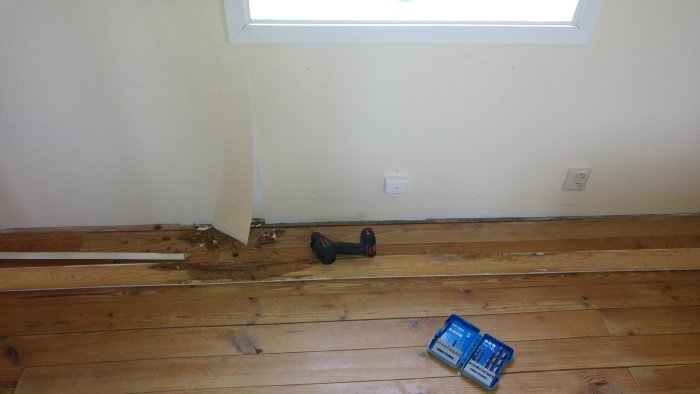
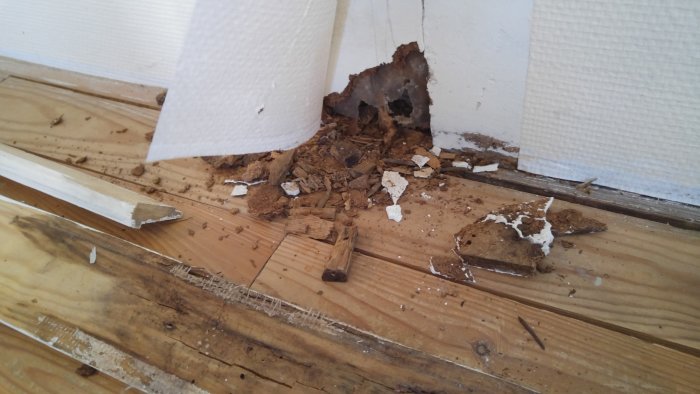
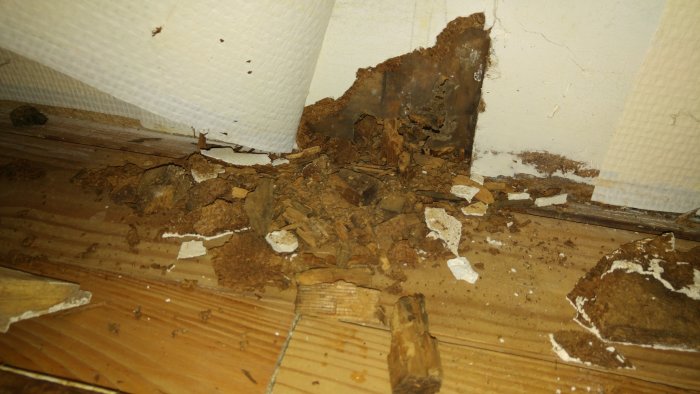
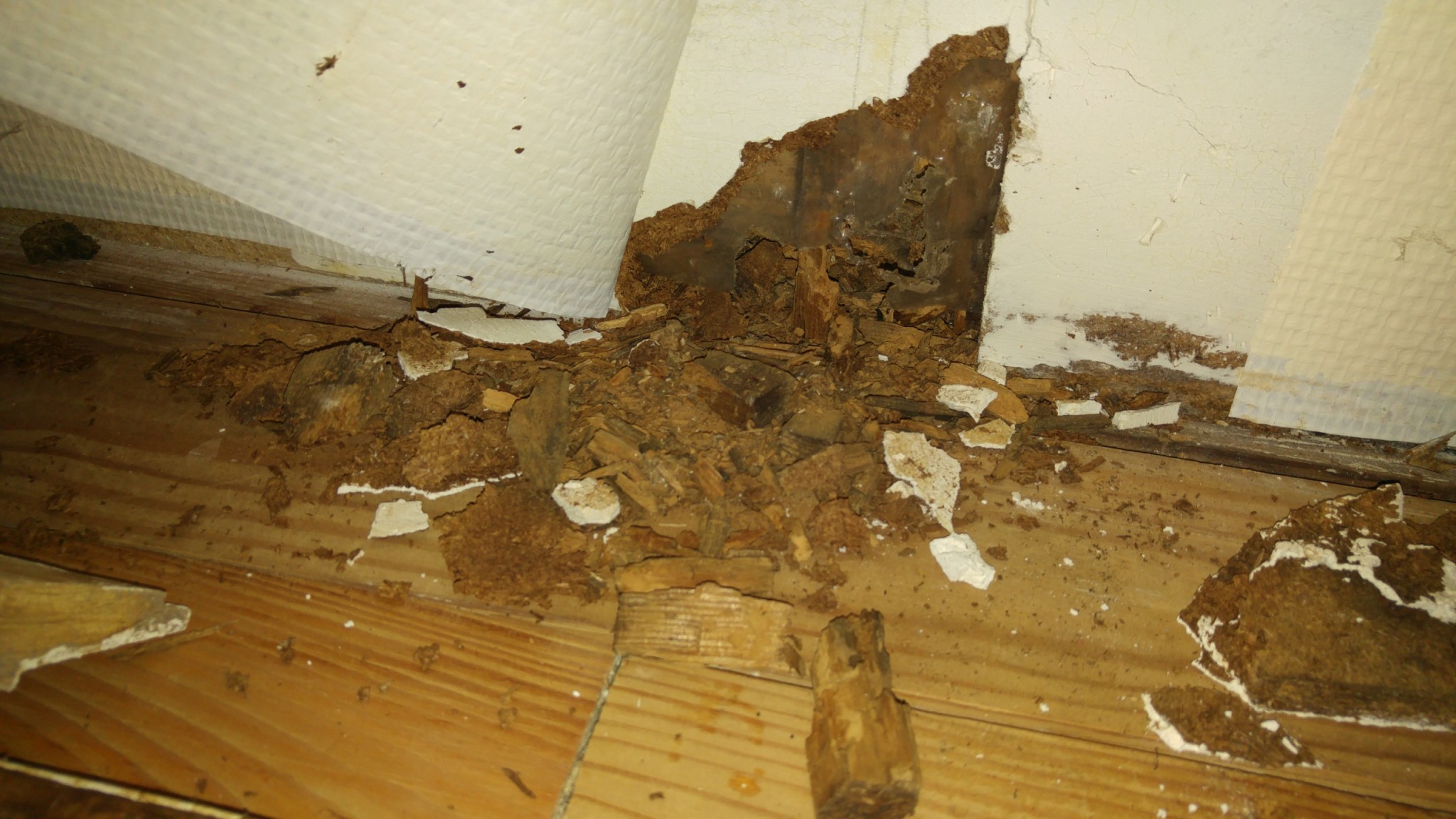
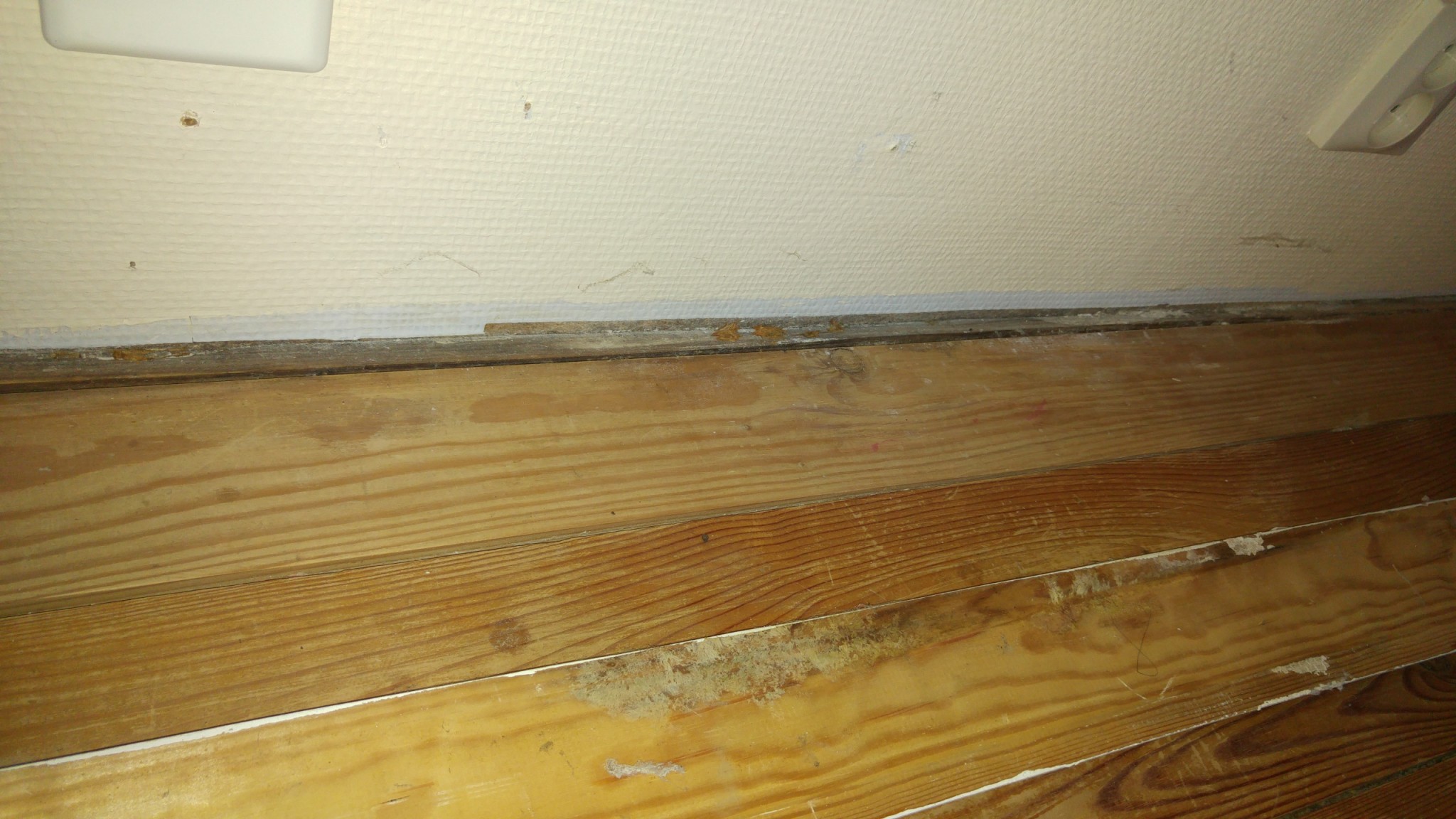
I've encountered issues in our old house that we bought three months ago. I was planning to repaint the fabric in the living room this weekend. Started removing the baseboards and found a surprise where I'd previously seen that the fabric had come loose a bit.
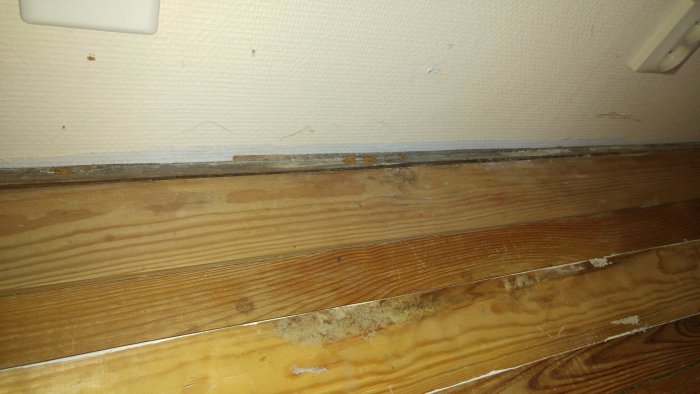
The chipboard and what's behind the plastic are completely rotten several cm in. Should I continue tearing it down to see the extent, or what should I do now? Is it time to involve the insurance company if it's due to potential dry rot, pests, or water damage? It's dry now, so it seems to be old. It doesn't seem to smell. There's a window where I discovered this, so it's possible the moisture came in that way and caused the rot. It looks like there's some form of plastic behind the chipboard, which isn't quite right for an old wooden house, is it? The floor closest to the wall also seems soft and discolored. It's about 1.5 meters wide.
The house was built "1909", so it's a log house with a stone foundation and wooden exterior panel.
Common with such damage under windows. I would remove the inner wall to see how it looks. The best is to remove all affected wood and replace it with fresh wood. Maybe tough now, but if you can fix the issue properly, you'll know you have something good to work with moving forward.
Contacting the insurance company might be a good idea, but it's not certain that this would be covered by insurance, at least not in an older house.
The problem that I've seen under windows is when you have electric radiators, which means you have an electrical box behind them. Where the box is located, it is often not sealed in the plastic. So you get a lot of moisture movement right there because the radiator is there and you have no vapor barrier. It looks like this might be true for you as well.
Yep, there was an electric radiator there before, but it was removed when a Mitsubishi FH35 was installed. However, there is a pipe sticking out behind the junction box, so the pipe has been concealed with a box. The insurance company will come out on Wednesday and take a look before I start tearing down more. I have a sister thread with a bit more info here: https://www.byggahus.se/forum/miljo-halsa/284419-svarta-prickar-bakom-list-svartmogel.html
Click here to reply
Vi vill skicka notiser för ämnen du bevakar och händelser som berör dig.