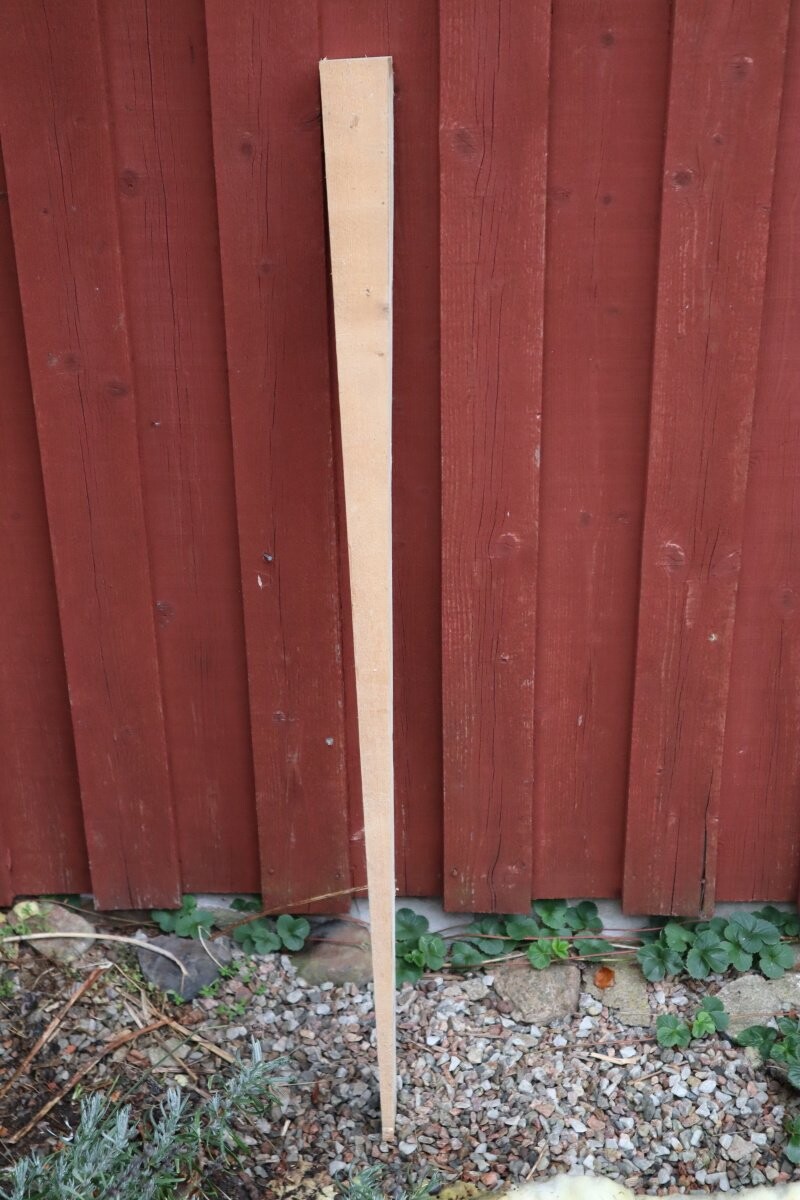
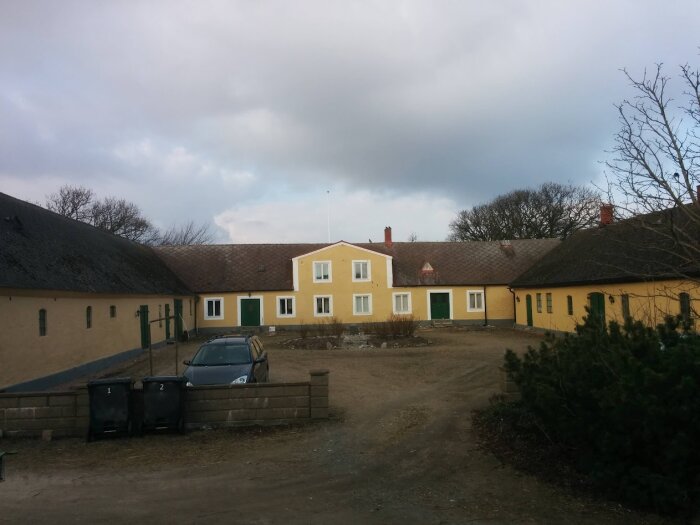
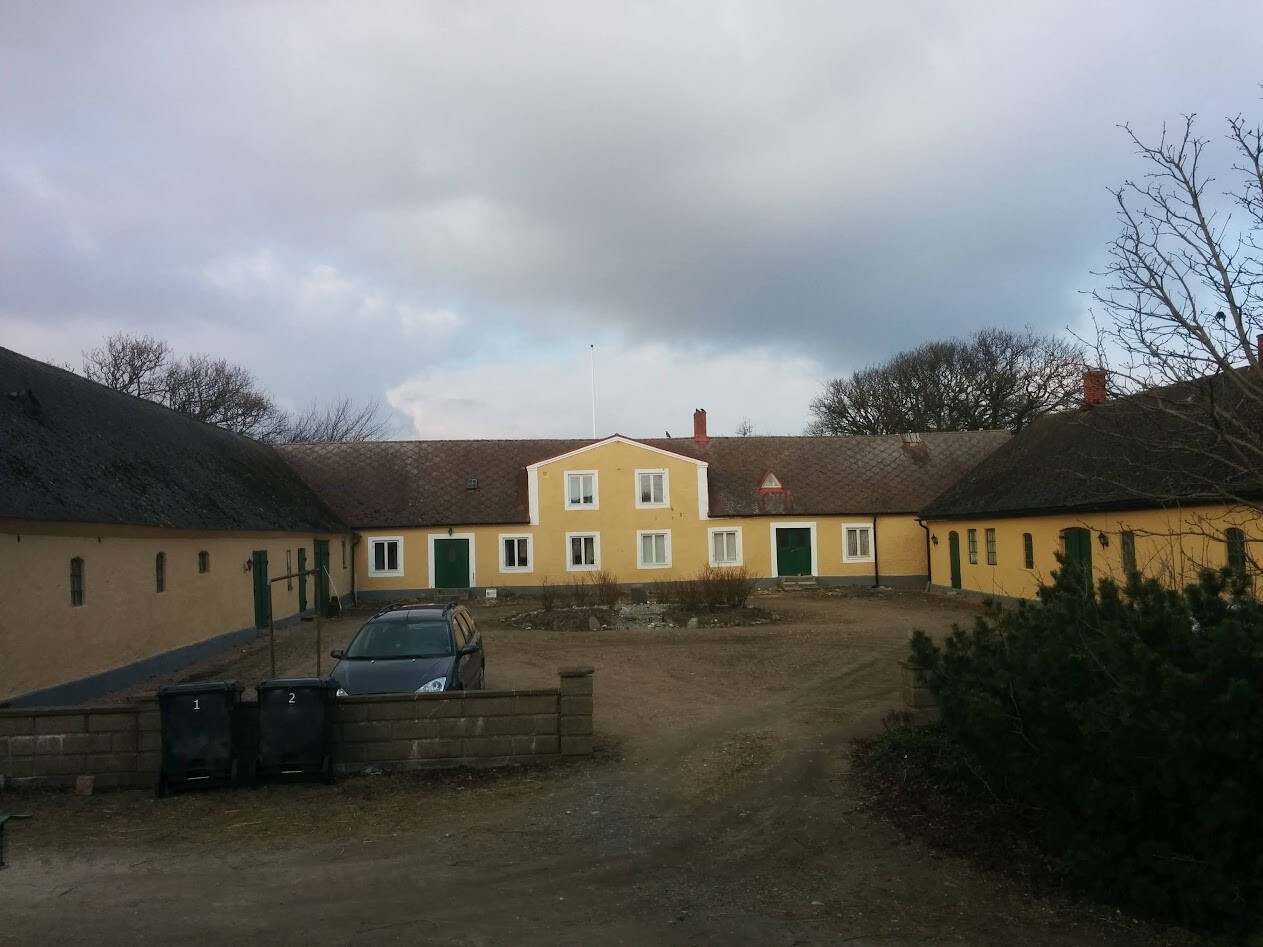
We have finally had the opportunity to look inside the old family farm house we are considering completely renovating.
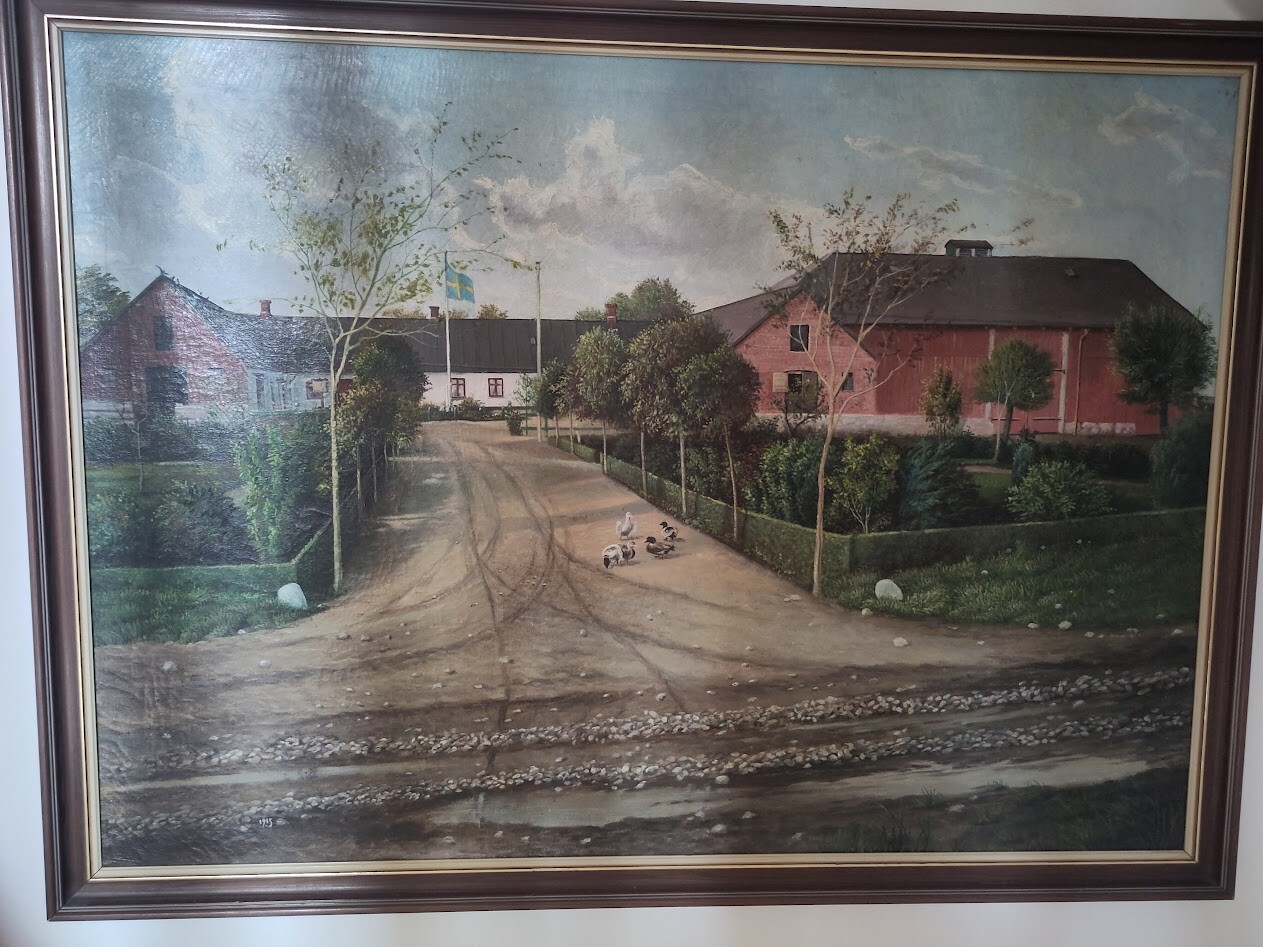
Depiction from 1913:
today:
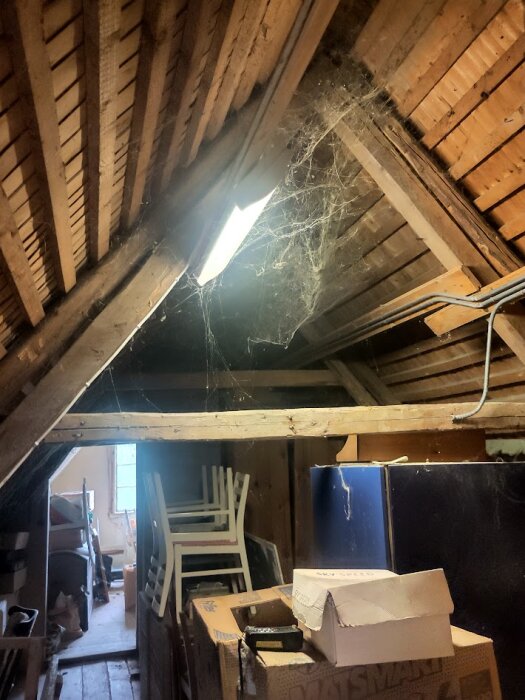
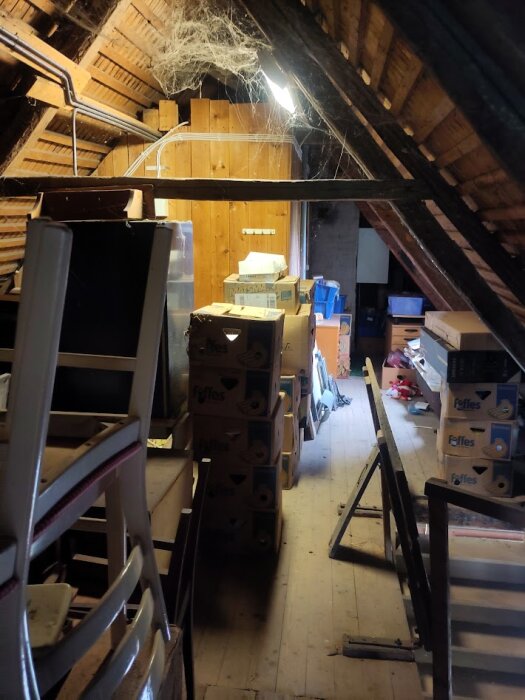
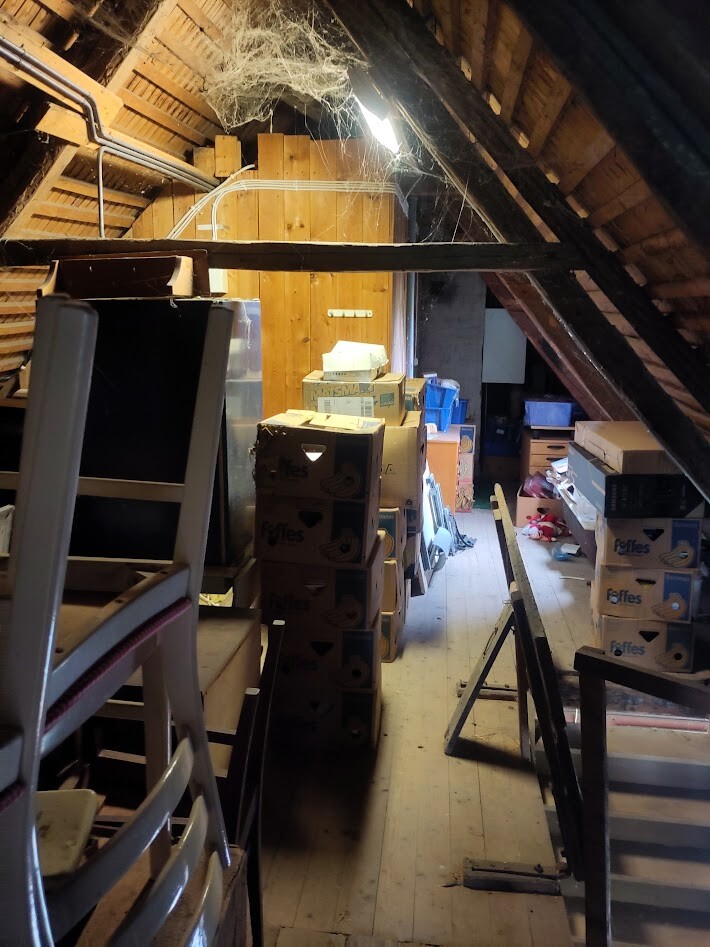
When I'm up in parts of the attic, I discover that the trusses seem to lack an underframe and the floor rests on its own beams. Previously, an exterior wall began to bulge, but it was stopped long ago by propping up the floor beams.
A principle sketch of this part of the house:
There is 4.8m between the interior walls which are 50-60cm thick and made of clay brick. The floor beams are 6x6", and in some places have a superimposed beam that is about 8x8".
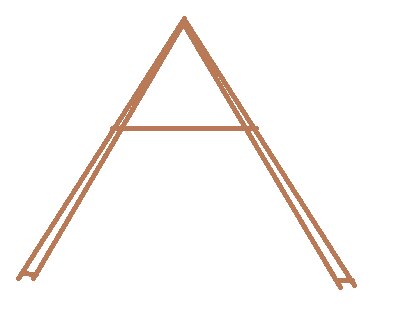
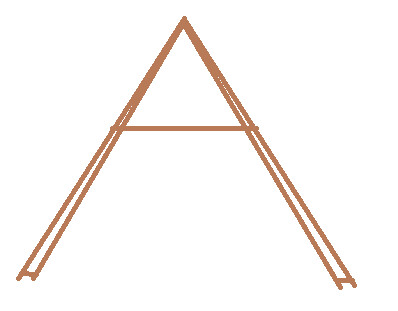
Simple sketch of the trusses:
It looks more like some form of inverted scissor truss where each top chord consists of two 4x4" joined together with a spacer at the bottom and meet at the top. Some trusses have had the collar tie raised and some lack it completely. The roof angle is about 50 degrees. Now that I think about it, the outer part might have been added later if they moved from a thatch roof to a felt roof.
Our plan is to clear out the entire interior to be able to lower the floor by 2-3dm and cast an insulated concrete slab with underfloor heating. The bulging exterior wall probably needs a new foundation and to be rebuilt.
Should we be worried about anything? Spontaneously, this has held for over a hundred years, even though there are some more modern changes from the 50s, but if we are going to renovate now, we have the opportunity to correct any mistakes.
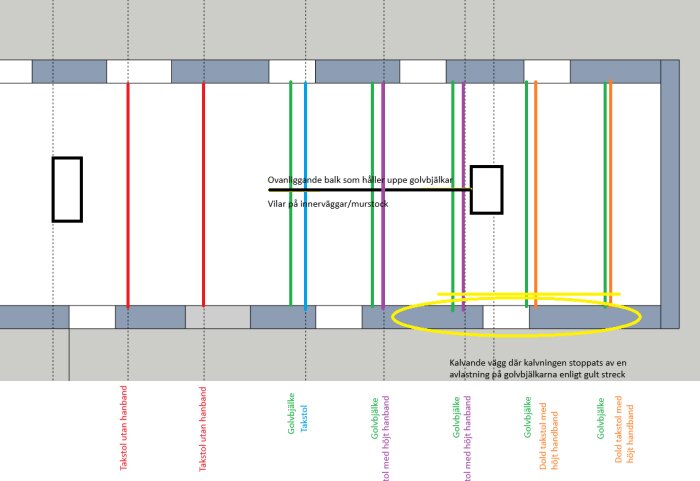
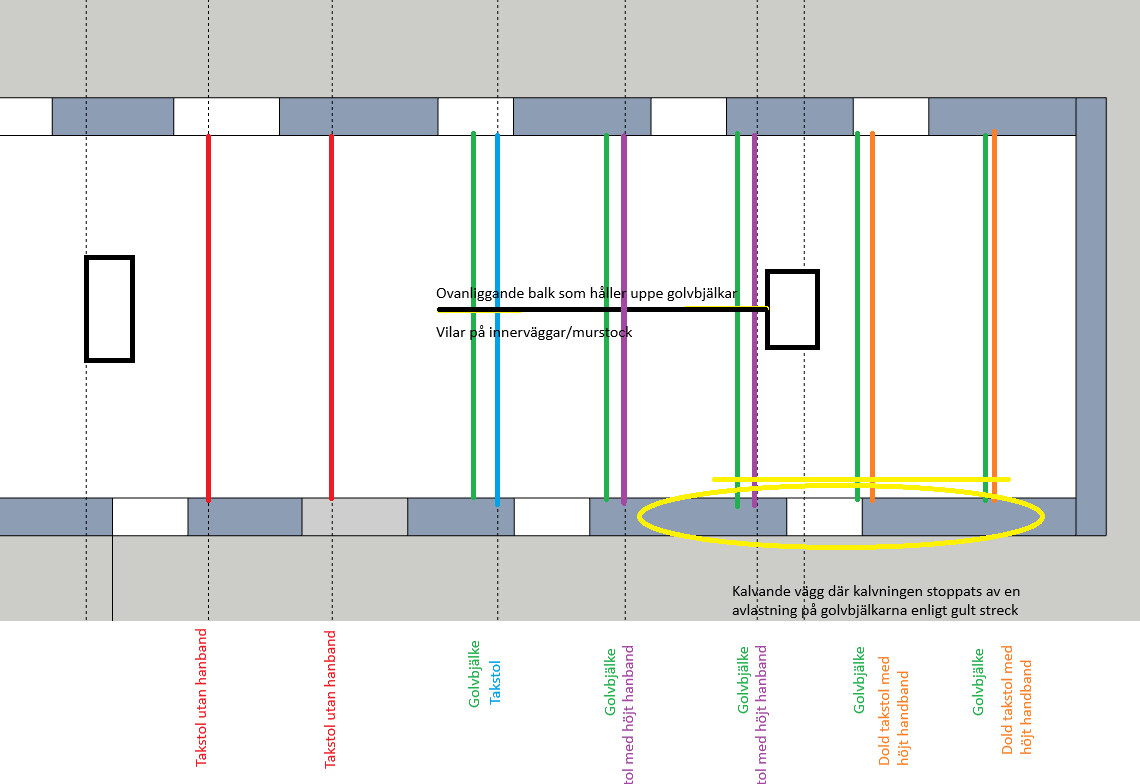
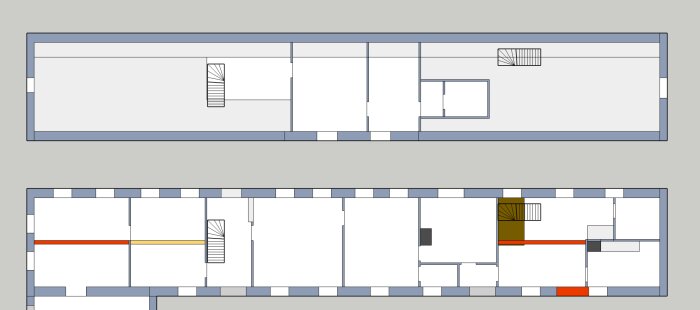
Here is a sketch of the entire construction, including existing inner walls and chimneys (dark gray). The upper is the attic, and the lower is the ground floor.
Brown is a small potato cellar.
Red are beams above floor joists in the attic, orange is possibly an additional beam.
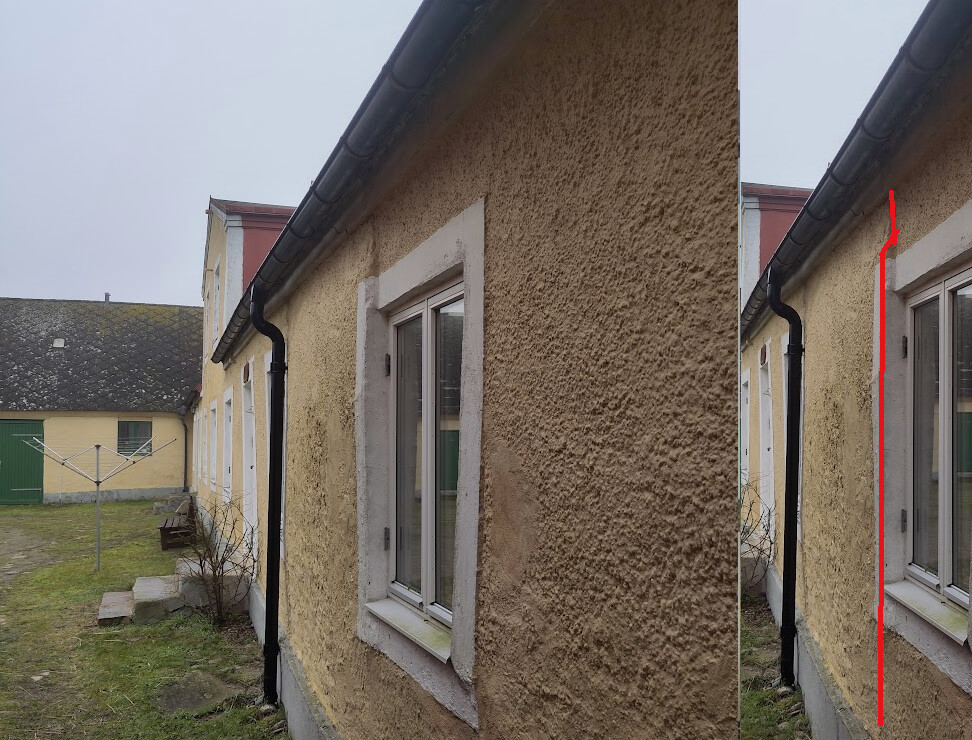
The wall marked in red is the one that has moved outward.
There is a bit thicker gray wall by the left staircase, which could possibly be a chimney removed in the attic.
I am still puzzled as to why there are beams over certain parts but not all, especially since they only support the floor framework. The rooms in the frontispiece have no beams above the floor and no support in the large rooms below. The rooms below have a built-in ceiling that does not appear to have sagged.
It would also be interesting to know how the frontispiece itself is constructed and how the roof trusses are built there. The left wall there doesn’t even stand over any wall on the ground floor.
I was around the yard not too long ago and realize that there probably is a hammarband, however, it is embedded in the adobe wall, here you can glimpse it in the "huggehuset":
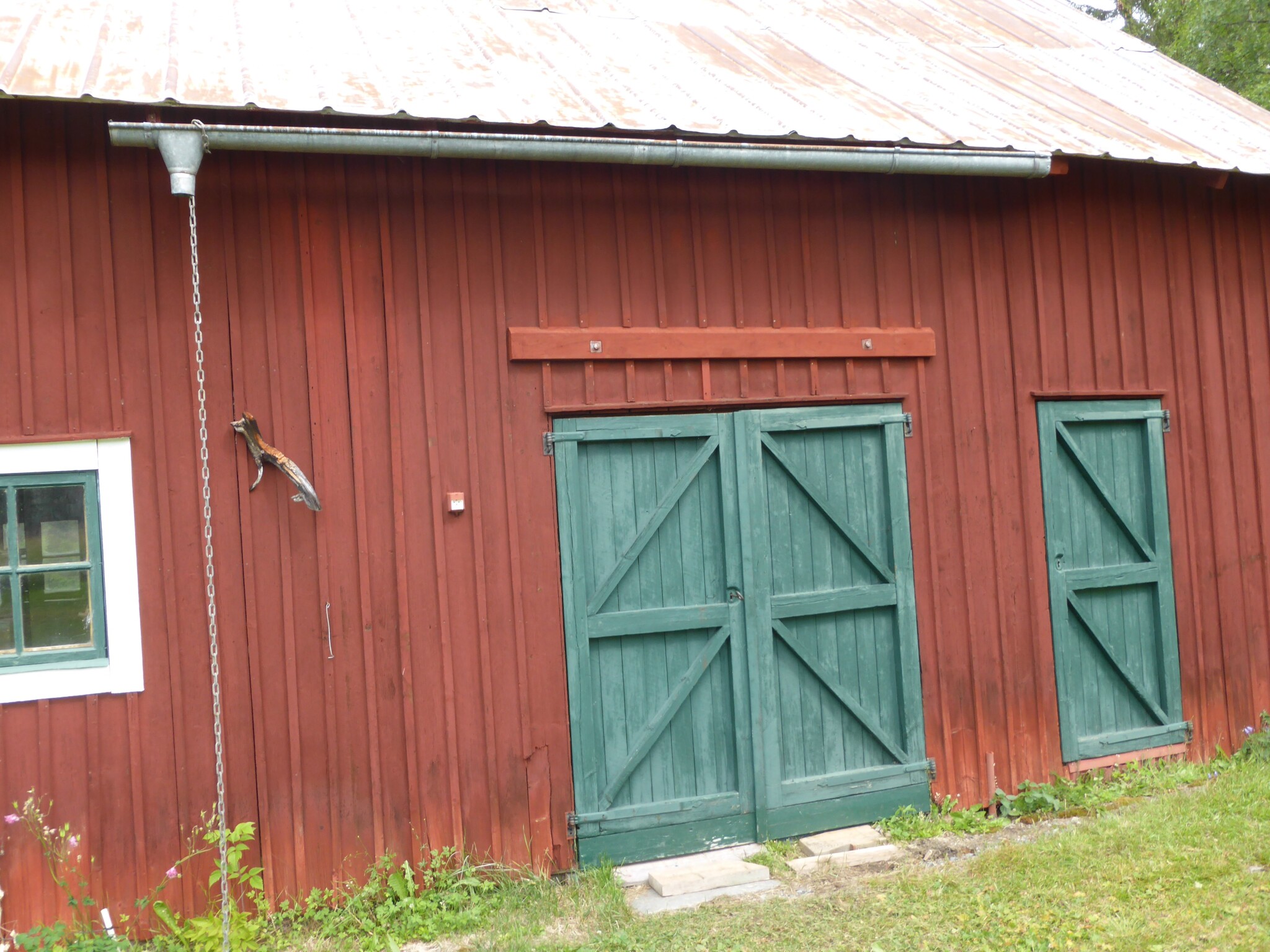
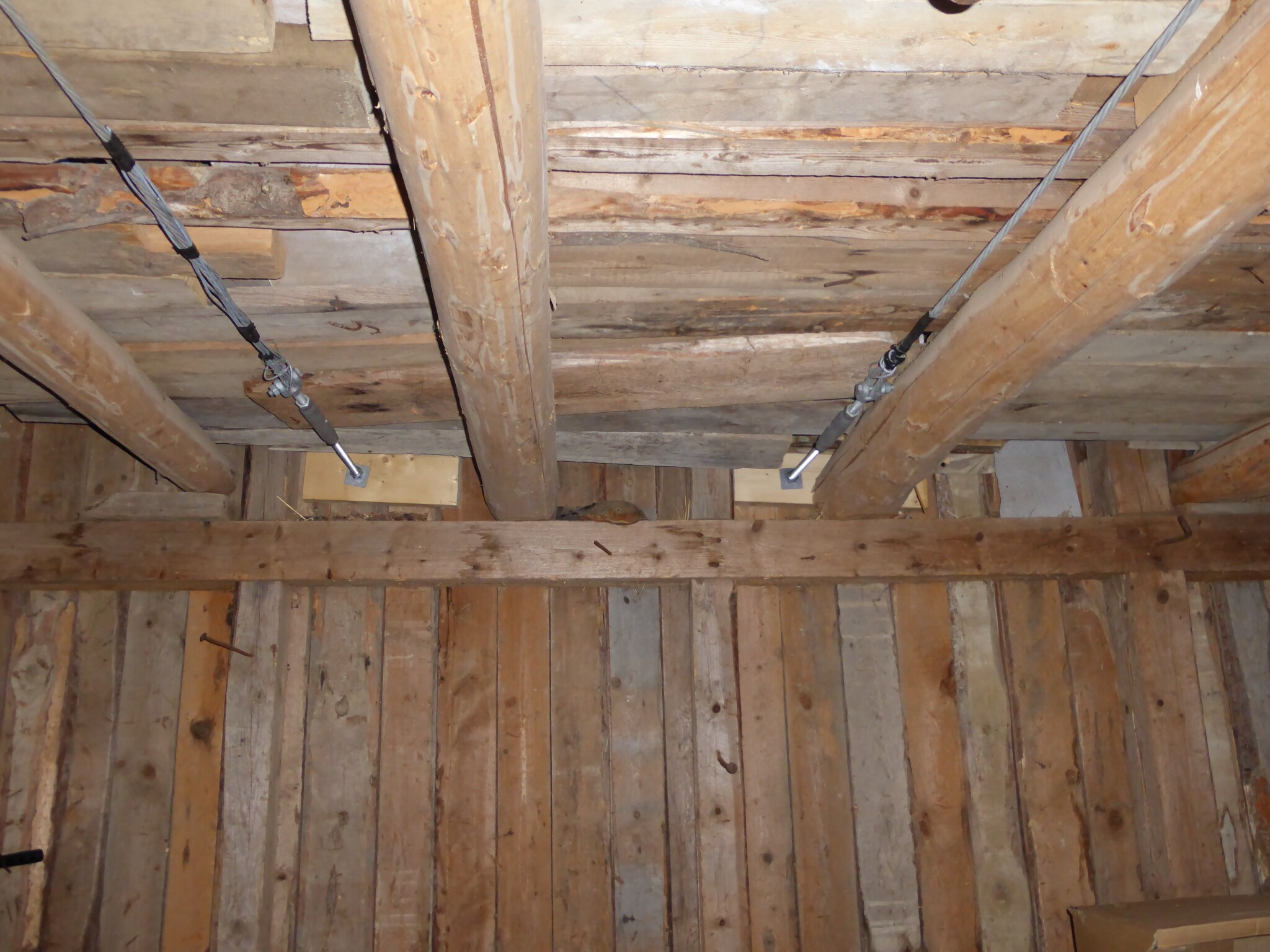
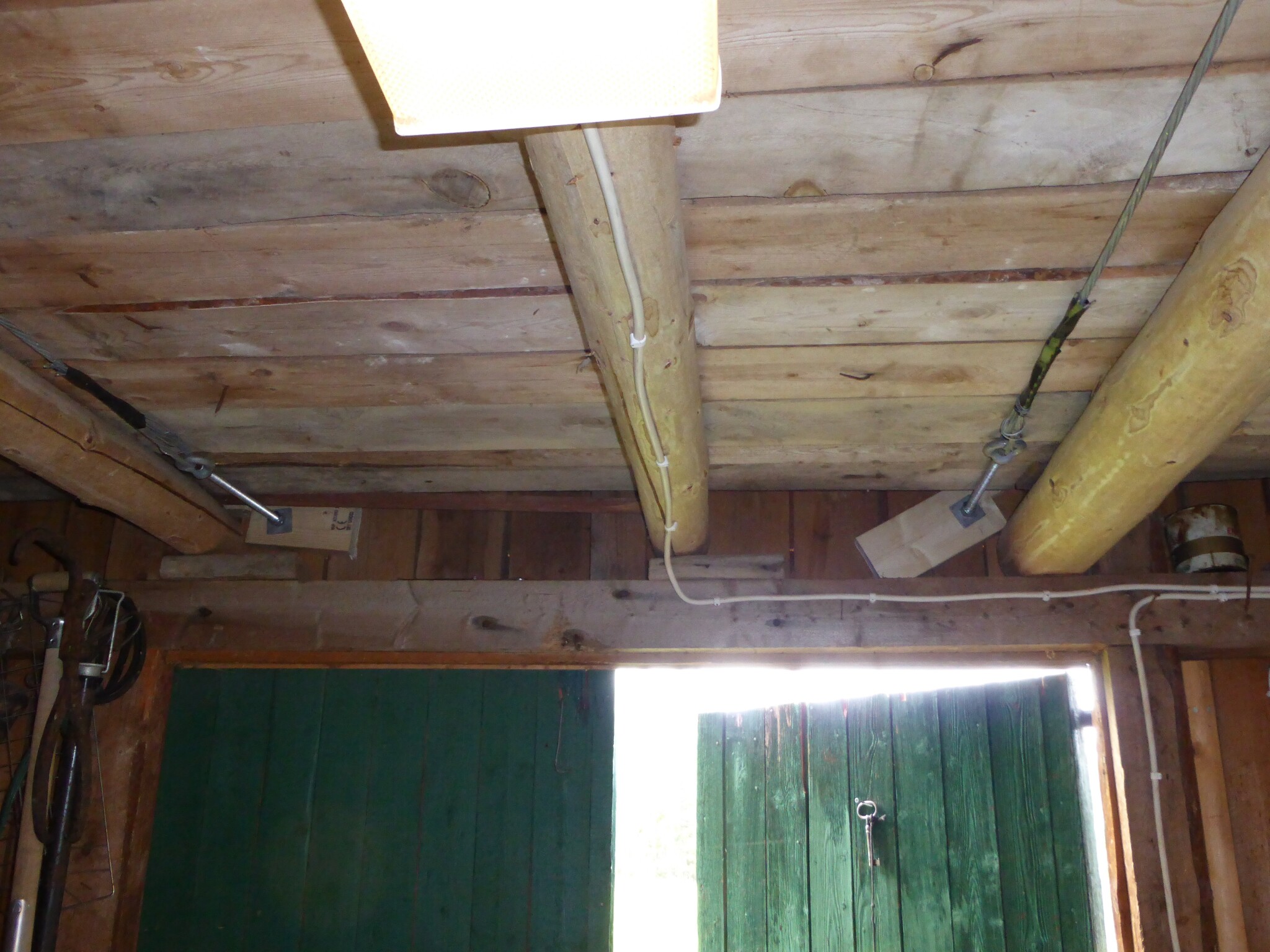
That the walls bow outward and have a bulge is perhaps not so common. But the lack of collar ties under the rafters causes the downward pressure to push on the rafters, straining the outer walls. It was the same with the barn at the cottage. The collar ties were removed and 3 rafters were broken; they were above a larger door. Solution: Tightened with 2 pieces of 25 m2 stranded cables and a 20 mm turnbuckle. Also used a fully-threaded 20 mm rod with a plank and nuts on the outside. Pulled in the bulge by about 50 mm and tighten a bit each year to not break anything else when it moves. Now, it might be difficult for you to tighten a cable since there is no direct stud/beam/facade to attach to.
EDIT The beams in the floor structure of the loft were just resting on the outer wall and could slide. No fastenings or anything, just resting on them.
Dog bones? Do you mean the collars?
Their job is primarily to prevent the rafters from sagging inward.
Here, the floor joists should be attached to the wall plate and thus hold against when the top chords in the rafters try to push the walls apart 🤔
Dog bones? Do you mean hanbanden?
Their main job is to prevent the trusses from sagging inward.
Here, the floor joists should be attached to the wall plate and thus hold against when the upper frames in the trusses try to push the walls apart 🤔
Yes, sometimes a dear child has many names. With such long trusses and in new houses. There are posts that support the trusses a bit in from the outer wall. Normally, there is a kattvind in new houses.
The longhouse should be constructed in the same way as all timber-frame structures, i.e., with a thicker wall plate that is locked with the floor joists so that no outward bowing can occur. The advantage of a thicker wall plate in this manner is that the placement of rafters and floor joists becomes more flexible. That is, the wall plate can support and hold against outward forces if a rafter needs to be placed between two floor joists. The rafters stand on/against the wall plate and are locked so they cannot move outward.
In some timber-frame houses, the floor joists go through/partially under or over the wall plate to lock it. It is not uncommon for the outer part that has been/is exposed to the weather and perhaps especially leaking roofs due to poor maintenance to have rotted away after 100-300 years, thereby losing its locking function.
We also have longitudinal beams between the chimney and internal wall that reinforce the floor joists. There must have been internal walls or posts where these heavy beams are supported.
Kattvindar (hundben) do not seem to have originally existed with us either. They are not needed on narrow houses with steep and light roofs.
I'm updating with some new pictures.
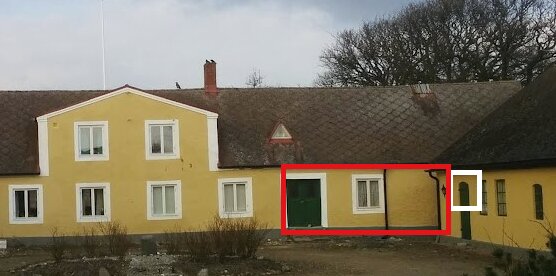
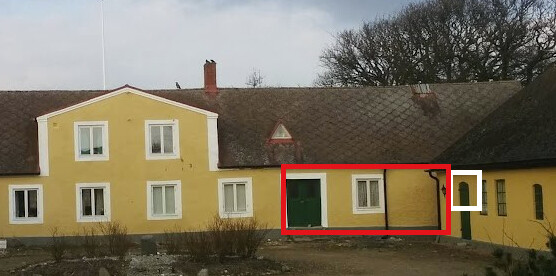
The residential house is supposed to be from 1845 and was remodeled in 1937, presumably when the frontispiece was added and the asbestos roof was laid.
I now see that it is along this stretch that it is relevant.
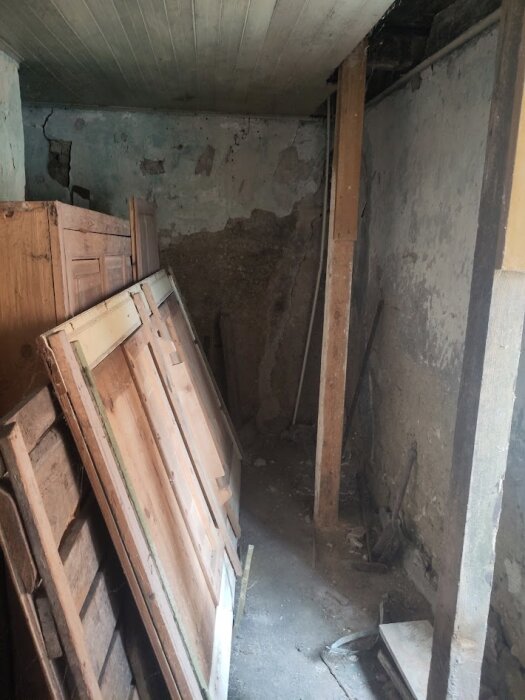
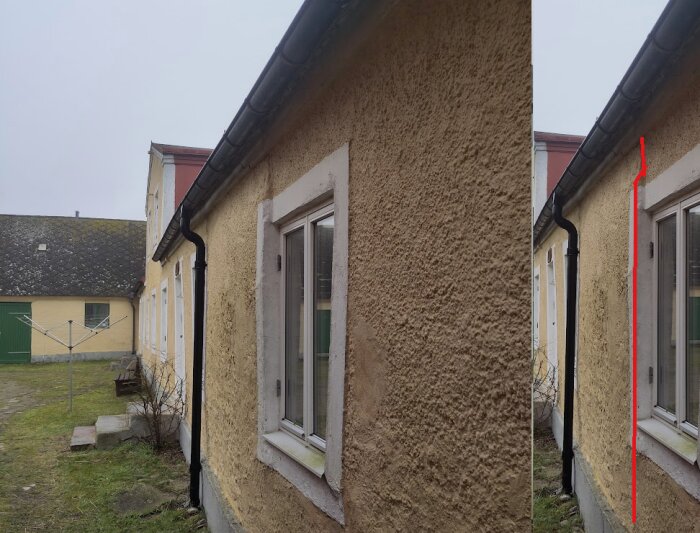
This is what the inside looks like on the wall piece between the windows:
And from the outside on the side, I notice that the top edge of the wall seems to have stayed in place. You can also see how the entire facade leans slightly, up to the window after the door.
The row should be constructed in the same way as all timber frame structures, i.e., with a thicker wall plate that is locked together with the floor beams so that outward leaning cannot occur. The advantage of a thicker wall plate in this way is that the placement of rafters and floor beams becomes freer. In other words, the wall plate is able to support and hold outward if a rafter needs to be placed between two floor beams. The rafter feet stand on/against the wall plate and are locked so they cannot move outward.
Sounds reasonable.
Oldboy said:
In some timber frame houses, the floor beams go through/partially under or over the wall plate to lock it. It's not uncommon for the outer part that was/is exposed to the weather and perhaps especially leaking roofs due to poor maintenance to have rotted away after 100-300 years, thereby losing its locking function.
Not so easy to access right now, but we'll see if it's possible to check the condition of the wall plate from the attic or via the gap at the leaning.
Oldboy said:
We also have longitudinal beams between the chimney and internal wall that stiffen the floor beams. There must have been internal walls or posts where these thick beams are supported.
I think they're gone in the bay window section, have to check and see if the floor is higher there 🤔
But I don't think the house has had any "heart walls" as all rooms have been walkthrough rooms 🤔
Oldboy said:
Attic spaces (doglegs) don't seem to have originally existed in our house either. They aren't needed in narrow houses with steep and light roofs.
In some half-timbered houses, the floor beams pass through/partly under or over the wall plate to lock it. It's not uncommon for the outer part exposed to weather and perhaps especially leaking roofs due to poor maintenance to have rotted away after 100-300 years, thereby losing its locking function.
In our old barn, the locking has been "updated" in "modern" times, presumably the first half of the 20th century, on one or two beams. There are now tension irons and anchor nuts if I remember correctly. 🤔
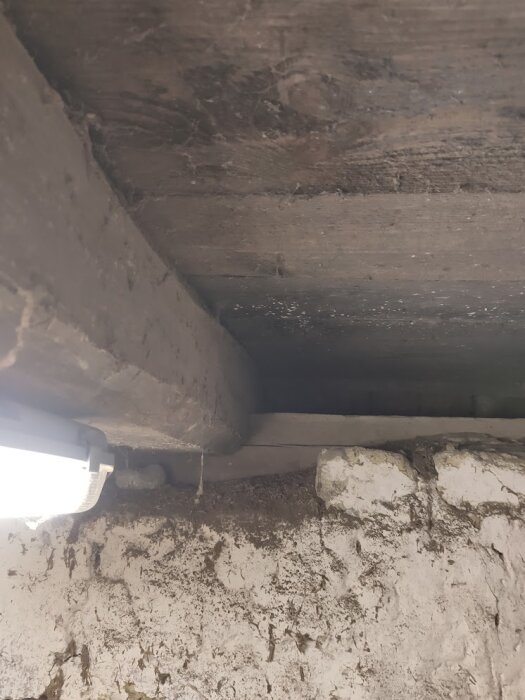
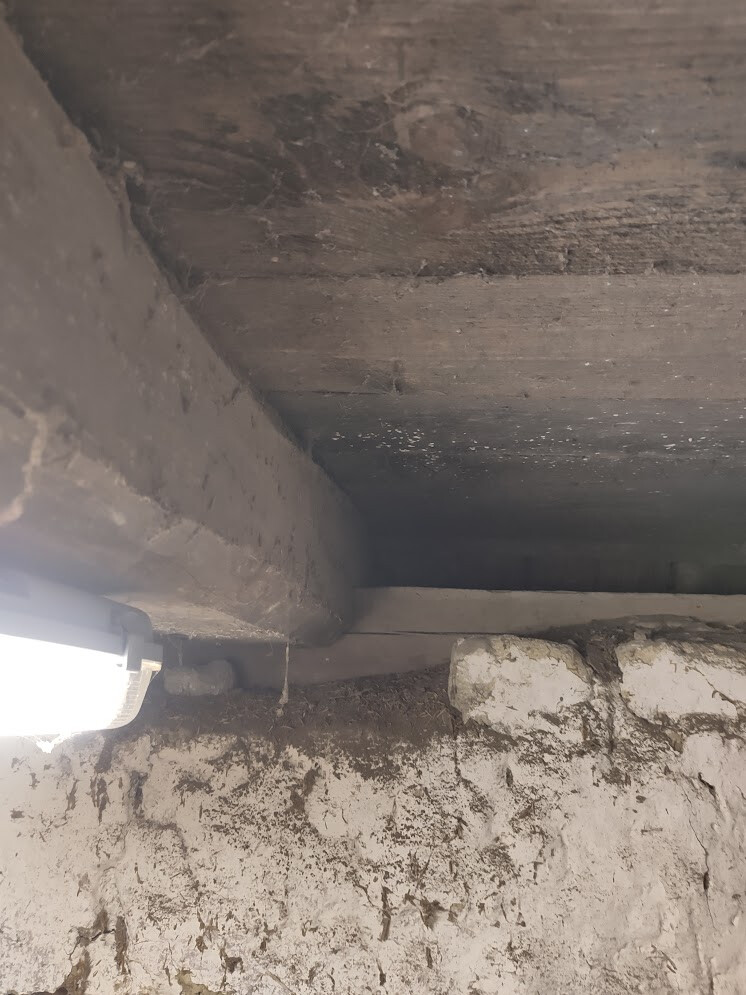
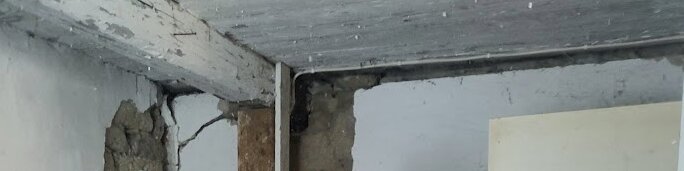
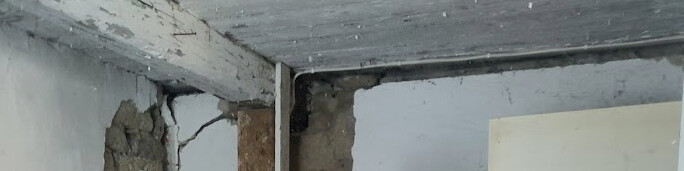
Our residential house has two wall plates. (I believe it's called something else in these post constructions but can't recall it.) The rafters rest on the top one, and the beams in the middle floor are in between. How the beams are locked to the wall is not apparent, but commonly they were tenoned in one way or another. It could also be that they protruded and rotted and were later cut off and locked with some large nails instead. You can see some rot-affected wood just at the lower edge of the beam and wall plate underneath. However, it cannot be ruled out that this is due to an old roof leak.
13th Marine said:
But I basically don't think the house had any "heart walls," but all rooms were passage rooms.
Exactly, the Skånelängorna were divided by "heart walls" from long side to long side, but each such "heart wall" (virtually all walls were load-bearing) is a support for cross beams in the length direction of the house, and because the houses and rooms were relatively small, the distances between the "heart walls" are relatively short. Ours have distances between 3-3.6 m, which gives a reasonable span for a stiffening beam compared to the house width, which is about 5.5 m that the floor beams span.
13th Marine said:
You can also see how the entire facade tilts slightly, up to the window after the door.
At least one of our walls does that too. What's a difference of 5 cm over a shorter stretch? Charming and lively! Old leveling wedge from the wall...
No, exactly, the Skånelängorna were divided by "heart walls" from long side to long side, but each such "heart wall" (in principle, all walls were formerly load-bearing) is a support for cross beams in the length direction of the house, and since the houses and rooms were relatively small, the distances between the "heart walls" are relatively short. Ours have distances between 3-3.6 m, which provides a reasonable free-spanning length for a stiffening beam compared to the width of the house which is about 5.5 m which the floor beams span across.
Here we have about 5.2 m between the logs in the outer walls, where beams have been placed, we have a span between the inner walls of about 5 m. This is in places with visible joists from below, then we have rooms with non-visible beams, and then the cross beam above is also missing, presumably from the renovation in 1934 and that they stiffened up by placing from below.
Oldboy said:
At least one of our walls does that too. What's a 5 cm difference over a shorter distance? Charming and lively! Old straightening wedge from the wall...
[image]
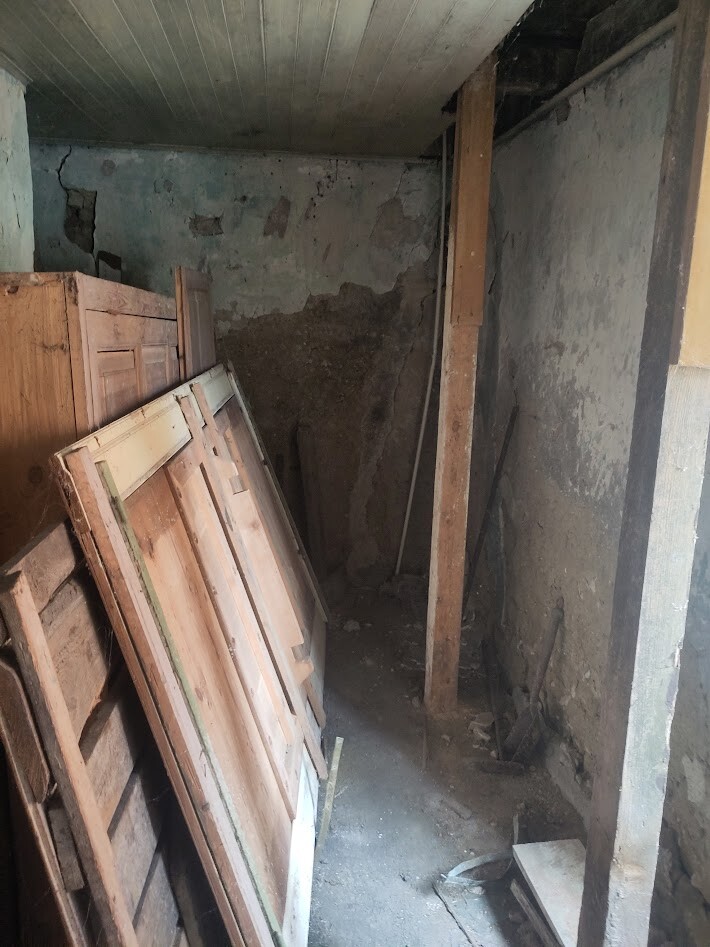
Our problem is that there's a wall that was about to move outward before the floor structure connecting to it was propped up, if we were to renovate we would want to be able to remove the prop.
Chatted briefly with my father-in-law today, the collapsing wall is likely due to poor foundation work, and has been stopped by him casting a concrete footing on the inside and propping up the floor joists above.
It's probably necessary to dismantle the entire wall section and redo it if you want to fix the whole thing.
Are there any signs that the wall is moving? If not, maybe you can just leave it be. In old houses, it is common for walls to lean after having moved, but that doesn't necessarily mean the house is about to collapse.
Are there any signs that the wall is moving? If not, maybe you can just leave it as it is. In old houses, it's common for walls to lean after having moved, but that doesn't necessarily mean the house is about to collapse.
We now want to be able to use the rooms behind and need to get rid of the support.
Click here to reply
Vi vill skicka notiser för ämnen du bevakar och händelser som berör dig.







Oldboy said:
The row should be constructed in the same way as all timber frame structures, i.e., with a thicker wall plate that is locked together with the floor beams so that outward leaning cannot occur. The advantage of a thicker wall plate in this way is that the placement of rafters and floor beams becomes freer. In other words, the wall plate is able to support and hold outward if a rafter needs to be placed between two floor beams. The rafter feet stand on/against the wall plate and are locked so they cannot move outward.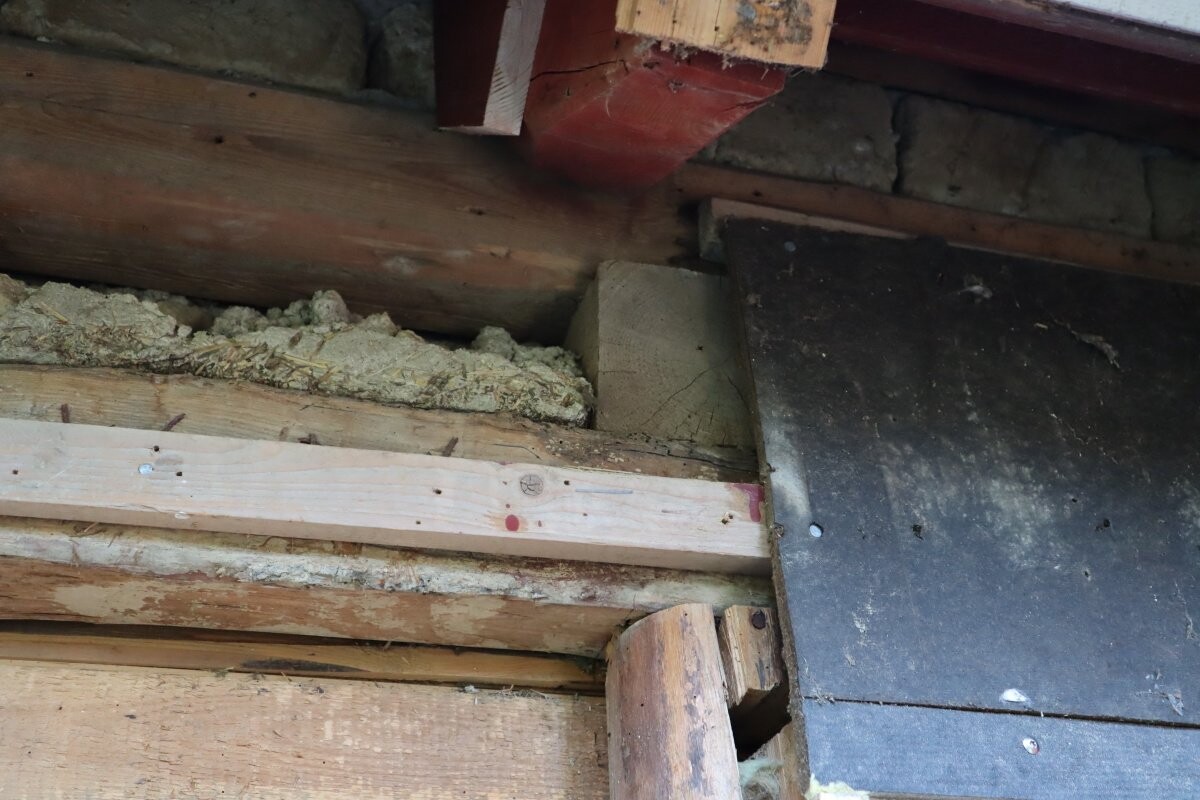
 Old leveling wedge from the wall...