
9,748 views ·
19 replies
10k views
19 replies
Roof structure Gable roof vs. Gable roof?
Stick-builder
· Östergötland
· 177 posts
Sketching a new build and have been drawn to a roof variant that is incredibly stylish but perhaps not the best technical solution in terms of construction.. It's a gable roof against a gable roof, and the problem would be solving the drainage and risk of snow pockets. But if one were to attempt this, how would one construct such a roof? I've searched but only found attractive architectural images.
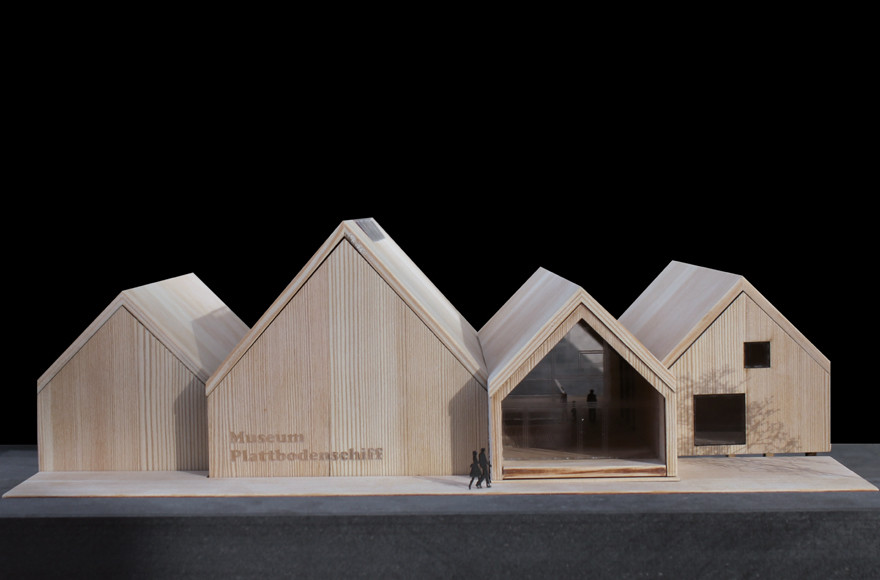

There are indeed technical problems with this type of joint roofs, but if you don't live in the mountain regions of Norrland, they can probably be solved. The result can be very attractive. Many times, it is the only sensible solution for an extension. Old cities around the Baltic Sea, in Norway, and in Holland, are full of such building environments.
The water drainage is resolved by placing two sloping wedges in the valley, leading the water to the front and back. The wedges are covered with felt and metal (only skilled metalworkers here). Snow pockets must be calculated with margins, so the roof constructions become quite substantial. This also provides an opportunity for indoor exposed frames with a lot of glulam.
The water drainage is resolved by placing two sloping wedges in the valley, leading the water to the front and back. The wedges are covered with felt and metal (only skilled metalworkers here). Snow pockets must be calculated with margins, so the roof constructions become quite substantial. This also provides an opportunity for indoor exposed frames with a lot of glulam.
Stick-builder
· Östergötland
· 177 posts
Ok, that sounds doable! I'm guessing we're talking about standing seam metal roofing or is it also possible to read with concrete tiles?



Standing seam roofing is clearly the best, although tiles are also possible. Concrete tiles (poor aesthetic lifespan) are not an option I would consider for such an expensive roofing solution. In that case, choose clay tiles.
The image in post #6 that @Rickard.ag has posted is interesting. It is a good budget option but with a limited lifespan (30 years?).
Well, who knows exactly, somewhere between 30-50 years is probably not wrong anyway. In this case, it was a mix of the architect's vision and the climate it was built in simply making most other solutions impossible.
Stick-builder
· Östergötland
· 177 posts
The cardboard roof looked interesting, mostly been considering Benders Carisma tiles which have a slightly more modern appearance.
https://www.benders.se/filtered/3990/rszww2560h1650-30/c00021-1063050995-rszww2560h1650-30.jpg
Someone else has thought along the same lines, albeit on a slightly larger scale. I get a bit anxious thinking about when the whole valley is filled with wind-driven snow and it starts to thaw, but I also realize that it's a problem not everyone has
Someone else has thought along the same lines, albeit on a slightly larger scale. I get a bit anxious thinking about when the whole valley is filled with wind-driven snow and it starts to thaw, but I also realize that it's a problem not everyone has
Stick-builder
· Östergötland
· 177 posts
It was undeniably an interesting solution, especially if you use sheet metal in the same color as the tiles. We are talking about the Linköping area here and the days with a lot of snow per year are few...

Naturum at Sydkoster (Kosterhavet National Park) is a building with saddle roofs facing each other, where the drainage has been solved in an interesting and elegant way. The gables on the long sides are staggered so that the roof surfaces form triangles.
Images can be found here:
naturum sydkoster bilder
Images can be found here:
naturum sydkoster bilder