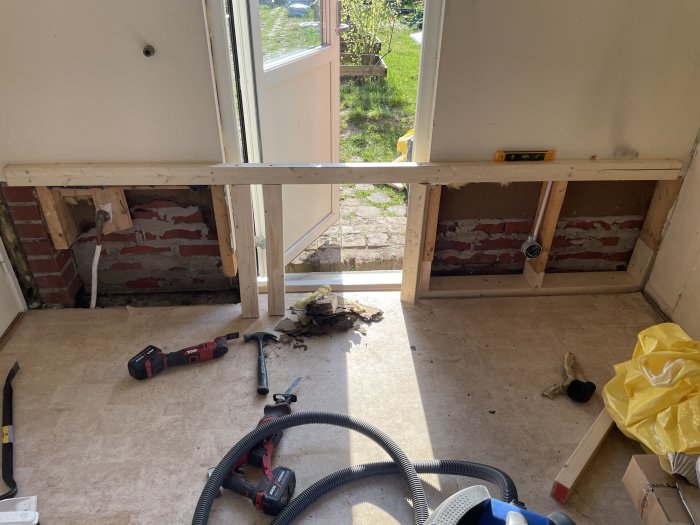
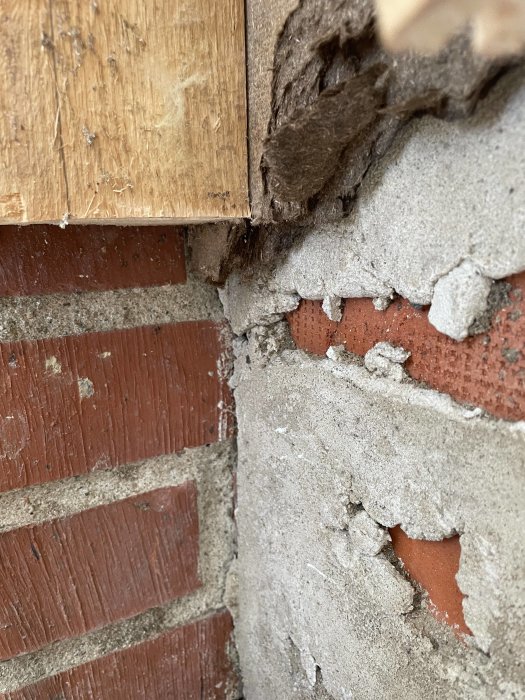
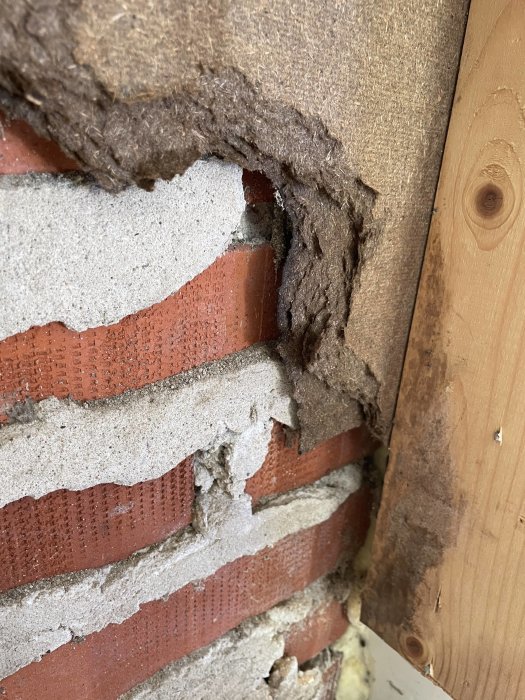
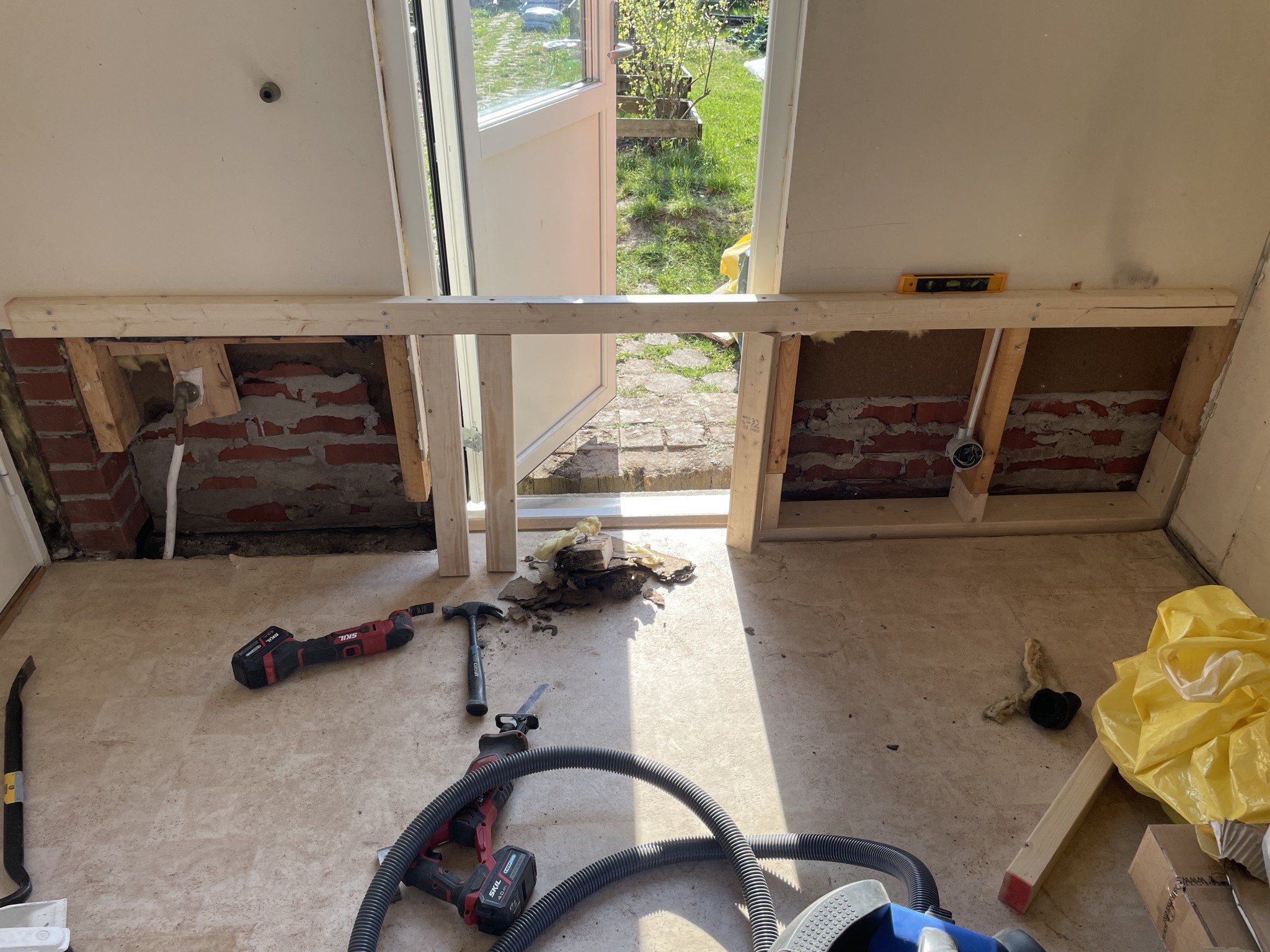
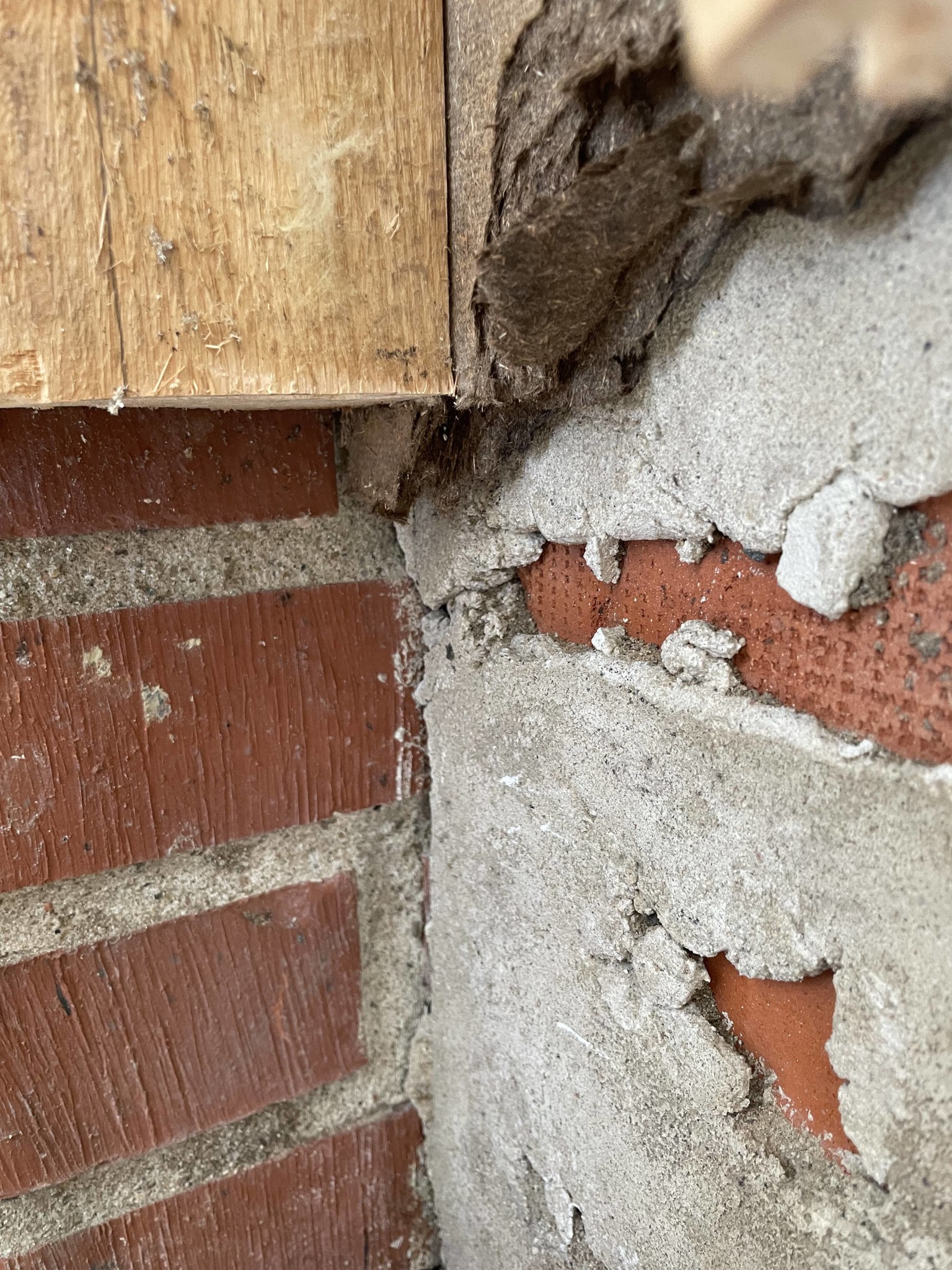
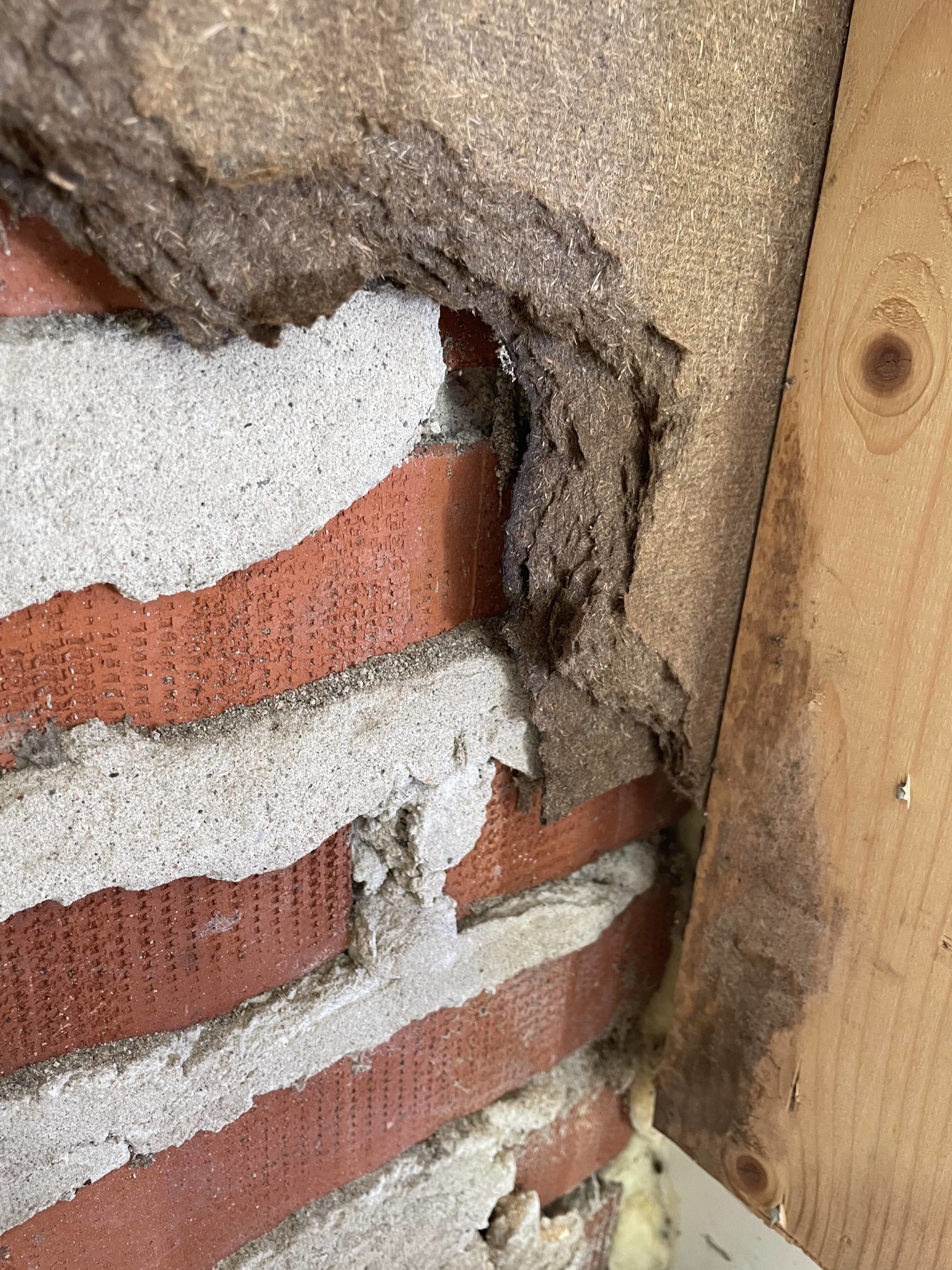
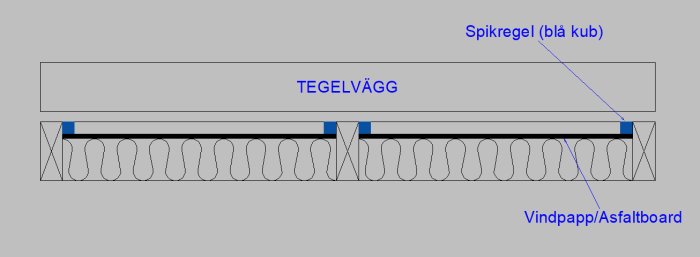
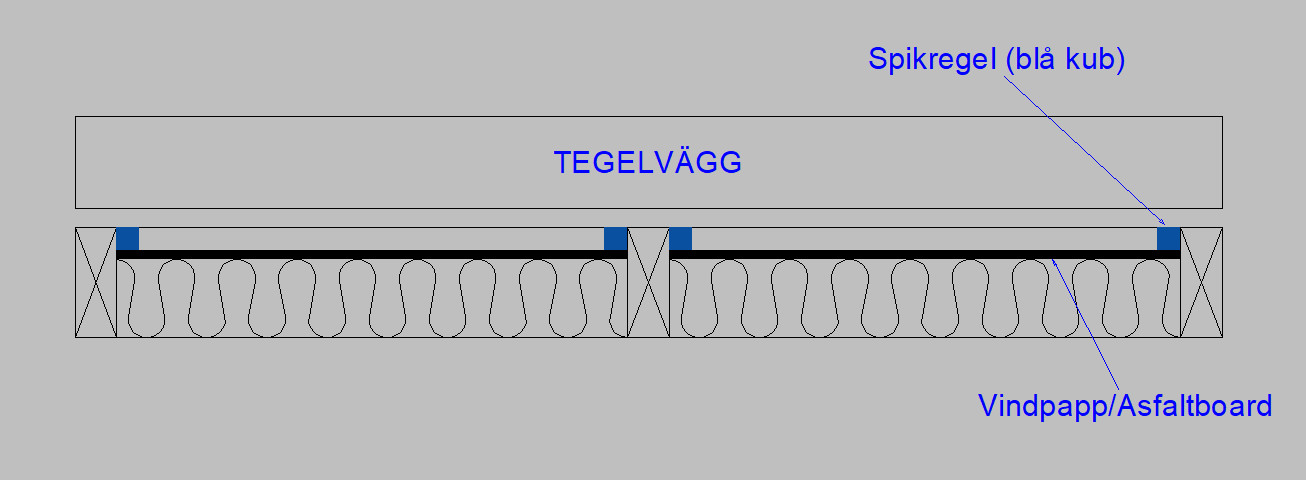
I'm working on renovating the sill in an extended section from the 70s. Ants and soil were what was left of the old sill. But I would like some tips and advice for planning and demolition. The wind barrier (asphalt board) is placed directly against the brick wall, and I would prefer some ventilation between the brick wall and the studs. Tearing down the brick wall won't happen as the area is protected, and I don't want to hassle with building permits. I have considered removing all the old wind barriers and attaching 25x25 boards to the studs closest to the brick wall and putting up a new wind barrier on them. Or is there a better alternative?
Wind barrier is probably used to reduce wind movement in the insulation. It is indeed also a certain moisture barrier. I think the brick wall should be tight
Can only guess.
The asphalt board has been too close to the brick wall so moisture has traveled.
The old door was really damp at the threshold; replaced it last year and then saw the moisture damage on the studs.
There has been poor slope on the outside.
But does anyone have feedback on the main issue with ventilation. Made a simple sketch so it's easier to see. Are there any drawbacks to doing it this way?
Didn't get a "notification" on post #5
Then you shouldn't be affected by the sick house syndrome (sill that has rotted on uninsulated concrete slab)
Regarding your ventilation, your battens but maybe use https://www.byggmax.se/vindskyddsfolie
which you can also wrap around standing studs (for simplicity's sake)
I believe that the wind protection foil doesn't absorb moisture in the same way that asphalt board can.