
1,839 views ·
13 replies
2k views
13 replies
Replacement of floor beam, where can I get a new one?
Hi, I have a question about floor beams. I am renovating the bathroom floor in the summer cottage from around the 1900s. I noticed that the existing floor beams are damp and need to be replaced, unfortunately, I didn't take any pictures at the time. But the beams are about ~170x180mm, length ~ 1600*2 / 2350*2. Where can I get such beams? Alternatively, can I glue+screw together 4*170x45 beams?

Member
· Västernorrland
· 12 029 posts
Moist in what way then? Wood normally dries, so what makes them moist?
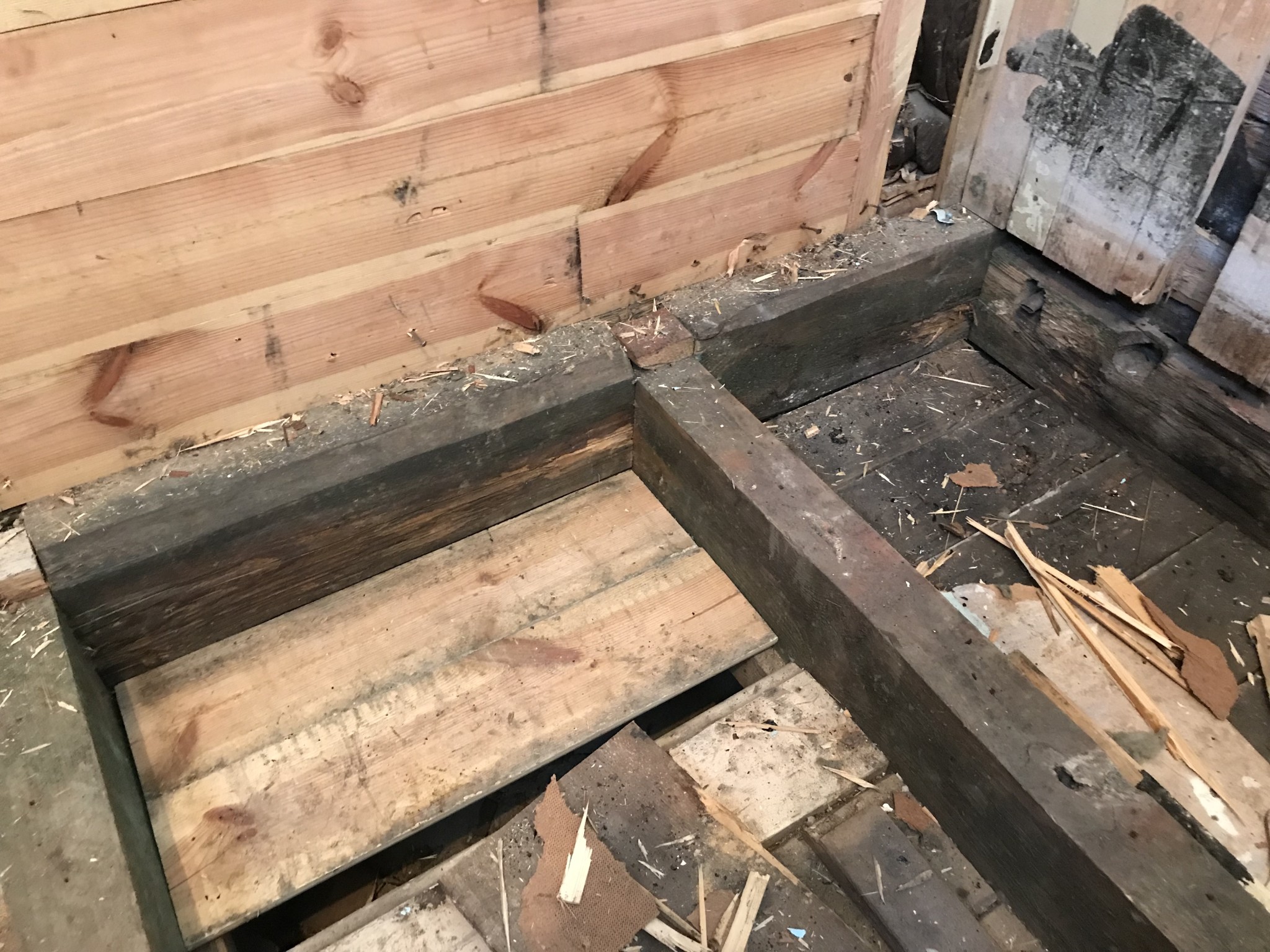
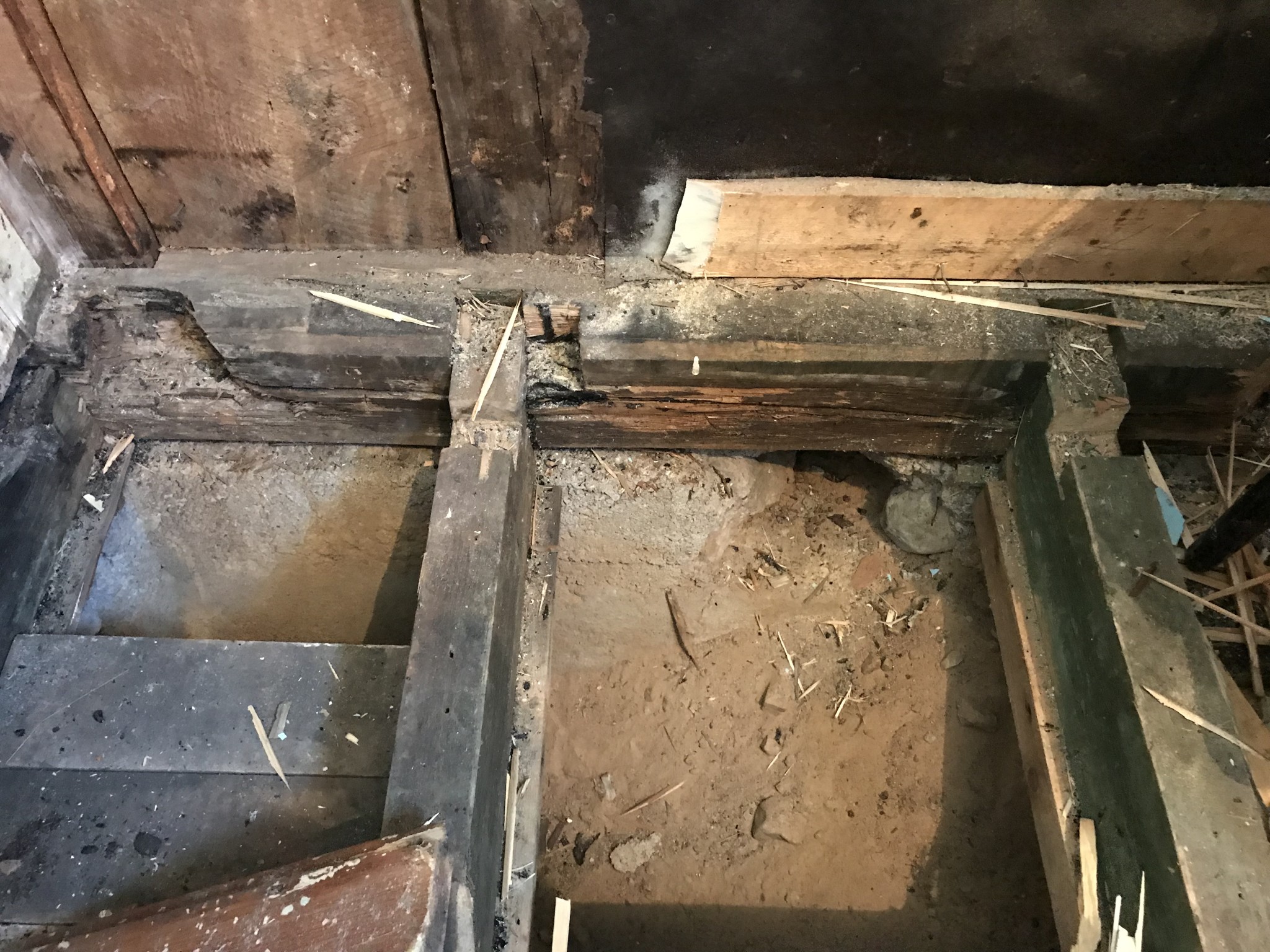
Found a couple of pictures on the computer from last week before it was cleaned... These are the beams the wall rests on: image 1. In image 2, you can see there's some moisture, though it's worse on the other beam.
I haven't found the source of the moisture but suspect it's poorly insulated against the foundation wall, as I only see a small piece of tar paper it rests on. The base bottom's tongue and groove and the joists are dry and in good condition. Will switch to base bottom boards and new joists at 300 centers after replacing the beams. There was a water leak there about 5 years ago. Hence the renovation.
(The beams/joists are treated with something green)
Thanks for the responses.
I haven't found the source of the moisture but suspect it's poorly insulated against the foundation wall, as I only see a small piece of tar paper it rests on. The base bottom's tongue and groove and the joists are dry and in good condition. Will switch to base bottom boards and new joists at 300 centers after replacing the beams. There was a water leak there about 5 years ago. Hence the renovation.
(The beams/joists are treated with something green)
Thanks for the responses.



One option is to buy glulam beams with the dimension 140x180. They are equivalent to 170x180 with regular construction timber of better quality.
I'll take a closer look at that! I really appreciate all the answers and thoughts, as this is my first project. I was originally just going to replace the inner floor to start with...
Does anyone have any idea what might cause moisture in the beams?
It's dry all around on both the blind floor and the studs, as well as the tongue-and-groove wall that was there before. I haven't seen any indication of mold on the bottom either...
It currently sits on a foundation wall, but I've shoveled sand very close to the foundation due to a sewer line replacement in connection with this. Could it be that it has traveled via that? Or could one suspect poor insulation against the foundation wall? I don't see any moisture on the wall except "behind the sand."
This was originally an entrance to a kitchen from the outside with wood paneling all around, converted to a bathroom and extra insulated and plastered facade sometime in the 60s.
Does anyone have any idea what might cause moisture in the beams?
It's dry all around on both the blind floor and the studs, as well as the tongue-and-groove wall that was there before. I haven't seen any indication of mold on the bottom either...
It currently sits on a foundation wall, but I've shoveled sand very close to the foundation due to a sewer line replacement in connection with this. Could it be that it has traveled via that? Or could one suspect poor insulation against the foundation wall? I don't see any moisture on the wall except "behind the sand."
This was originally an entrance to a kitchen from the outside with wood paneling all around, converted to a bathroom and extra insulated and plastered facade sometime in the 60s.
If you want more opinions on what may have caused the moisture, some form of drawing is needed, preferably a section. Most moisture damage is caused by moisture coming from within, but that can hardly be the case in a summer cottage?
I will gladly return with a drawing; the room has been unused for a long time, so moisture from inside is completely ruled out.J justusandersson said:
A change does not solve any moisture problems.



Unfortunately, no drawing has been made for the house, but I have tried to sketch a drawing from what I have seen on site.:J justusandersson said:

Rendered houses (plaster on a timber frame) used to have a coated asphalt felt (type underlay felt) between the plaster+mortar and the wood surface. If it's missing, there is a constant addition of moisture. The foundation also looks a bit questionable. I suspect that demolition is the best option.
I missed writing that, but it's very likely there, I just haven't exposed the wall to confirm. It's only on the short sides that it's damp. Where should I turn to get someone with knowledge to come and check it out?J justusandersson said:Reveterade hus (plaster on a wooden frame) used to have a coated asphalt felt (like underlay felt) between the plaster+rendering and the wooden surface. If it's missing, there is a constant accumulation of moisture. The foundation also looks a bit questionable. I suspect demolition is the best option.
Click here to reply