Living in a house built around 1850. In the TV room, there are beams running across the room. In the cold attic above, there's a log measuring 20x20 cm along the room (drawn in green). The beams are bolted into the log as a kind of replacement for a load-bearing wall. The log has the exterior wall as a support on one end and a load-bearing wall on the other. Approximately 4.7 m span.
The cold attic above is now to be converted into a bedroom, and the log is so high that it causes problems with the floor height on the upper floor. Note that the log is not glulam but a roughly hewn tree type.
Spontaneously, it seems like an HEA100 is stronger than a 20x20 cm log?
You can determine this (usually feels safer ) by looking at the cross-sectional constants of the different beams (moment of inertia, section modulus). The elasticity modulus of the materials also matters for deflection; in that case, it's the product E*I that can be compared.
I would guess that a log could be considered as wooden piles, i.e., as C30. But it was probably even better in the past.
So the beams in the image are then supposed to be attached upwards to the steel beam?
Hanging the suspended ceiling we see in something is one thing. If you then load everything with an upper floor as well, I doubt it will work.............I find it hard to believe that you can avoid normal floor thickness then.
It is currently used for storage without any problems. Sure, you might feel it sway a bit if you jump, but it's not that bad. I think it will get even better when joists, noggins, and chipboard flooring are added.
It is used today for storage without any problems. Sure, you might feel it sway a bit if you jump, but not so bad.
I think it will get even a little better when additional joists, noggings, and floor chipboard are added.
Doesn't it require a building permit to convert an attic into living space? Then construction calculations are needed, which of course must meet standard requirements.
That you feel it's okay today is not a guarantee that it will hold over time - or when a new owner moves in and wants to use the space a little differently.
It probably takes at least HEA 140 to reach a comparable level with today's stock. If the floor load is then increased, additional stiffness is required. I would probably consider a different principle solution.
I am very grateful for all the input!
It is not an urgent project, so I have time to think.
One option I've considered is having more steel beams. Either a total of 2 or preferably 3.
Vertical level? I meant replacing the current log with a beam and then adding 2 more beams parallel and evenly distributed. This way, the unsupported distance for the joists in the ceiling of the lower floor would be halved.
Or is it completely wrong to count on some form of load-bearing capacity from the joists?
Placing the beam under the rafters was out of the question for me. The ceiling height could have accommodated it, but I think it would have ruined the entire old feeling of the room.
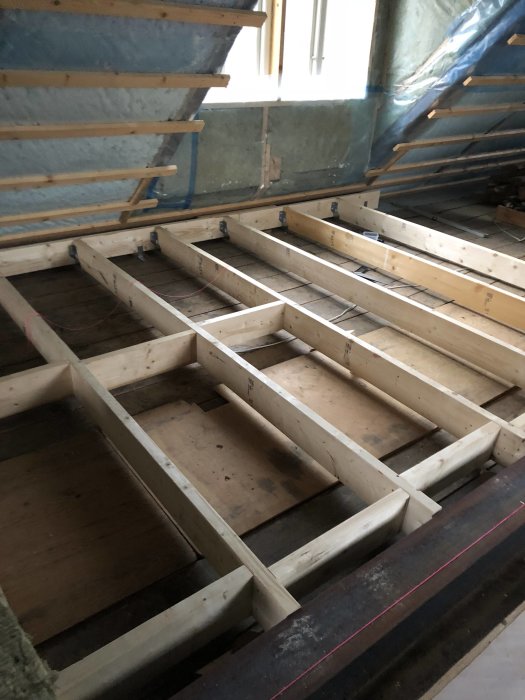
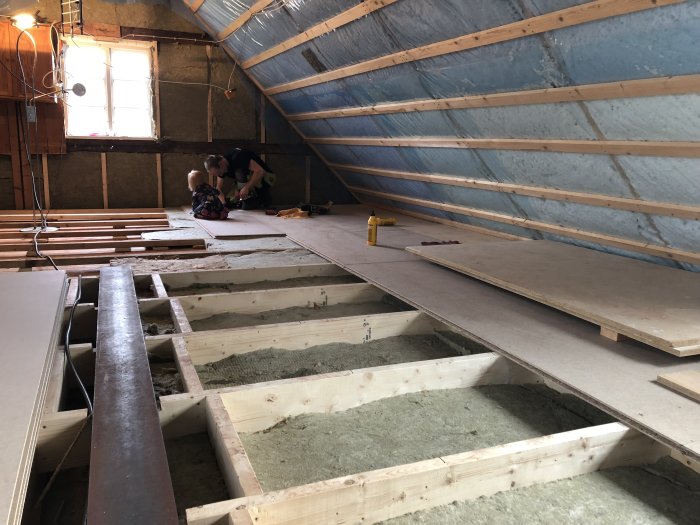
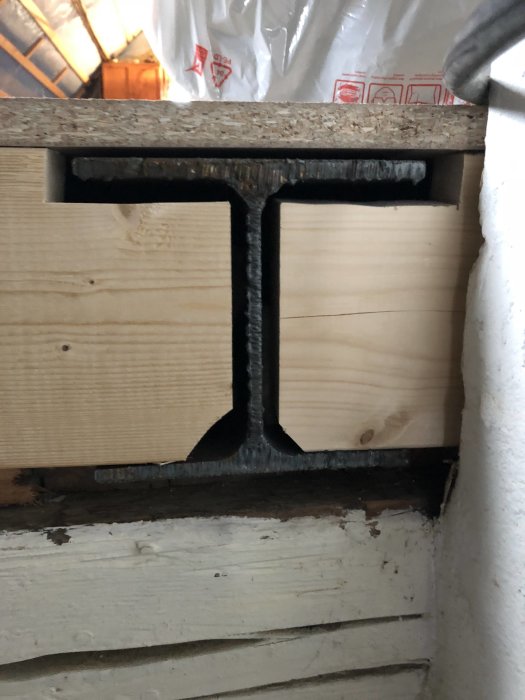
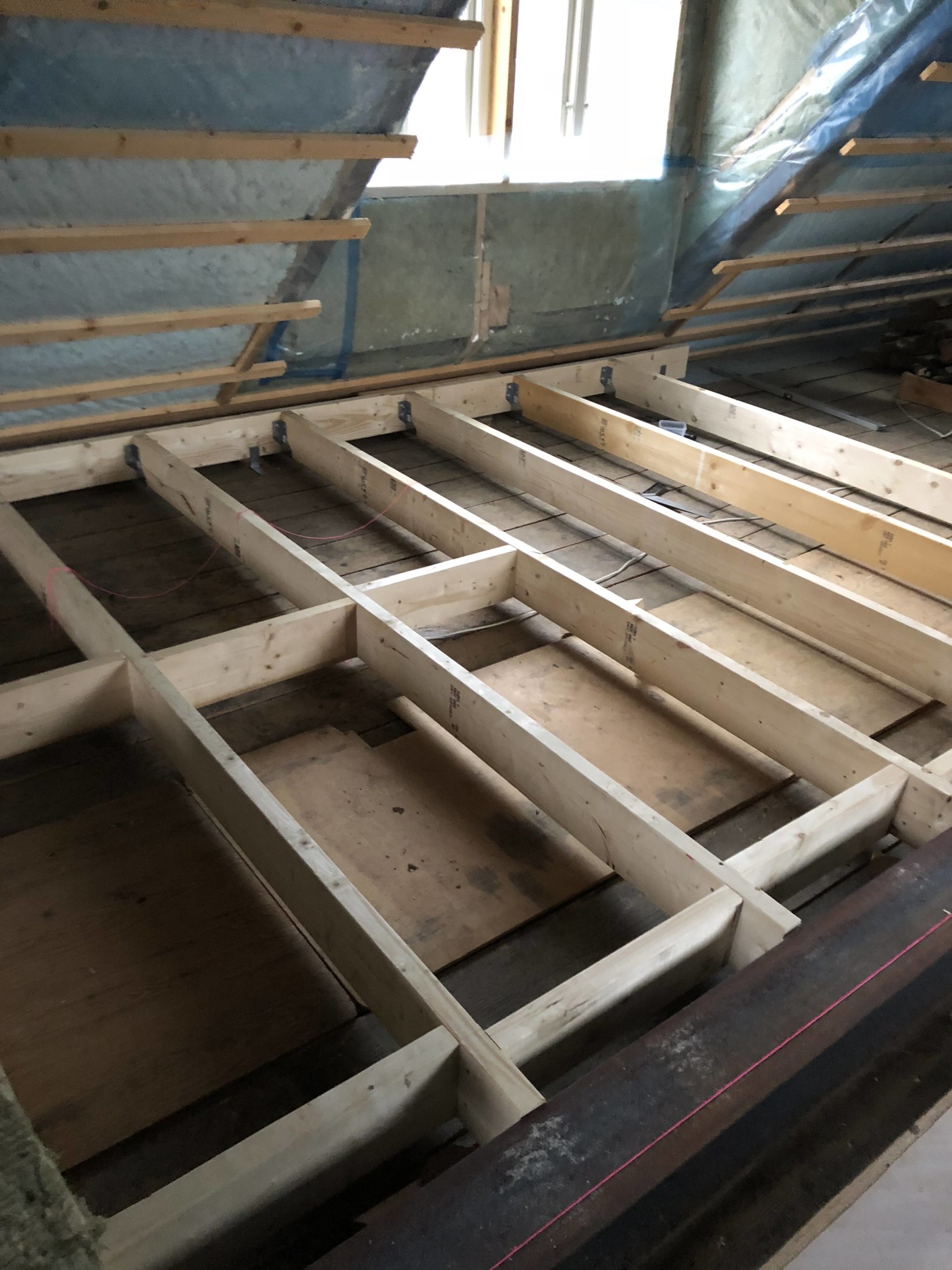
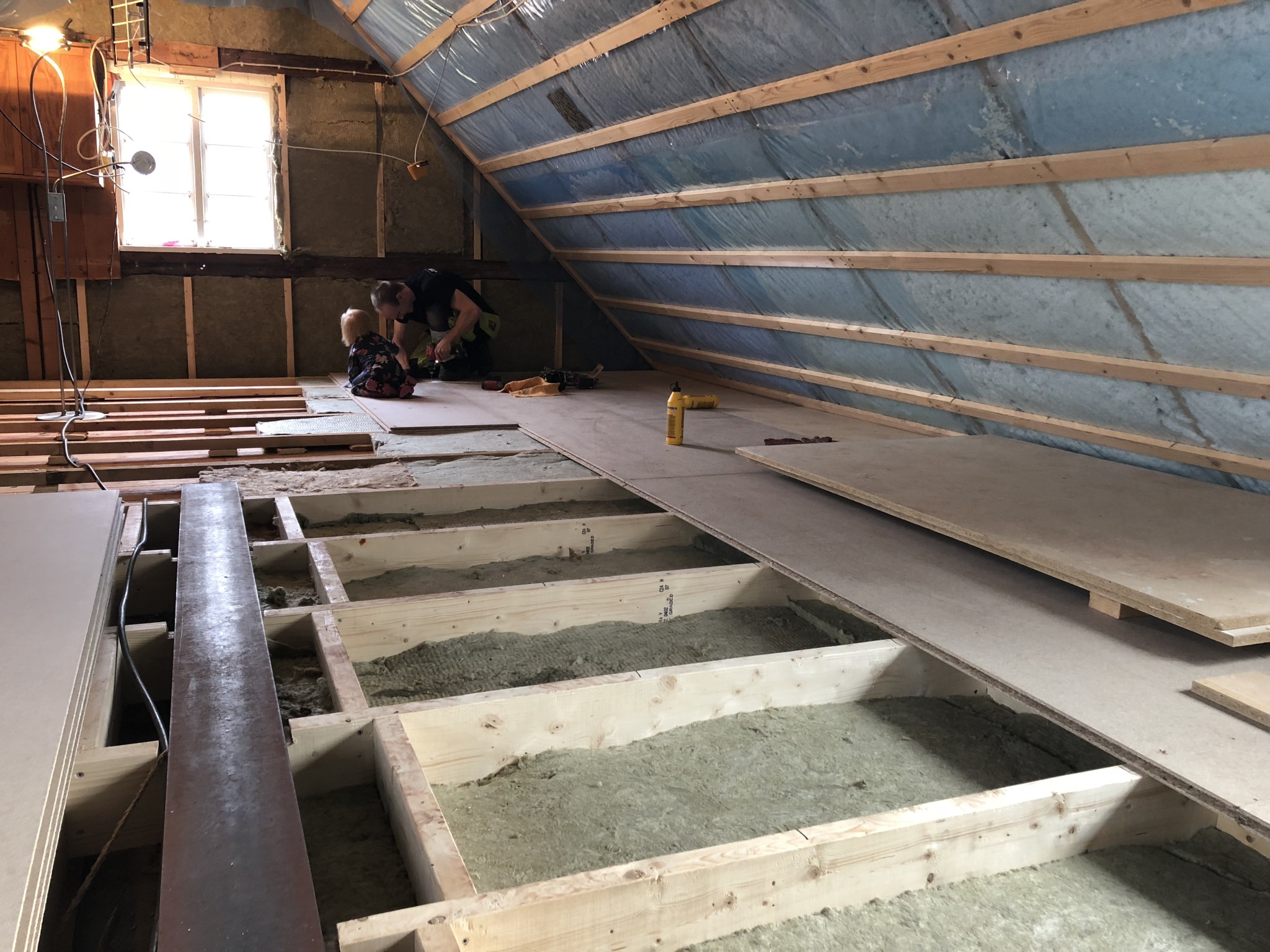
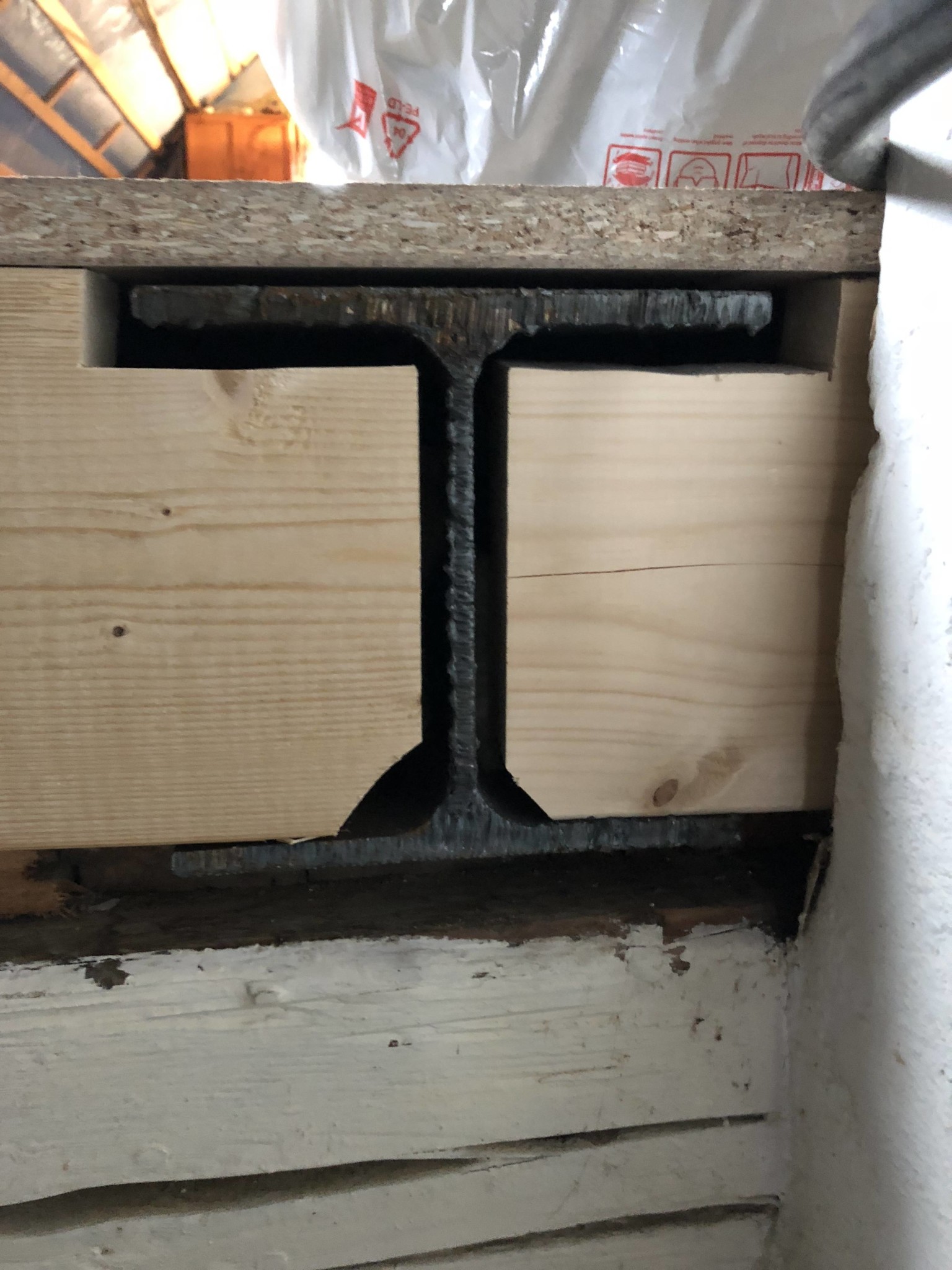
I used 45x170 as new joists on the upper floor and recessed them into the steel beam. Then I glued and screwed floor chipboard onto it.
I feel that it is very good and stable. If three people jump at the same time, you can feel that it is not rigid, but it doesn't sway.
Attached are some pictures that I think give a good view of the whole.


 ) by looking at the cross-sectional constants of the different beams (moment of inertia, section modulus). The elasticity modulus of the materials also matters for deflection; in that case, it's the product E*I that can be compared.