
1,580 views ·
7 replies
2k views
7 replies
Replace nuts exposed to galvanic corrosion
Hello!
I've noticed significant rust on the washers and nuts of an awning. They've only been in place for a couple of years.
When I look at the nuts, I get the impression that they are hot-dip galvanized (see pictures).
Yet they've rusted. It's a bit harder to see what material the bolt they are attached to is made of. It doesn't seem to have rusted to a large extent.
I considered replacing them with stainless steel nuts and washers, but then the bolt might start to rust instead, which would be worse since it's harder to replace.
What do you think this material is? Suggestions for action?
I've noticed significant rust on the washers and nuts of an awning. They've only been in place for a couple of years.
When I look at the nuts, I get the impression that they are hot-dip galvanized (see pictures).
Yet they've rusted. It's a bit harder to see what material the bolt they are attached to is made of. It doesn't seem to have rusted to a large extent.
I considered replacing them with stainless steel nuts and washers, but then the bolt might start to rust instead, which would be worse since it's harder to replace.
What do you think this material is? Suggestions for action?
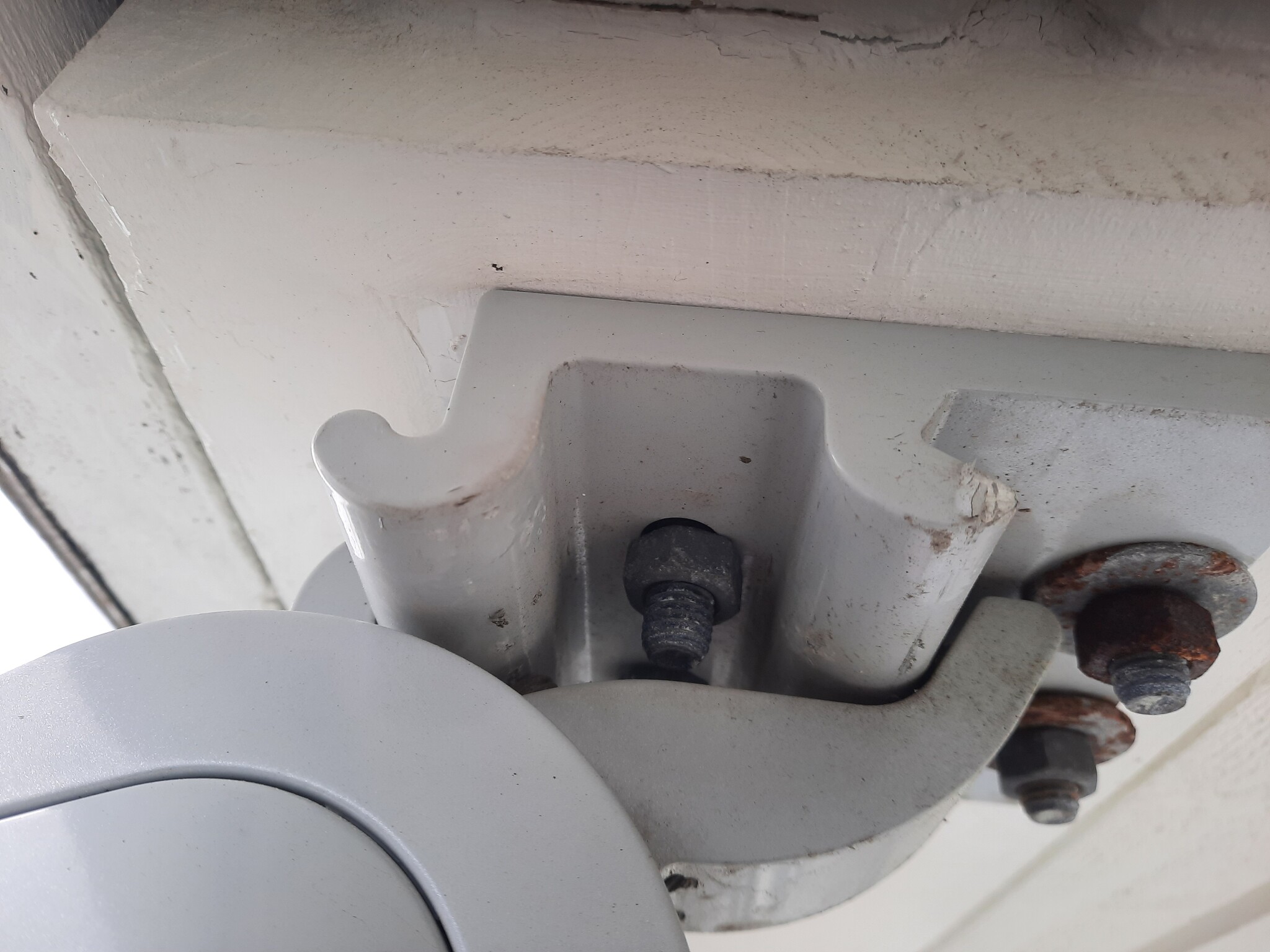


Is the house located near the sea?M Magnus21 said:Hi!
I have noticed significant rust on the washers and nuts of an awning. They've only been there for a couple of years.
When I look at the nuts, I get the impression that they are hot-dip galvanized (see pictures).
Yet, they have rusted. It's a bit harder to see what material the bolts they are attached to are made of. They don't seem to have rusted to any significant extent.
I considered switching to stainless steel nuts and washers, but then maybe the bolt will start to rust instead, which is basically worse because it's harder to replace.
What do you think this material is? Suggestions for solutions?
Like 5km on the West Coast, or half that on the East Coast?
Then you should probably have Stainless or Acid-resistant.
Aluminum, which the bracket appears to be made of, is nobler than the zinc coating on the nuts, washers, and bolts, exposing the steel over time.
They won't rust away, but the aesthetics are important.
You could brush with a steel brush and spray cold galvanization over the nuts, available at Biltema and other mechanic companies.
Thank you for the response!
Yes, it's 5 km from the West Coast.
The question I'm also pondering is whether the bolt will instead rust away if I replace the nut and washer with stainless steel. It would indeed be more troublesome with a rusted-through bolt.
Yes, it's 5 km from the West Coast.
The question I'm also pondering is whether the bolt will instead rust away if I replace the nut and washer with stainless steel. It would indeed be more troublesome with a rusted-through bolt.
Best answer
For rust to occur, oxygen and some moisture that metal ions can react in are required, which takes a very long time inside the nut and inside the wall. If you can reach to replace the screws/bolts as well, do it; it’s not a big expense. Or spray cold galvanize and paint over.M Magnus21 said:

Lock nuts are never wrong as an awning can sway a little and over time cause a nut to start coming loose. Additionally, the plastic ring that locks seals the threads from moisture.M Magnus21 said:

When mixing metals that are far apart in the galvanic series, a more noble metal should be used for fastenings and fittings. Otherwise, these act as a sacrificial anode, leading to galvanic corrosion/rust. Ideally, the same material should be used in the screw as in what is fastened, but aluminum screws have poor strength, so it is a better compromise to use stainless steel over hot-dip galvanized screws when fastening aluminum.
Click here to reply