
2,195 views ·
3 replies
2k views
3 replies
Repairing of lime plaster(?) on an old wall
Hi,
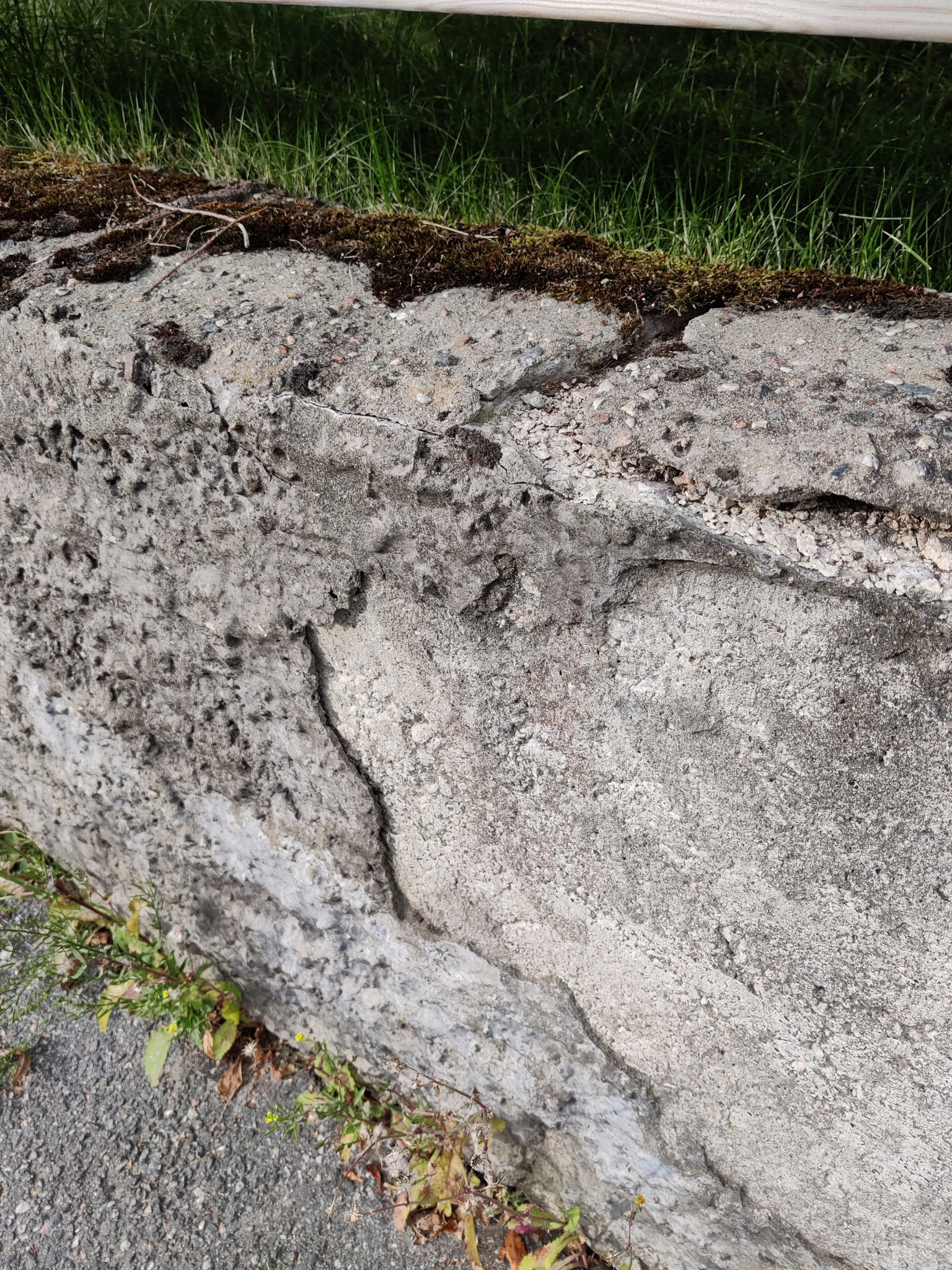
I have a house from '67 with a retaining wall probably from the same period. The wall is cast in concrete and covered with something coarse that resembles roughcast or plaster mixed with gravel. Picture attached.
The plaster has come off in several places. How do I fix this? Does anyone know how it was done in the past?
Thanks in advance.
/Tom
I have a house from '67 with a retaining wall probably from the same period. The wall is cast in concrete and covered with something coarse that resembles roughcast or plaster mixed with gravel. Picture attached.
The plaster has come off in several places. How do I fix this? Does anyone know how it was done in the past?
Thanks in advance.
/Tom
I'm absolutely no expert, so take what I write with a pinch of salt. I would have knocked off all the loose parts, and then tackled the remaining parts with an angle grinder with a steel brush head, for a good foundation. Then applied a type of base mortar, like red base, loose like porridge, in a thin layer. After that, fix a plaster mesh (galvanized). Then 2 layers of render b.
You can check, for instance, Finja or Weber, and see what products they recommend for the base. A wall is more exposed than a base, so it needs at least as good of a build-up as a foundation.
You could probably use fiber-reinforced mortar as well, but it's quite expensive, so I would gamble on cheaper products and accept a slightly shorter lifespan for the job. If it’s a larger job or if you really want it to last at least 15 years, I would probably contact, for instance, the support at Combimix and ask which products they recommend.
Long ago, lime mortar was the norm, but it's clear this is a concrete wall, so I would probably stick with cement-based mortars (with some lime content) and not use pure lime products.
You can check, for instance, Finja or Weber, and see what products they recommend for the base. A wall is more exposed than a base, so it needs at least as good of a build-up as a foundation.
You could probably use fiber-reinforced mortar as well, but it's quite expensive, so I would gamble on cheaper products and accept a slightly shorter lifespan for the job. If it’s a larger job or if you really want it to last at least 15 years, I would probably contact, for instance, the support at Combimix and ask which products they recommend.
Long ago, lime mortar was the norm, but it's clear this is a concrete wall, so I would probably stick with cement-based mortars (with some lime content) and not use pure lime products.
Thank you very much!B BSOD said:I'm absolutely not an expert, so you should take what I'm writing with a grain of salt. I would have chipped away everything loose, and then gone over the remaining parts with an angle grinder with a steel brush head, so the base is good. Then applied a primer mortar a, like rödgrund a, thinly like porridge. After that, attach a rendering mesh (galvanized). Then 2 layers of plaster b.
You could check with, for example, finja or weber, and see which products they suggest for the plinth. A wall is more exposed than a plinth, so it requires at least as good a build-up as for a plinth.
You could probably also use fiber-reinforced mortar, but it is quite expensive, so I would take a chance on cheaper products and accept a slightly shorter lifespan for the job. If it's a bigger job or if you really want it to last at least 15 years, I would probably contact, for example, support at combimix and ask which products they recommend.
Long ago, it was lime mortar that was used, but it's obvious that this is a concrete wall, so I would probably continue with cement-based mortars (with some lime inclusion), and not use pure lime products.
Click here to reply