
13,959 views ·
18 replies
14k views
18 replies
Repair settlement cracks in brick house
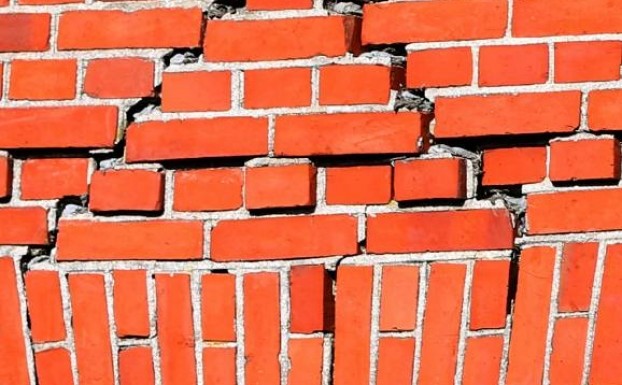
Hello, as we have just purchased a brick house from -72, there are some "settlement cracks" in the facade. I'm wondering how to repair these and seal the cracks in the easiest way.
There are no major cracks. Attaching a picture that Anticimex took during the inspection. They also said there is no underlying problem because of these cracks, but they should be addressed.
There are no major cracks. Attaching a picture that Anticimex took during the inspection. They also said there is no underlying problem because of these cracks, but they should be addressed.

The only reason to repair the cracks is to keep the wall sealed and avoid frost damage.
You can scrape away enough of the mortar so that it can be re-pointed. Cracked stones can be removed completely and replaced with new stones.
But since it concerns the appearance of the house, I wouldn't do it myself but hire a professional mason.
It should be a small job.
You can scrape away enough of the mortar so that it can be re-pointed. Cracked stones can be removed completely and replaced with new stones.
But since it concerns the appearance of the house, I wouldn't do it myself but hire a professional mason.
It should be a small job.

When it cracks in that way, it is due to some form of settling. Whether it only affects the facade stone or possibly the entire wall cannot be determined with this information. I think you should thoroughly examine this. It could be an indication of a larger problem.
That it is a settlement crack is probably beyond doubt. However, the underlying shear stress is likely quite weak. But house facades should not have settlements at all.
Knowledge and techniques on how to avoid settlement damage have likely advanced today. I'm quite convinced that a majority of houses from the '50s to '80s have this issue when slab-on-grade construction became more common, and there was a construction boom with many houses built quickly.J justusandersson said:
These are absolutely not large cracks, and the rest of the house is in very good condition both outside and inside, despite few things being done to it over the years. So this is more about aesthetics and preventing water from entering and causing more damage when it freezes.
As mentioned, it is quite common to have cracks in older house facades. We have two in ours that resemble yours. As long as they don't worsen, there is absolutely no danger.
Scraping out the joints and replacing with new mortar is not difficult, nor is replacing the damaged stone provided you have a spare stone lying around. The tricky part is color matching the new joint with the old one, that's the only reason I'm considering outsourcing our job - but you have to find a mason with an aesthetic sense, not everyone has that, unfortunately.
Scraping out the joints and replacing with new mortar is not difficult, nor is replacing the damaged stone provided you have a spare stone lying around. The tricky part is color matching the new joint with the old one, that's the only reason I'm considering outsourcing our job - but you have to find a mason with an aesthetic sense, not everyone has that, unfortunately.
No, that's exactly how it is.mexitegel said:
As mentioned, it's quite common to have cracks in older house facades. We have two in ours that resemble yours. As long as they don't worsen, there's absolutely no danger.
Scraping out the joints and replacing them with new mortar isn't difficult, nor is replacing the broken stone provided you have a spare stone lying around. The tricky part is color-matching the new mortar with the old, that's the only reason I'm considering outsourcing our job - but you need to find a mason with an aesthetic sense, which unfortunately not all have.
I think one should be meticulous when writing about cracks. Cracks occur in all buildings due to movements in the different materials. They can be caused by seasonal changes, ongoing drying, or sensitive material combinations. This is completely natural. However, when cracks have the diagonal shape like on TS's facade, it is not a natural occurrence, but a sign that parts of the foundation are moving differently in vertical direction. This should be monitored. It can begin to appear after many years. Houses from the 70s with uninsulated slabs on the ground have many problems, but technically, they are usually good. Strong edge beams ensure that the slab as a whole stays intact. I write this also with other readers than TS in mind.
OK, let's think a little more about the crack...J justusandersson said:
The crack goes from a corner in a window opening diagonally down towards the foundation. One hypothesis might be that one side of the foundation settled somewhat. The tensile stress in the facade then becomes too great and you get a crack in the weakest part of the facade, which is through the mortar against a window opening. Especially in the corner of the opening, you get a high stress concentration, and that's why the crack starts right there.
If that's correct, the crack should continue above the window, and there the crack should be wider (the risk is there anyway).
Is the crack dangerous? It is certainly possible that there is a crack in the slab that could create problems with moisture migration or damage to embedded conduits. It could also affect the radon levels in the house since ground radon can more easily enter the house. Is it a big risk? Probably not.
Are there other risks? Theoretically, large deformations in the house's framework could cause it to lose load-bearing capacity. For example, when two walls move away from each other so that the floor slab no longer remains. Overall, a wooden frame has more flexibility than stone material. Movements are so small that it will not lead to problems in the load-bearing structure.
Is there then a problem for the gable? No, not really. Gravity is very important for a brick facade. Stone bridges were once built entirely without mortar, only with the help of gravity. And in this case, gravity helps to hold the crack together. So the only thing you need to do is seal it, so moisture doesn't penetrate and even that is not very serious.
Re-mortar the crack and replace the damaged stone, then the facade is whole again. If the crack returns, you know that the wall is still moving, and then you can think a little deeper about the cause.
Is it never a problem with cracks? Yes, it can be. I'm attaching a picture of a crack that is located above a window. Here you can see that the cracked facade part hangs on the window frame (the crack is also wider). So here a slightly larger repair is needed.
You are absolutely right. If I recall correctly from the inspection, there was a small crack formation even above the window diagonally from this crack. If it were the foundation that gave way due to settling, these cracks would probably have been larger, I feel.harry73 said:
OK, let's think a little more about the crack...
The crack goes from a corner in a window opening diagonally down towards the foundation. A hypothesis could be that one side of the foundation settled somewhat. The tensile stress in the facade then becomes too great, and a crack forms in the weakest part of the facade, which is through the mortar against a window opening. Especially in the corner of the opening, you get a high stress concentration, which is why the crack starts just there.
If that's true, the crack should continue above the window, and there the crack should be wider (there's always that risk).
Is the crack dangerous? It's certainly possible that there is a crack in the slab that could cause issues with moisture migration or damage to embedded conduits. It might also affect the radon levels in the house, as ground radon can more easily enter the house. Is it a big risk? Probably not.
Are there other risks? Theoretically, large deformations in the house structure could cause it to lose load-bearing capacity. For example, if two walls move away from each other, the floor slab might not remain in place. Overall, a wood structure has greater flexibility than a stone material. The movements are small enough that they won't lead to problems in the load-bearing structure.
Is there then a problem for the gable? No, not really. Gravity is very important for a brick facade. Stone bridges were once built entirely without mortar, relying solely on gravity. And in this case, gravity helps hold the crack together. So all you need to do is seal it, so moisture doesn't get in, and even that isn't extremely serious.
Re-seal the crack and replace the damaged brick, then the facade is whole again. If the crack returns, you know the path is still moving, and then you can think a little deeper about the cause.
Is it never a problem with cracks? Yes, it can be. I'm attaching a picture of a crack located above a window. Here you can see that the cracked part of the facade is hanging on the window frame (the crack is also wider). So in this case, a slightly larger repair is needed.
[image]
Could be an earthquake
http://www.dt.se/allmant/dalarna/jordskalv-skakade-om-dalarna
http://www.dt.se/allmant/dalarna/jordskalv-skakade-om-dalarna
I wouldn't express it that way. It is certainly the foundation that has caused these cracks. However, these are minor settlements that are likely not serious. But all cracks in masonry should be sealed. Yes, earthquakes can cause issues. It might be worthwhile to see if there is a connection in this case.N Nygge72 said: