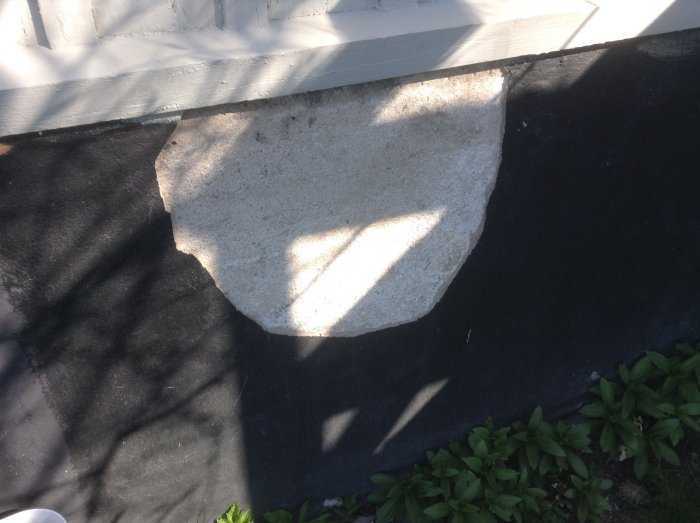
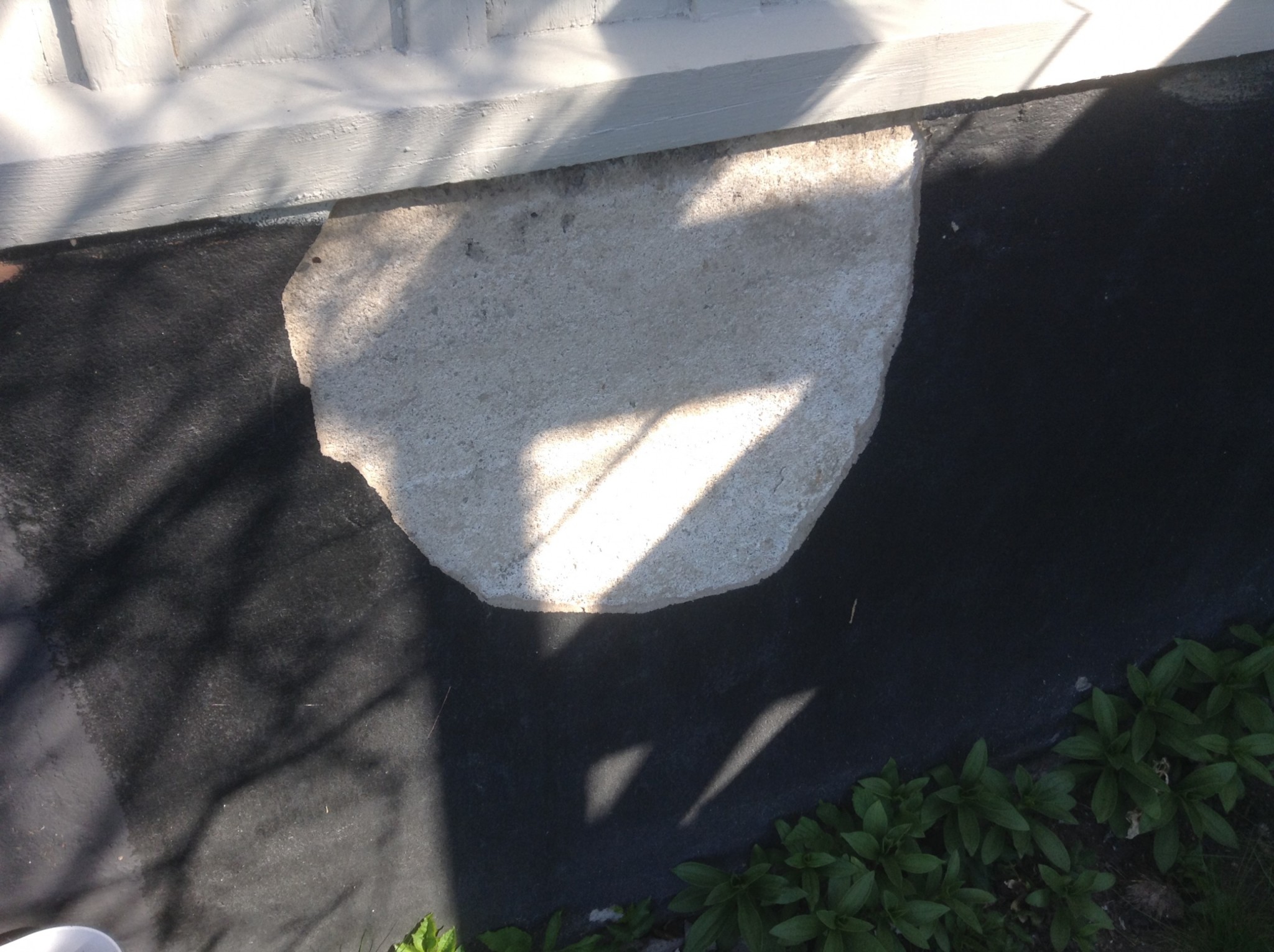
I live in a house from 1909 and parts of the render on the base have come loose and this will now be repaired. The render is between 5 and 10 mm thick. See below:
My plan is to knock off the loose parts and then repair and paint. However, I would appreciate your help with:
Which mortar should I use? Since it's an old house, I've heard that hydraulic lime mortar might be an option. Is this correct?
Any tips on the procedure to make the mortar adhere as best as possible? Should the surface be primed first or should I just "go for it"?
That sounds good, the question is just how it's possible considering the age of the house? What is the disadvantage besides the cost of using lime mortar? The reason I ask is that I have read in several places that you should always have weaker mortar on top of stronger, otherwise it will come loose... don't want to redo the job anytime soon!
I would rather suggest that the original plaster/base wall is lime plaster that has been patched with too hard cement plaster, such as a B-mortar. You can clearly see that the piece that has come off is a much grayer plaster compared to the original inner plaster/base wall.
That is also why the patch has come off in one whole piece. It's difficult to get cement mortar to adhere to a previously built or plastered surface of lime mortar. Try repairing with a pure lime mortar or possibly a C-mortar.
Click here to reply
Vi vill skicka notiser för ämnen du bevakar och händelser som berör dig.