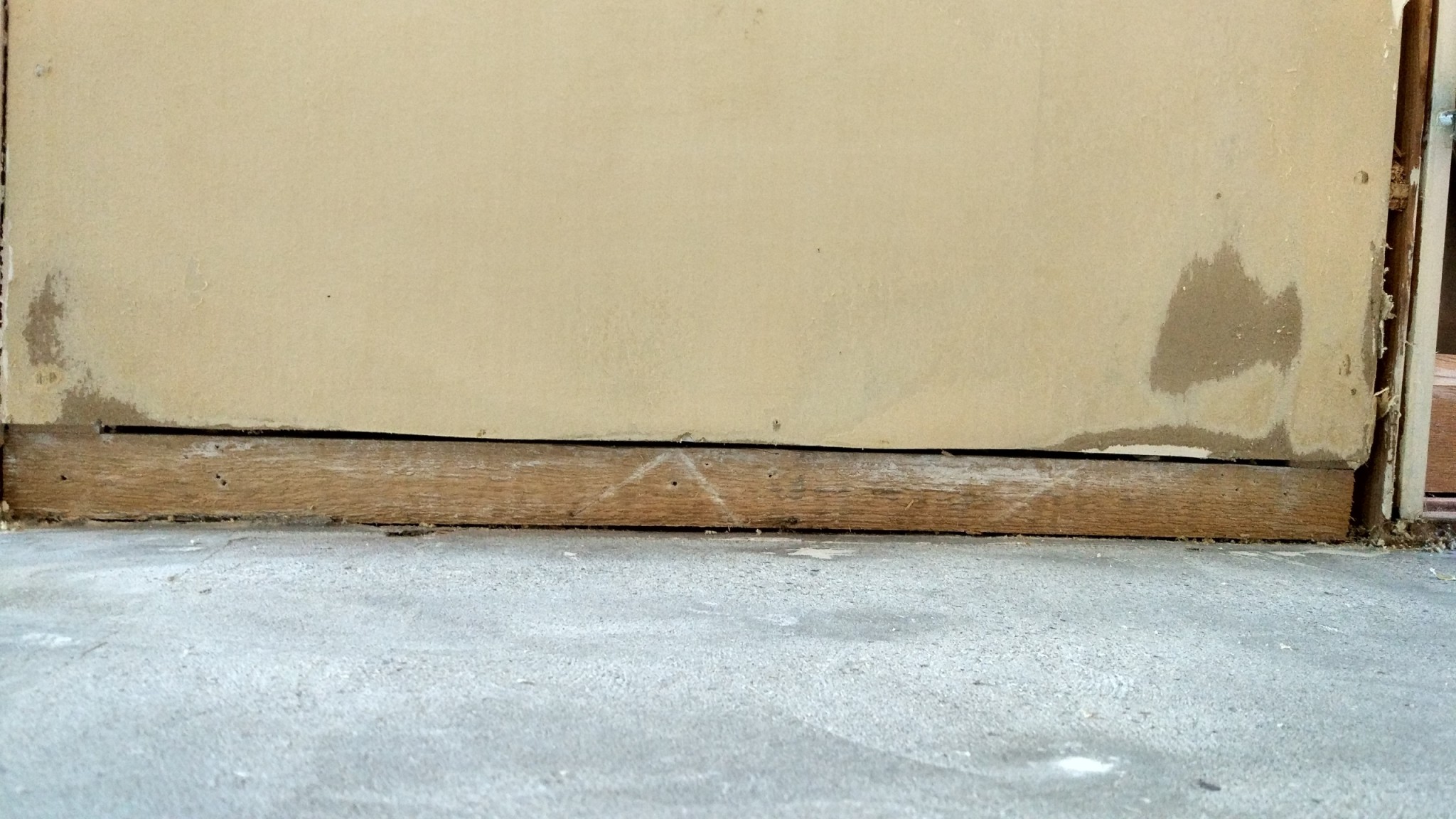
I hope I'm not posting twice. I had a water leak a while ago from wastewater, and the drying personnel installed dryers, removed the floor, and sawed off about 7 cm of drywall at the floor.
Now I'm going to restore this myself (don't ask why).
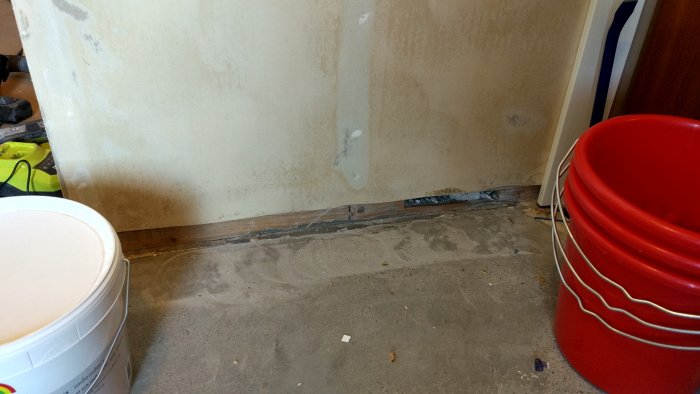
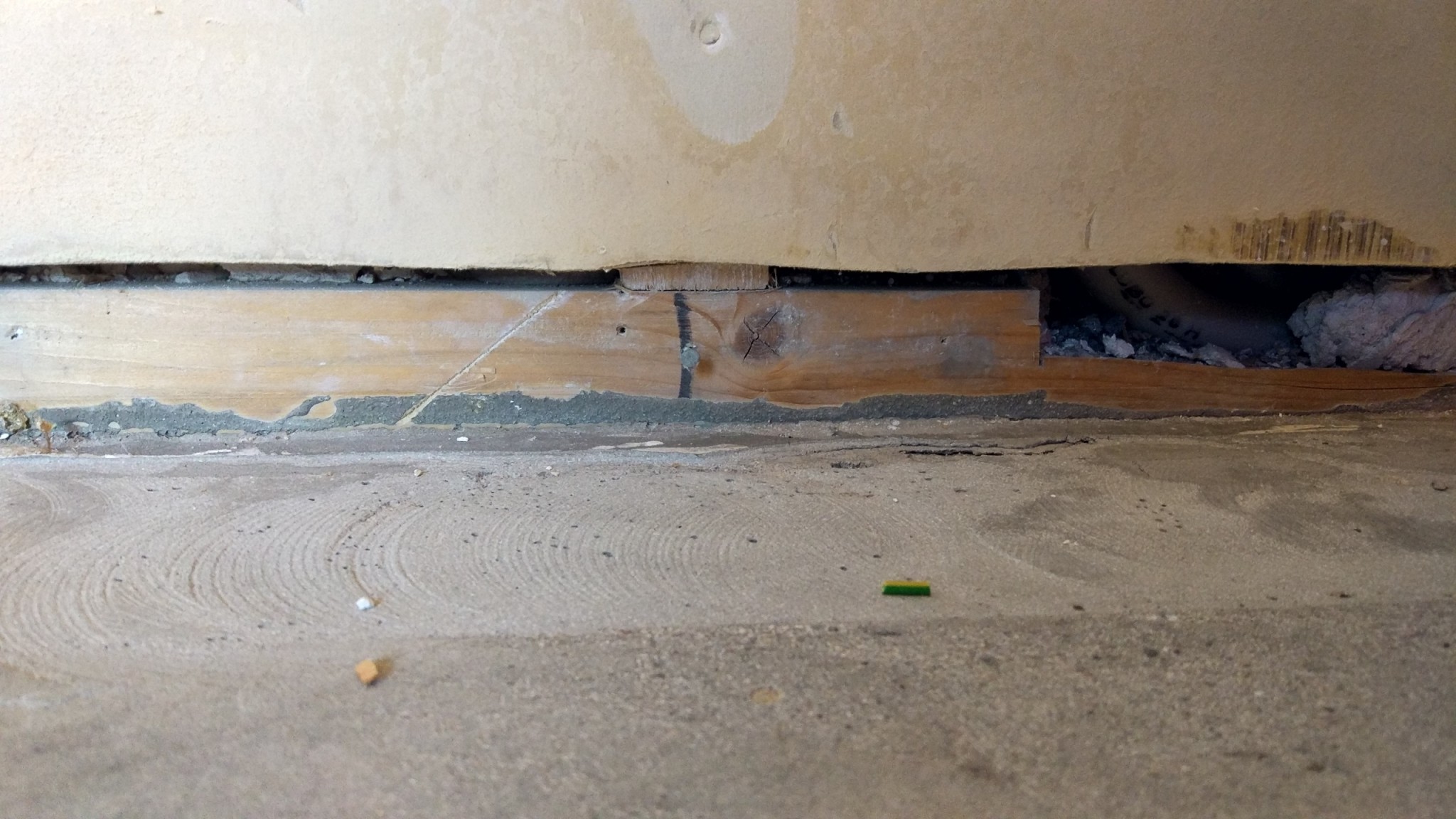
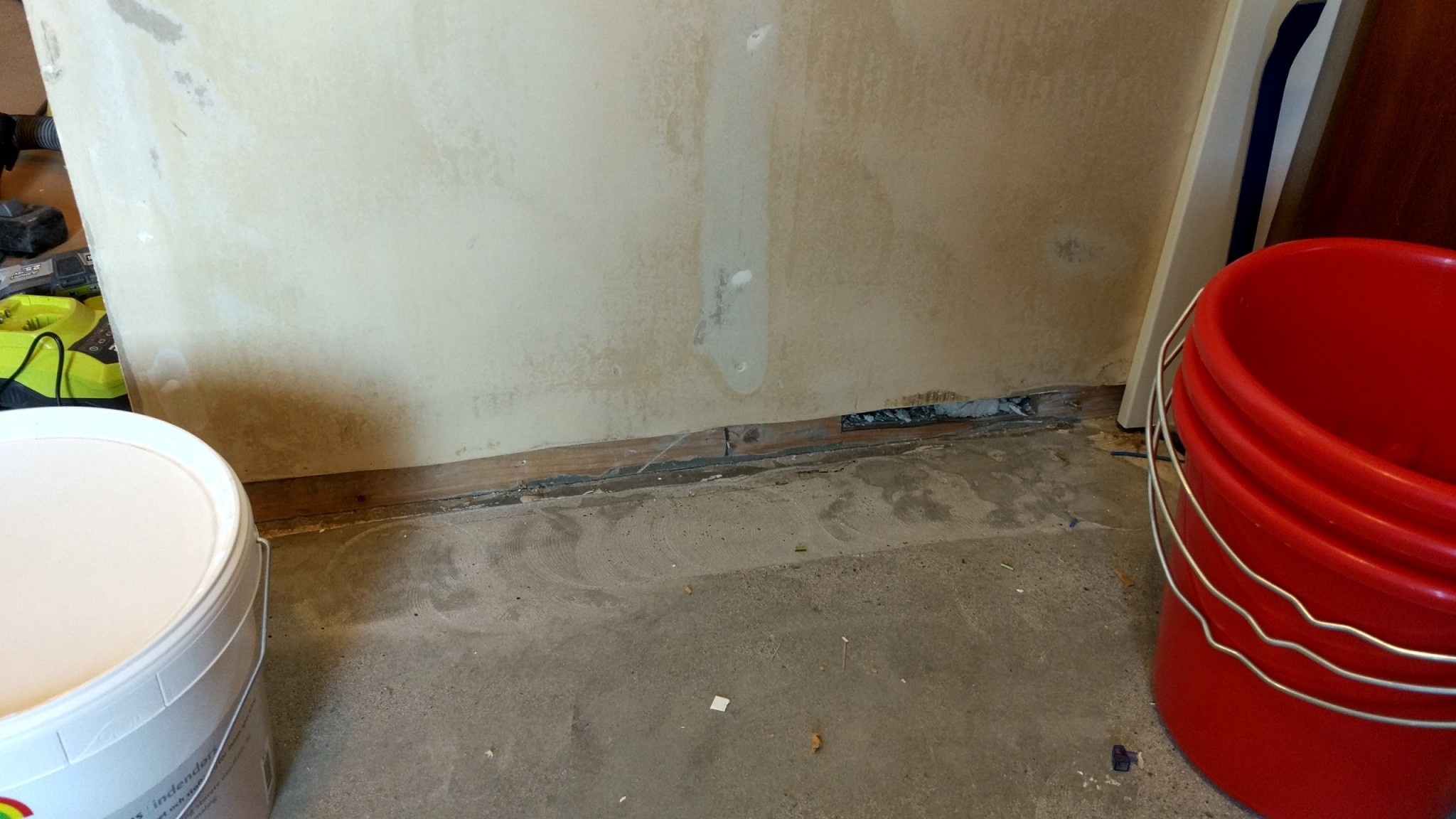
This is how it looks.
And from a distance
My question is: Is it "just" a matter of cutting new pieces of drywall, fitting them in, fastening, patching, wallpapering over, and then adding molding? Or is there something more that's usually done?
I'm worried that the drywall, which was previously attached on all 4 sides, will now be somewhat flimsy at the bottom since it's only attached on 3 sides, as the bottom side has been cut off. I'm afraid cracks will appear between the new 6 cm piece and the old 234 cm piece. Is there a good way to bond these pieces together? Or am I worrying unnecessarily? I won't be replacing the entire board.
Yes exactly, otherwise it will crack at the joint. Plywood or something similar works well too.
Ok.
But it's not everywhere that I can easily add a piece of stud on the inside. Like, for example, here. Does that mean I have to open the drywall to get the stud piece behind it? Is there no way to achieve the same thing "from the outside," so to speak?
I would cut an additional 7cm to begin with, working with strips as thin as 5-7 cm is no fun..
When I've encountered similar situations, I've cut OSB into 10cm strips and screwed them on the inside. 5cm attachment per sheet is usually enough
Hi. Yes, after the floor is built up, there will be a substantial list that covers the gap. Maybe you can double-fasten the list to both pieces and thus join them together?
One option is to insert a metal strip intended for the purpose and screw it in. But you might need to saw off a small piece more, and then you can take the opportunity to ensure the cut is really straight, making it easier to fit it nicely. http://gyproc.se/produkter/tillbehör/tillbehör-till-stålprofiler/pb-plåtband
from the wall's perspective, it doesn't matter that it's not attached at the bottom so just fill it with any piece of wood and get higher baseboards. No point in messing with something that might end up completely behind the baseboard anyway.
One option is to insert a metal strip intended for the purpose and screw it in. But you might need to saw off a little bit more, and then you can make sure the cut is really straight, making it easier to fit it neatly. [link]
Hi. This sounds interesting. Could you countersink one of those from the outside and then fill it over?
One option is to insert a metal strip intended for this purpose and screw it in. But you might need to saw off a little more, and then you can make sure the cut is really straight so that it fits nicely.
[link]
The metal strip is meant for a situation like this, but you have two layers of board.
The idea is that you should accept a general joint because the metal strip stabilizes it.
The easiest way is to do as several of us have suggested; plyfa or osb behind and screw the drywall in place.
Hi. This sounds interesting. Could one recess such a thing from the outside and then putty over it?
No, not if you can't screw from the inside.
I vote for removing a few more centimeters of the drywall, and take the opportunity to make the edge straight, then reinforce the joint with any scrap. If you can keep the joint behind a future trim, that's good, but if you're going to putty and paint the rest of the way anyway, it's quite little extra work.
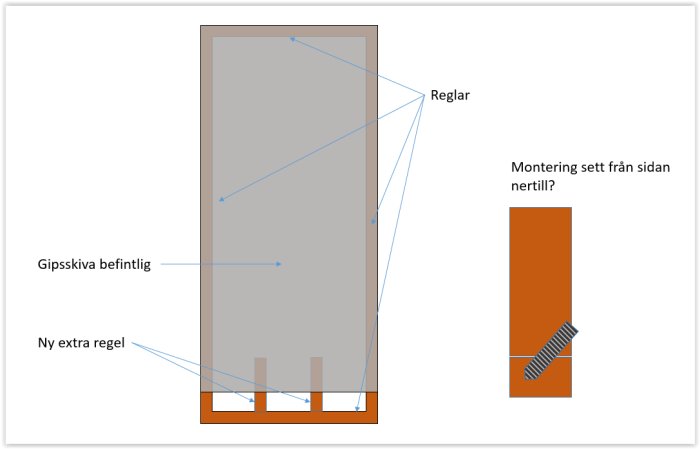
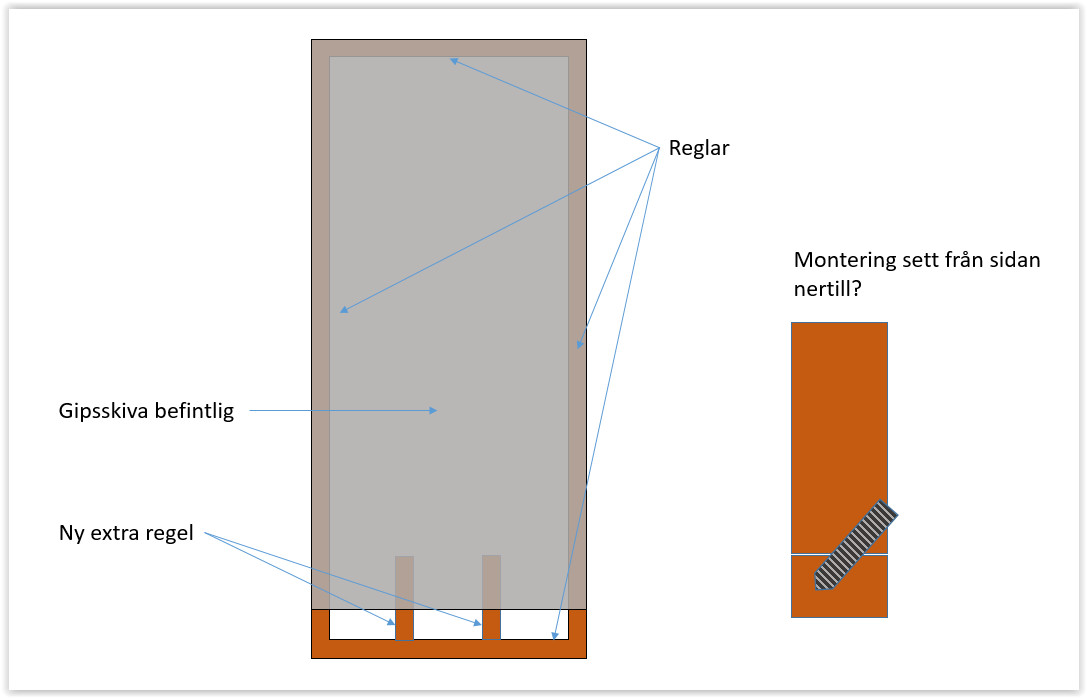
Excuse my drawing but is this how you're thinking?
I.e., cut a little more and then insert e.g., extra studs like this? And attach the extra stud diagonally against the lower existing one and then tidy up and apply an additional drywall panel? Or how do you otherwise attach them?
Apologies in advance for the questions
Vi vill skicka notiser för ämnen du bevakar och händelser som berör dig.

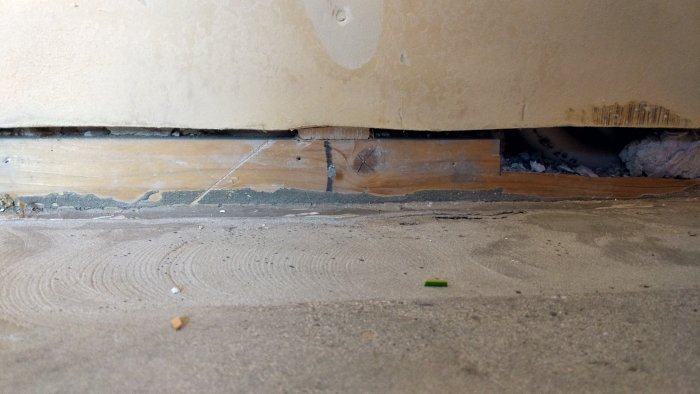


 . I'm not that experienced, although I get better with each renovation.