
10,359 views ·
6 replies
10k views
6 replies
Repair drill holes in vapor barrier exterior wall?
Hi!
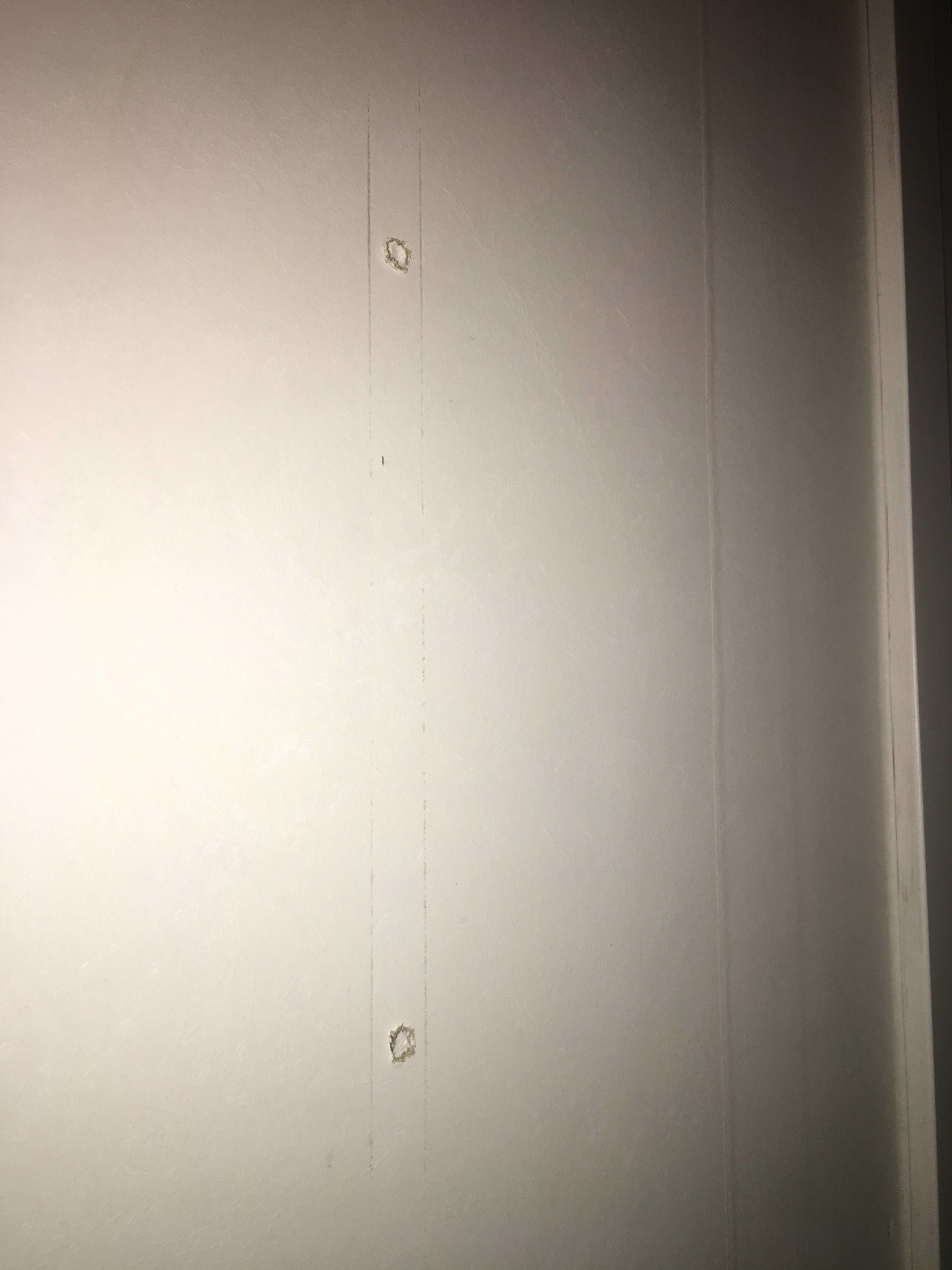
I've been living in a house built in 2000 for half a year now. I'm completely new to house ownership and learning as I go. I've just realized that the vapor barrier in the exterior wall is punctured in several places where there were previously shelves, lamps, and similar items. The holes range from about 2 to 10 mm, and at the larger holes, you can feel a slight draft into the house if you put your hand against it. My question now is, what should I do about this? Try to repair, but how and with what? Grateful for any tips and experiences!
I've been living in a house built in 2000 for half a year now. I'm completely new to house ownership and learning as I go. I've just realized that the vapor barrier in the exterior wall is punctured in several places where there were previously shelves, lamps, and similar items. The holes range from about 2 to 10 mm, and at the larger holes, you can feel a slight draft into the house if you put your hand against it. My question now is, what should I do about this? Try to repair, but how and with what? Grateful for any tips and experiences!

Member
· Västernorrland
· 12 077 posts
if it's drafty, then you probably have bigger problems than the waterproofing being punctured. On that side, there definitely shouldn't be any draft. Then something is very poorly done somewhere.

Exactly, it's negative pressure in the house. Most worried about whether it could eventually cause moisture problems in the long term..useless said:

Moisture problems occur when you have the reverse, i.e., positive pressure inside the dwelling, causing moist air to get into the wall.J Johma said:
Small holes can be repaired with some soft sealant and a dab of paint, larger ones should be caulked.

Seal the holes with filler or latex caulk. It would of course be optimal if you could also seal the plastic sheeting in the wall. But it is not possible to do so with reasonable effort.
Now, it is not certain that the plastic sheeting is located right on the inside of the drywall. In many cases, a 45mm installation layer is used. This means the plastic is 45mm inside the wall, precisely to avoid puncturing it unnecessarily.
Now, it is not certain that the plastic sheeting is located right on the inside of the drywall. In many cases, a 45mm installation layer is used. This means the plastic is 45mm inside the wall, precisely to avoid puncturing it unnecessarily.
@Solvskaftet It seems reasonable that the main problems occur with overpressure! Nice to get confirmation on such a thought 
@hempularen It definitely seems much smarter to build with such an installation layer. Unfortunately, the foil is right behind the drywall for us:/
@hempularen It definitely seems much smarter to build with such an installation layer. Unfortunately, the foil is right behind the drywall for us:/
Click here to reply