
Hello new homeowner, the kitchen is going to be larger so a total of 3 walls need to be removed, one of which will be relocated.
First up is a wardrobe stretch between bedroom 1, bedroom 2 to put up a new wall with wardrobes along the entire wall in bedroom 2.
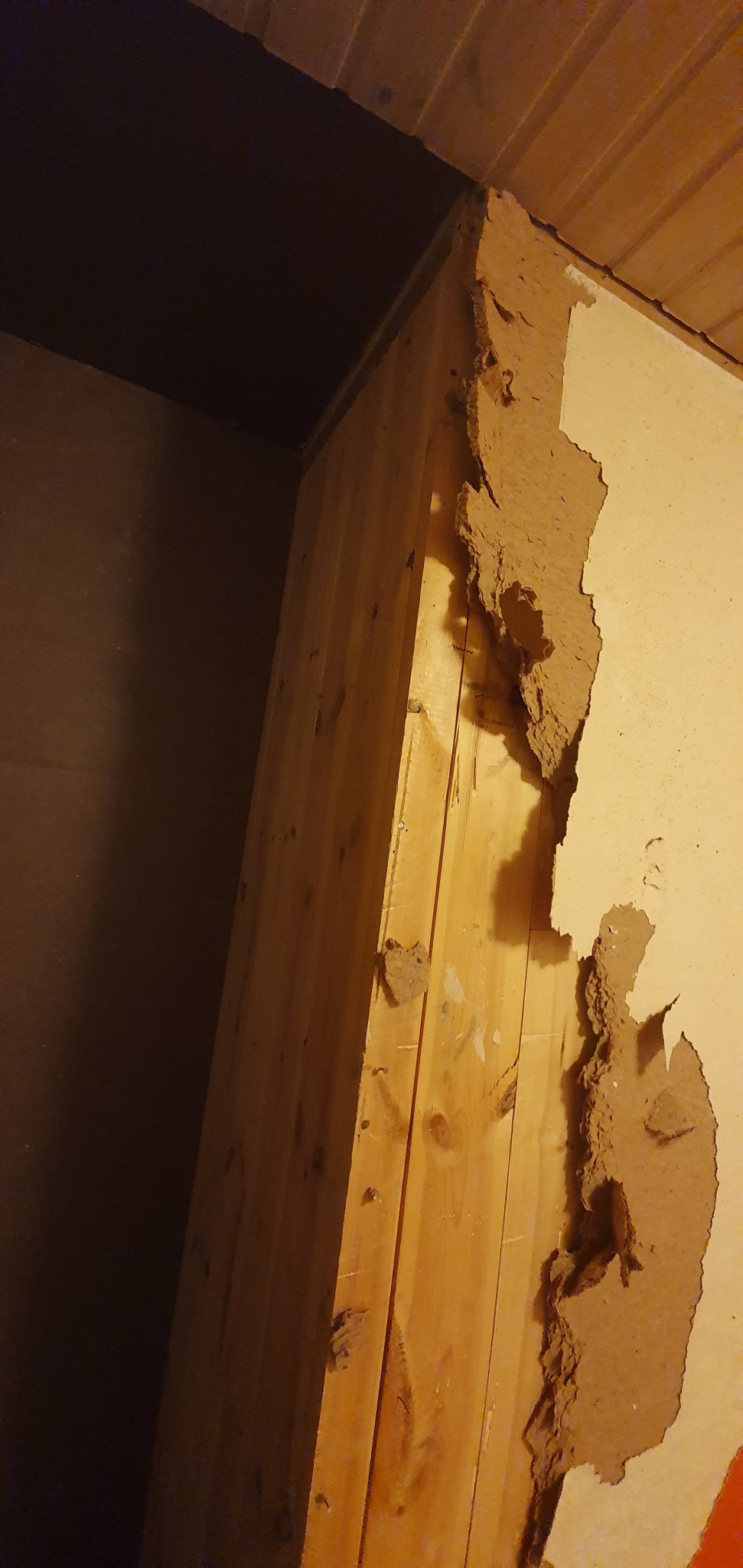
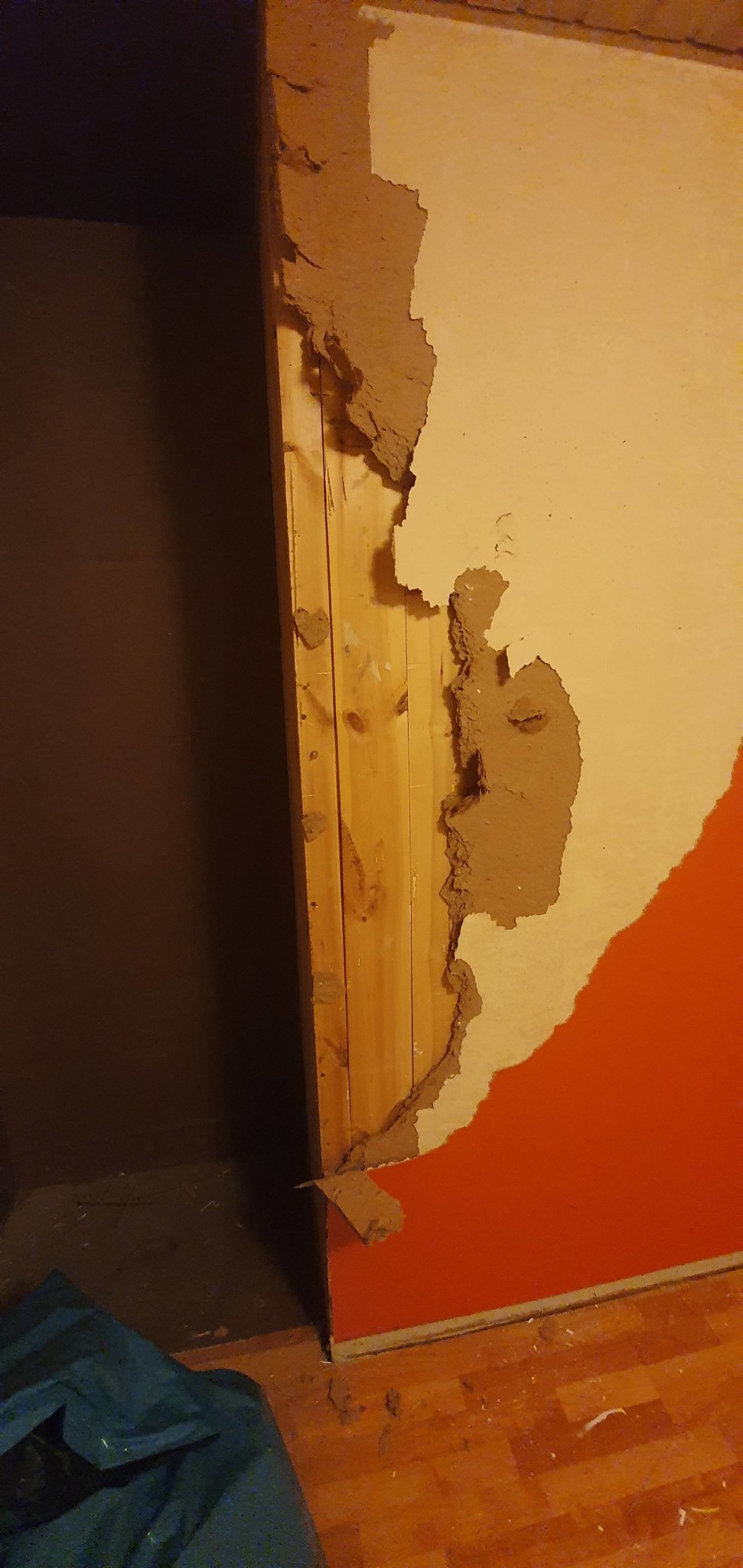
I’ve torn out the wardrobes on both sides and now the wallpaper, but then comes the inner wall and it appears to be solid wood. Did they build inner walls with solid wood planks in 1961 or could this one be load-bearing? It seems very sturdily built otherwise.
I'm going to go up in the attic when I get hold of a ladder and check, but I thought this wall would be safe to tear down.
Later, the wall in the kitchen against bedroom 1 will be removed, and the wall towards the hall in bedroom 1 will become the kitchen.
Attaching a drawing...
First up is a wardrobe stretch between bedroom 1, bedroom 2 to put up a new wall with wardrobes along the entire wall in bedroom 2.
I’ve torn out the wardrobes on both sides and now the wallpaper, but then comes the inner wall and it appears to be solid wood. Did they build inner walls with solid wood planks in 1961 or could this one be load-bearing? It seems very sturdily built otherwise.
I'm going to go up in the attic when I get hold of a ladder and check, but I thought this wall would be safe to tear down.
Later, the wall in the kitchen against bedroom 1 will be removed, and the wall towards the hall in bedroom 1 will become the kitchen.
Attaching a drawing...
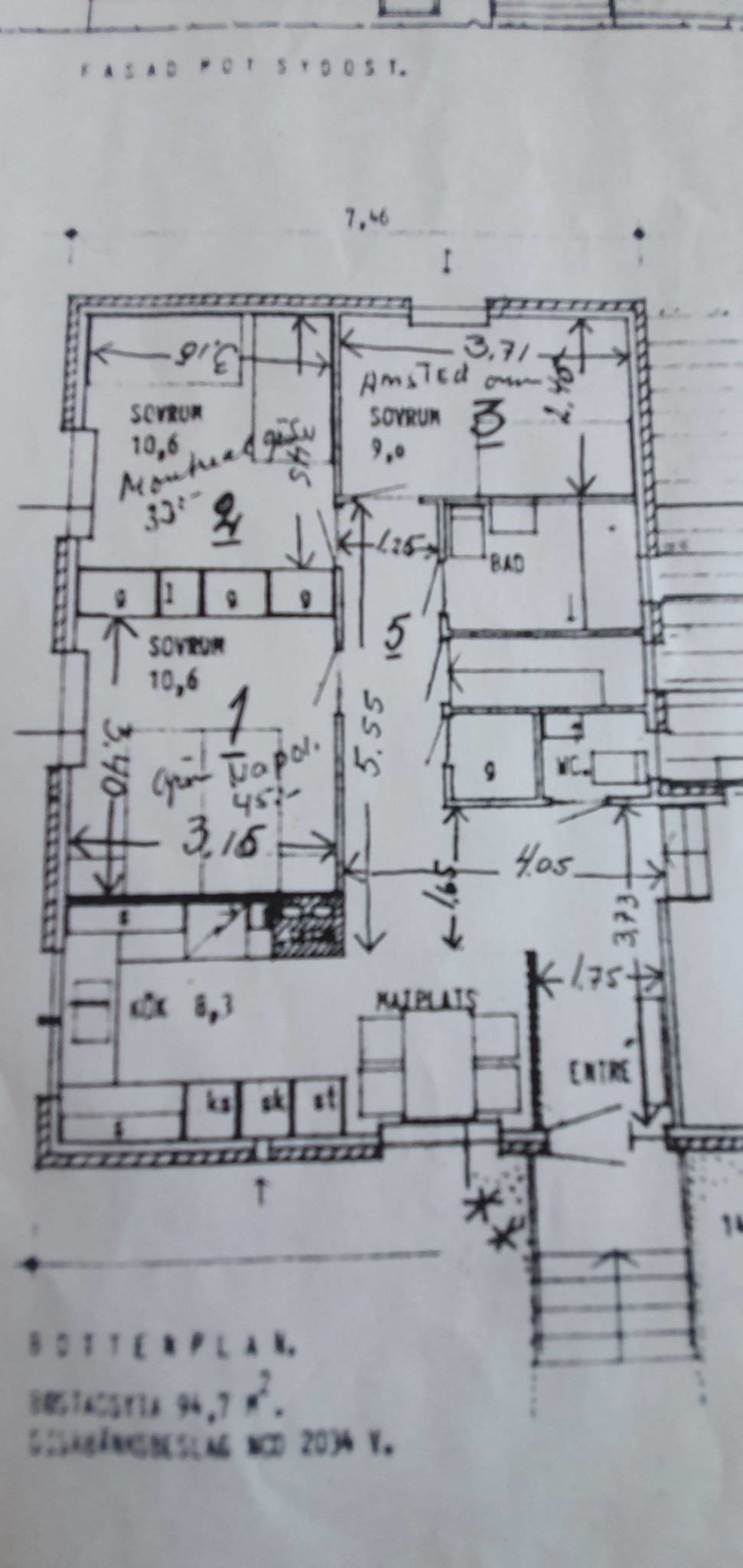
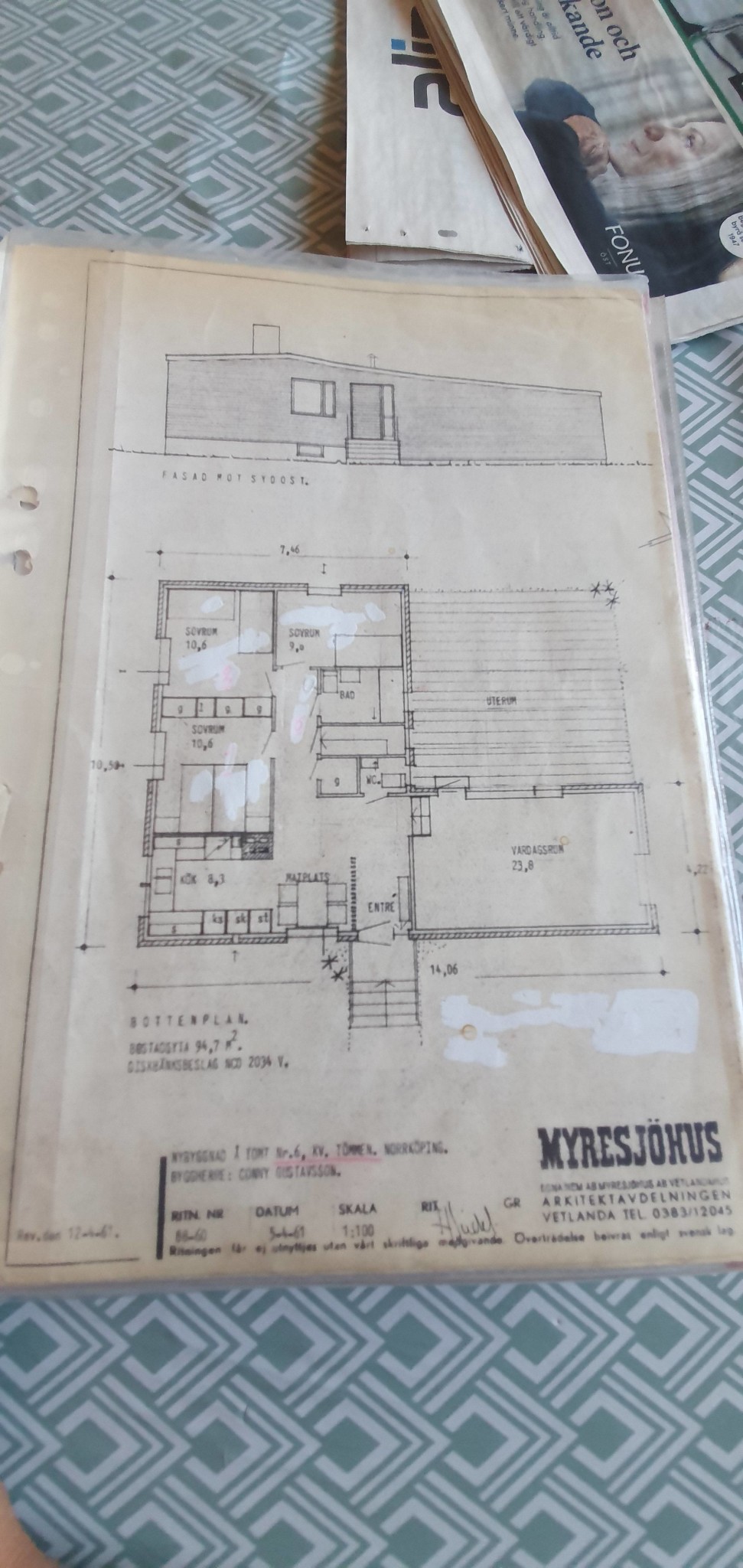

I am not an expert on Myresjöhus from 1961, but it's likely a prefab house. This probably means some unusual solutions. In principle, I believe the wall that follows the roof ridge is load-bearing. The cross-walls should be removable. However, I urge extreme caution. Try to figure out how each wall is constructed and integrated before you start tearing them down. 30 cm is a common element width.
The wall that runs through the center is load-bearing for the trusses, as well as the black one to the right by the stairs. All other walls that align with the trusses are loose parts that are placed on site. There is no electrical plan, so there may be quite a bit of electrical that comes from the ceiling down into the walls, which can cause some issues to sort out. Then you have a very flat roof, and it is important that the trusses are supported properly.
Thanks for the response. I'll try to get someone here to take a look, especially since the middle wall will almost be completely removed and it's probably load-bearing. I'm going to start carefully removing the small closet wall now. I've found several drawings, etc. that seem to match fairly well.
If it says B--> against a wall, could that mean it's load-bearing? I need to find a carpenter because I don't dare tackle load-bearing walls myself.
If it says B--> against a wall, could that mean it's load-bearing? I need to find a carpenter because I don't dare tackle load-bearing walls myself.
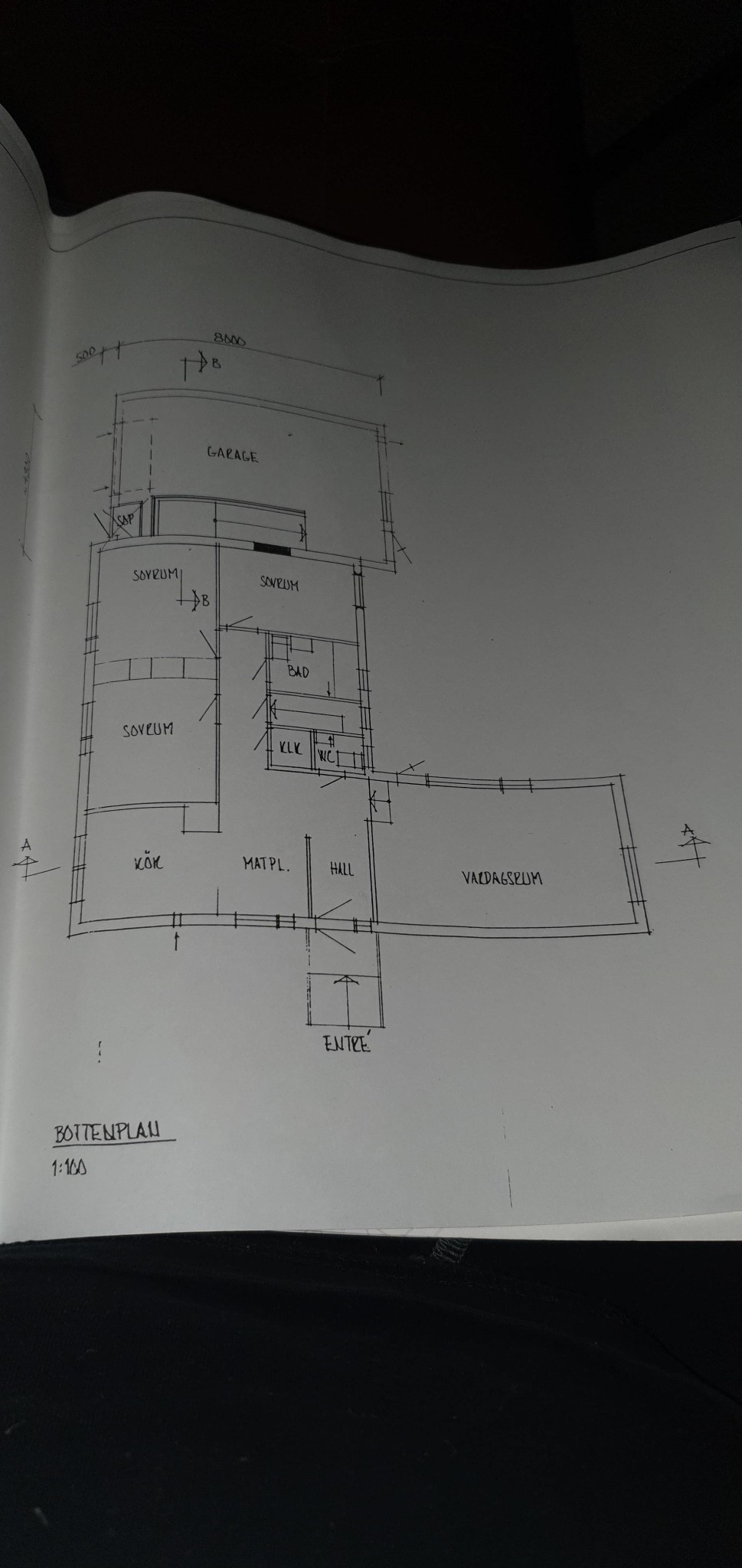
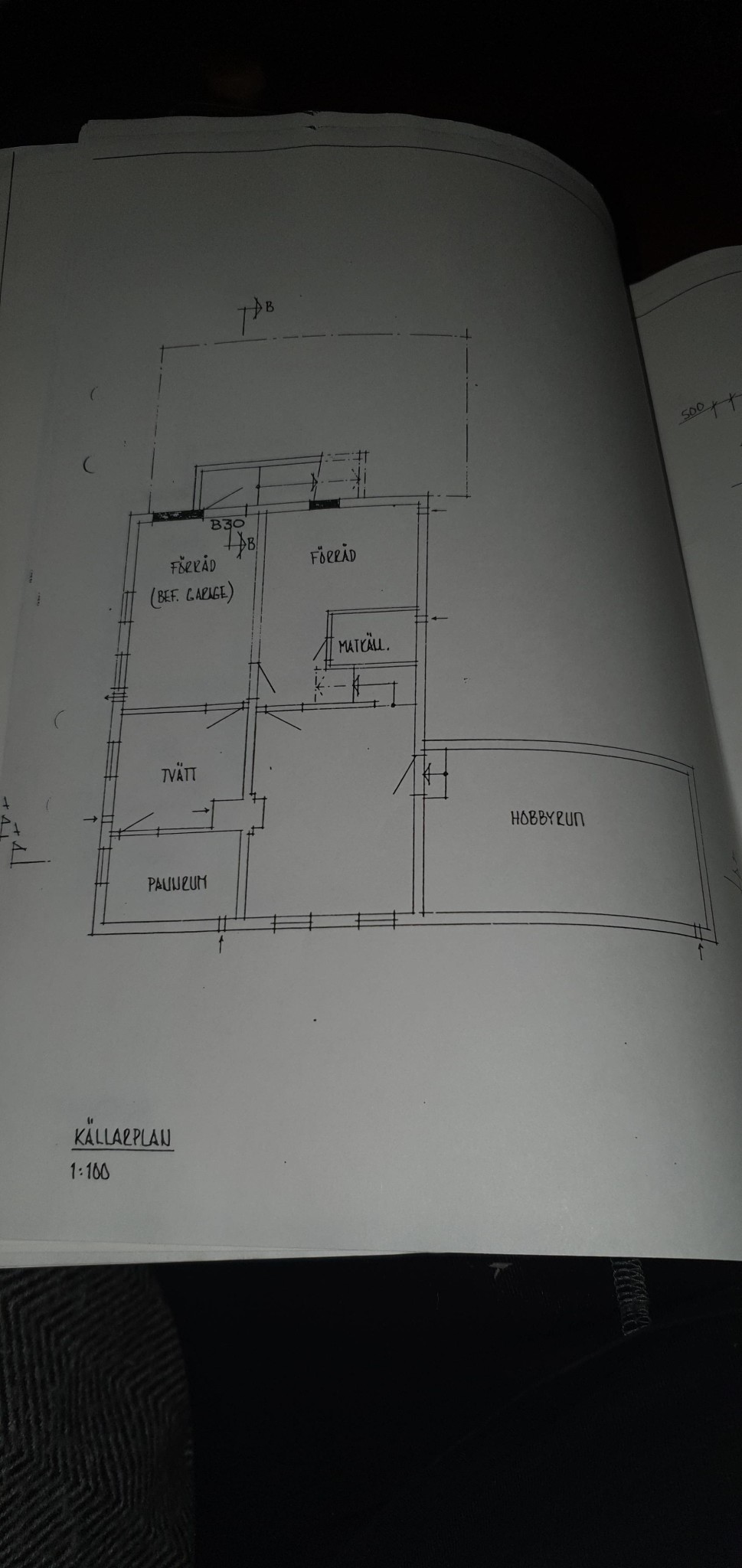
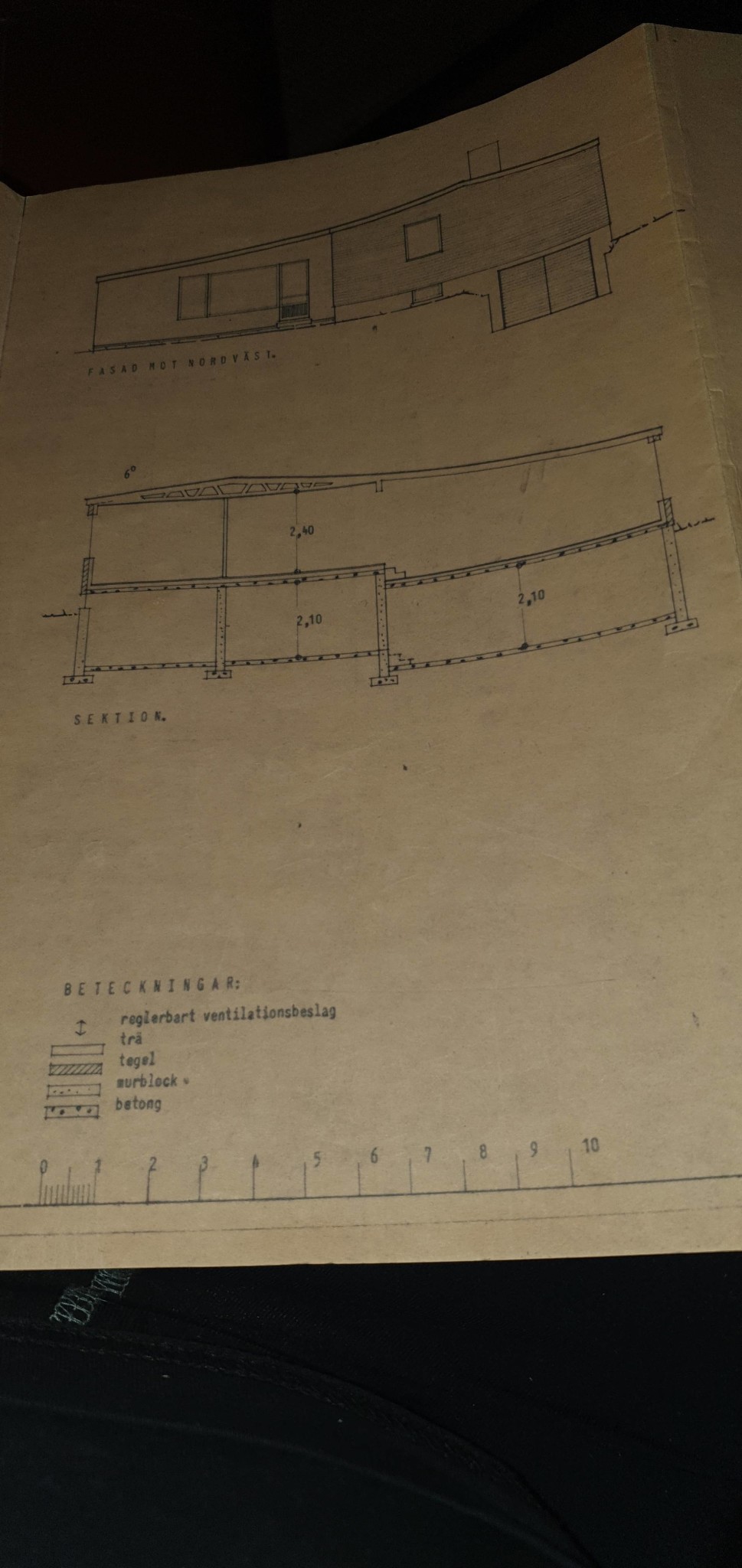
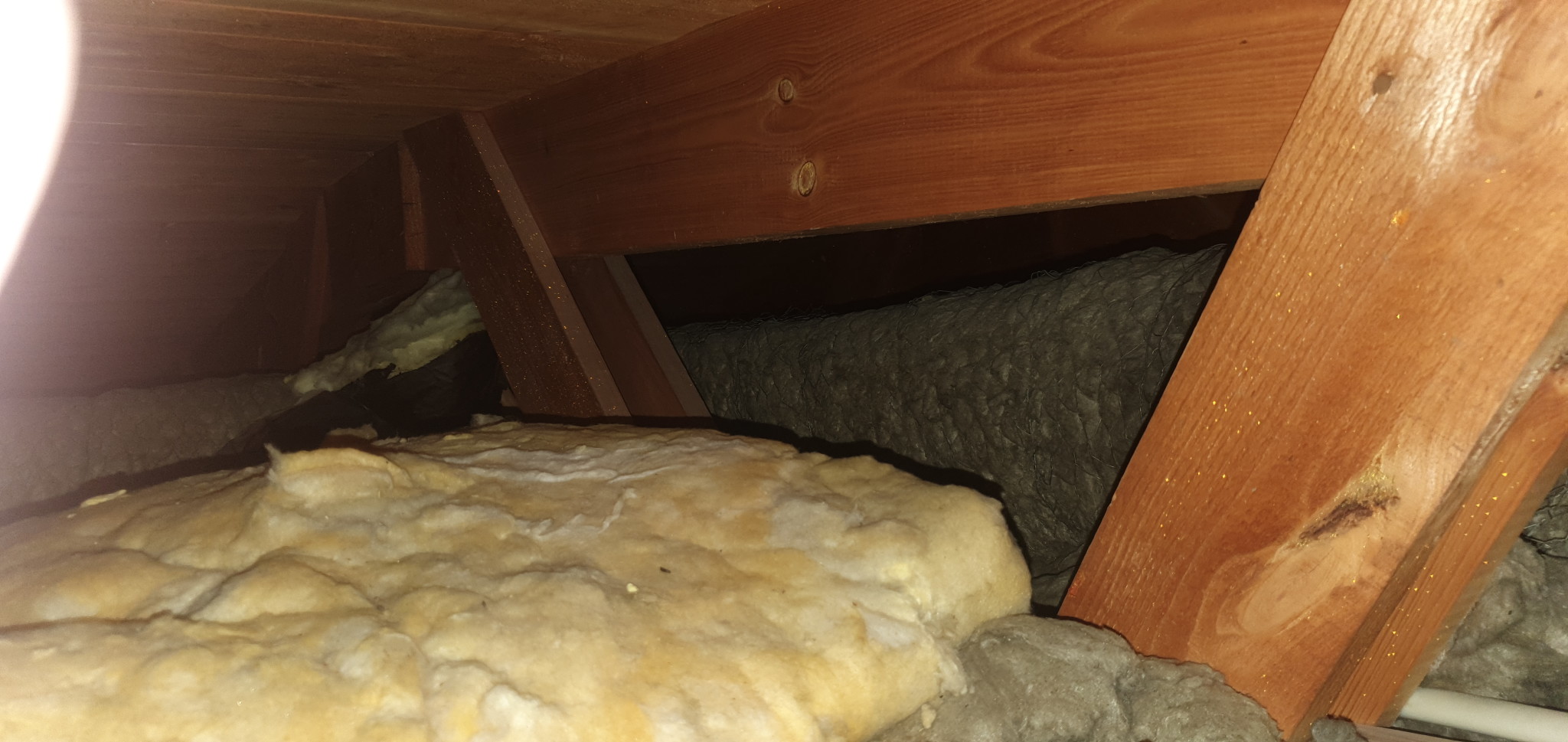
An arrow and a letter, e.g., B, refer to a sectional drawing through that part of the building. The attic photo suggests that the house has truss roof trusses. If so, no interior walls are load-bearing. Feel free to take a better photo from the attic.
J justusandersson said:
Okay thanks heard something else from a "carpenter" I'll try to get up tomorrow and move some insulation etc. It's unfortunately a bit tricky to get up there right now and you can only crawl, attaching current pictures. It looks the same over the entire roof as far as I could see.
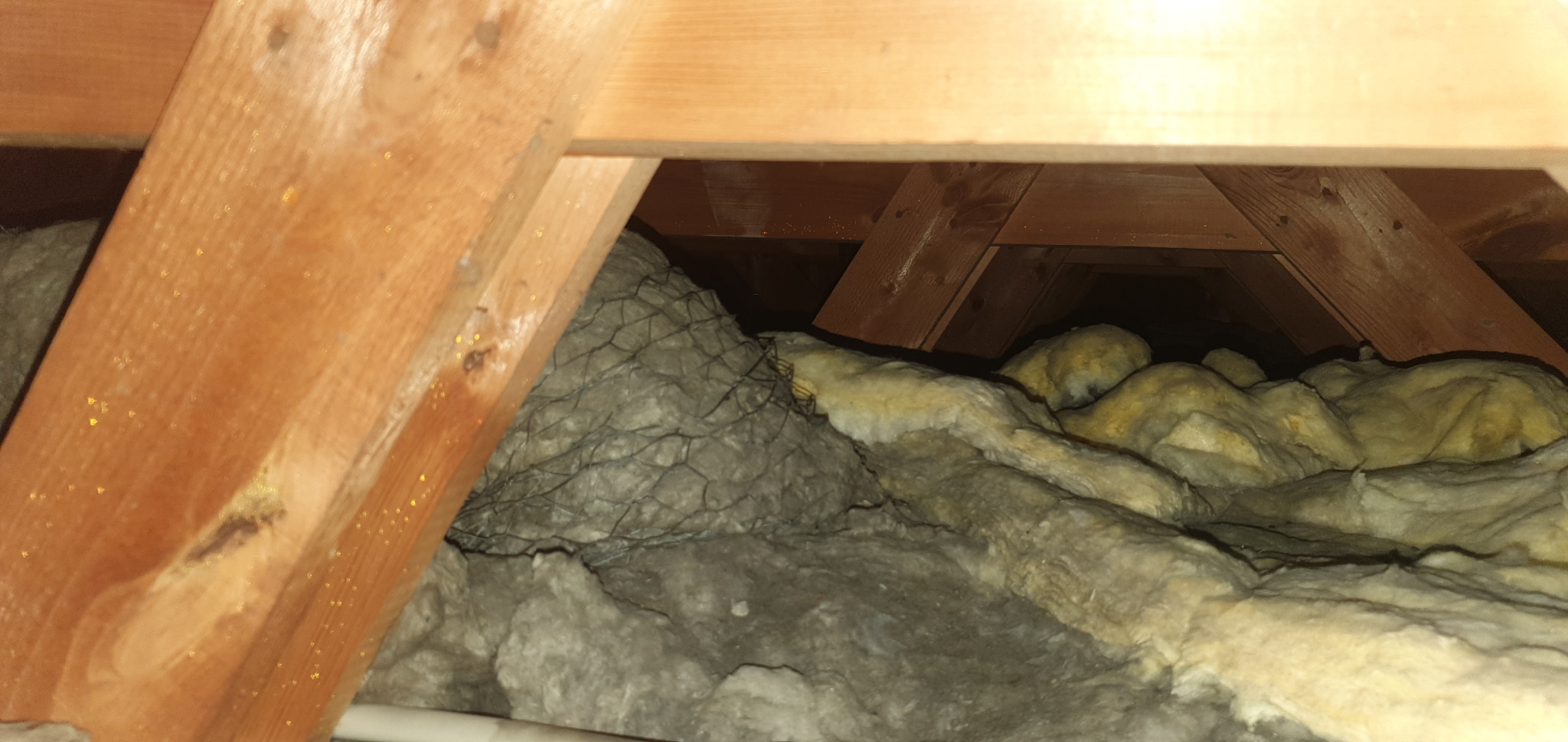
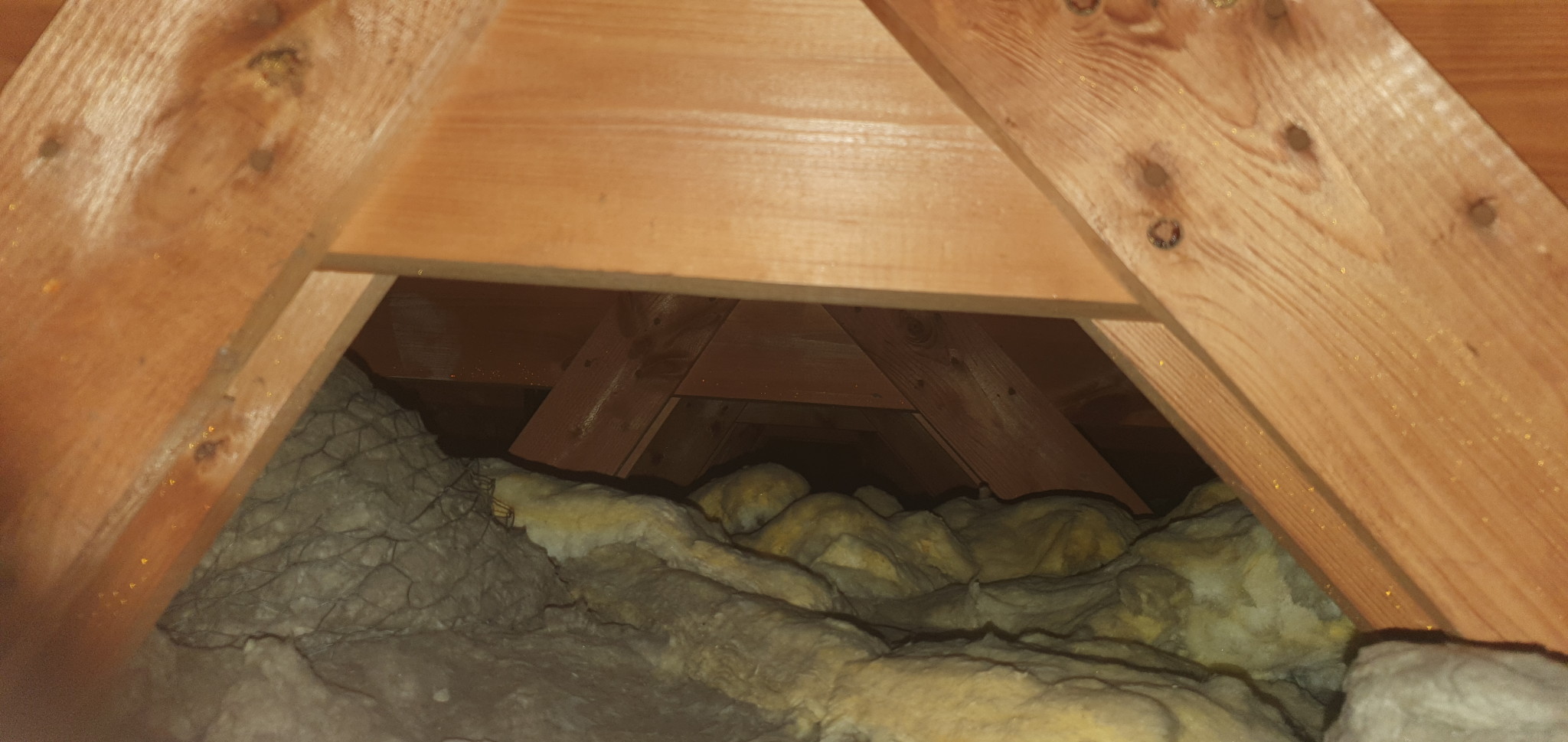
An exterior photo of the roof can be very enlightening as well. Most "carpenters" usually lack the expertise to determine that type of issue.
Click here to reply