
7,724 views ·
7 replies
8k views
7 replies
Reinforcing wooden joists between floors
hello
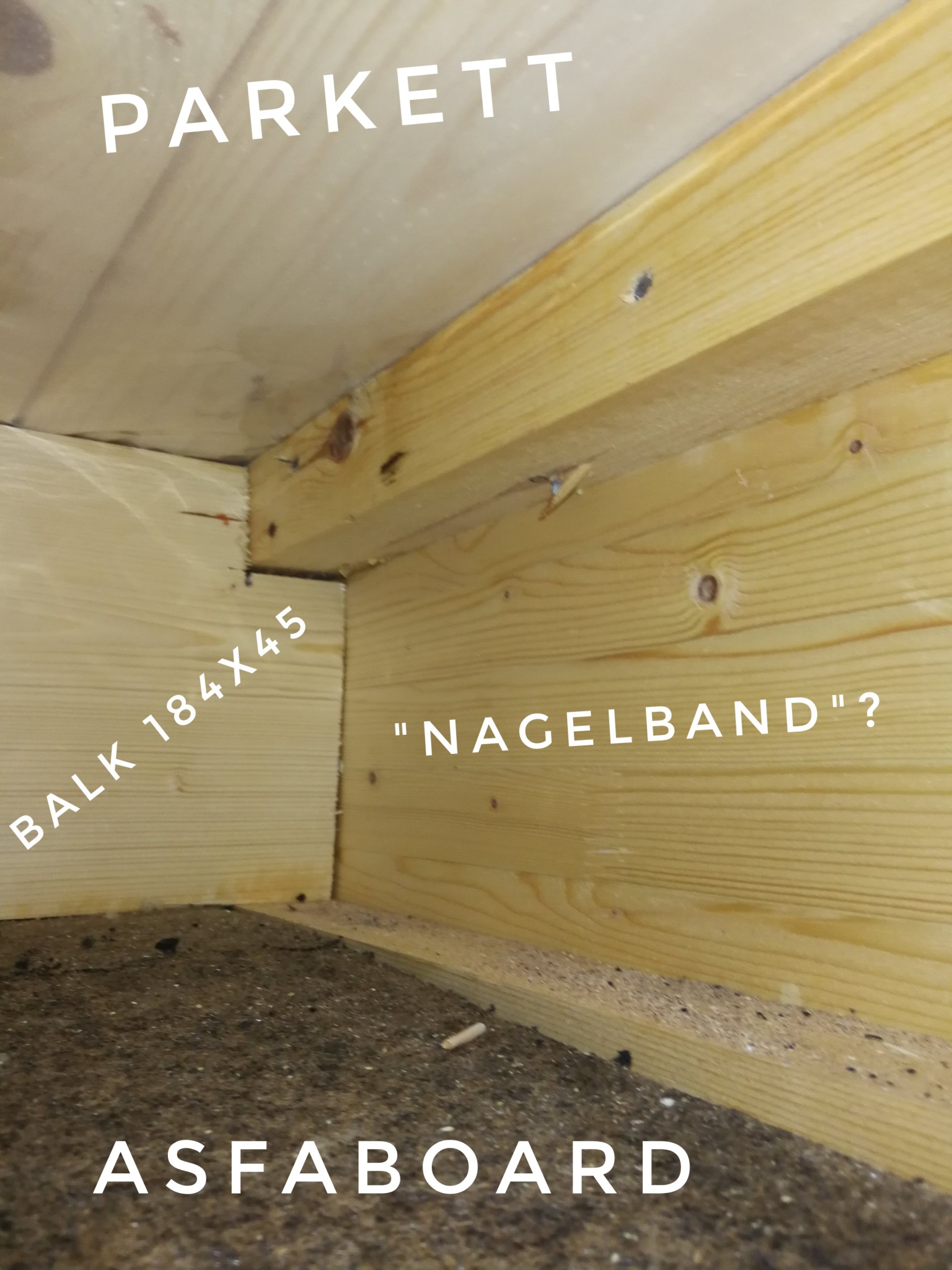
I have a house from the 70s, where we renovated the upper floor and subsequently got tired of the bounce and "hammock" effect in the floors. We plan to renovate the room under the living room and intend to reinforce the floor structure from underneath.
From bottom to top it consists of:
1. Ceiling panel boards about 20mm thick
2. Battens/open panels 45x45mm
3. Asfaboard 22mm
4. Beams 185x45mm with cc600mm.
5. Parquet directly on the beams
I have considered the following options:
1. Install additional glulam beams between the existing beams and attach them with joist hangers to the bearing beam.
2. Place a steel beam or glulam beam crosswise under the existing beams to halve the span. At the location where this would be placed, I would omit the board, battens, and ceiling panel/gypsum. Then I would have at least 85mm to spare.
What do you think?
I have a house from the 70s, where we renovated the upper floor and subsequently got tired of the bounce and "hammock" effect in the floors. We plan to renovate the room under the living room and intend to reinforce the floor structure from underneath.
From bottom to top it consists of:
1. Ceiling panel boards about 20mm thick
2. Battens/open panels 45x45mm
3. Asfaboard 22mm
4. Beams 185x45mm with cc600mm.
5. Parquet directly on the beams
I have considered the following options:
1. Install additional glulam beams between the existing beams and attach them with joist hangers to the bearing beam.
2. Place a steel beam or glulam beam crosswise under the existing beams to halve the span. At the location where this would be placed, I would omit the board, battens, and ceiling panel/gypsum. Then I would have at least 85mm to spare.
What do you think?
Member
· Västernorrland
· 12 100 posts
What is the span? The big problem still seems to be the low height of the timber? One can wonder why they choose to do so and then have 45mm sparse paneling?
3.5m span

One should not moralize too much over swaying floors in older houses. Building codes have changed considerably over the years. The intermediate floors in TS are likely correctly executed according to SBN 67, which probably applied when the house was built. Today's (very well-justified) deflection criterion was introduced much later.
The simplest measure is to place a glulam beam as a girder across the middle under the floor. If the beam can utilize the 85 mm that the false ceiling covers, it need not be too intrusive. Glulam is more flexible than steel in such situations, as you can also work with the beam's width. If you mention the room's width as well, you can get a dimensioning suggestion. It is of course possible to insert glulam beams between the existing beams, but that is a more laborious and expensive solution.
The simplest measure is to place a glulam beam as a girder across the middle under the floor. If the beam can utilize the 85 mm that the false ceiling covers, it need not be too intrusive. Glulam is more flexible than steel in such situations, as you can also work with the beam's width. If you mention the room's width as well, you can get a dimensioning suggestion. It is of course possible to insert glulam beams between the existing beams, but that is a more laborious and expensive solution.
that sounds good.
the width is just over 3.7m.
how should I then attach the beam at the ends? it ends up under the nagelbandet, or whatever one might call it. the walls are made of lättbetong. my thought was that the glulam beam could rest on some form of pillars at the ends.
the width is just over 3.7m.
how should I then attach the beam at the ends? it ends up under the nagelbandet, or whatever one might call it. the walls are made of lättbetong. my thought was that the glulam beam could rest on some form of pillars at the ends.
Best answer
Yes, with lightweight concrete walls, columns at the ends are clearly preferable. The columns need to rest on something that can handle their loads, but this is usually manageable. Regarding the beam dimension, 90x225 is a borderline case. The next size up is 90x270. By choosing a wider beam, you can keep the beam height down if desired, for example, 190x180. The dimensions of the columns should be adjusted to the width of the beam. Common construction timber can be used, although glued laminated timber looks the best.
how cool, thank you so much.
the posts would in that case be placed directly on the non-insulated 70s slab. I am happy to spend a few extra kronor on glulam.
should a moisture barrier be placed under the post and between the wall and the post?
the posts would in that case be placed directly on the non-insulated 70s slab. I am happy to spend a few extra kronor on glulam.
should a moisture barrier be placed under the post and between the wall and the post?
The point load that the column represents is about 8 kN (about 800 kg). That is not a problem. The column should rest on "syllpapp", but against the aerated concrete nothing is needed.
Click here to reply