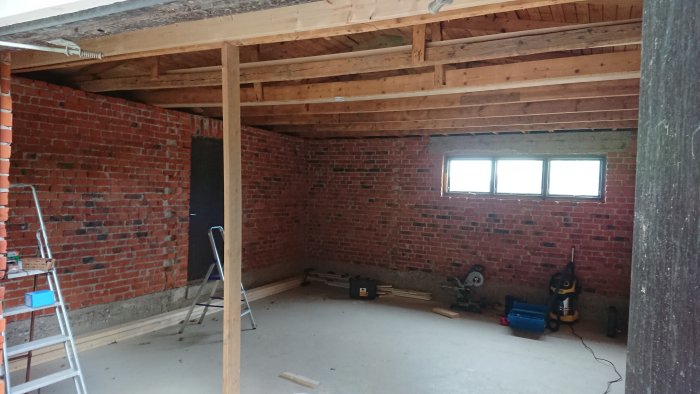
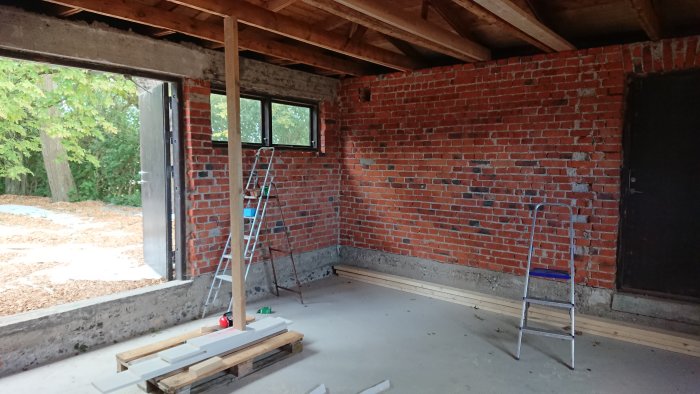
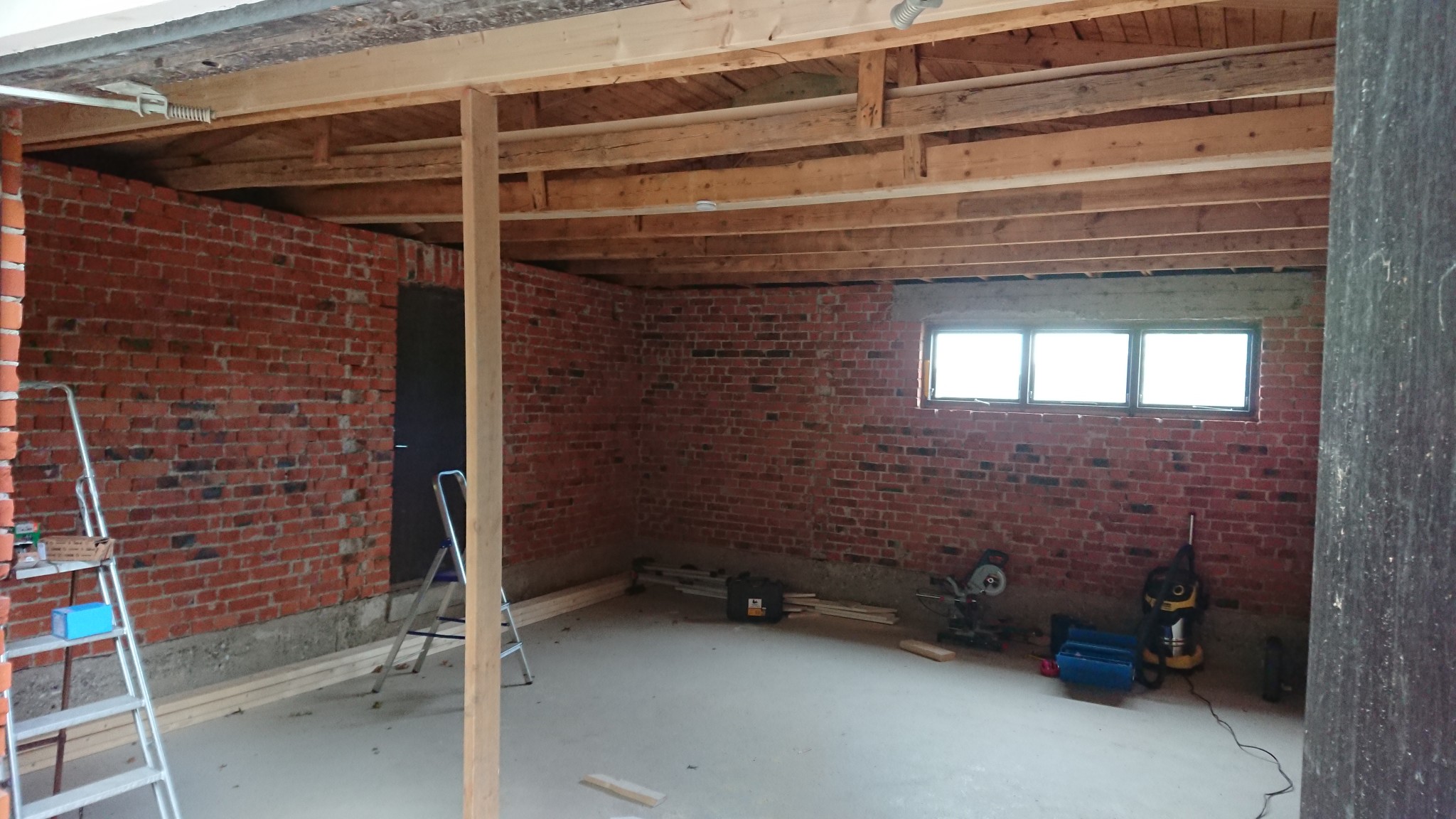
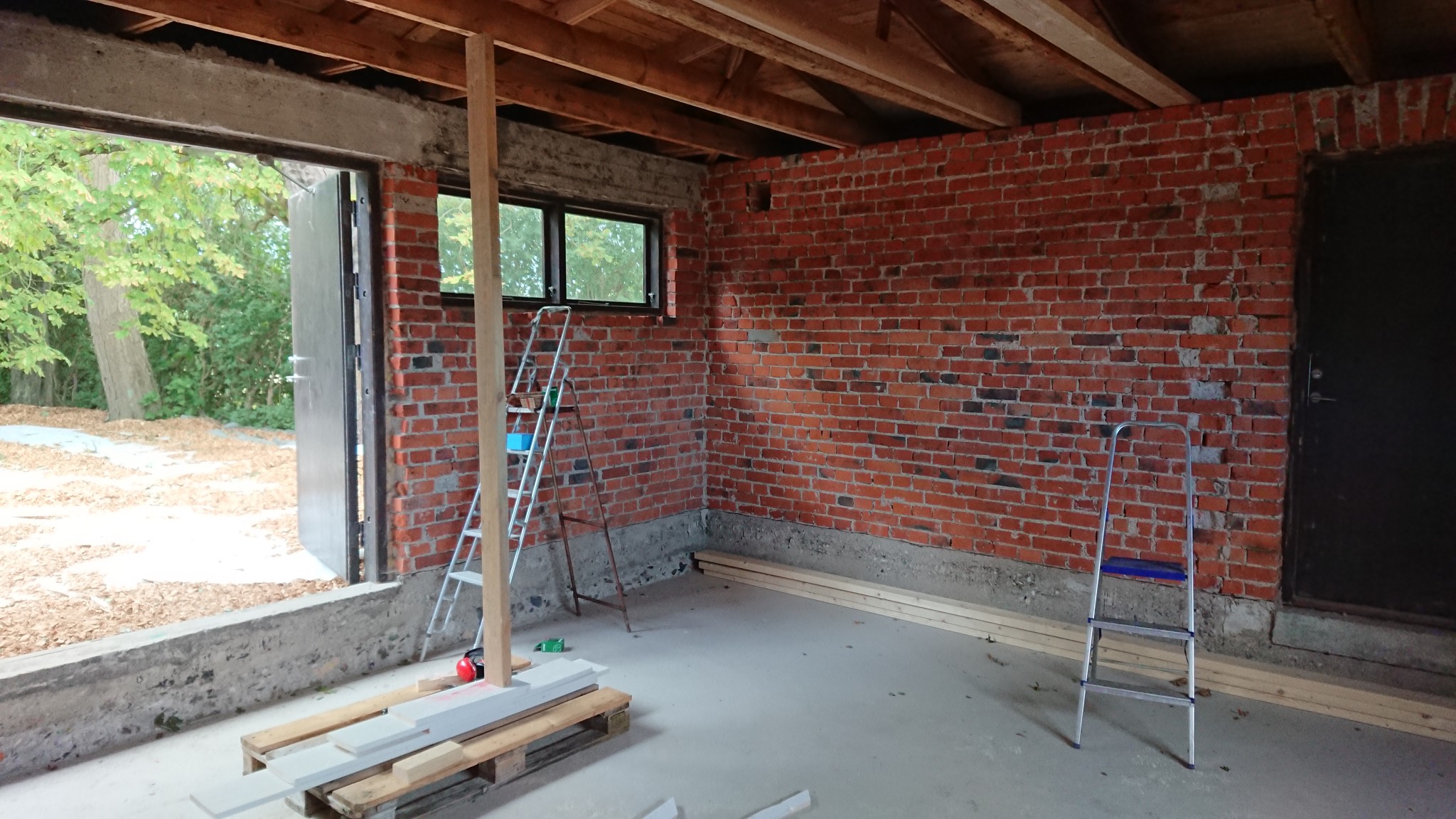
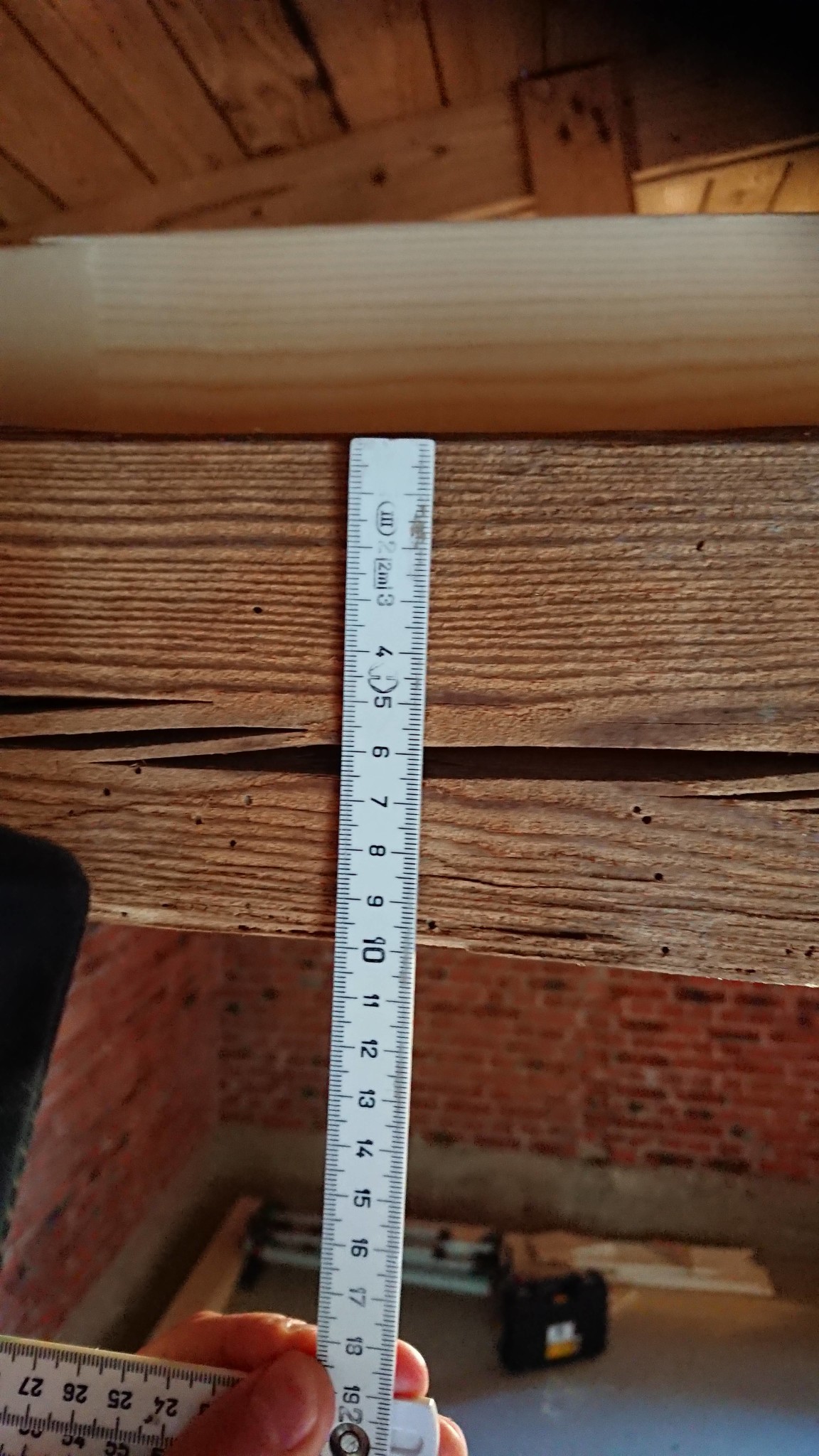
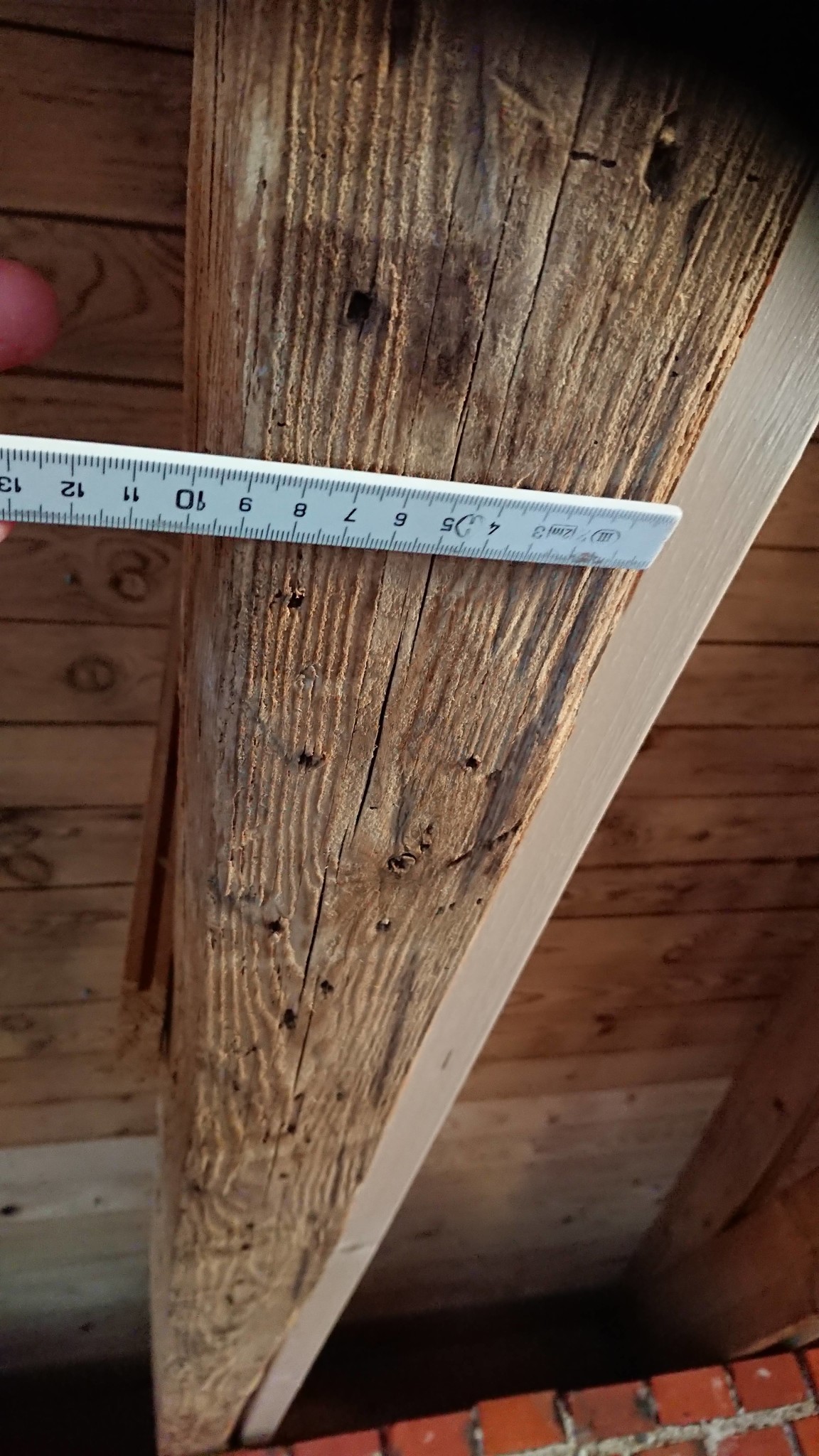
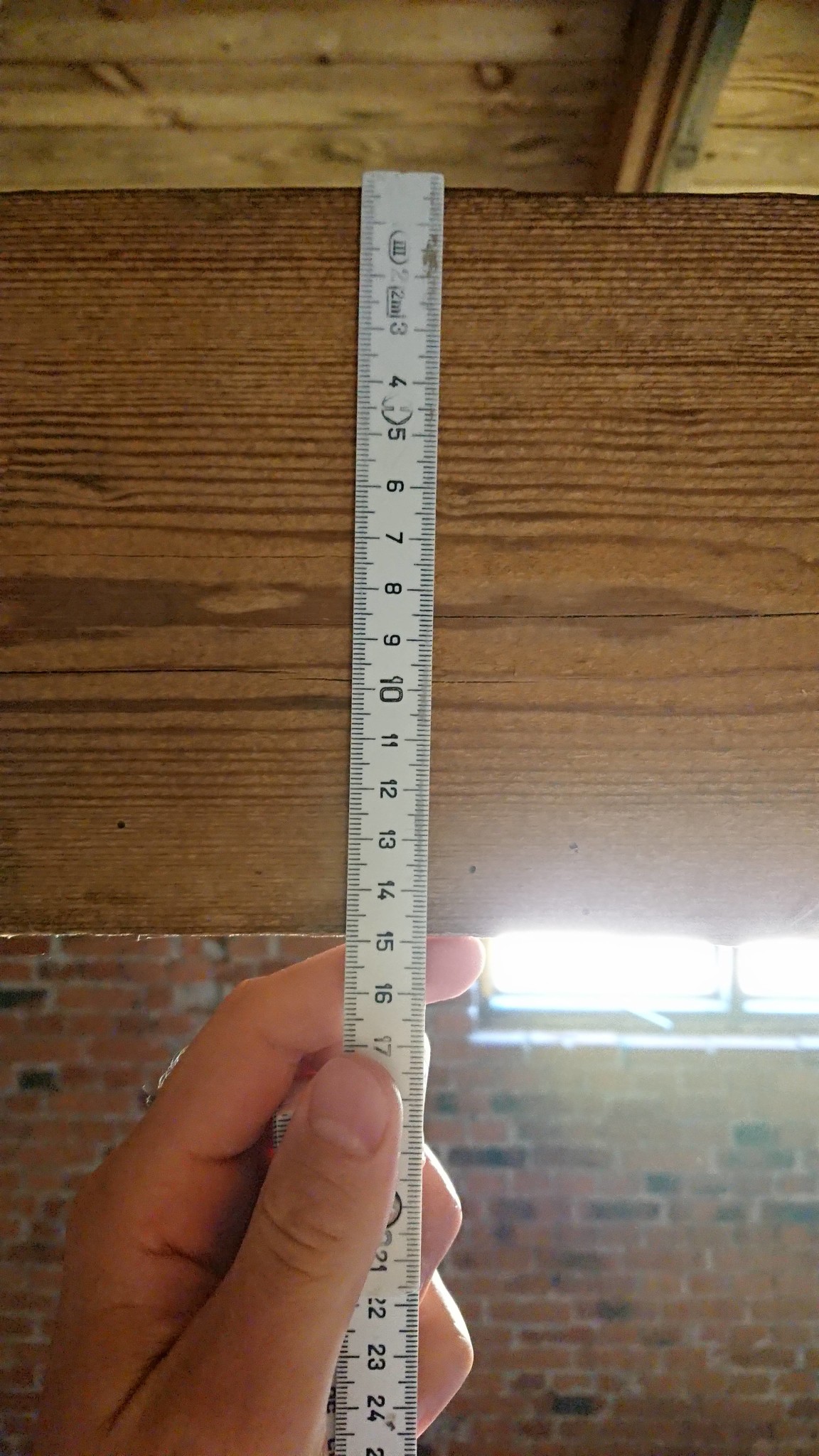
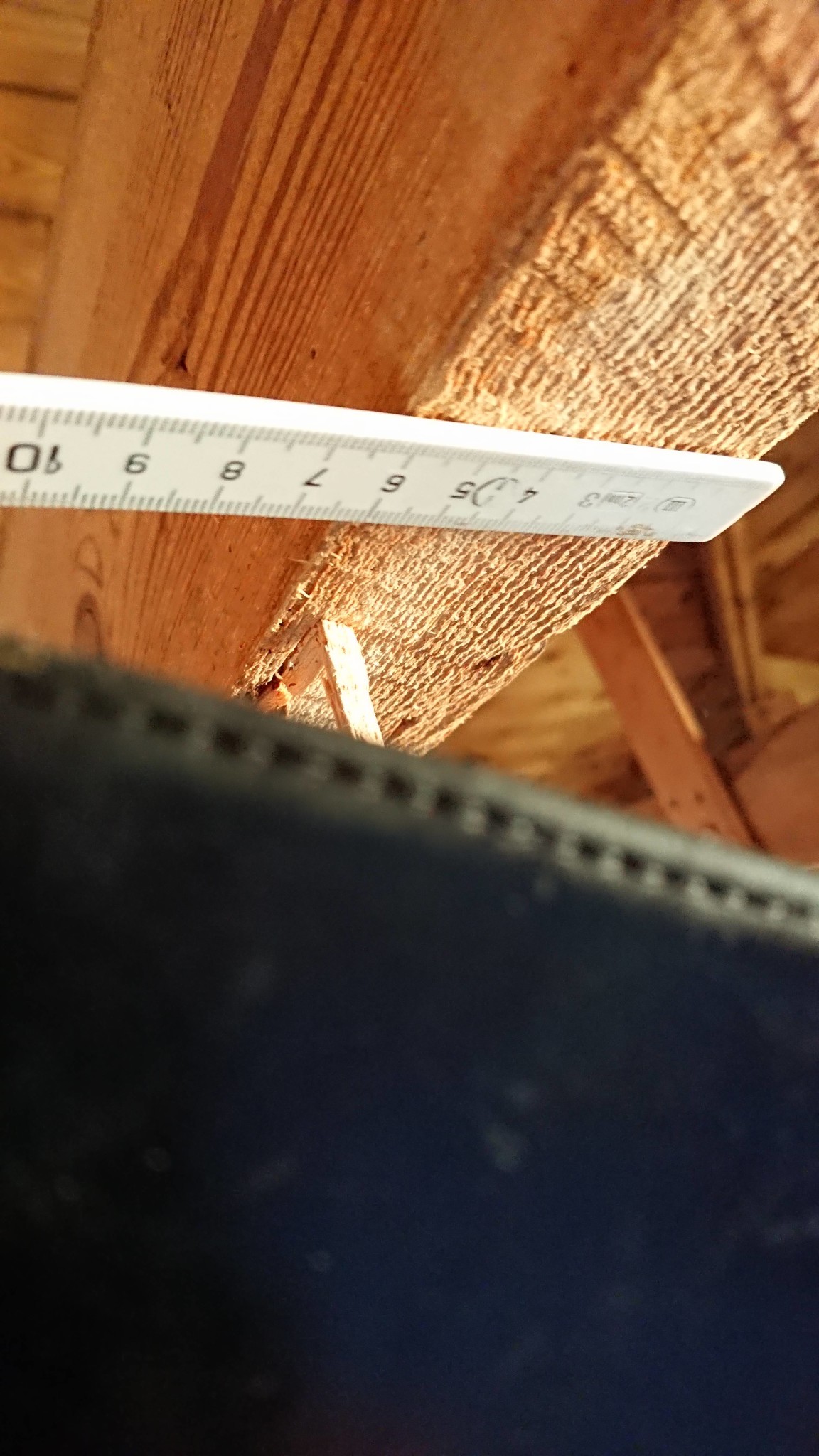
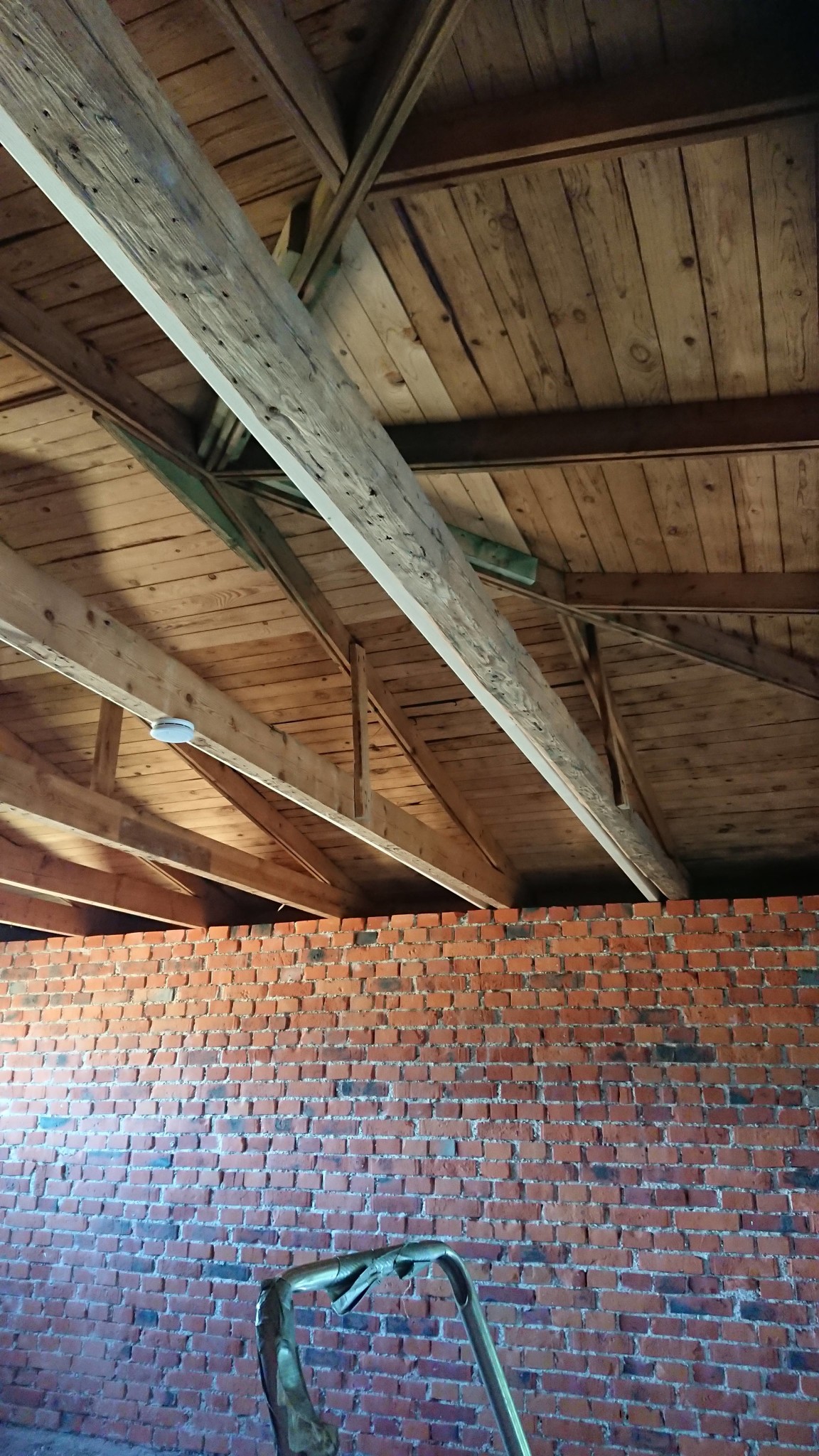
As part of my renovation of an old stable/shed into a gym (in another thread), I plan to reinforce the rafters before hanging things from them. They are already quite sagged without load and are spliced lengthwise (span 5.5m).
I bought a bunch of finger-jointed C24 145x45 mm battens that I intend to mount parallel to the existing rafters. The plan is to screw and glue them, but I have a couple of questions.
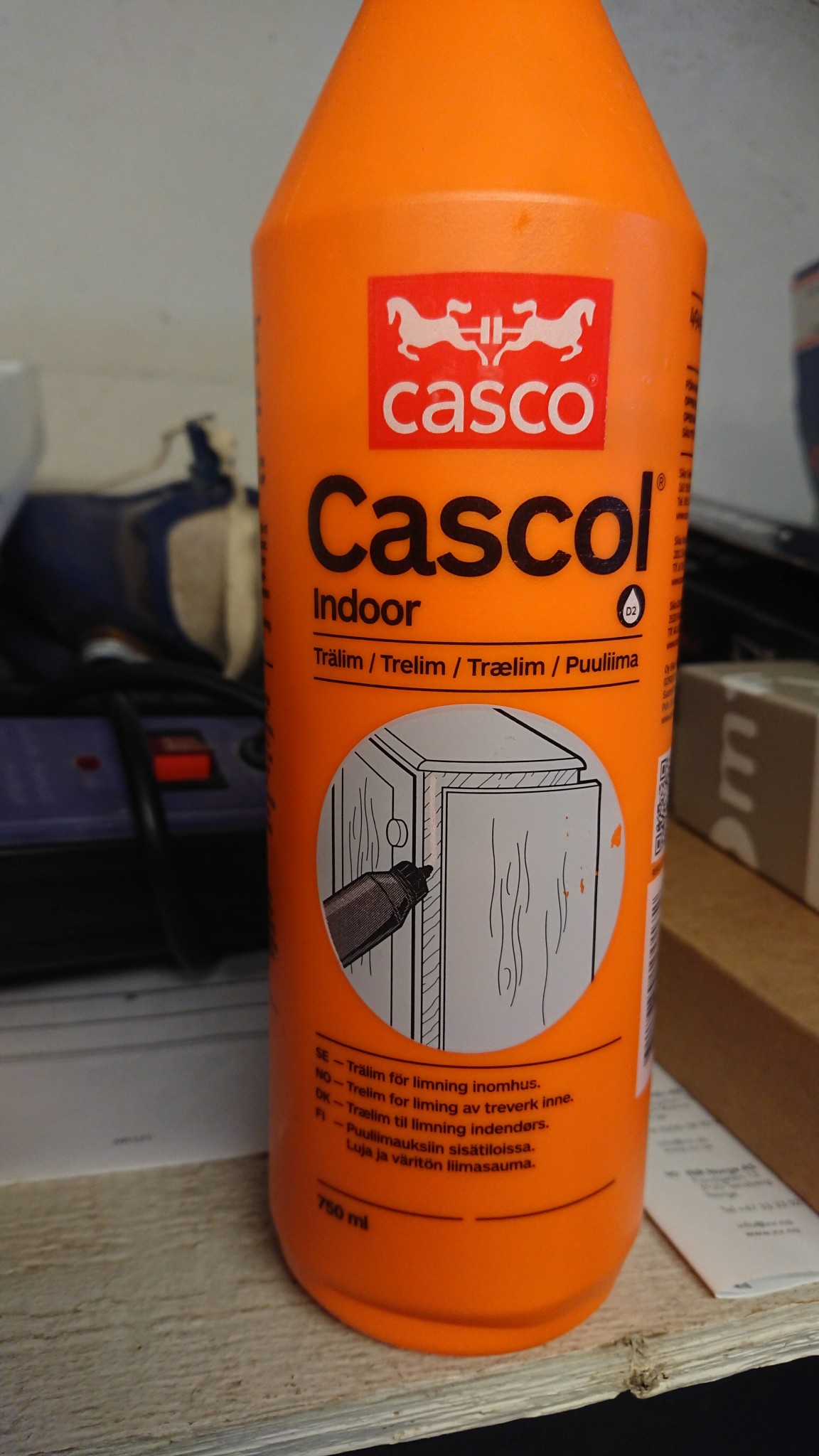
What type of glue should I use? Any specific type of screw, distance between screw holes?
Should I try to push up the sagging existing beams before I screw and glue on the new batten?
I did a little attempt the other day with an old batten as support that I pushed in, managed to remove maybe half the sagging, but I see I probably need to work on two points simultaneously to lift it evenly. Is there perhaps better equipment to rent for this purpose?
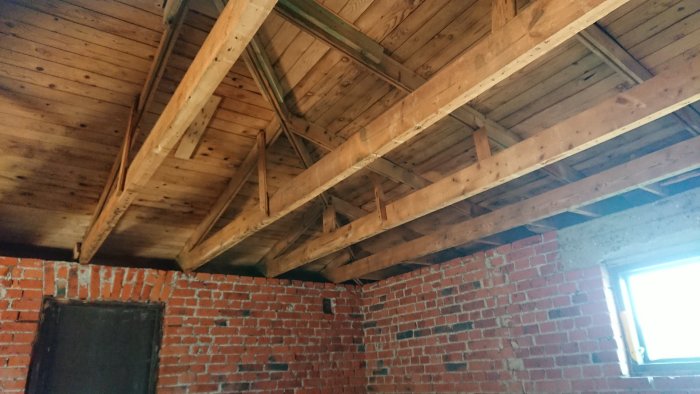
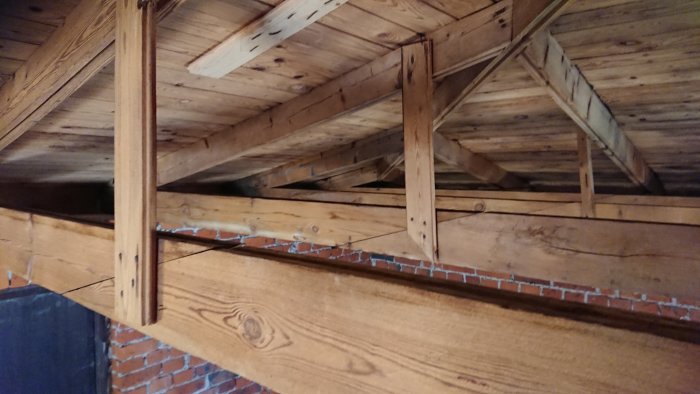
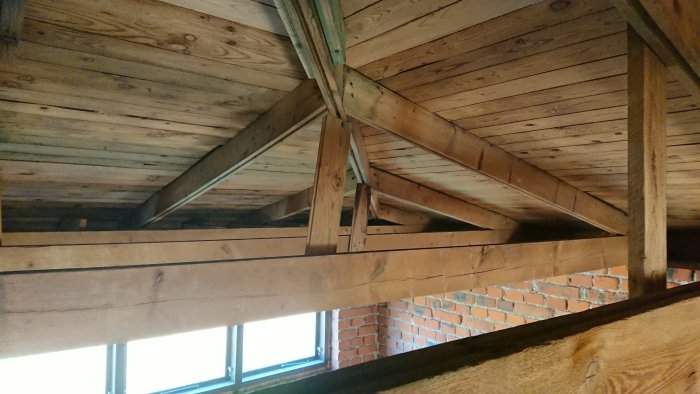
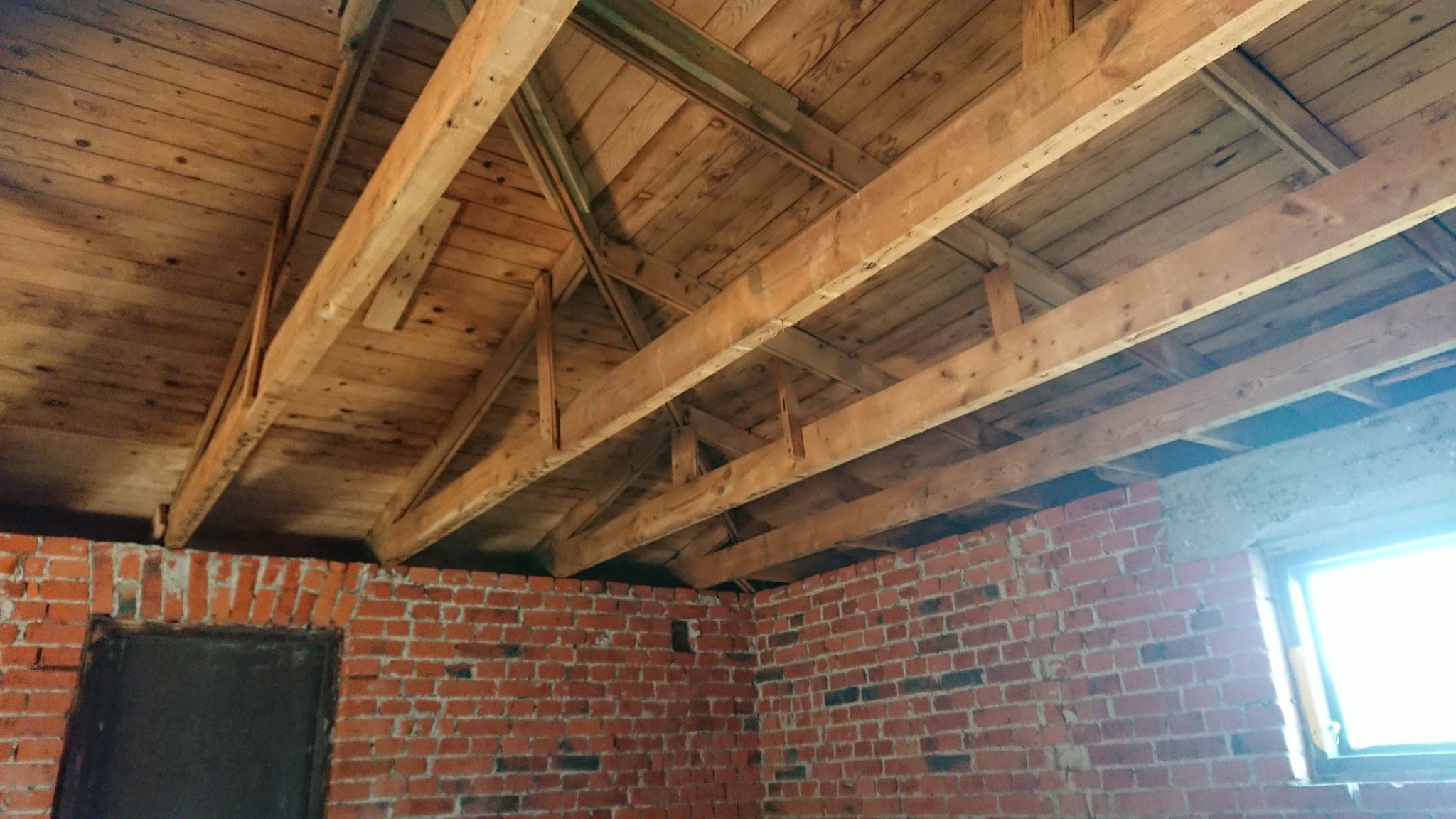
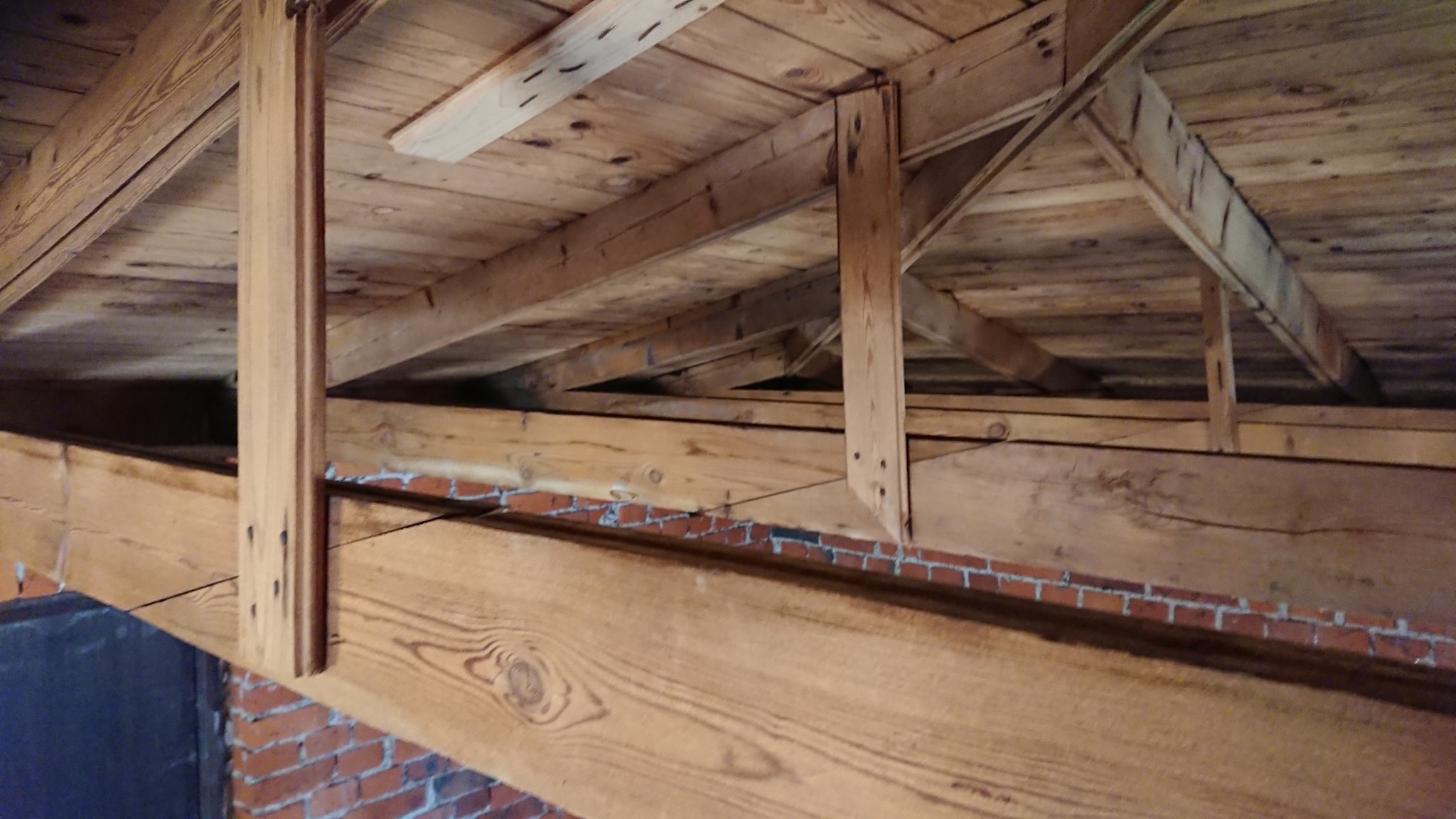
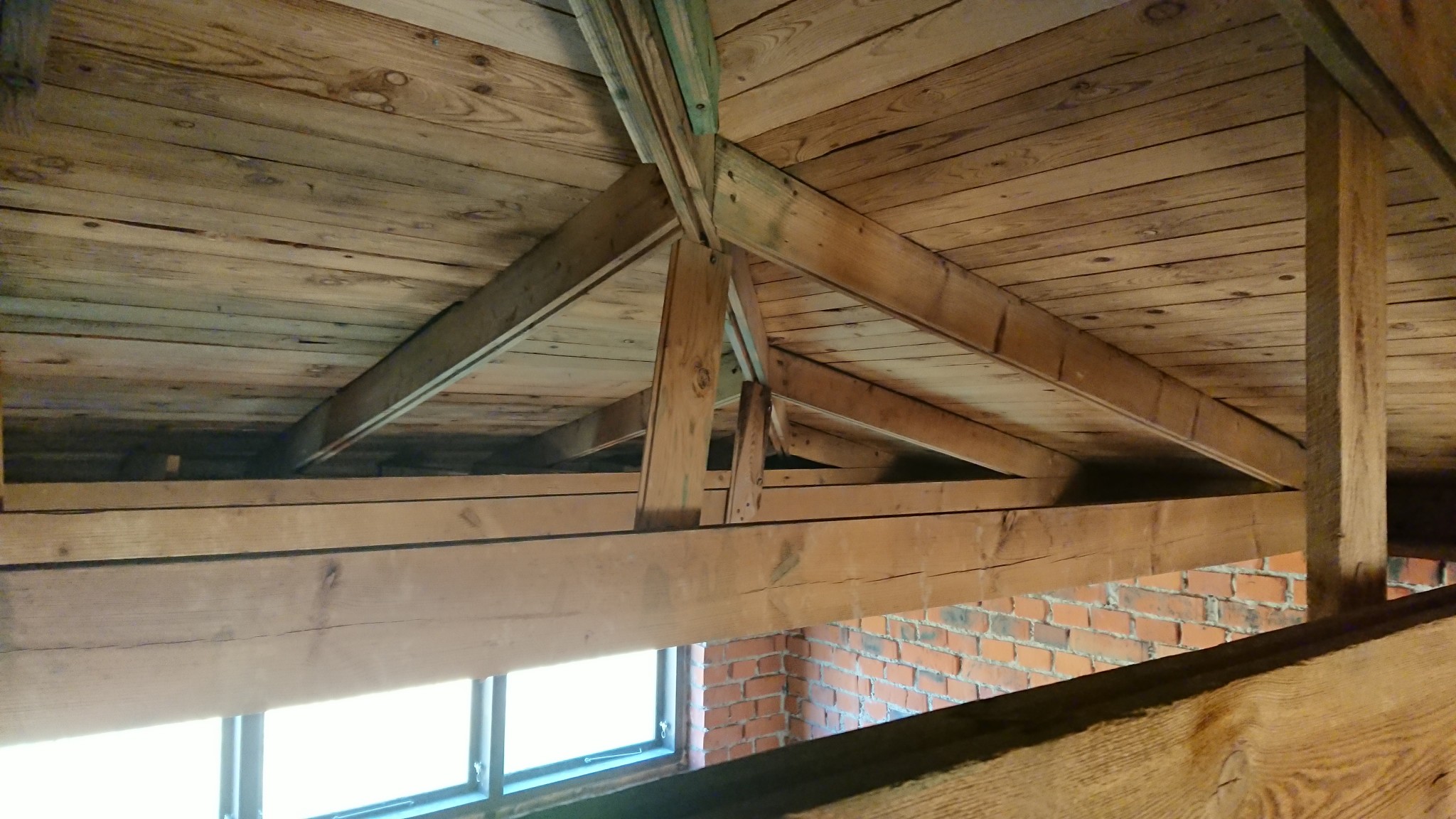
I'm having some trouble understanding the existing roof construction. There are too many boards in the way. What are its dimensions and c/c spacing? 5.5 m is typically too large a span for regular construction timber. It usually requires glulam or trusses.
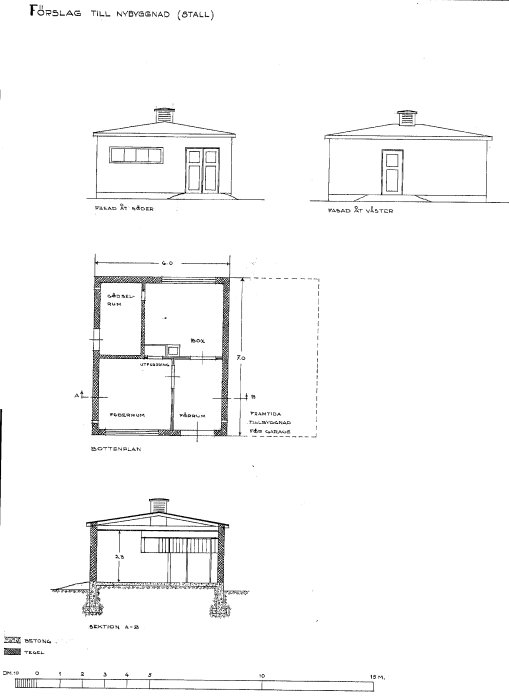
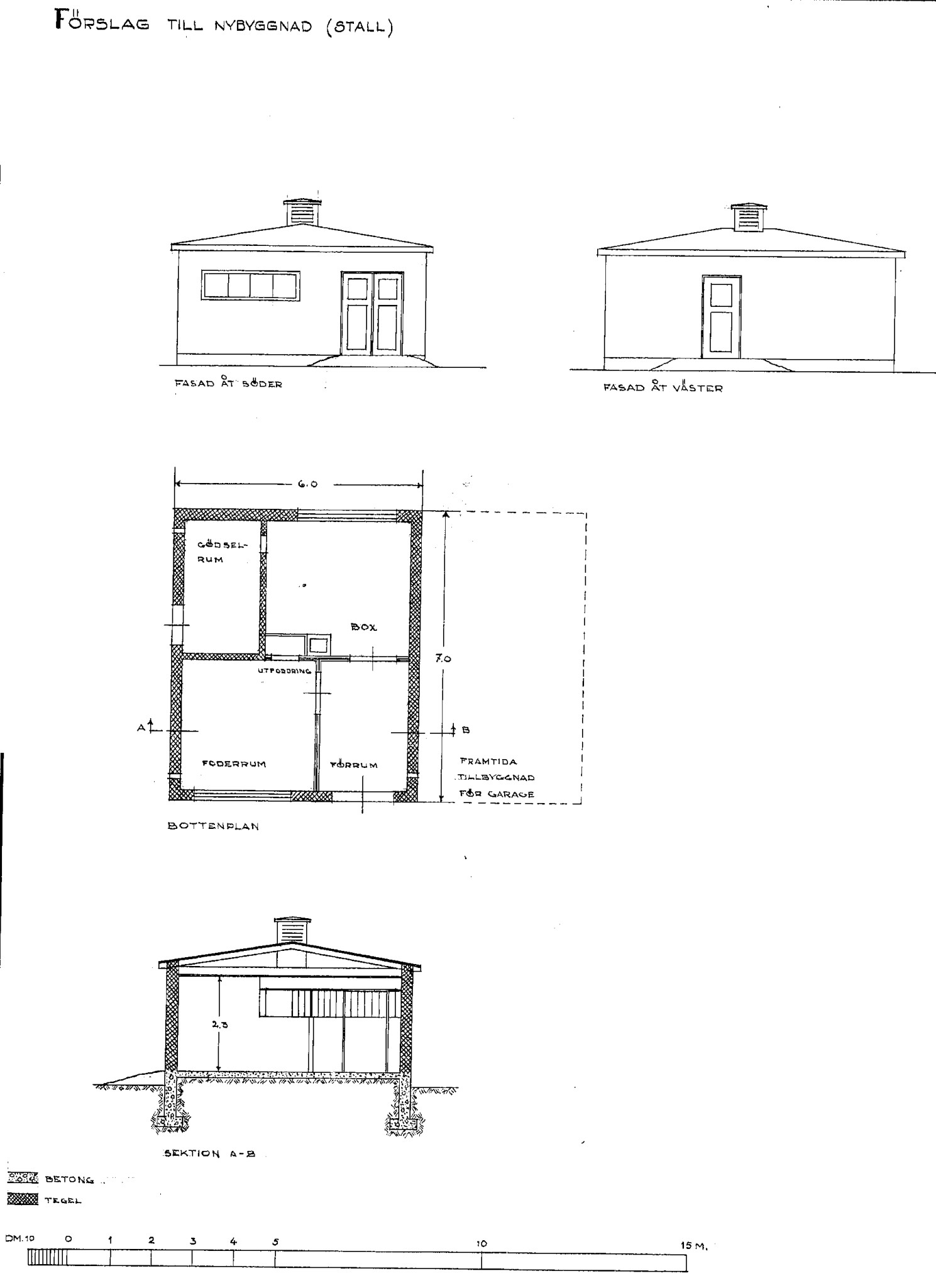
Attached are some more pictures and the original design from the 1930s.
All the walls except the brick wall around the "gödselrummet" were torn down when we bought the property, since the other rafters managed without support, I tore that one down too. It's likely that the joints once were over these and the other walls.
So the rafters are probably undersized, even though they seem quite homemade to begin with, and all but one beam appear to have been replaced since then (the original beam is actually without joints).
The right thing would probably be to redo the entire roof with new rafters and everything, but even without today's lumber prices, that sounds like an expensive deal (does anyone have a sense of how expensive?)
So I thought doubling the beams with a jointless stud couldn't make it worse in any case.
I see a problem with raising the old ones; it will then burden the new ones more than if they continue to "hang." So if you don't need a smooth floor up there, but rather want a smooth ceiling, I would consider letting the old ones continue to "hang" and mounting the new ones so they can form an even ceiling. Otherwise, I lifted my floor joists in the crawl space with a workshop jack (worked really well) and set props.
Neither ceiling nor floor should be installed, it will remain open up to the ridge. I plan to hang some punching bags and similar items, so that's why I don't want to burden the current structure more than necessary since it already feels quite flimsy. Maybe insulate and clad the ceiling (but with exposed beams) later on, but then perhaps it's just as well to start from scratch first to achieve more standard spacing?
By the way, I'm in the southernmost part of Skåne, so snow zone 1.
The really old one is about 100x100mm, no joints along the length. The ones I suspect were replaced more recently are approximately 150x60mm and jointed once along the length.
The problem with living in snow zone 1 is that you forget there is snow... but once every fifty years it comes. The easiest thing is probably to replace the subframes with glulam, for example, 90x225. Due to the mixed dimensions, it is difficult to find a uniform solution.
The problem with living in snow zone 1 is that you forget there's snow... but once every fifty years, it comes. The easiest solution is probably to replace the bottom beams with glulam, e.g., 90x225. Due to the mixed dimensions, it is difficult to find a uniform solution.
I understand what you mean. Right next to it, there's an old (almost) dilapidated garage that we plan to demolish in the future and reuse the slab for an (architect-designed) greenhouse. It's not impossible that the best solution there would be to build a roof connecting the two buildings, so I would prefer not to undertake a huge project with the current roof. (Replacing the bottom beams and raising all the trusses sounds to me like it is more or less as much work as just replacing all the trusses + the entire roof, albeit saving a little on materials, and in that case, I would rather replace everything with professionally manufactured trusses)
I assume that screwing and gluing an extra beam along each bottom beam cannot make anything worse while waiting for a better solution later on. Any input on what type of glue to use, spacing between screws? Should I try to lift the sag of the existing trusses first?
It is a rather pointless measure that does not correspond to the effort involved. I wouldn't do it. It is more effective to screw-glue 45x145 from underneath onto the existing beams. When you screw-glue, the screws function as clamps, you screw so that all the glue seeps into the joints. Glue is chosen with consideration to the moisture level.
It is a fairly pointless measure that does not correspond to the work effort. I wouldn't do it. It's more effective to screw-glue 45x145 from underneath onto the existing beams. When you screw-glue, the screws act as clamps, so you screw until all the glue seeps into the joints. Choose glue with regard to moisture level.
Screw-glue from underneath, meaning short side to short side instead of alongside each other with the broad sides glued? There's no setup in that case, so they would hang freely from the underside of the beams?
If you do so, you naturally need to correct the existing sagging, so that answers that question at least
Moisture level in the wood? No idea, should be like the surrounding air now in the summer? The battens have been out there for 1-2 weeks already.
I have this glue at home, but thought there might be better, but I'm a novice at this.
I was thinking that the 45x145 beams would be glued lying down from underneath. It doesn't matter that they won't get any support. I would use some glue that is more moisture-resistant, possibly PU glue. The glue in the picture is only for carpentry-dry materials.