Hello
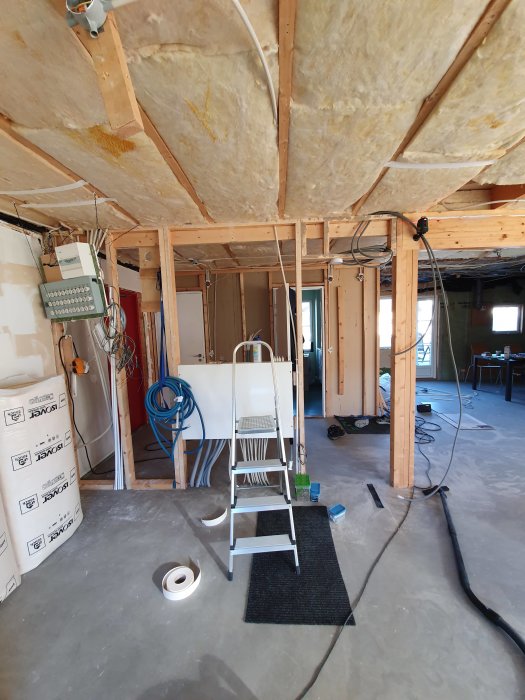
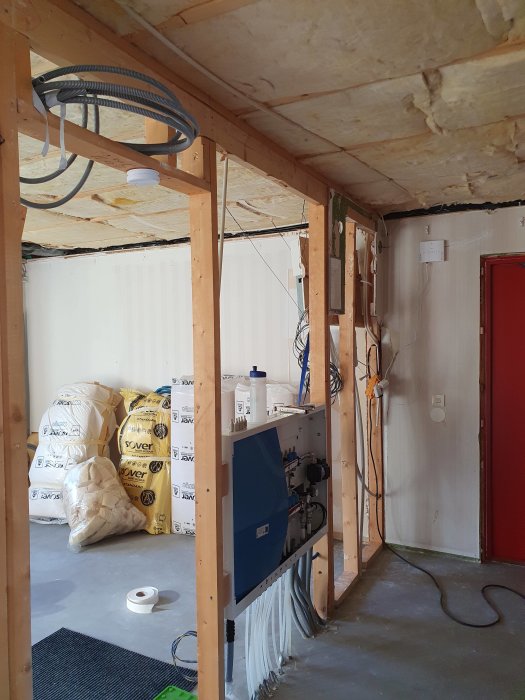
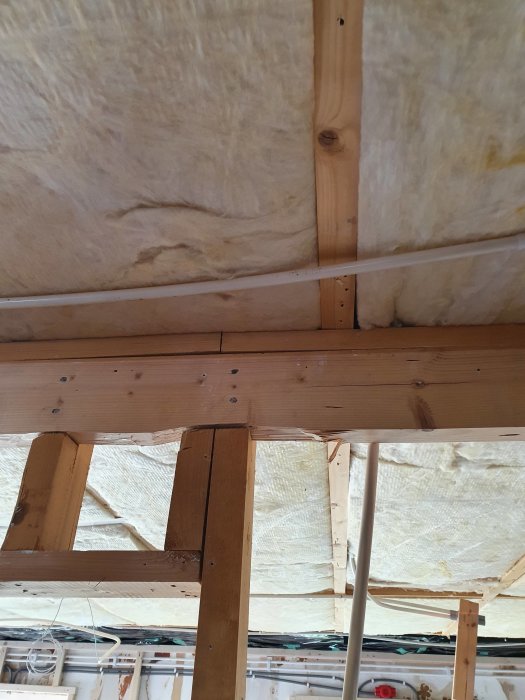
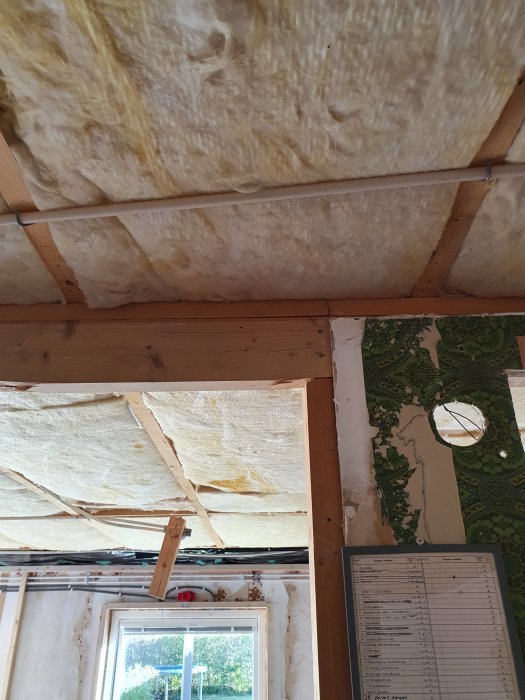
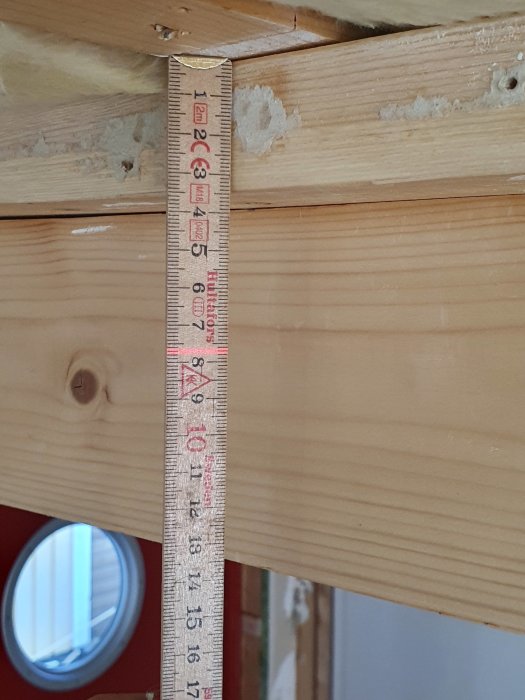
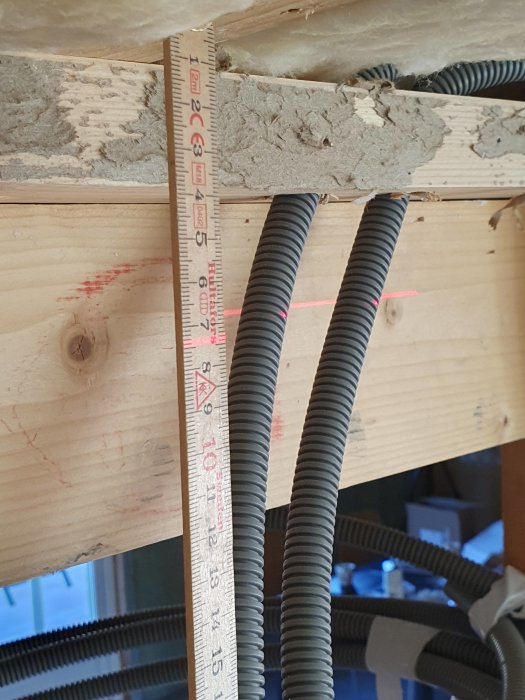
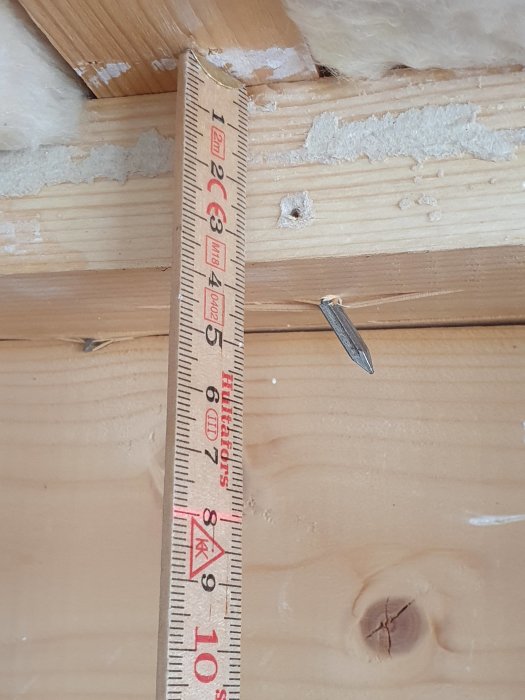
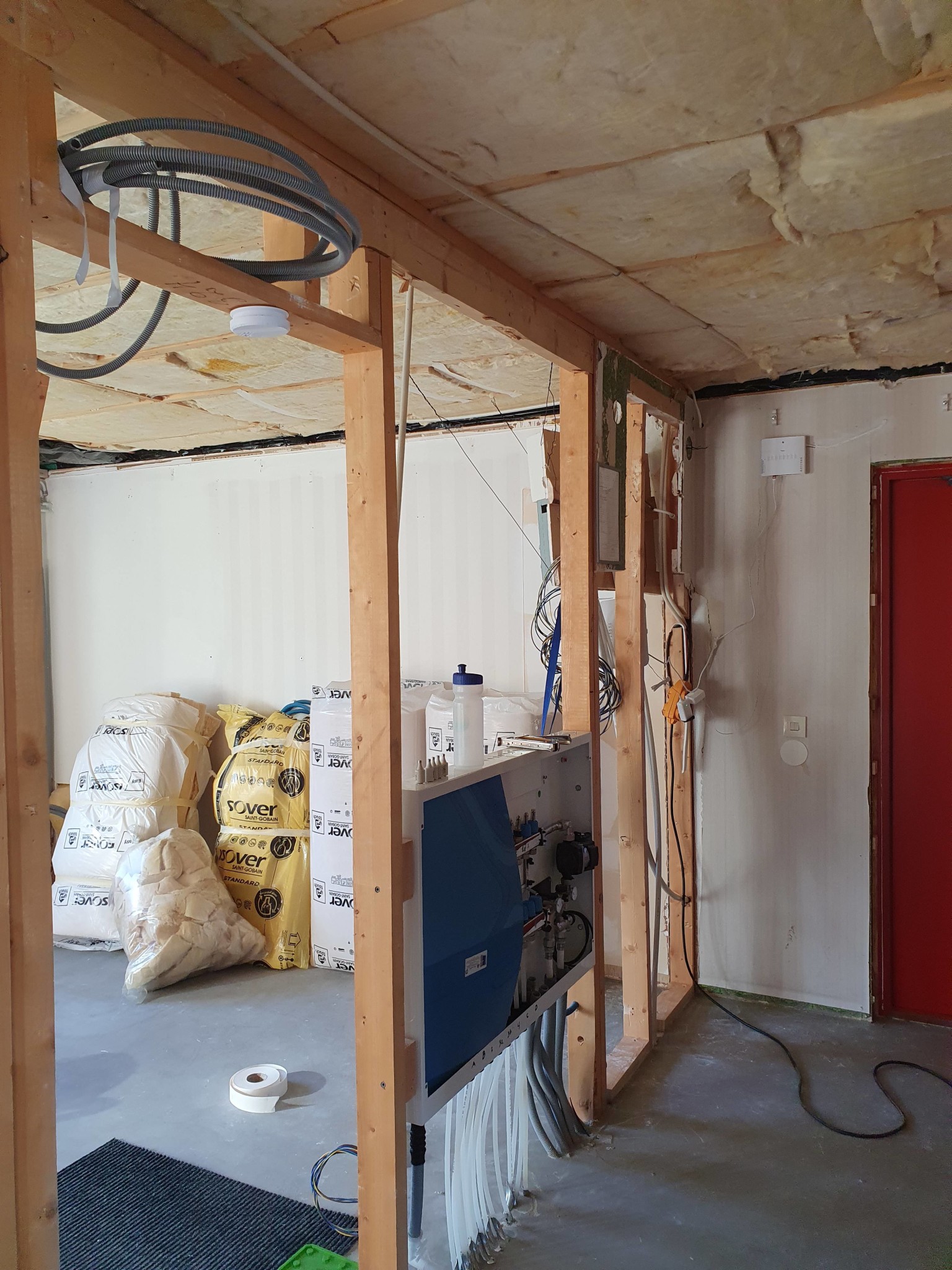
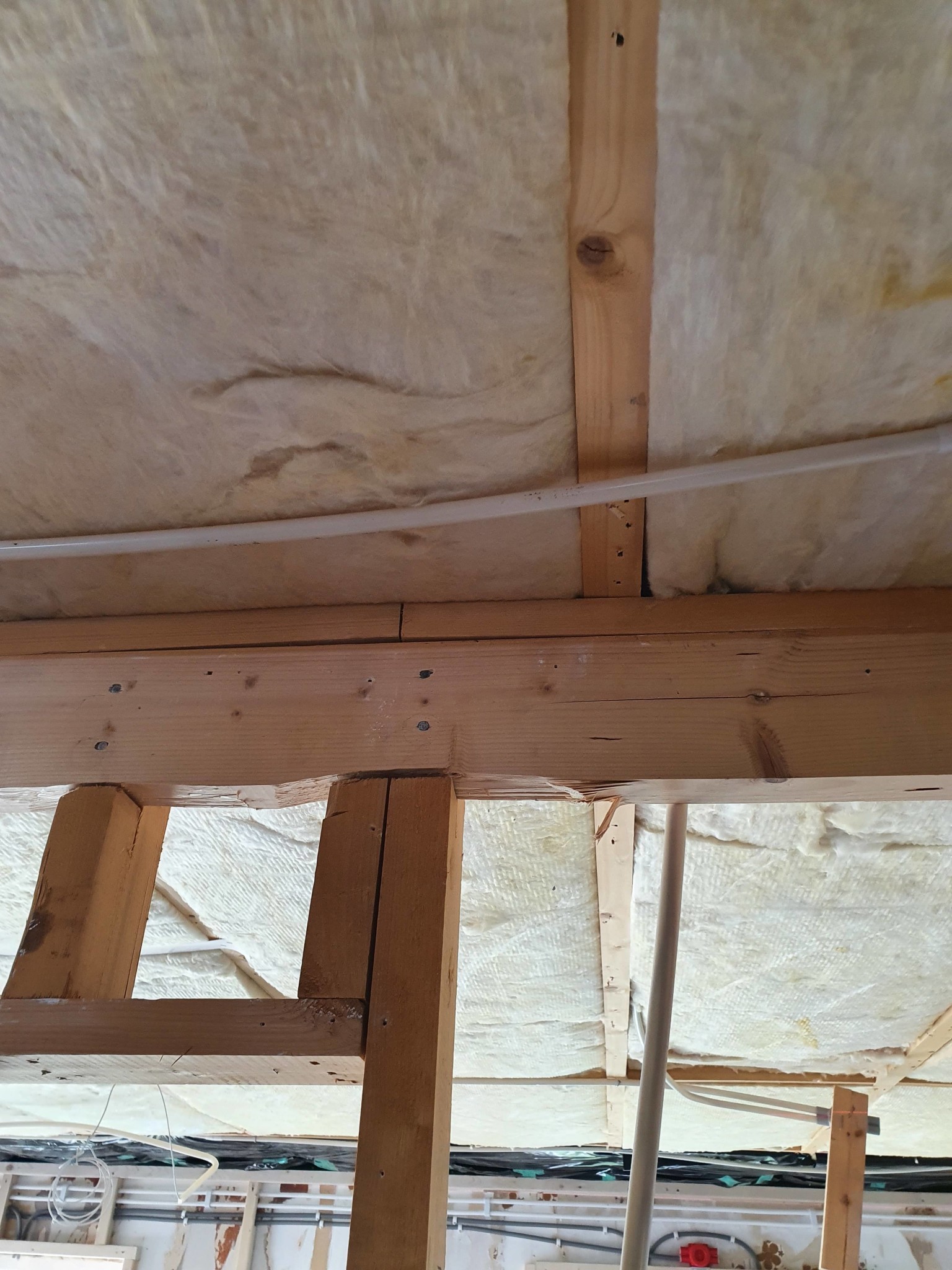
I'm renovating the downstairs and have taken down the ceiling and walls. To make room for the underfloor heating manifold, I had to cut one of the studs in the load-bearing wall. However, it didn't seem to be carrying any load as it was easy to remove. Now that I have everything exposed, I see that the longitudinal beam towards the ceiling looks very weak and is sagging in several places where the supports for the inter-floor structure are located. Should I prop up the wall and insert a thicker beam? If so, what size should I use? The wall is about 3.20 meters long, and then a glulam beam takes over. The inter-floor structure is just under 9 meters. The hole where there used to be a door closest to the glulam will be sealed, so I can add more studs here. But what should I do above the underfloor heating cabinet? There, the distance between the studs is 1.15 meters.
Do as above the door. It's probably "just a matter of switching off" simply. Now there are double studs on one side so it's just about closing the door and inserting double noggings above the cabinet and single ones beside it. And then frame up with a suitable CC since the door is no longer there and was the natural place to patch up drywall or whatever you are using. If you want to handle a lot of forces, you need to put in braces between the floor and noggings in the spaces next to the cabinet and then continue with braces above the cabinet in those spaces. But that's probably a bit advanced. (depending on how it looks upward in the house, of course)
As you mentioned; in the door opening, double the single stud next to the cabinet and add a stud in the middle of the opening. In the now doubled studs next to the central unit, glue and screw an additional stud on each side as far as possible towards the central unit's top. In these studs, create notches for 45*195. Simple and strong!
So it's enough to frame off as you describe. You don't need to support up and replace the entire overhead beam? It looked so weak...
Good if that's the case, I was envisioning a lot of hassle...
Ok, the plan is to install new beams and then frame off the openings with 45x195! And both glue and screw!
Click here to reply
Vi vill skicka notiser för ämnen du bevakar och händelser som berör dig.