
Wondering if there are guidelines for how much the floor tiles can differ when having flooring installed. The company that sold the tiles also handled the installation. Once completed, it became apparent that the tile size differed a bit more than usual, resulting in the joints varying between 2-6 mm. The tiles are also straight-cut, so the joints are completely straight. The company does not want to compensate in any way and claims it would pass an inspection. I haven't heard of similar cases and wonder if it's within the limits of what one has to tolerate or if compensation should be demanded and, if so, how much.
Thankful for answers and other opinions.
Thankful for answers and other opinions.
What type of tiles are they and how large are they? Which EN14411 group are they classified in? If it is porcelain stoneware in the B1a group, the maximum allowed deviation from work-size measurements is 1.2% for an area less than or equal to 90cm2, 1.0% up to 190cm2, 0.75% up to 410cm2, and 0.6% over 410cm2. The average deviation of 10 random tiles must not exceed 0.75% up to 90cm2 and 0.5% over 90cm2.
I have personally had issues with Hornbach who systematically misrepresents their tile measurements.
I have personally had issues with Hornbach who systematically misrepresents their tile measurements.
Last edited by a moderator:


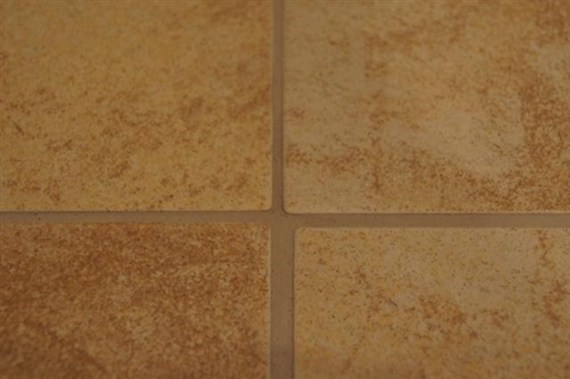
These are tiles from the B1a group that you have. They have a nominal size of 35x35cm (or 35.56x35.56cm, it is unclear which, as there are two size specifications that do not precisely match each other). But this is the nominal size and probably includes an unknown number (maximum 5) of mm grout. The manufacturer should also have specified a "Work Size" measurement, which is the size the tiles should adhere to. This measurement should be indicated with the prefix W. From this size, your tile can deviate a maximum of 0.6% (approximately 2mm).
So the conclusion in your case is that your tiles can vary about 4mm from the largest to the smallest tile if you are really unlucky. 4mm is quite a lot considering that the grout is often 3-5mm wide, so it is indeed a rather lax standard.
So the conclusion in your case is that your tiles can vary about 4mm from the largest to the smallest tile if you are really unlucky. 4mm is quite a lot considering that the grout is often 3-5mm wide, so it is indeed a rather lax standard.
Last edited by a moderator:
Click here to reply
Similar threads
-
How thick with foam glass to get a satisfactory insulation value? Have received varying suggestions from 0.3 to 0.6. Grateful for help :)
Building Materials and Construction Technology -
Ljuskällor i Sarfatti-lampa lyser olika mycket
El -
Ordered (the same) gravel in two batches - got completely (!) different colors
Building Materials and Construction Technology