
3,499 views ·
2 replies
3k views
2 replies
Questions about walls in 50s houses
Hi,
I'm in the process of tearing out my old built-in kitchen, which seems to be original since the apartment building was constructed at the end of the '50s. The plan is to do as much as possible myself, and I've started demolishing to see what conditions and problems emerge. I have a few points below I'd like your expertise and opinion on:
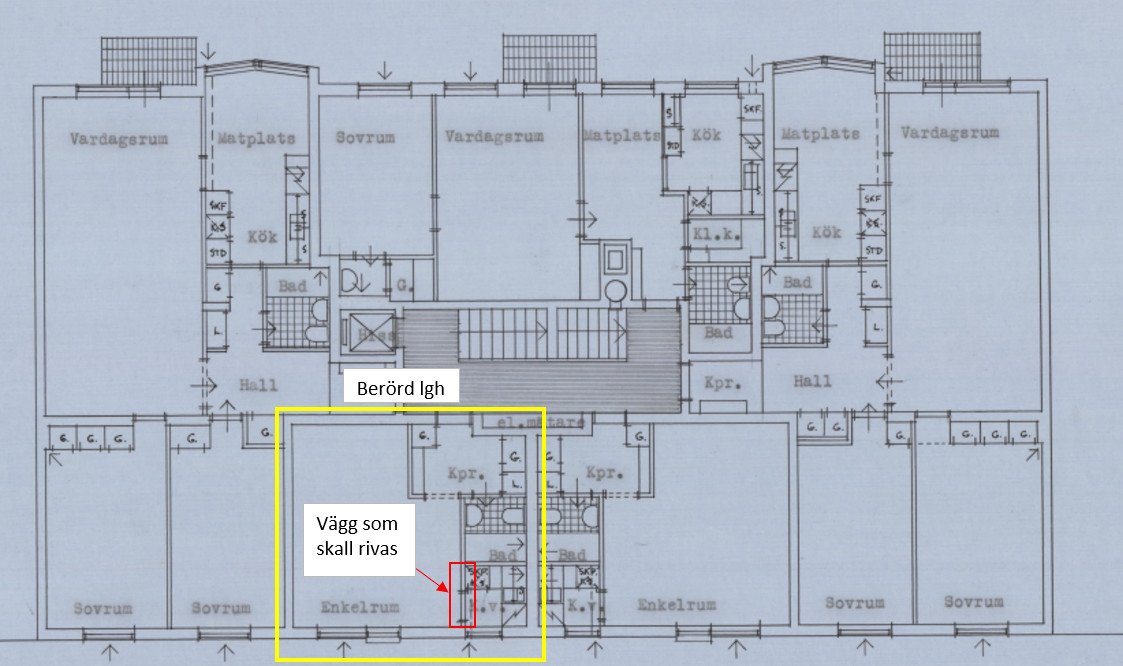
1. It's becoming more relevant to tear down part of the partition wall where the kitchen door frame is. Is there any risk that this wall could be load-bearing? I find it very difficult to see the wall as load-bearing since it sounds hollow when you knock on it. The wall is about 10cm thick and is made of some sort of "darker" block and a few cm of plaster. It appears to be the same block in the wall to be demolished as it is between the kitchen and bathroom, with blocks roughly 500x250 (mm). What type of block/building material could this be? To clarify, I have requested additional drawings from the municipality and will ensure that it’s load-bearing and get approval from the board before I start tearing it down.
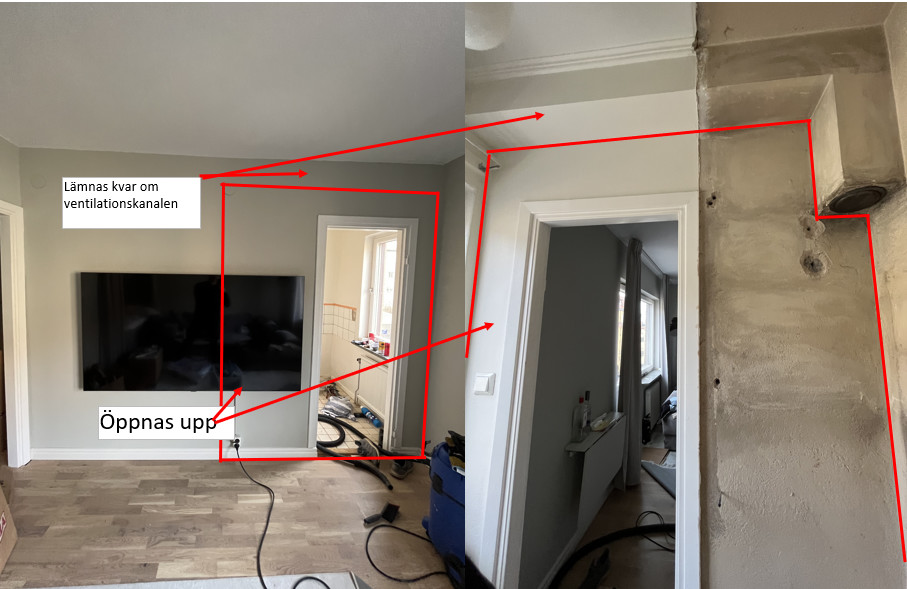
2. As seen in the pictures, there seems to be some sort of ventilation duct running along the wall that is to be removed to the other side where there's some sort of plate valve or similar. Do you think this ventilation continues into the wall, or is it old ventilation that is no longer used? I will also check with the board if this ventilation is still in use; otherwise, it might be relevant to remove this as well, but I suspect there might be a risk it consists of asbestos?
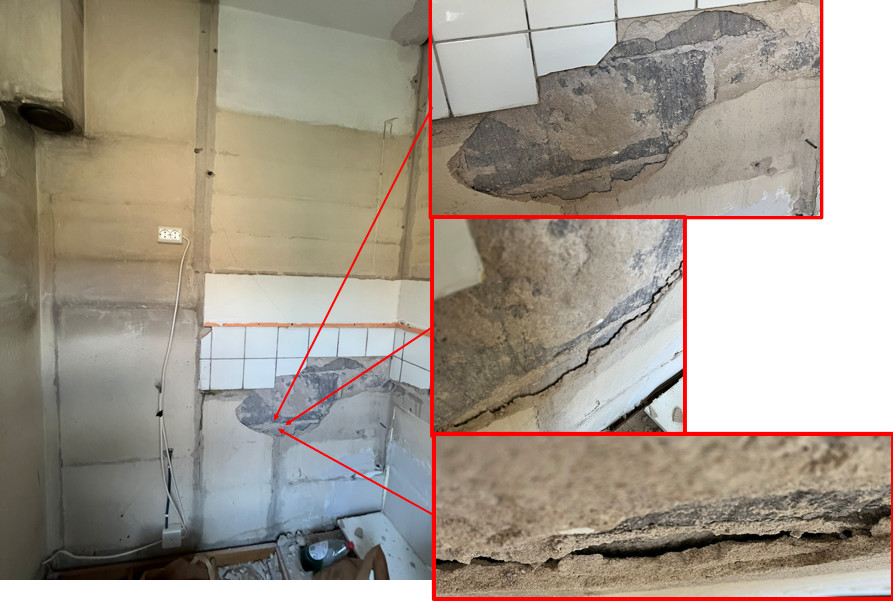
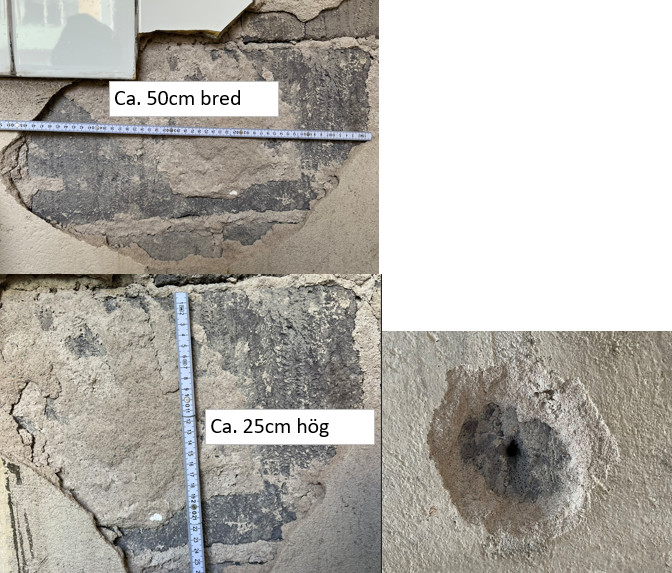
3. The plaster on the wall between the kitchen and bathroom has started to come loose, and you can easily peel off large chunks with your fingers. If I press on the plaster, I also see it flexing inward. Should the plaster be removed from this wall, or is there a good alternative to repair it? The advantage of removing the plaster is that the kitchen becomes a few cm larger, but the downside is that it will be dusty and time-consuming. If all the plaster is to be removed, what's the best way to address it afterward? Is it enough to use joint compound, or should I apply new plaster first?
I'm in the process of tearing out my old built-in kitchen, which seems to be original since the apartment building was constructed at the end of the '50s. The plan is to do as much as possible myself, and I've started demolishing to see what conditions and problems emerge. I have a few points below I'd like your expertise and opinion on:
1. It's becoming more relevant to tear down part of the partition wall where the kitchen door frame is. Is there any risk that this wall could be load-bearing? I find it very difficult to see the wall as load-bearing since it sounds hollow when you knock on it. The wall is about 10cm thick and is made of some sort of "darker" block and a few cm of plaster. It appears to be the same block in the wall to be demolished as it is between the kitchen and bathroom, with blocks roughly 500x250 (mm). What type of block/building material could this be? To clarify, I have requested additional drawings from the municipality and will ensure that it’s load-bearing and get approval from the board before I start tearing it down.
2. As seen in the pictures, there seems to be some sort of ventilation duct running along the wall that is to be removed to the other side where there's some sort of plate valve or similar. Do you think this ventilation continues into the wall, or is it old ventilation that is no longer used? I will also check with the board if this ventilation is still in use; otherwise, it might be relevant to remove this as well, but I suspect there might be a risk it consists of asbestos?
3. The plaster on the wall between the kitchen and bathroom has started to come loose, and you can easily peel off large chunks with your fingers. If I press on the plaster, I also see it flexing inward. Should the plaster be removed from this wall, or is there a good alternative to repair it? The advantage of removing the plaster is that the kitchen becomes a few cm larger, but the downside is that it will be dusty and time-consuming. If all the plaster is to be removed, what's the best way to address it afterward? Is it enough to use joint compound, or should I apply new plaster first?

2. All ventilation is the responsibility of the association and you may not alter it without having received permission from the board. They should also know how the ventilation should function in the building. In kitchens, there should be exhaust air. Could there be a duct that was intended to cool the pantry (SKR?)?
There is a high risk of eternit in the ventilation duct. There may also be asbestos in tiles and fix. You should consider how you demolish to avoid inhaling asbestos dust either during or after the demolition. It's best to send it in for analysis, it costs a few hundred kronor and you'll likely have the results 2-3 working days later.
3. Many place gypsum boards on top of or instead of the plaster to easily achieve a smooth surface.
There is a high risk of eternit in the ventilation duct. There may also be asbestos in tiles and fix. You should consider how you demolish to avoid inhaling asbestos dust either during or after the demolition. It's best to send it in for analysis, it costs a few hundred kronor and you'll likely have the results 2-3 working days later.
3. Many place gypsum boards on top of or instead of the plaster to easily achieve a smooth surface.
thank you for your answers!BirgitS said:
2. All ventilation is the responsibility of the association and you may not alter it without approval from the board. They should also know how the ventilation is supposed to function in the house. There should be exhaust air in the kitchen. Could it be a duct that was intended to cool the pantry (SKR?)?
There is a significant risk of asbestos in the ventilation duct. There could also be asbestos in the tiles and adhesive. You should consider how you demolish to avoid inhaling asbestos dust both during and after demolition. It's best to send it in for analysis, it costs a few hundred kronor, and you probably get the results 2-3 business days later.
3. Many install plasterboard on top of or instead of the plaster to easily achieve a smooth surface.
Click here to reply