Hello!
I'm in the process of framing walls with steel studs.
I've attached tracks to the floor and ceiling, but should I also screw the stud into the outer wall? It feels weak otherwise.
OSB and drywall will go on later!
Regards: confused, as I've only built with wood!
Hello!
I am in the process of framing walls with steel studs.
I have attached tracks to the floor and ceiling, but should I also screw the stud into the outer wall? Otherwise, it feels flimsy.
OSB and drywall will be added later!
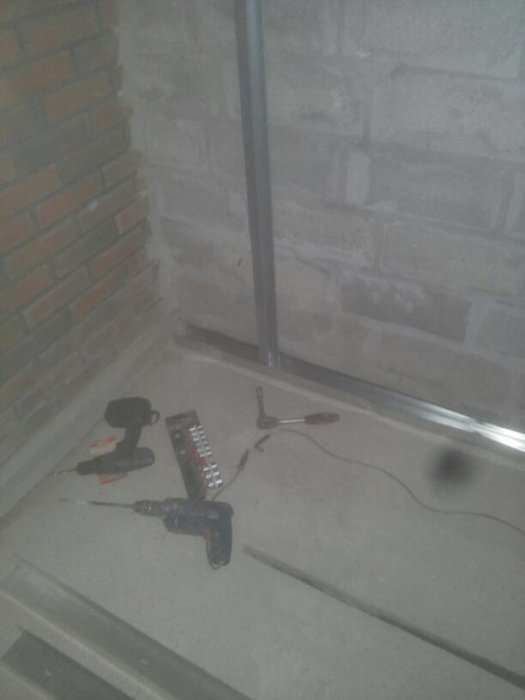
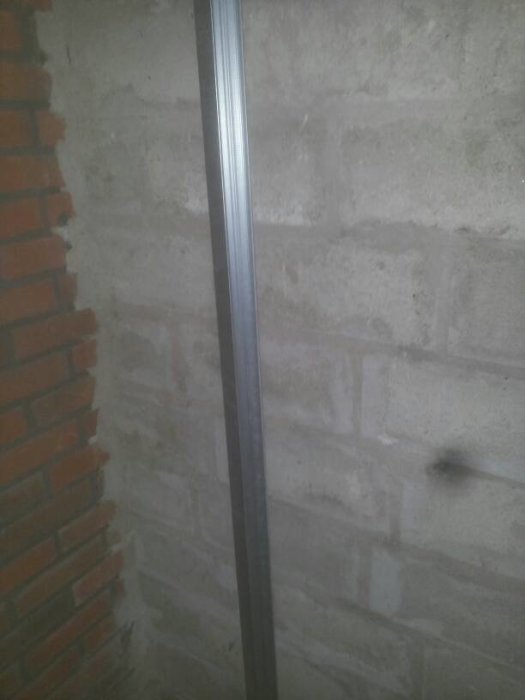
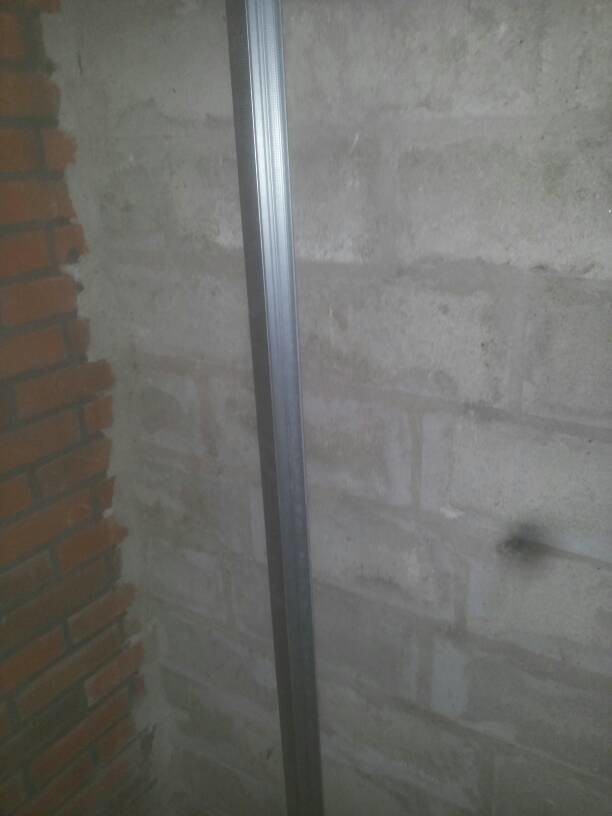
[image]
[image]
Regards: confused, as I've only built with wood!
There is a special tool (expensive) that snaps the studs in place, but otherwise, it becomes stable as mentioned when you attach the OSB...
While I'm at it and asking!
If I screw the OSB into the rails, the wall becomes sealed, and I would like to have a small air gap at the top and bottom!
Maybe add spacers?
It should not be fastened to the wall. Steel studs are unfortunately weaker than wooden studs, and this becomes evident with boards on one side and empty on the other (as in your case). I have done exactly the same thing in my old basement. The advice I can give is to use cc45 for studding and use boards intended for it instead of cc60. Don't forget reinforcement in the corners, which otherwise become unstable. Each manufacturer of steel tracks has their solutions for corners.
Spacers are useless if you don't get above the lowest stud, but I don't think you need to worry. You will probably have a number of holes for switches and outlets?
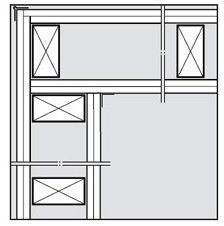
When it comes to corners, I always put one wall up and let it pass by, then attach a stud in the earlier wall and continue with it. Thus, I only use metal studs.
Found an earlier picture here on BH from "Sippan7" which I'm borrowing a bit;
However, I am still concerned about having OSB against the outer wall, which can release moisture. I intend to place a gap at the top since I am planning to lower the ceiling anyway, thereby venting any potential moisture.
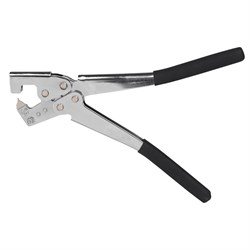
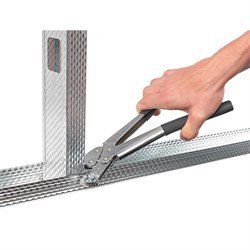
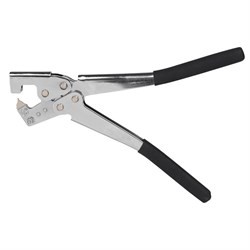
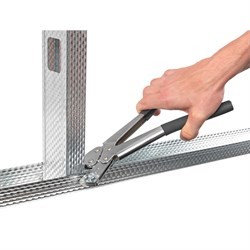
The pliers are good for fixing the studs before stepping in with the boards. Jula actually has one that is reasonably priced - Note that I haven't tried it myself; http://www.jula.se/stuknittang-123009
To further fix the studs, you could add a spacer against the outer wall and attach it, for example, only in the middle.
The clamp is good for securing the studs before you start with the boards. Jula actually has one that is affordable - I should add that I haven't tried it myself; [link]
[image][image]
To further secure the studs, you could add a spacer towards the outer wall and fix it, for example, in the middle only.
I've used Jula's clamp, and it is worth every penny. However, it's not worth buying if you're not going to install a bit.. A small wall or two with cc-60 can just as well be fastened with sheet metal screws.
Started a little today to screw OSB onto a steel frame! What a difficult material:sly: I think the screws hold very poorly despite using the right screws for the purpose 7 out of 10 times the screws didn't hold properly!
I didn't think the wall became rigid enough either after screwing! Maybe it will be better when the plasterboard overlaps with the OSB?
Regards: troubled and dissatisfied
If you haven't pulled too hard so that the screw just spins in the metal stud, then you haven't gotten any grip at all because it will stick and properly if the screw pulls in the stud. Are you absolutely sure you have the right screw?
I have the same experience, using grabbers particle board screws for sheet metal studs and also find it difficult to get a proper grip.
The two tricks I've found that make it easier are:
1. Use a traditional screwdriver, no impact.
2. Try to screw as close to the 90-degree edge of the steel stud as possible because it's stiffer there than further out.
Use 13mm assembly screws (blåbär) instead of with locking pliers..
The locking pliers are just bulky to have in the pocket while working, always fall out
I use decking screws with threads all the way in, you have to press/hold against the metal when screwing, and it usually grips well, but you can't tighten too hard either. The threads on the decking screw are a bit too coarse.






 7 out of 10 times the screws didn't hold properly!
