
1,902 views ·
4 replies
2k views
4 replies
Putting up a mirror on a wall with electricity
We are renovating the hallway and have bought a large (circular with a 110 cm diameter) mirror that we planned to hang on a wall.
Before we were going to mount the mirror, we checked it with a stud finder, which of course indicated that there was electrical wiring in almost the entire section of the wall where we intended to screw. To be sure, we tested with another stud finder, which indicated pretty much the same. At first, we thought it might be due to still damp wallpaper, but it increasingly feels like it's time to accept the truth :/.
How do we hang up the mirror in the best way without risking the electrical wiring? I believe there is chipboard behind the wallpaper, and the mirror weighs about 15 kg according to the supplier. There are two mounting points on the mirror.
There are also children in the house who will surely touch it, so I feel the mounting should be sturdy enough to give peace of mind .
.
Before we were going to mount the mirror, we checked it with a stud finder, which of course indicated that there was electrical wiring in almost the entire section of the wall where we intended to screw. To be sure, we tested with another stud finder, which indicated pretty much the same. At first, we thought it might be due to still damp wallpaper, but it increasingly feels like it's time to accept the truth :/.
How do we hang up the mirror in the best way without risking the electrical wiring? I believe there is chipboard behind the wallpaper, and the mirror weighs about 15 kg according to the supplier. There are two mounting points on the mirror.
There are also children in the house who will surely touch it, so I feel the mounting should be sturdy enough to give peace of mind
.
The stud finder probably indicated that there were reglar in the wall?V villasuperstar said:
But drill e.g., two Ø8 mm holes carefully and insert metal expanders:
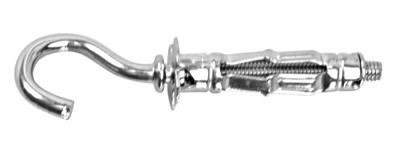
https://www.jula.se/catalog/bygg-oc...s/gipsexpanders/metallexpander-c-krok-365122/
It should be easy to check that there are no electrical wires, or that reglar are not where you place the expanders.

House or apartment?
The hallway in an apartment can contain risers to other apartments, if there are many floors and apartments above, there can be a lot of cables... in a house, the panel can be on the other side of the wall, resulting in a lot of wiring as well.
The hallway in an apartment can contain risers to other apartments, if there are many floors and apartments above, there can be a lot of cables... in a house, the panel can be on the other side of the wall, resulting in a lot of wiring as well.
Absolutely, I don't have a picture but I can describe my approach.KnockOnWood said:
I got the idea from another place that it's really only the screw part that sits in the board that contributes to the sturdiness. So I drilled a small hole in an "electricity-free" spot where I could insert a piece of thin steel wire that I bent at the front (kind of like an L but with less than a 90-degree angle). With this, I could measure the thickness of the board by measuring the length of the wire from the point the hook "caught" on the other side (and then pulling out the wire). Once I knew the board's thickness, I simply chose screws where only a few millimeters would protrude on the backside.
The board was quite thick (1 inch) and a particle board, so two sturdy screws were enough to hold the mirror in place
.
Click here to reply