
6,995 views ·
16 replies
7k views
16 replies
Prefab concrete slab that has given way
Hi! Please let me know if there is a similar thread. I could not find one.
I have a house with a basement (semi-basement). The basement floor is poured concrete, and its walls appear to be precast concrete. The ceiling in the basement is also precast concrete.
The ceiling in the basement consists of three parallel concrete slabs with a thickness of about 5 cm and a width of 2.5 m. They are reinforced. These hang freely between a wall and a flat steel beam. The free-hanging length is about 5 m. I do not know what the attachment to the wall looks like (need to tear down to access it).
Now to the problem: these concrete slabs have a deflection of about 3-4 cm on 2.5 m. This is also visible on the upper floor where the floor has a slope. Some notice it, others do not.
This feels concerning. Mainly because we do not know if it will continue to bend. We are considering how to address or stop this. Any suggestions?
The simplest seems to be to install an additional steel beam halfway (so the free-hanging length becomes 2.5 m). However, one might wonder if it is wise to push the precast concrete up again. The risk of cracks and problems in the attachment to the wall worries me. What do you think?
The house was built in 1995. There are also a bunch of water-bearing pipes through the ceiling as well as electrical cables, etc.
Thanks in advance!
I have a house with a basement (semi-basement). The basement floor is poured concrete, and its walls appear to be precast concrete. The ceiling in the basement is also precast concrete.
The ceiling in the basement consists of three parallel concrete slabs with a thickness of about 5 cm and a width of 2.5 m. They are reinforced. These hang freely between a wall and a flat steel beam. The free-hanging length is about 5 m. I do not know what the attachment to the wall looks like (need to tear down to access it).
Now to the problem: these concrete slabs have a deflection of about 3-4 cm on 2.5 m. This is also visible on the upper floor where the floor has a slope. Some notice it, others do not.
This feels concerning. Mainly because we do not know if it will continue to bend. We are considering how to address or stop this. Any suggestions?
The simplest seems to be to install an additional steel beam halfway (so the free-hanging length becomes 2.5 m). However, one might wonder if it is wise to push the precast concrete up again. The risk of cracks and problems in the attachment to the wall worries me. What do you think?
The house was built in 1995. There are also a bunch of water-bearing pipes through the ceiling as well as electrical cables, etc.
Thanks in advance!

You should let a construction engineer look at that. Request all the blueprint documentation from the municipality. There might be construction drawings.
A thickness of 5cm sounds completely wrong.
A thickness of 5cm sounds completely wrong.
Member
· Västernorrland
· 12 077 posts
if they are only 5cm thick it's not particularly strange if they sag? Not that I know how thick they usually are but it sounds thin offhand. They will probably sag from their own weight alone.
Spontaneously, I would guess that even half the späävidd is too far.

That a concrete floor would only be 5cm thick is very unlikely. It wouldn't be able to support it. Most likely they are intended for casting the rest of the floor on top. But it's hard to say anything without pictures.
So get someone to take a look at it. If it really is only 5cm, it feels completely crazy.
So get someone to take a look at it. If it really is only 5cm, it feels completely crazy.
How do you know that the thickness is only 5 cm? It doesn't sound reasonable. Especially not with a span of 5 meters.
All floor structures hang more or less. Concrete slabs hang on the reinforcement since the concrete itself can't handle much tensile force and cracks. As long as the sizing is correct, there's no danger with that.
All floor structures hang more or less. Concrete slabs hang on the reinforcement since the concrete itself can't handle much tensile force and cracks. As long as the sizing is correct, there's no danger with that.
Agree that it feels thin. There are some holes in the ceiling where you can reach. Will take a picture.
Isn't it possible to imagine that there's a träbjälklag above the 5cm ceiling perhaps? Might have to tear up somewhere.
Isn't it possible to imagine that there's a träbjälklag above the 5cm ceiling perhaps? Might have to tear up somewhere.
Member
· Östergötland
· 253 posts
If it's a filigran floor, the prefab concrete is often about 5 cm, but it is guaranteed to be topped up with at least 150mm more.
Are you sure it hasn't been hanging since it was cast?
Are you sure it hasn't been hanging since it was cast?
Will try to access and check how it is structured. Will get back.

Here's what the concrete slab looks like. Thin. At the shaft for the stove (where you can't access the floor construction). I can't really access above the concrete slab to see how it's constructed. The best is picture 2, which suggests a wooden joist structure above the concrete slab. I'm doubtful that anything has been cast on top of the concrete slab.
Picture 3 is an image in the basement of the ceiling.
I will talk to the municipality tomorrow.
Picture 3 is an image in the basement of the ceiling.
I will talk to the municipality tomorrow.
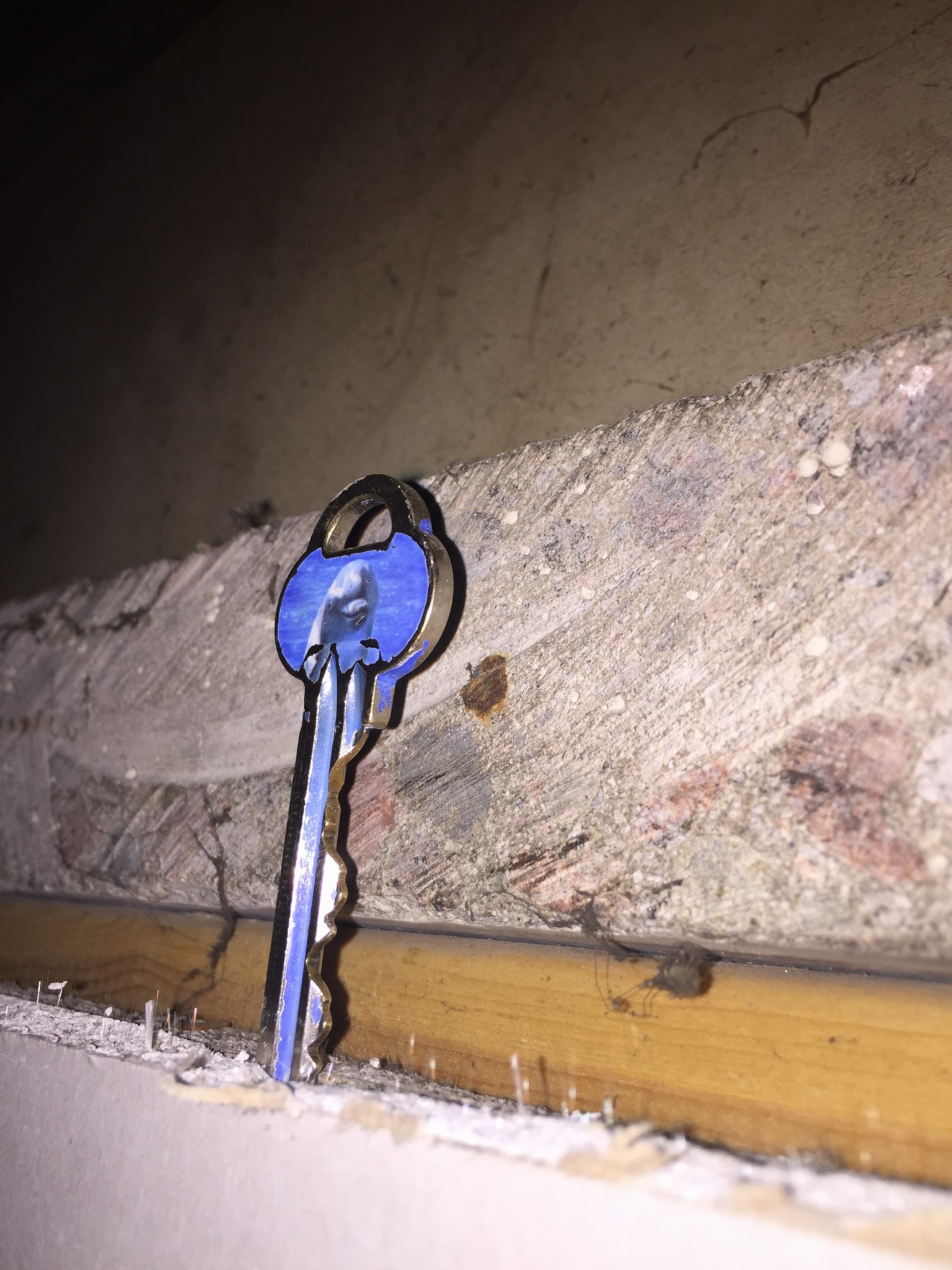


Knocked on it. Felt like plaster. Probably some fireproof material.

It is a so-called ERGE floor slab, the span and support table is probably available from the manufacturer. I have the original documents for mine from 1967 and it states that supports in the form of solid concrete blocks should be present every 3 meters approximately. Can check back tonight with exact figures.
It's also common to pour a finish coat, often with underfloor heating and reinforcement.
It's also common to pour a finish coat, often with underfloor heating and reinforcement.