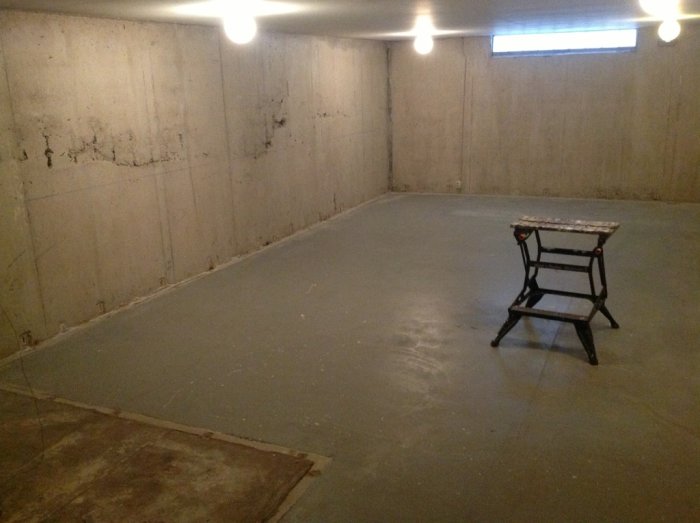
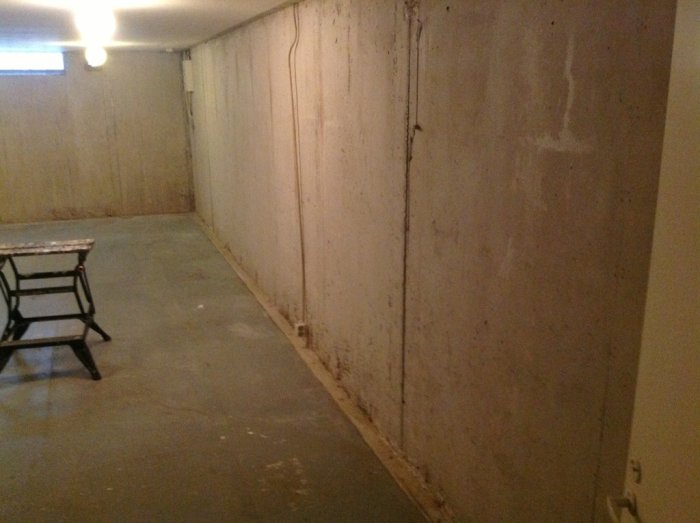
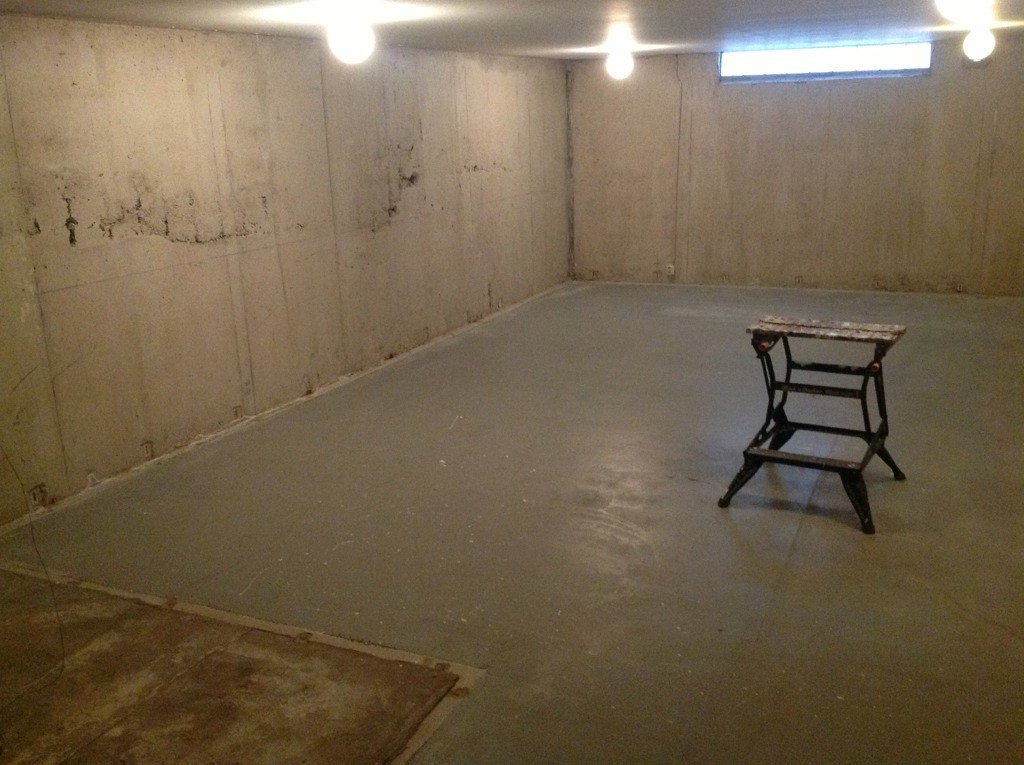
My partner and I bought a townhouse/atrium house/L-shaped house built in '74 almost two years ago. The basement is 130 sqm and shaped like an L-square. The interior walls in the basement were set up with untreated wooden studs, insulation, and drywall. The wooden studs were directly against the concrete wall. During the inspection, when they drilled holes in the wall, there was a 'smell of microbial growth,' and we decided to eventually tear out everything in the basement and rebuild it from bare concrete in a more sustainable and healthy way.
Currently, I have torn down the walls in most of one ‘wing’ of the building, where there was a large hobby room and a sauna. In the hobby room, the studs were not so moldy, but behind the sauna wall, there was a lot of mold. Now I intend to gradually start rebuilding again.
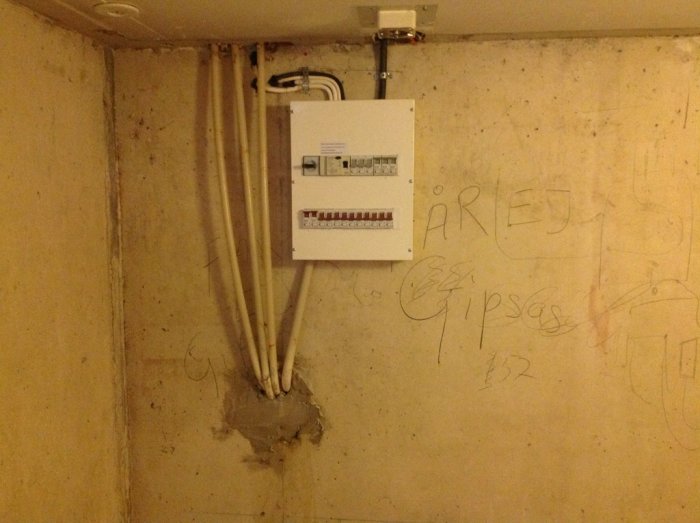
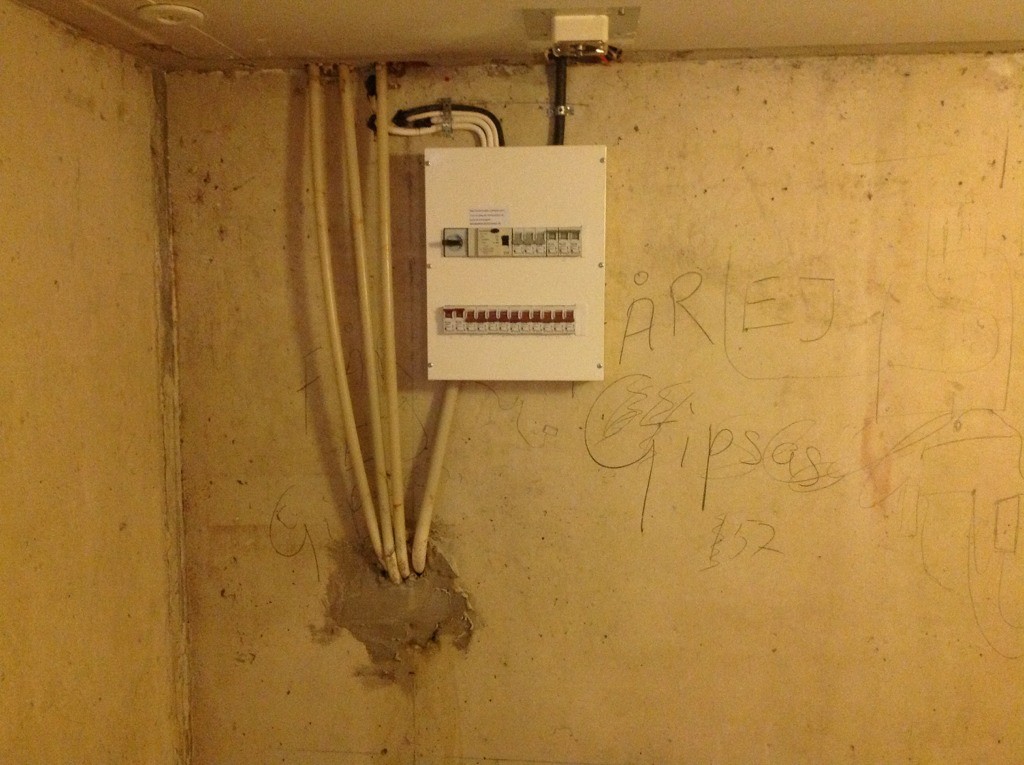
We also have high radon levels in the basement, and it has been determined to be soil radon. As a first attempt at action, we thought we’d seal all pipe penetrations and cracks we discover as we demolish in the basement.
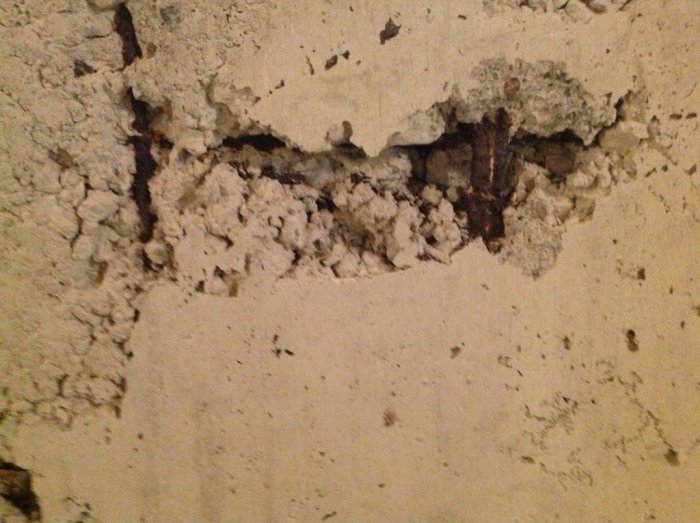
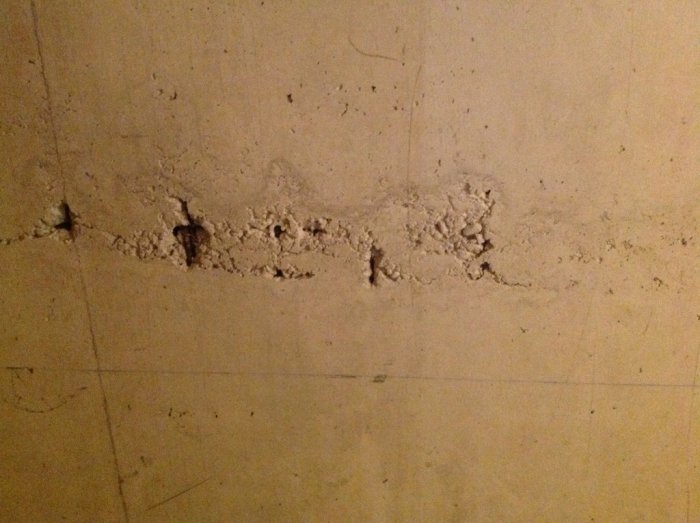
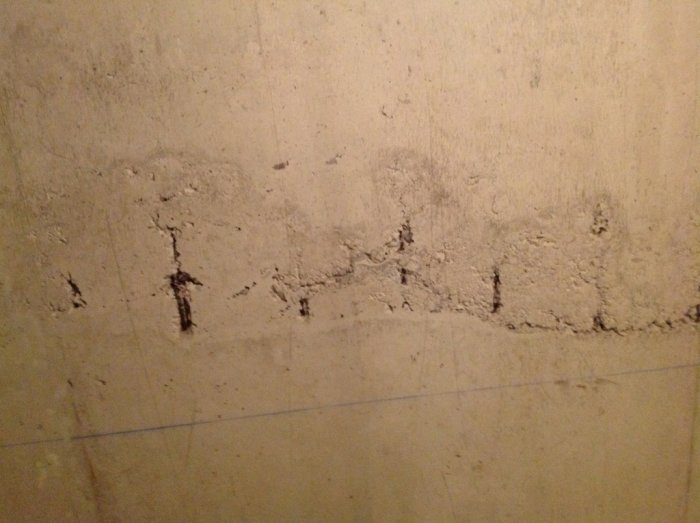
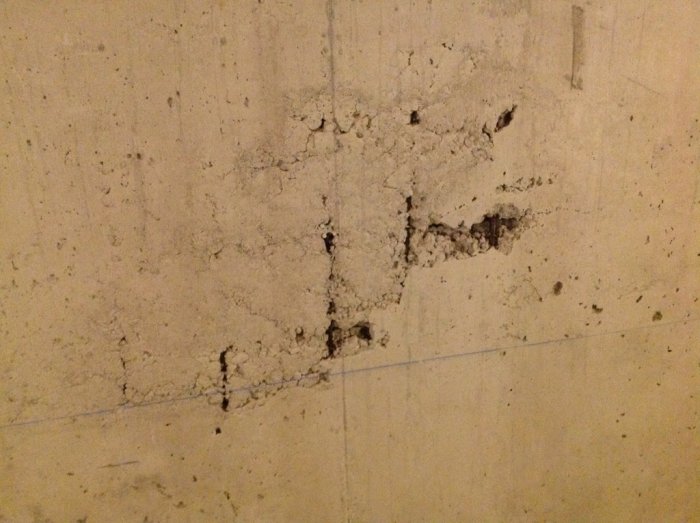
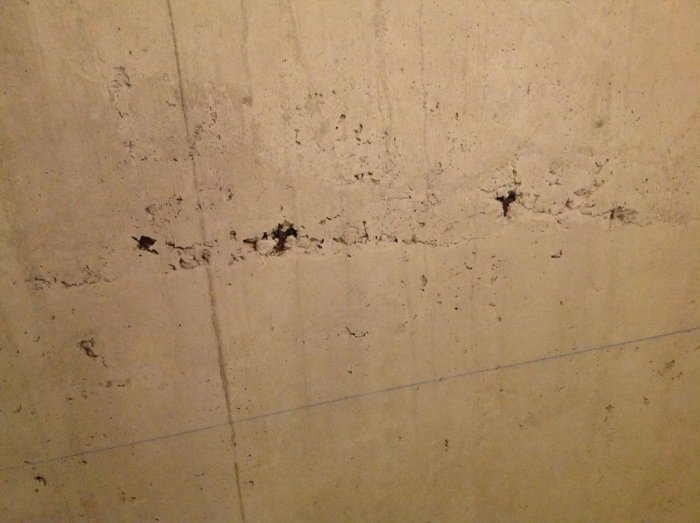
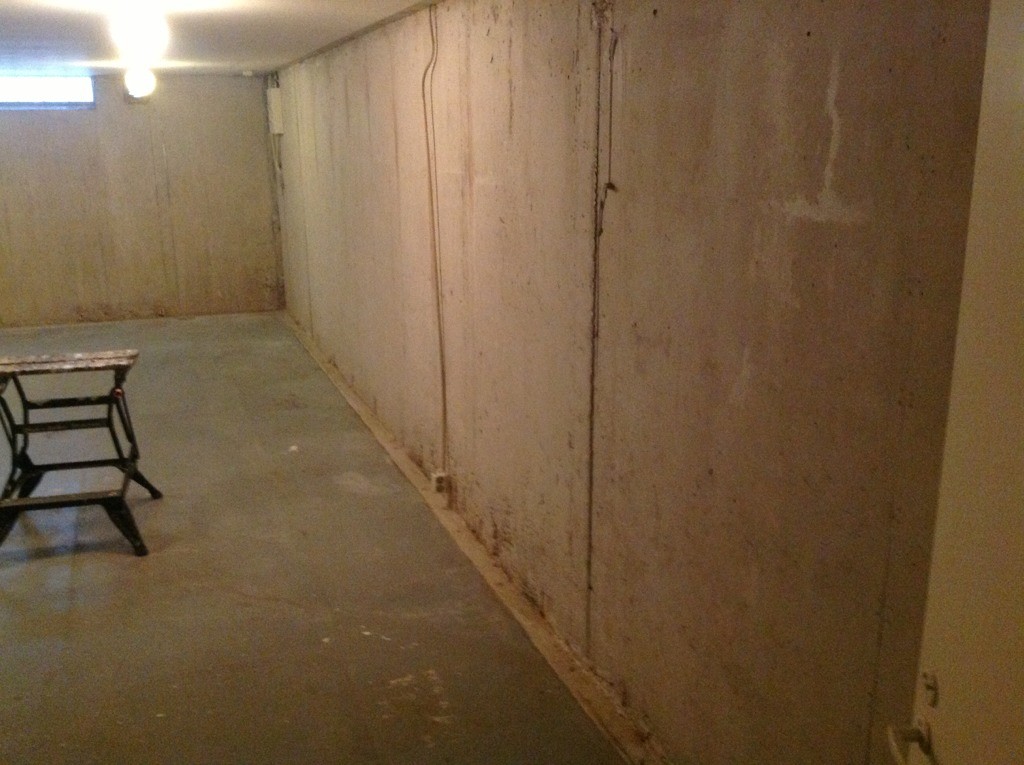
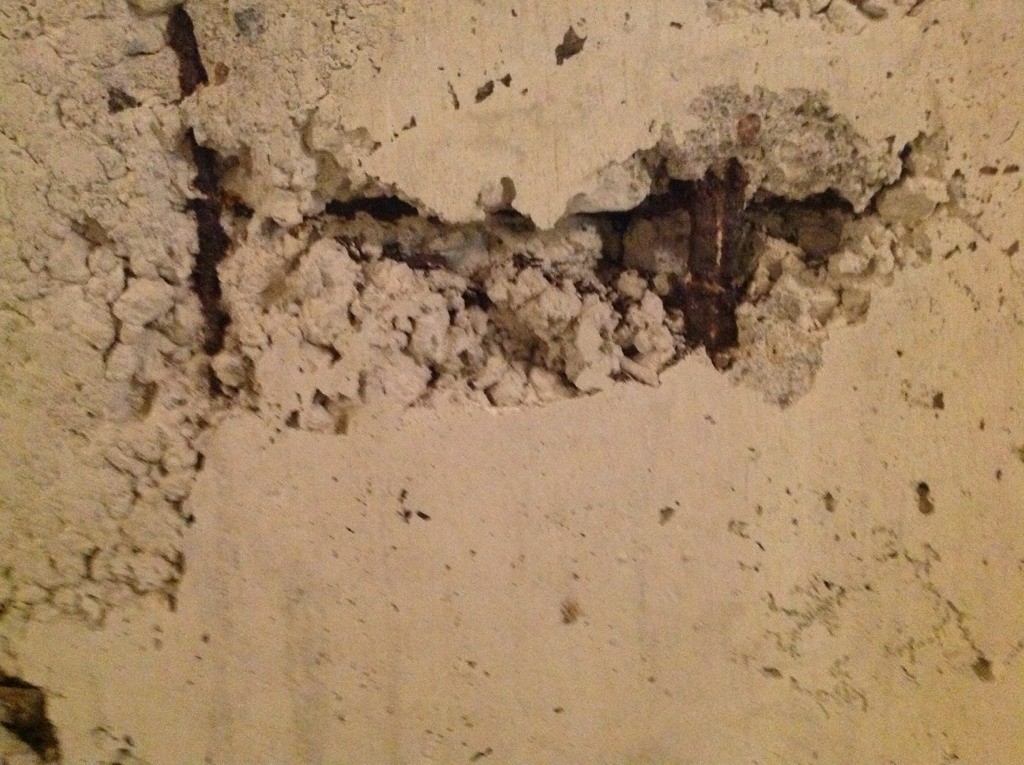
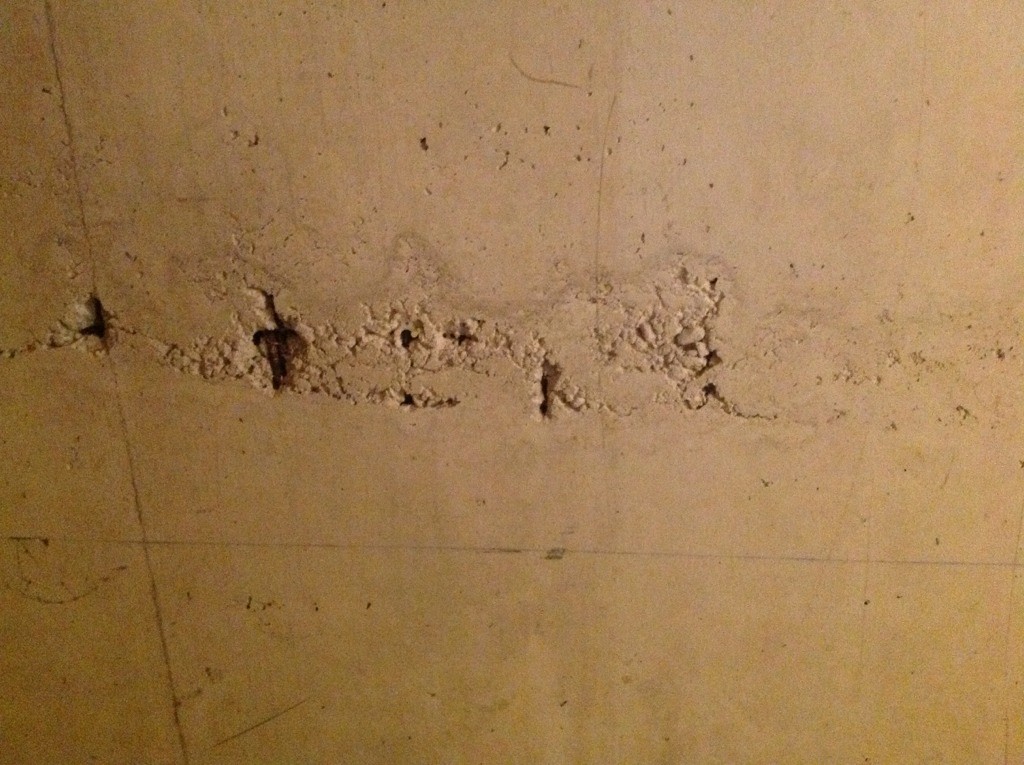
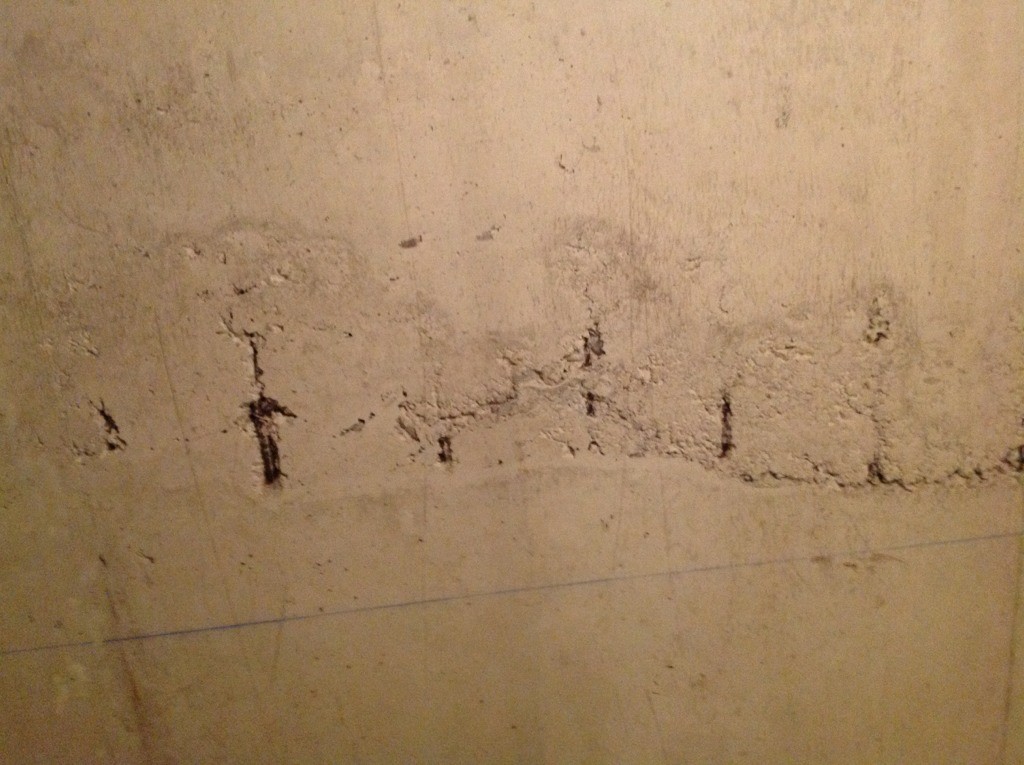
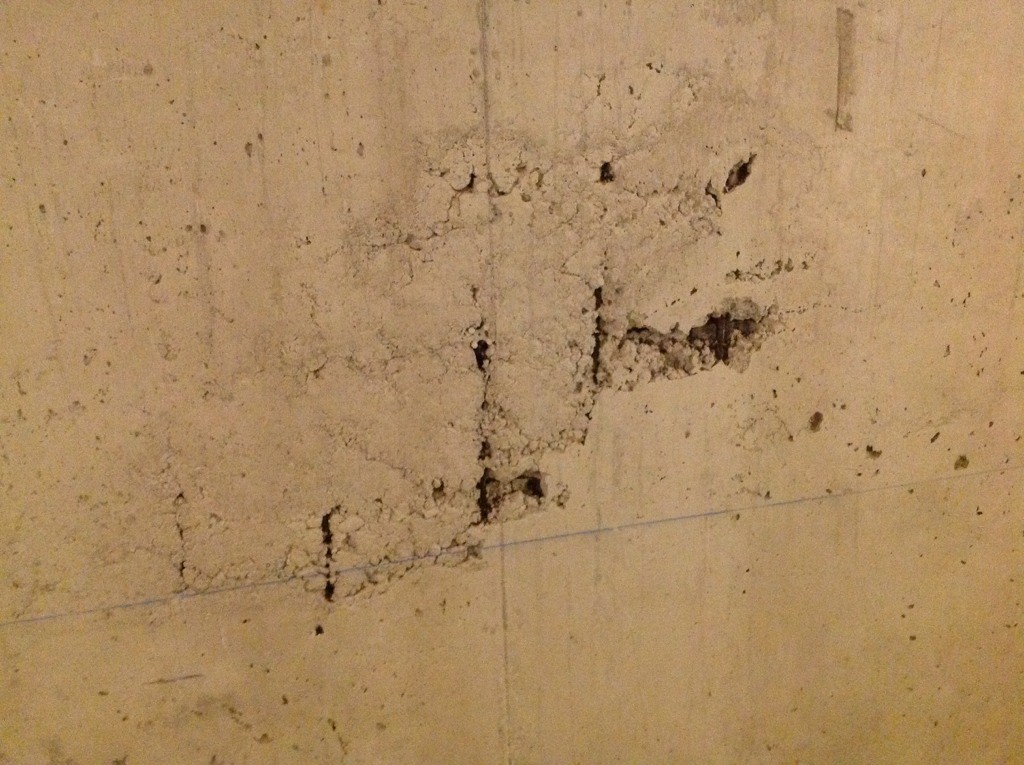
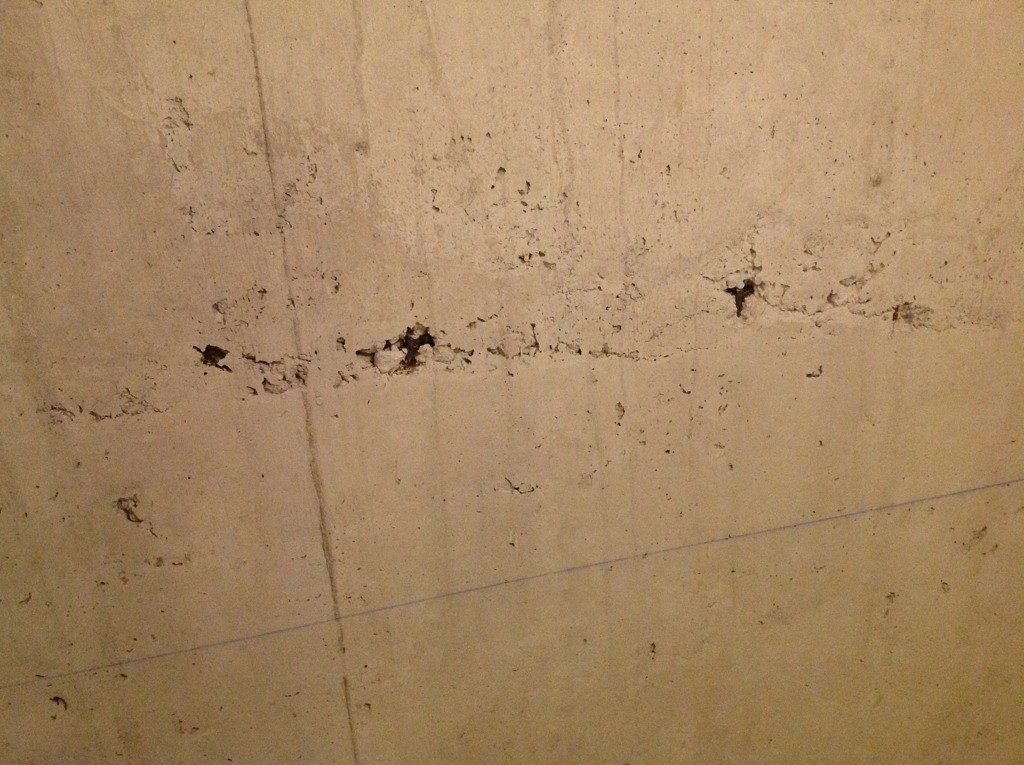
On the exposed walls, there are 'damages' that a neighbor says are due to poor casting of the concrete. This is nothing that emerged upon purchase and probably none of the previous owners have known about it. I wonder if it is something we can get compensation for somewhere (home insurance, some other insurance, hidden defect, or the like), something I must claim before I start restoring. I also wonder if anyone can say what causes it and how I best repair the wall and seal it. I am attaching some pictures below.
There are also pieces of polystyrene in holes in the wall, which we believe are remnants from the mold when they cast the wall. Should I try to scrape away the polystyrene before filling the holes? What should I fill the holes with?
We want to seal against any radon coming in and also make the walls look nicer. We are leaning towards not rebuilding the interior walls again, but just painting the walls (possibly plastering). Even though it looks like you can easily pick away more at the concrete defects, it's harder than it goes with fingers, at least.
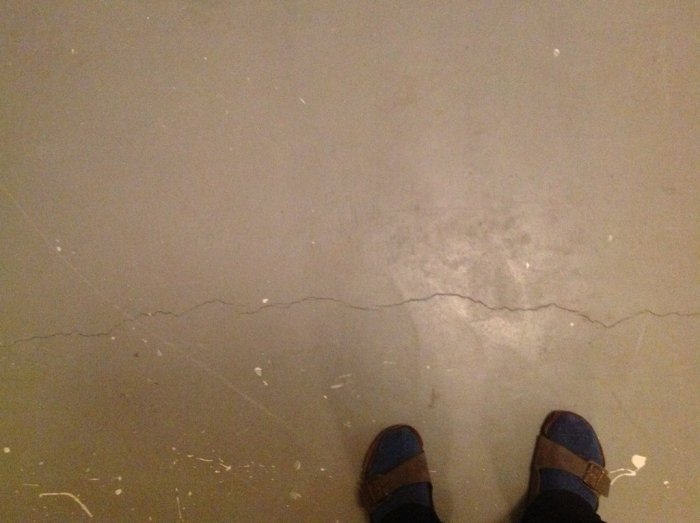
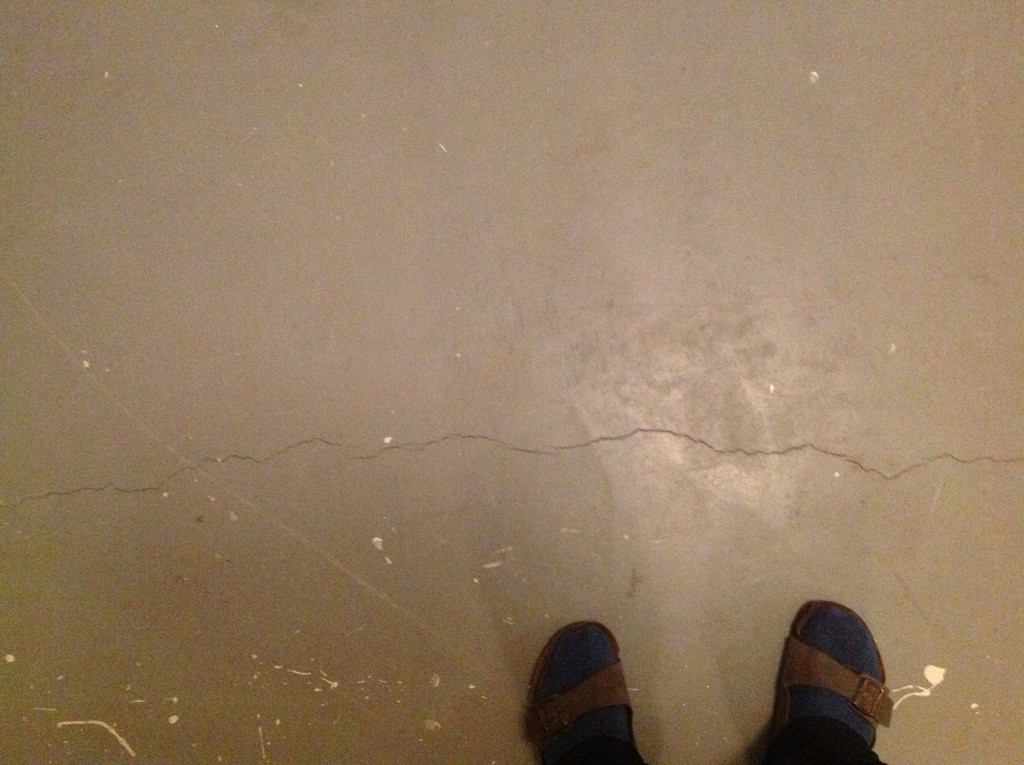
That's usually called a "rat's nest," it's caused by not vibrating well enough when casting, or it could be that it took too long between concrete trucks so it set a bit and couldn't be vibrated together. The crack in the floor is probably some form of settling in the house, quite common.
I would suggest that regular gypsum plaster and some patching compound would fix the wall.
Sealing radon is new to me, but I guess there's some super expensive sealant for that
Thank you, Donwoody! So we have rat nests then. A bit of a shame that it's unoccupied when there's such a housing shortage in the Stockholm area. However, I don't think we should take in any four-legged tenants. The risk is that they might come with claims for damages in the future if they get sick.
I don't really know about radon sealing either. It's a gas that should be stopped, anyway.
I have previously tried to find reliable information on the web about how to do it, but didn't find as detailed info as I would like. For example, materials for sealing that prevent the radon.
I don't think you can completely prevent radon from seeping in, possibly just reduce the amount. You need to get ventilation working in combination with "sealing"...
We plan to start by sealing what we can, and then conduct a new long-term measurement. Currently, we only live on the ground floor where the values are okay. We only use the basement for storage and the laundry room for now. We have measured in the basement and will continue to do so since we plan to use it as living space in the future.
Since we will tear down the entire basement to the concrete walls, we should at least have a chance to access all existing cracks, holes, wells, and pipe penetrations. I honestly don't know what results we can expect from these measures. I guess that it's not common to expose so much solely to seal against radon.
But as for the walls, you can't seal them. You've torn everything down because you've had issues with moisture in the old wall coverings, so if you put up something that seals against a gas, you'll trap moisture and get those problems back. Provided, of course, that you haven't re-drained so that no moisture seeps in anymore, but you can't be a hundred percent sure about that, can you?
Not plaster on the wall...... Use something cement-based.
Radon: sealing is good and you do that with regular sealant. But, even more important is to let air in where it should go. Make sure you have the air supply arranged appropriately.
Metal studs seem to be a good way forward for the walls.
Radon: sealing is good and you do it with regular sealant. But, even more important is to allow air where it should come in. Make sure you have arranged for appropriate air supply.
I was mostly thinking about some kind of sealing wallpaper or paint. I'm not well-read on the topic but it felt wrong directly on the concrete. Or? Correct me if I'm thinking foolishly.
I also don't know how such paint would work, but wallpaper is definitely not the right way to go directly on an exterior wall below ground level.
Depending on the degree of the problem, radon sealing is likely mainly done in the floor, not the walls. However, it also depends on whether we are talking about ground radon or radon from the building materials (here it looks like regular concrete, so we're talking about ground radon).
TS considered hidden defects, regarding how the concrete looked... First, you must determine that it is a defect, and not just a cosmetic issue. Additionally, it's not that expensive to repair those "holes" that exist, so it might not even be worth the trouble to discuss hidden defects with the seller. The house has been standing since '74, and I don't think there's any risk with the structural integrity.
Thanks for the responses, I feel more confident about how to proceed.
There was a period of inactivity, partly due to longer workdays, but perhaps mainly because I managed to bury my head in the sand for a while. Now it feels interesting to move forward again.
I'm also considering ordering one of Makita's 18V kits from the UK. It was an idea I had already last autumn, but I never got around to it then. Now that the British pound is so low and we have a lot of renovation ahead of us, both inside and outside, it feels worth it again. I might also buy a drywall 'screw gun.' I got a taste for it when we borrowed one earlier. What complicates the purchase is that the Swedish Makita packages feel more modern/better in my opinion, without having much expertise.
If we build up interior walls, it will be with steel studs. We don't plan on sealing the walls with plastic. We have insulated externally with 10cm of pordrän when we re-drained. We don't have blue concrete; it's about ground radon.
We are repairing the walls ourselves without putting energy into trying to get a few extra pennies for it. Thanks for the guidance there too!
Regarding radon:
I believe there are like DEFCON 1 - 2 levels depending on the amount of radon in the air?
If you have "just a little" amount, it might be enough to have a slightly more forced exhaust in the basement (+ concrete sealing), and supply air to be taken partly or entirely from the living area (so no radon air rises up). Laundry rooms and WC/shower are obvious exhaust points and should already be present?
A positive side effect is that ventilation and drying improve, reducing the risk of moisture problems. If you plan to furnish the basement for residential use, the necessary improved ventilation is already in place.
Click here to reply
Vi vill skicka notiser för ämnen du bevakar och händelser som berör dig.