
2,828 views ·
16 replies
3k views
16 replies
Plumbing through beams
Hi!
I'm in the middle of a bathroom renovation. And with the placement of the toilet, bathtub, and sink, we might need to run drain pipes from the sink and bathtub.
As I understand it, 75mm pipes are sufficient for the bathtub and sink.
The joists are 22cm thick and 7cm wide, and we would need to pass through 2 joists at cc60.
Do you think it's structurally okay to do so?
I'm in the middle of a bathroom renovation. And with the placement of the toilet, bathtub, and sink, we might need to run drain pipes from the sink and bathtub.
As I understand it, 75mm pipes are sufficient for the bathtub and sink.
The joists are 22cm thick and 7cm wide, and we would need to pass through 2 joists at cc60.
Do you think it's structurally okay to do so?
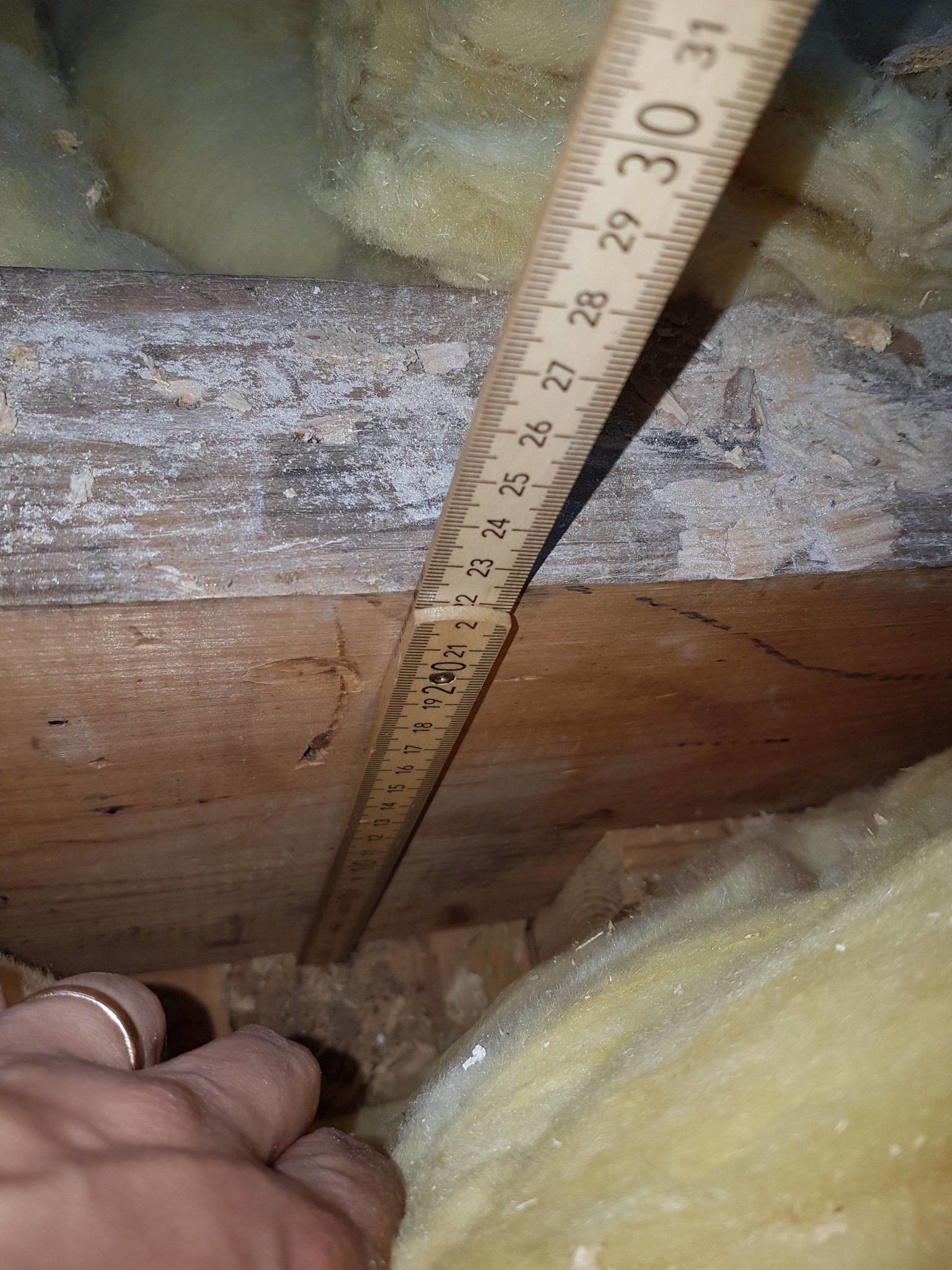
You really need to look at the site to determine the action. Generally, you drill a suitable hole. Then take, for example, 2 pieces of 15-ply that you drill holes in and screw-glue on either side of the beam. Whether this is sufficient in your case or if additional measures are required is difficult to answer.S SomePenguin said:Hello!
I'm in the middle of a bathroom renovation. And with the placement of the toilet, bathtub, and sink, we might need to run drain pipes from the sink and bathtub.
As I understand it, 75mm pipes are sufficient for the bathtub and sink.
The beams are 22cm thick and 7cm wide, and you would need to pass through 2 beams at 60cm centers.
Do you think it's structurally okay to do so?
The basic rule is that you should reinforce what has been weakened.

The main rule is not to make large holes in load-bearing beams. A 50 mm pipe usually suffices from the sink. You can often achieve a lot with some clever solutions. If you still need to make a hole, it's important to do it in the right place. Certain places should be avoided. To make a good assessment in your case, both a floor plan and a section are needed. The assessment requires knowledge of structural mechanics. The beam dimension, 3x9 inches, suggests a long span.
Thanks for the input!J justusandersson said:The main rule is not to make large holes in load-bearing beams. From the sink, a 50 mm pipe is usually sufficient. You can also achieve a lot with some clever solutions. If you still need to make a hole, it's essential to do it in the right place. Certain spots should be avoided. For a proper assessment in your case, both a floor plan and a section are needed. This assessment requires knowledge in structural mechanics. The beam dimension, 3x9 inches, suggests a long span.
By a long span, do you mean the length of the beam? They are probably no more than 6m long.
The house is from the 1930s.
Thanks for the tip!Krille-72 said:
You really have to look at the site to decide on action. Generally, you drill a suitable hole. Then, for example, take 2 pieces of 15 plywood that you drill holes in and screw-glue on each side of the beam.
Whether this is sufficient in your case or if additional measures are required is difficult to answer.
The basic rule is that you should reinforce what has been weakened.
Will discuss the idea with the bathroom builder tomorrow!
I can add that I am dealing with a bathroom contractor. I would probably guess that he doesn't have an engineer who knows structural mechanics on the teamJ justusandersson said:The main rule is not to make large holes in load-bearing beams. From the washbasin, you manage well with 50 mm pipes. You can often get by with some clever solutions. If you still need to make holes, it's important to do it in the right place. Certain areas should be avoided. For a good assessment in your case, you need both a floor plan and a section. The assessment requires knowledge of structural mechanics. The beam dimension, 3x9 inches, suggests a long span.

Yes, length = span. 6 meters is very long in this context. Bathroom contractors are completely dangerous. The solution is often to take some detours, something they strongly dislike. Do you have a floor plan you can show the forum?
Oh, 6m is just a guess since the house is 6m wide in that length.J justusandersson said:
I don't have a good floor plan, but I can take a few more pictures.
J justusandersson said:
Today there are 2 pipes down from the bathroom. We believe the reason for this is that they did not want to go through the beams with cast iron pipes.J justusandersson said:
Now we are going to replace the vertical cast iron stack, and the builder suggests combining the drains to make it simpler. But then you have to go through the beams.

I can't see any problem with this if you follow my advice in the previous post. But you can only be sure when you look on-site.S SomePenguin said:Today, there are 2 pipes down from the bathroom. We believe the reason for this is that they didn't want to go through the beams with cast iron pipes.
Now we are going to replace the vertical cast iron pipe, and the builder suggests combining the drains to make it easier. But then you have to go through the beams.
If you're going by the book, a structural engineer should be involved.
Now it seems you have a contractor involved. What do they say?
Are they willing to do the job without involving a structural engineer?
The contractor is responsible for the action unless otherwise agreed.
We'll discuss the matter more with them tomorrow, so I'll take all the good advice from here with me.I don't see any problem with this if you follow my advice in the previous post. But you can only be certain when you look at the place.
By the book, you should involve a designer.
Now you seem to have a contractor involved. What are they saying?
Are they willing to do the job without involving a designer?
The contractor is responsible for the action unless otherwise agreed.
All input here is invaluable for us. Otherwise, I can only rely on the contractor's own words.
It is the contractor who should be cautious since they are responsible for their actions unless otherwise agreed upon.S SomePenguin said:
But at the same time, it is of course good for you to "read up" and take care of your house. No one is happy when something goes wrong. Regardless of whose responsibility it is in the end.
With what you've said in mind, I strongly advise against it. The hole drilling doesn't seem absolutely necessary. 70x220 may be an impressive dimension, but with a span of 6 meters, you have no margins. When making large holes in beams, there are two situations to avoid: in the middle of half the length and close to the supports (the supports for the beams). The hole should be made at half the beam's height. The problem with sewer pipes is that they need to have a slope, and therefore the holes often end up at the wrong height. A sink drain can be run along the wall to the vertical stack.
The house is 6 m wide if I've understood Ts correctly. Most likely, there is a load-bearing wall in the basement. Perhaps additional support?J justusandersson said:With what you've said in mind, I advise quite strongly against it. The drilling doesn't seem absolutely necessary. 70x220 may be an impressive dimension, but with a 6 m span, you have no margins. When making large drillings in beams, there are two positions you should avoid: Midway along the length and near the supports (the supports for the beams). The drilling should be done at the halfway height of the beam. The problem with waste pipes is that they need to have a slope, and therefore the holes often end up at the wrong height. A wash basin drain can be run along the wall up to the vertical stack.
The required slope is no problem at all when going through 2 beams that most likely are spaced 60 cc.
There are many ways to solve this.
You're probably right, but I don't know enough about house building from the 30s
So whether the beam is 6m or 3m, I actually don't know.
The center-to-center measure is 60 as you say.