
4,243 views ·
1 replies
4k views
1 replies
Plastic or not in sauna + boathouse
This eternal question plastic or not. I've read various writings on the web and elsewhere and come to a decision I want pressure-tested by you knowledgeable folks/experts on the subject:
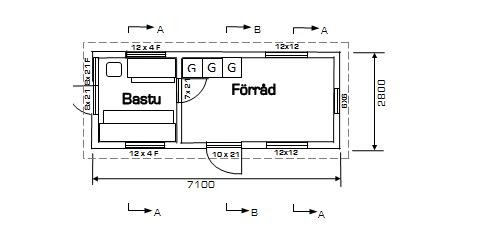
Situation: Building a boathouse that consists of a wood-fired sauna section + storage section. See picture. There will be a loft over the sauna part, a door between the sauna and storage, and the entire house will have a vaulted ceiling. The idea with the storage is that it will function as a sauna foyer when bathing and for storing various things like extra mattresses, blankets, cushions, clothes, etc. In other words, things that could potentially hold moisture...
So, what should one do with insulation/plastic/heat?
Here's what I'm thinking.
Generally, I will have 120 mm joists in the sauna section 120+45 in the storage section. Mineral wool. Heating with electric heaters and at least ~10 degrees in winter. Solar-powered extractor fan in the sauna or a pax to create a slight underpressure.
Sauna: Steam-tight sauna foil in the sauna all around with an air gap and sauna panel in the "usual way" inside. That is, it will condense steam on the vapor barrier when using the sauna, but it runs down to the floor and out into the drain as it should. And in the sauna exterior walls, the sauna foil then acts as a regular moisture barrier with 120 mm insulation outside.
Storage section: I'll use plastic (or vapor brake?) and fold and tape it together with the sauna foil in the outer wall seam against the sauna. However, I will end up with two layers of waterproofing in the part of the sauna facing the storage. One layer in the sauna interior ceiling and walls and another in the storage's vaulted ceiling and walls. You shouldn't have double layers of waterproofing, but there will be plenty of air between these since I'm effectively creating a sauna room within a room. And how else would you solve it? The important thing is not to have double layers of waterproofing in the exterior walls with just insulation in between, right?
Ideally, I'd like to be able to shut down the entire house or at least reduce it to just a few degrees above freezing but still have the possibility to sauna in winter. But I don't think that'll work. Completely cold alternating with sauna usage feels like two extremes and like asking for moisture problems. So hence the +10 to keep it safe. Ventilating the sauna after use should obviously happen via the outer door and with the inner door closed. And when the sauna is not used, the inner door to the sauna should remain open to the storage section to avoid the sauna part becoming colder than outside => condensation on the outside of the sauna foil. The exhaust fan is placed in the sauna to pull the warmer air from storage (heating and more windows) into the sauna so it gets warmed up.
What do you think of my strategy? What's missing? Critique and come with better suggestions...
Situation: Building a boathouse that consists of a wood-fired sauna section + storage section. See picture. There will be a loft over the sauna part, a door between the sauna and storage, and the entire house will have a vaulted ceiling. The idea with the storage is that it will function as a sauna foyer when bathing and for storing various things like extra mattresses, blankets, cushions, clothes, etc. In other words, things that could potentially hold moisture...
So, what should one do with insulation/plastic/heat?
Here's what I'm thinking.
Generally, I will have 120 mm joists in the sauna section 120+45 in the storage section. Mineral wool. Heating with electric heaters and at least ~10 degrees in winter. Solar-powered extractor fan in the sauna or a pax to create a slight underpressure.
Sauna: Steam-tight sauna foil in the sauna all around with an air gap and sauna panel in the "usual way" inside. That is, it will condense steam on the vapor barrier when using the sauna, but it runs down to the floor and out into the drain as it should. And in the sauna exterior walls, the sauna foil then acts as a regular moisture barrier with 120 mm insulation outside.
Storage section: I'll use plastic (or vapor brake?) and fold and tape it together with the sauna foil in the outer wall seam against the sauna. However, I will end up with two layers of waterproofing in the part of the sauna facing the storage. One layer in the sauna interior ceiling and walls and another in the storage's vaulted ceiling and walls. You shouldn't have double layers of waterproofing, but there will be plenty of air between these since I'm effectively creating a sauna room within a room. And how else would you solve it? The important thing is not to have double layers of waterproofing in the exterior walls with just insulation in between, right?
Ideally, I'd like to be able to shut down the entire house or at least reduce it to just a few degrees above freezing but still have the possibility to sauna in winter. But I don't think that'll work. Completely cold alternating with sauna usage feels like two extremes and like asking for moisture problems. So hence the +10 to keep it safe. Ventilating the sauna after use should obviously happen via the outer door and with the inner door closed. And when the sauna is not used, the inner door to the sauna should remain open to the storage section to avoid the sauna part becoming colder than outside => condensation on the outside of the sauna foil. The exhaust fan is placed in the sauna to pull the warmer air from storage (heating and more windows) into the sauna so it gets warmed up.
What do you think of my strategy? What's missing? Critique and come with better suggestions...

I don't think you should have plastic in the storage area. Preferably a variable vapor barrier. There will be many days when it's warmer outside than inside. Then the moisture movements go in the opposite direction. A classic summer cottage problem.
Click here to reply