Well, another one asking about a plastered basement wall.
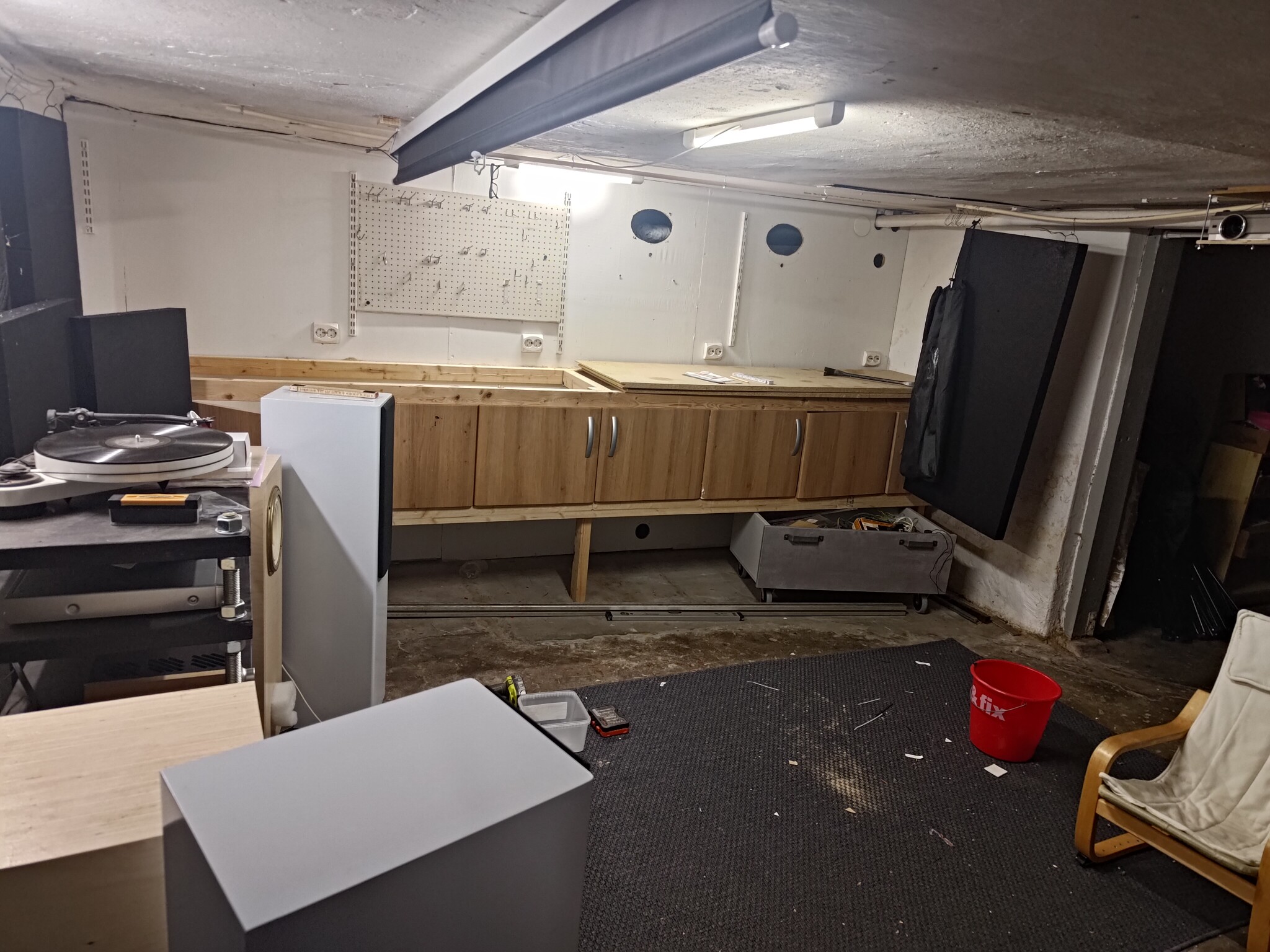
In our house from 1916 with equally old drainage, I had a hobby room for the simple reason that some previous owner had put up a plywood wall there.
I removed the plywood to gain a little extra floor space; the plan is to set up a TV and some video games so the kids can have a sort of club room. There is a dehumidifier in the basement, so the climate is okay for it.
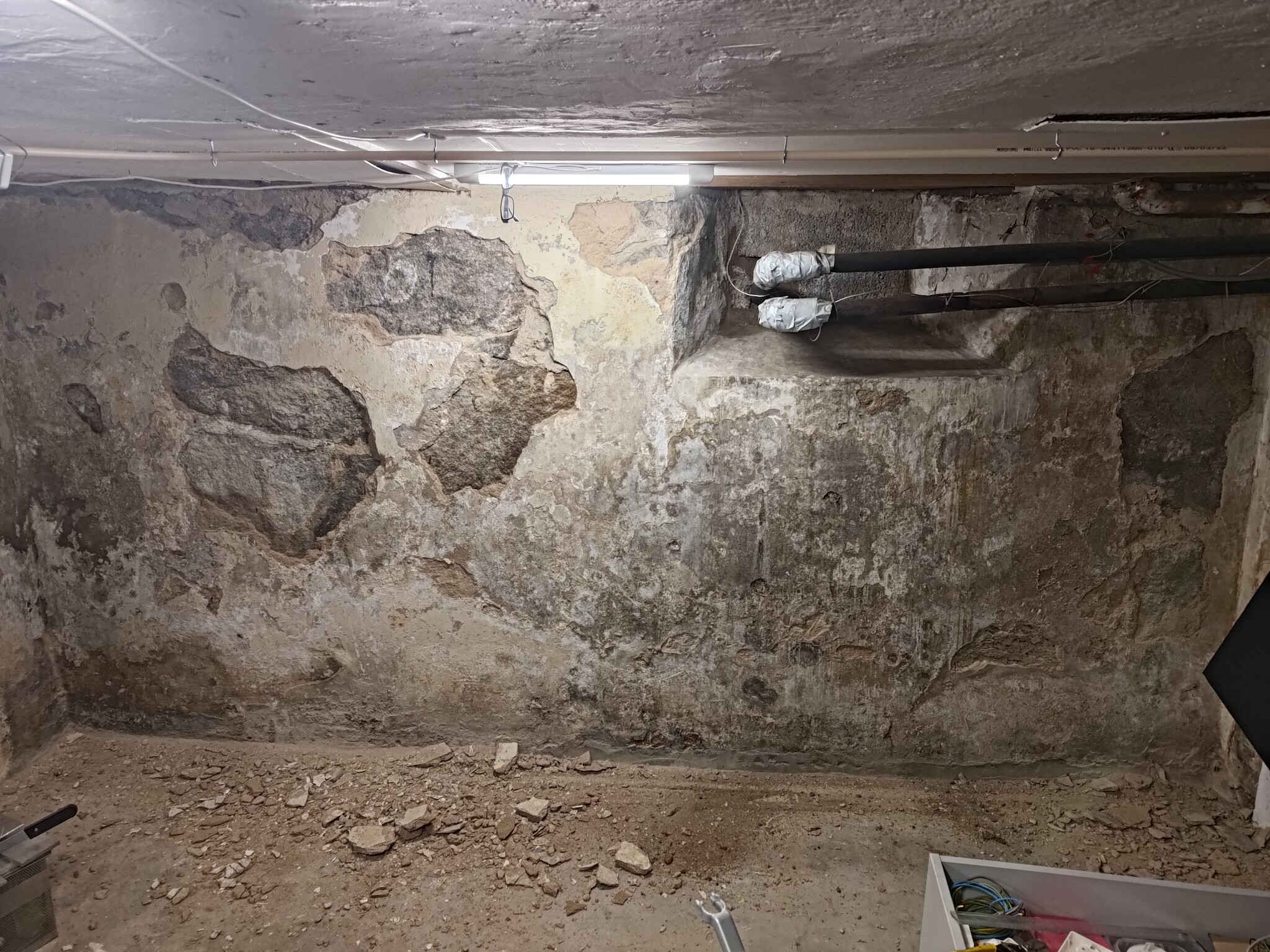
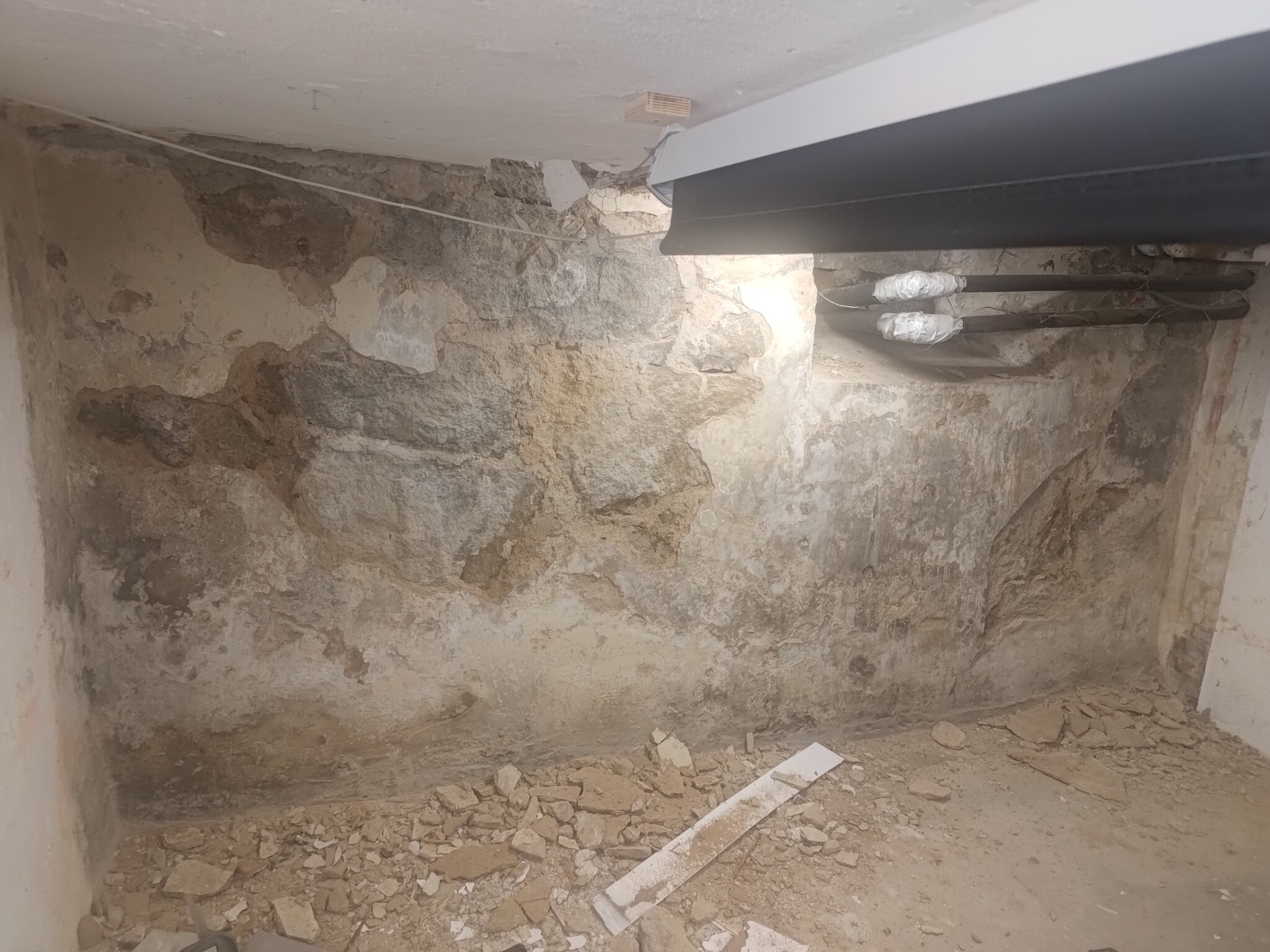
The wall in question has, according to the previous owner, had problems with moisture seepage, and it turns out the wall is still damp, and the plaster flakes off easily where hollow sounds are found.
The problem with the damp wall was "solved" by previous owners by digging away the soil down to the foundation and filling it with washed macadam.
They did NOT lay a drainage hose at the bottom, which leads to water from heavy rain having an express route down instead. A proper drainage system is not on the to-do list though.
Well, that explains the moisture.
Now to the actual question.
The room doesn't need to be very nice, so should I bring in machines to get rid of all the plaster, or should I save what is firmly attached?
I probably won't replaster the wall unless it's important, maybe just paint it with some diffusion-open paint.
It might be kind of cool if you just paint the plaster.
What are your tips?