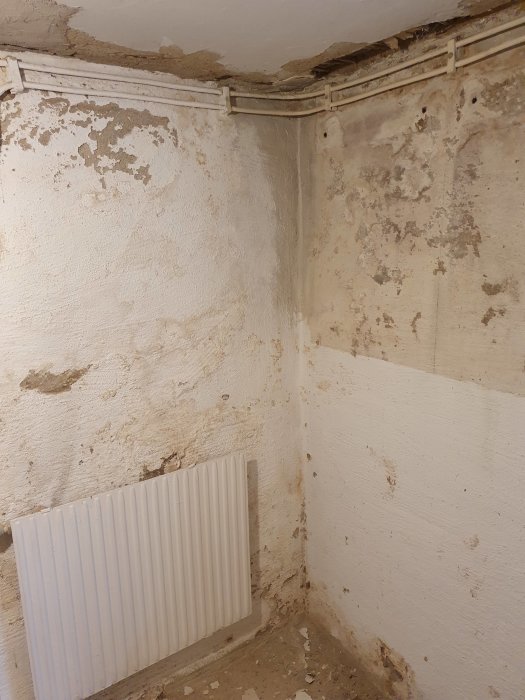
I'm planning to refurbish the walls in a basement room. The house is from 1928 and likely not well-drained. The groundwater is also quite high at times (I encountered it about 1 meter down when digging in the garden in spring).
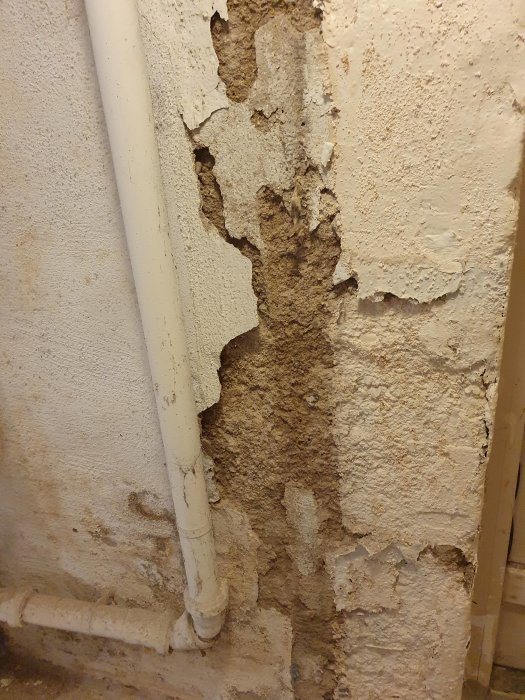
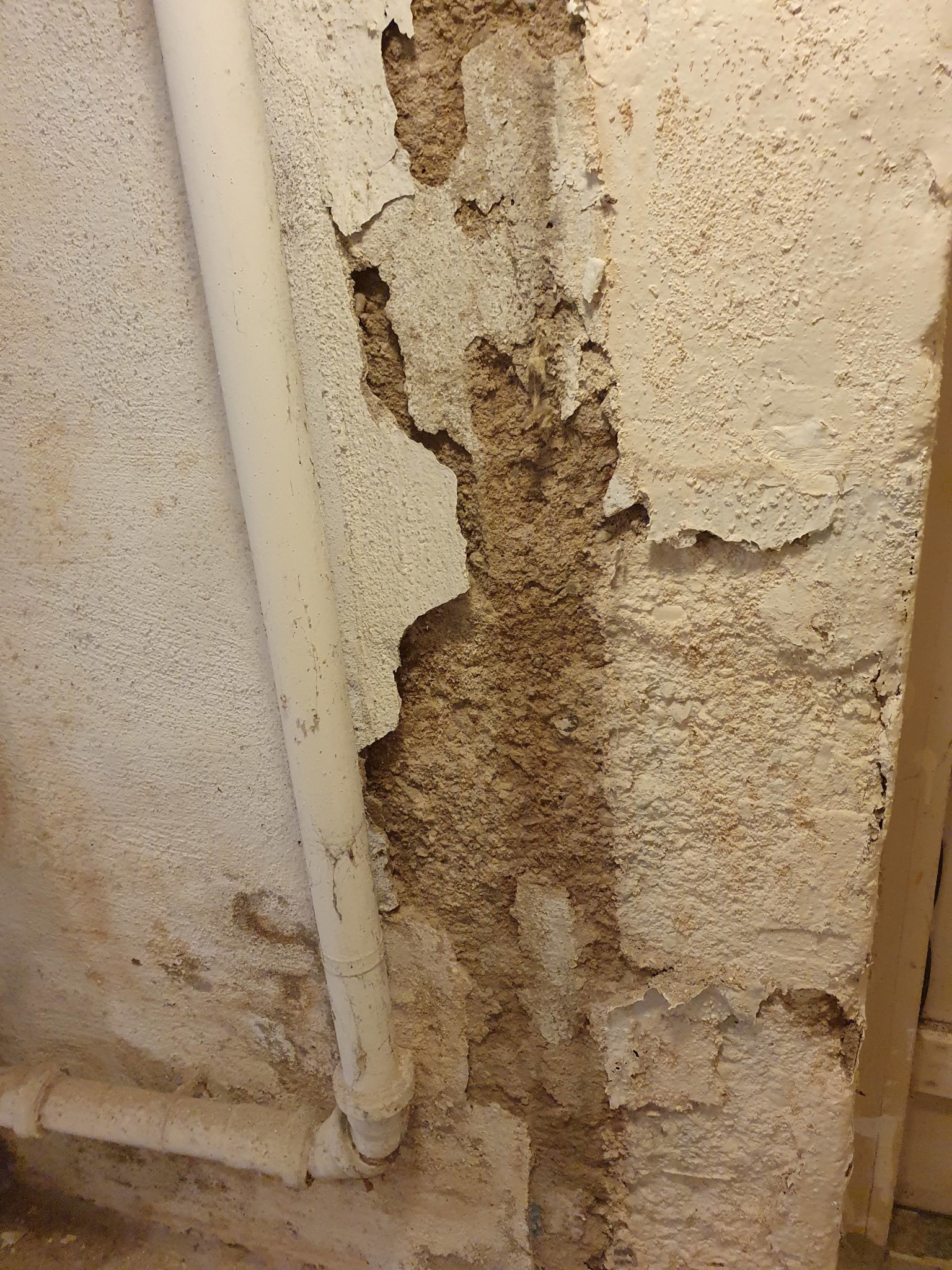
I plan to remove all the loose plaster first.
Question 1: What type of mortar should I use to plaster the wall? I plan to paint it as well.
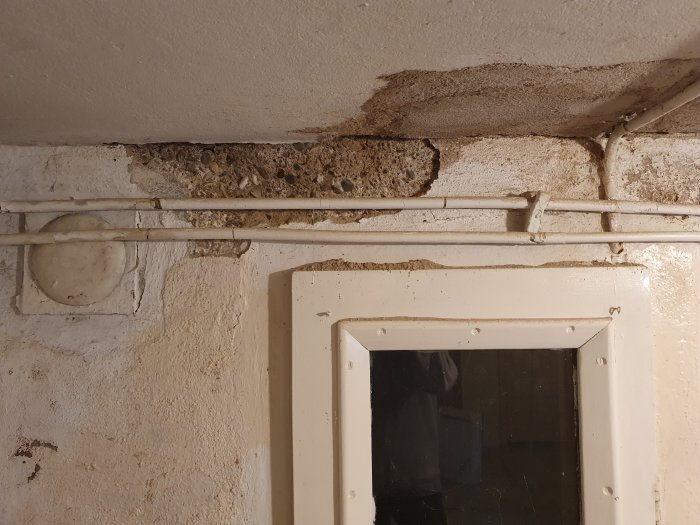
Question 2: There is an air gap at the edge between the wall and ceiling, as seen a bit in the pictures. A lot of loose plaster falls down here. Ideally, one would want to plaster this in, but I assume it's there for a reason. How would you handle this?
I have plastered with C-bruk in my basement and also the chimney.
Harder mortar than that wasn't used indoors before.
Can withstand a bit more without cracking as I understand.
Remove EVERYTHING that is loose and thoroughly pre-water the day before and an hour before.
Tear down everything loose, it dusts so damn much. Then water the surface with lime broom, apply kc base according to instructions and then c mortar or lime mortar to prevent what's left from collapsing, paint white with silicate and preferably drain.
1. Pull down everything loose as much as possible.
2. Water
3. Primer kc mortar
4. C mortar
5. Paint with silicate paint
I will be spending a lot of time in this room, so hopefully I'll notice if drainage is required and can act before it gets damaged. I'll plaster over the air gap and pretend it was never there.
It looks like you have significant moisture impact, so make sure to buy a silicate paint of good quality. Many silicate paints on the market contain plastic, which at least I wouldn't want to paint my basement walls with. We repainted some walls (in a house built around the same time as yours) 1½ years ago with silicate paint from Keim, and so far they still look great. However, we had drained before and I really recommend you to do so if it hasn't been done and you’re planning to spend a lot of time down there.
To be honest, I don't see an air gap. I see a lot of cavities of different sizes in different places. Unless I missed something, it's just broken plaster, even there. I think you have a wooden beam structure, which is plastered on the underside. Which was common at that time.
In my case, I had the basement plastered with STO Cote F, which should be a weak lime-cement mortar. It seems to hold up nicely in most places, but it has come off in spots (the masons are repairing it in stages).
Facing a similar project (with a similar starting point) and have tried to talk with some masonry people who know about old houses. I'm on the fence about whether to go with primer+cement-based mortar or alternatively hydraulic lime mortar. I was recommended hydraulic lime mortar because of its flexibility in being "just strong enough," which according to information provided would suit my basement well, where various masonry and plaster mortars have been used over the years. It's important not to apply something stronger than the substrate, while the opposite works fine. I also understood that this type of mortar is more vapor-permeable compared to cement-based mortar (but please correct me if I'm wrong). However, hydraulic lime mortar is more expensive and should be applied with a trowel. I have posed this question about these options to both Finja and Weber, so I can follow up when I hear more from them.
The best option, from an openness perspective, is probably to leave the walls unpainted. Otherwise, there is both lime paint (which chalks a bit..) and hydraulic lime paint. A bit cumbersome perhaps, but more vapor-permeable than silicate. If you still choose silicate, pick a high-quality paint. There are some silicate paints that still contain acrylic. It's a bit like wrapping the walls with cling film with holes in it. Open compared to pure acrylic, but it still won't breathe enough, resulting in plaster detachment.
Vi vill skicka notiser för ämnen du bevakar och händelser som berör dig.






AJ82 said: