We are planning to renovate one of our rooms in the basement and are considering removing a section of a wall that's somewhat in the way. However, we need to figure out if it is load-bearing or not before we dare touch it.
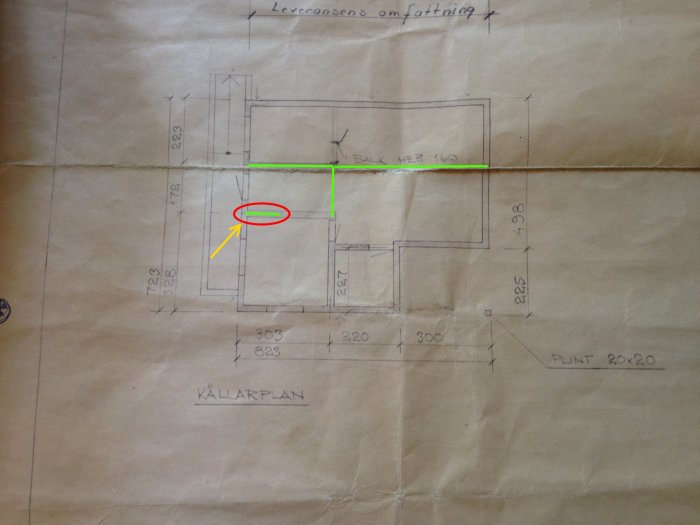
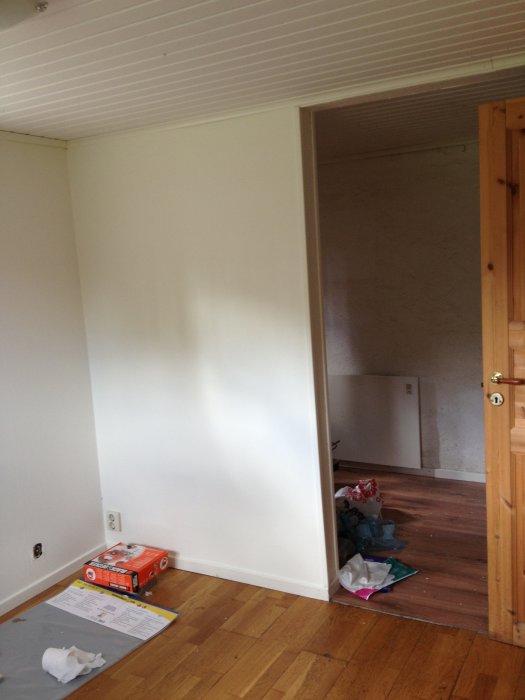
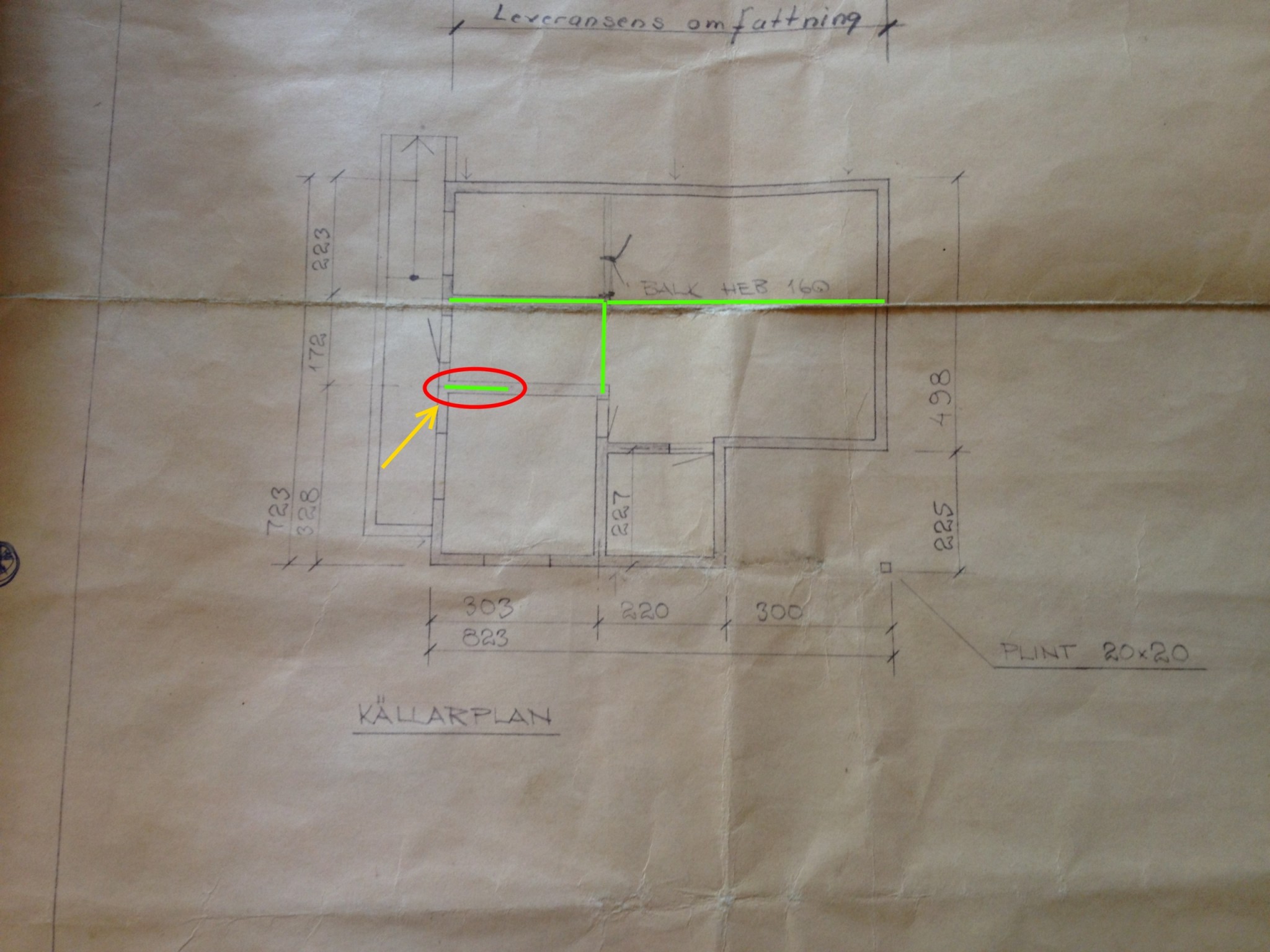
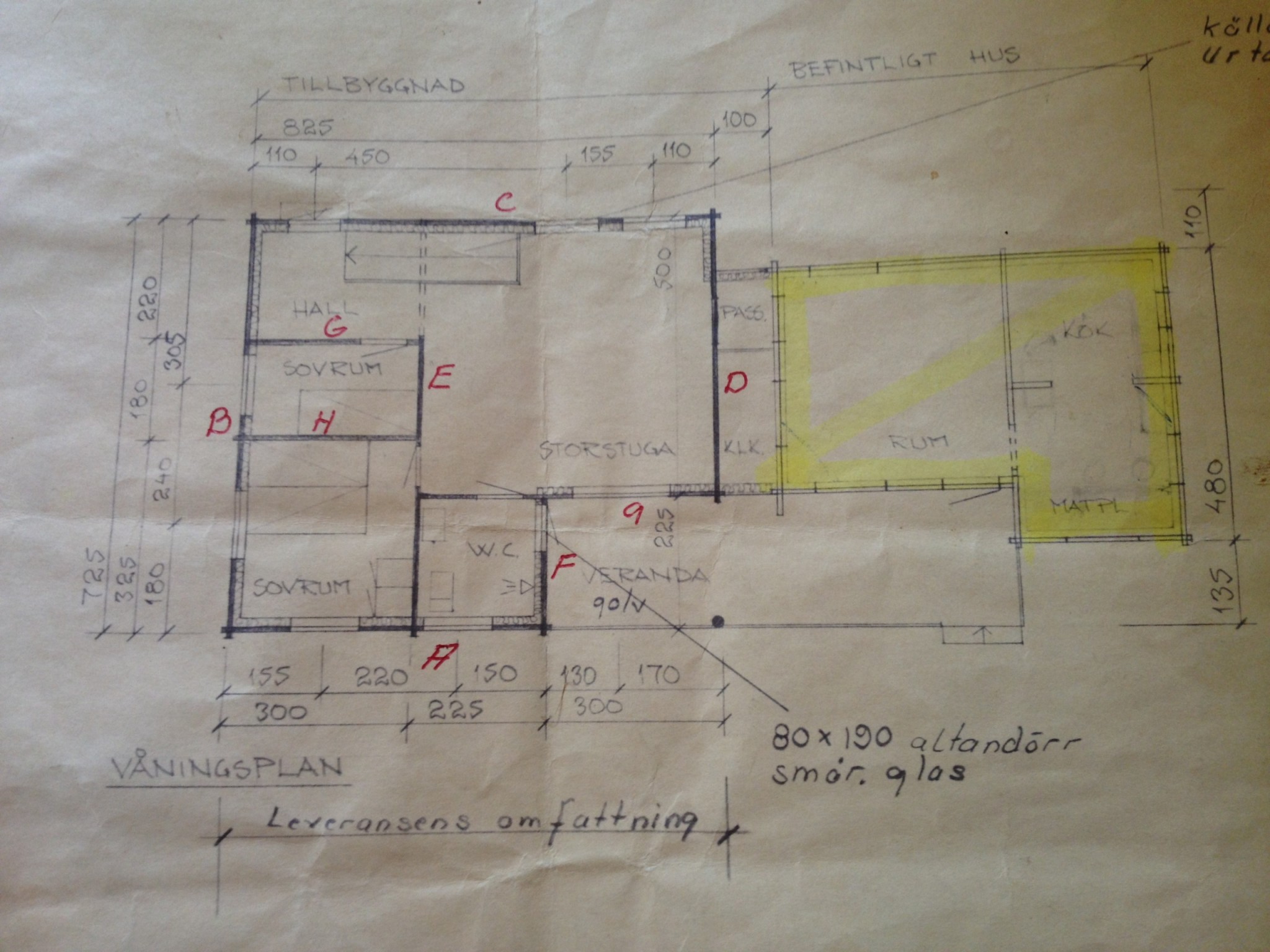
The wall is located in the basement, standing on a concrete slab. According to the drawing from 1978, when the extension was made, it seems there was a full wall there originally, but a large part has been removed and now we want to remove the last piece (circled on the basement floor plan). The beam mentioned in the drawing is not connected to that wall, but it is located in the wall on the other side of the front door.
What do you think? Is it safe to tear away the last piece too?
What is the wall made of?
Which direction is the floor structure above?
Is there earth pressure on the outside of the basement wall?
There is a risk if it functions as a retaining wall for the outer wall.
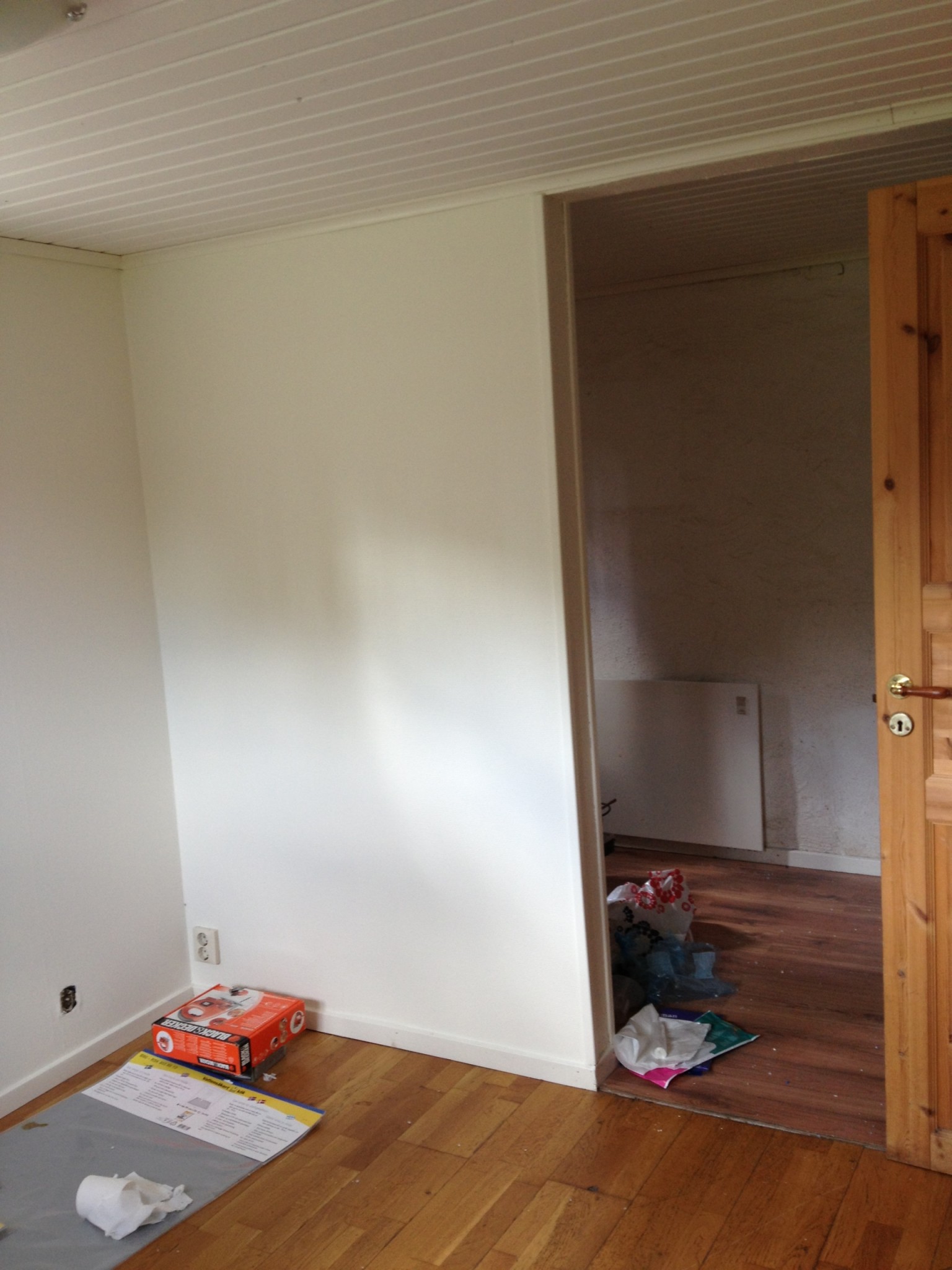
There are drywall panels on the wall anyway, I haven't examined how it looks inside.
The joist, yes... Now my complete ignorance comes to light here, we've only lived in a house for a few months and I'm still trying to learn as things come up that I want to do I don't know how I can find out, but the roof ridge goes in the same direction as the protruding wall piece anyway (if that has anything to do with it)
Outside the wall, there are stairs down to the front door. Outside the front door, further in the picture, there is about 2-2.5m of soil pressure on the outer wall.
If I understood you correctly, there is a staircase on the other side of the wall you want to remove? (not the staircase, but the wall ) So, nothing, air?
The flooring does not rest on that wall but on the outer wall, but if you look at the flooring, check if there is a beam running EXACTLY above that wall or if the wall is between 2 beams.
Don’t do what a carpenter once told me (on a big construction site) "A good way to check if it's load-bearing is to drive in the reciprocating saw, if it pinches, then it's load-bearing"
My mistake, I misunderstood which way the floor beams were going! Ignore what I wrote about checking how the beams are laid They don't rest on that wall anyway.
Almost, the stairs are on the outside of the outer wall and run along the house. When I look closer at the top image, I now see that it's probably the one drawn to the left of the green lines I have drawn myself There is a cast wall on the other side of the stairs that has earth pressure on it (the line furthest to the left in the top image).
The beam runs at the long green line in the top image, so it doesn't connect to that wall piece at all. But even if it doesn't have a beam, can it help support something above?
I read that tip about the saw in some post here on the forum, I think. I want to be 100% sure before I do anything that might be dangerous I usually can recognize my limitations, even if it's fun to try to learn as much as I can to do things myself
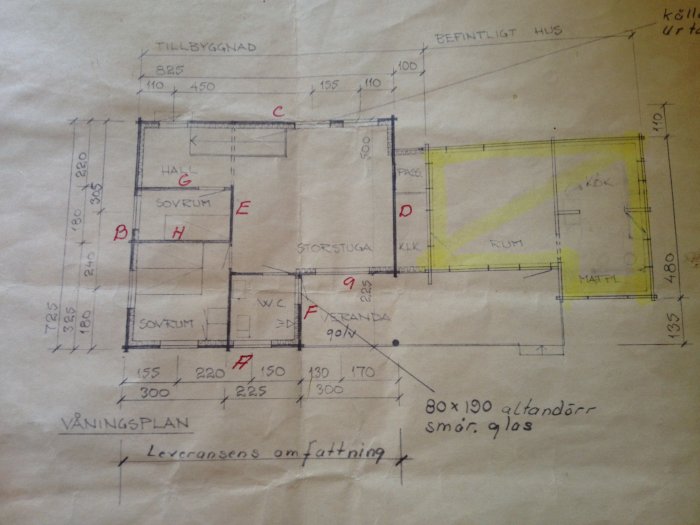
In the drawings, you can see that directly above the wall you want to demolish, there is another wall, which indicates that your wall is load-bearing.
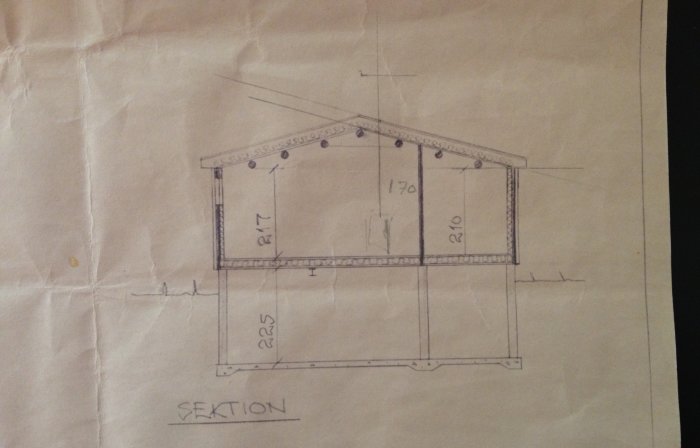
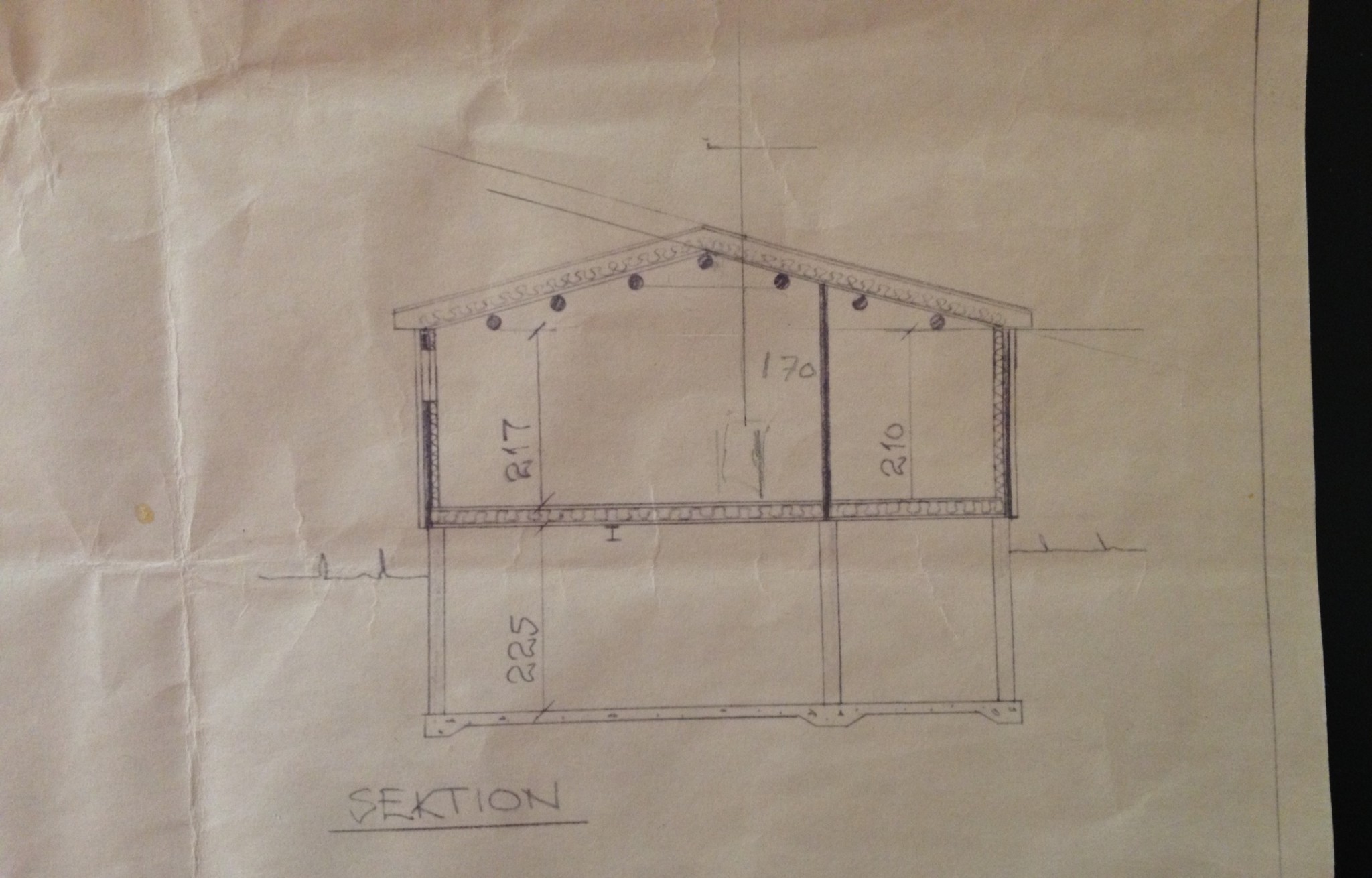
If I am reading your section correctly, you also have a vout under that wall, which means it is load-bearing.
/Torpalainen
Click here to reply
Vi vill skicka notiser för ämnen du bevakar och händelser som berör dig.


 I don't know how I can find out, but the roof ridge goes in the same direction as the protruding wall piece anyway