
18,932 views ·
34 replies
19k views
34 replies
Panel instead of OSB + drywall?



It is difficult not to achieve EI30 in a Swedish exterior wall. Maybe it's possible with cellular plastic, but with non-combustible insulation, it's almost impossible.Huddingebo said:
That's exactly what I meant.
With at least 13 mm plasterboard, you generally meet the minimum requirement.
But you can solve the fire rating however you want, with whatever materials you want.
But with wood paneling directly on wooden boards, you're nowhere near meeting even the old standards.
There's always a possibility to cut corners. Nobody opens the walls and checks during the "final inspection."
I've used this quote before as an example of what I suspect is minimal to meet it.
*It is the combination of outer paneling and inner paneling as well as the thickness and type of insulation that determines the fire rating. For example, we design our insulated garages with: 12 mm particleboard, at least 95 mm of glass wool insulation, and 22 mm outer wooden paneling. This construction meets the fire rating EI30*

There is certainly some written in Hus-AMA as well, for the dedicated enthusiast.

Construction rookie
· Stockholm
· 318 posts
Cool! Do you have a photo of how it turned out? What kind of panel do you recommend, it seems it can cost a lot... Is it like usual, that you get what you pay for?Jonatan79 said:
Innerpanel is nice, and you avoid having to plaster, sand, plaster, sand, and paint a lot! We installed an innerpanel about 12 mm thick and stained it with one coat, looks great. However, we used OSB behind it for stability and it's easier to nail the panel. Otherwise, just innerpanel might be enough.

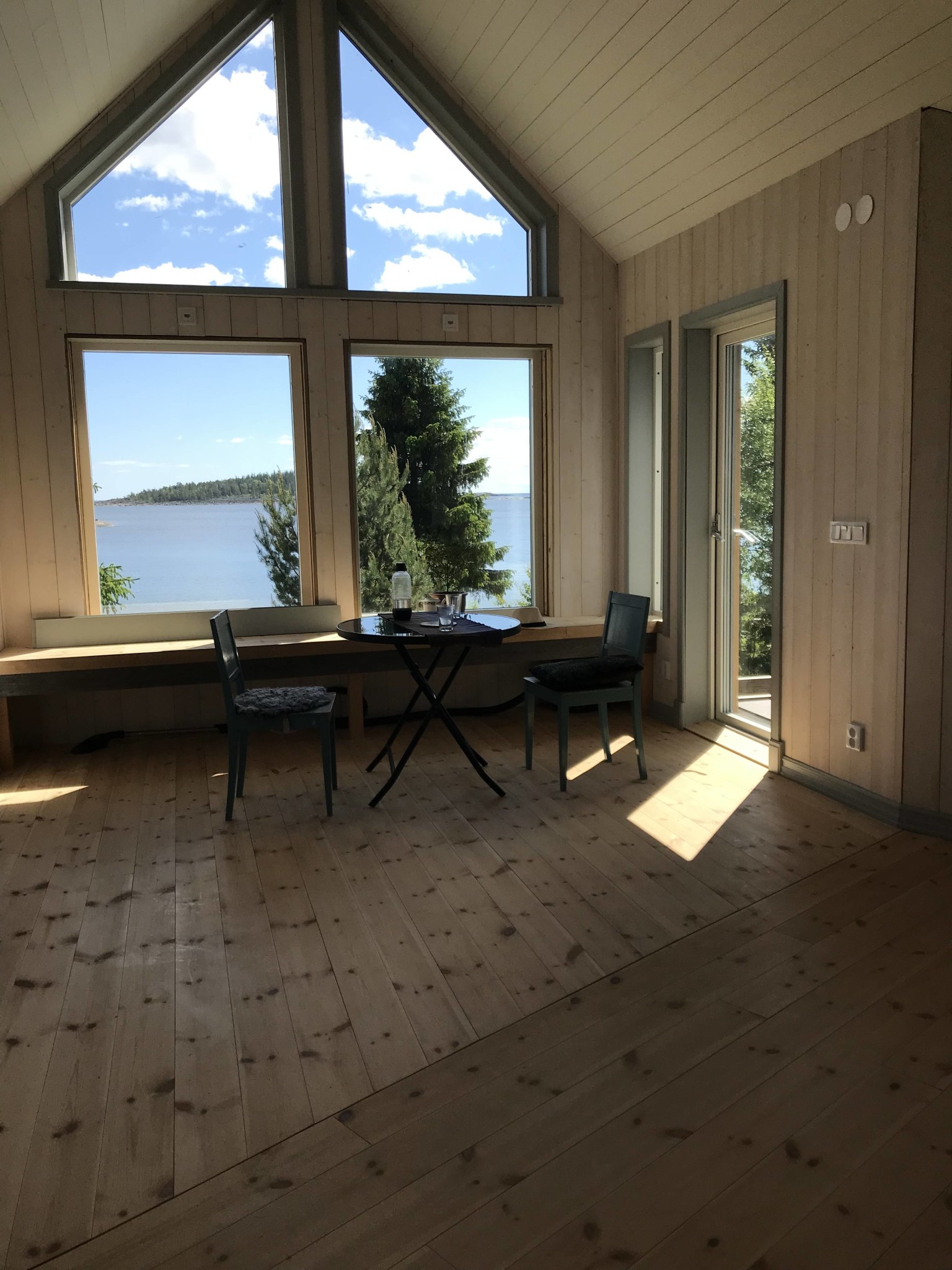
When we built a new house in 2010, we covered all interior walls, except in the shower/toilet room and laundry room, with horizontal wood paneling.Now we've received several tips about using paneling instead of drywall. We like that idea. Some questions:
- What type of paneling is suitable for interior walls?
- Does it work everywhere (e.g., wall where a kitchen will be installed)?
- Are there any disadvantages compared to drywall?
- Can you skip OSB if you use paneling?
Even in the kitchen, but there we had drywall underneath, because we were going to have tiles over the countertops.
We didn't install any OSB anywhere.
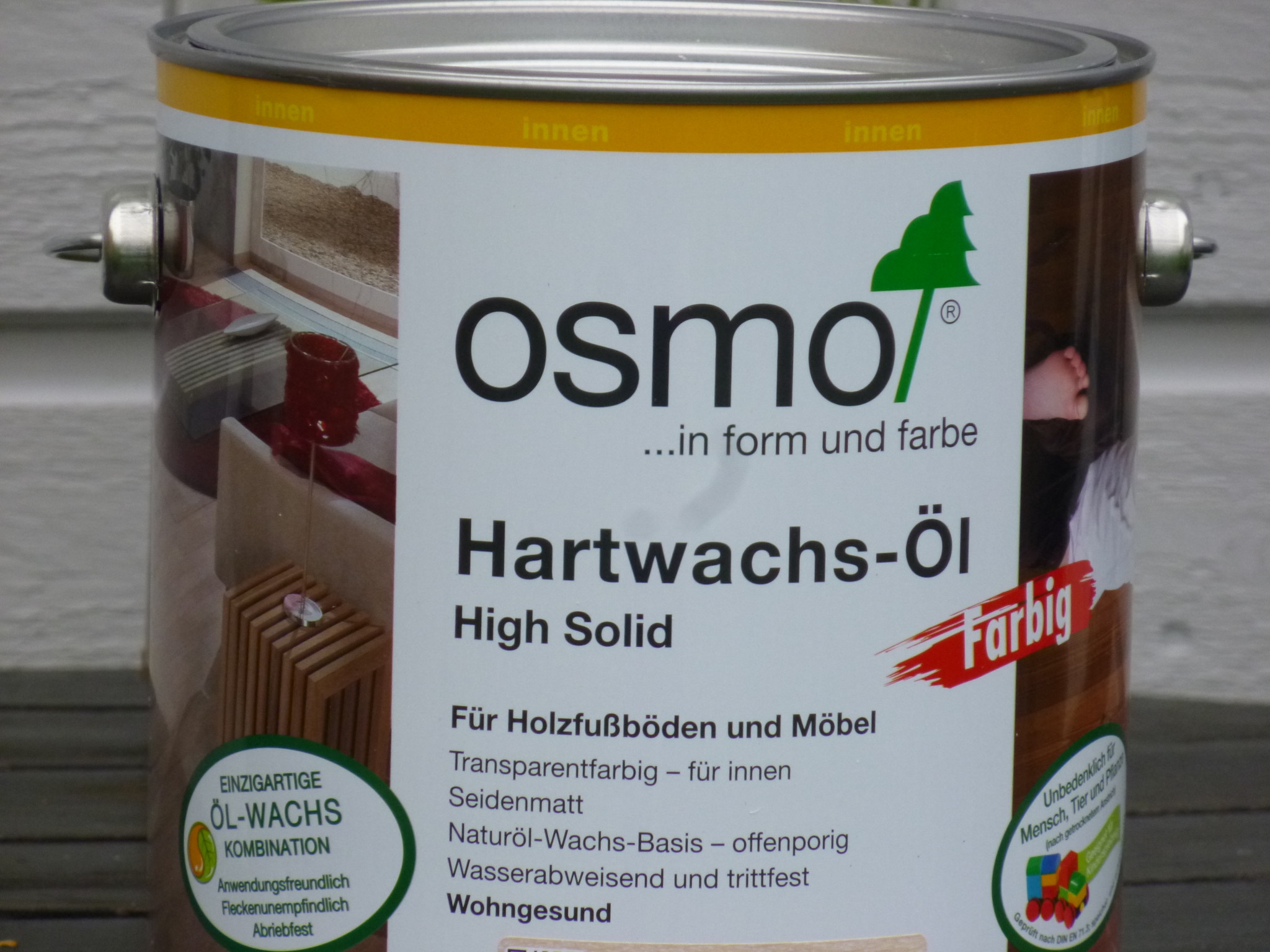
We hard-waxed the wood paneling white.
A major advantage of the paneling is that you can hang pictures, paintings, hooks, etc., without leaving any visible marks afterwards.
I see no disadvantages at all compared to drywall.
Some pictures:
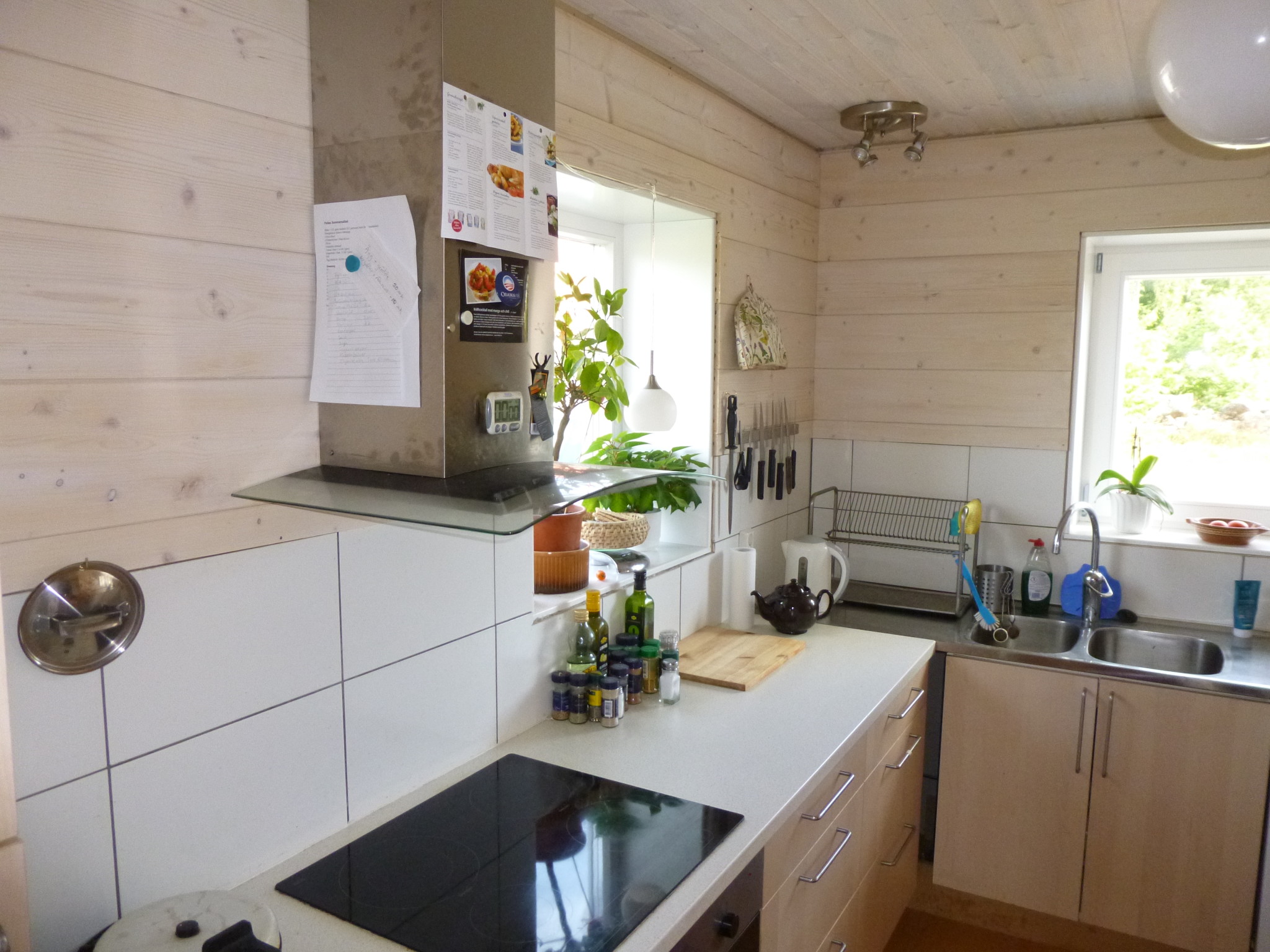
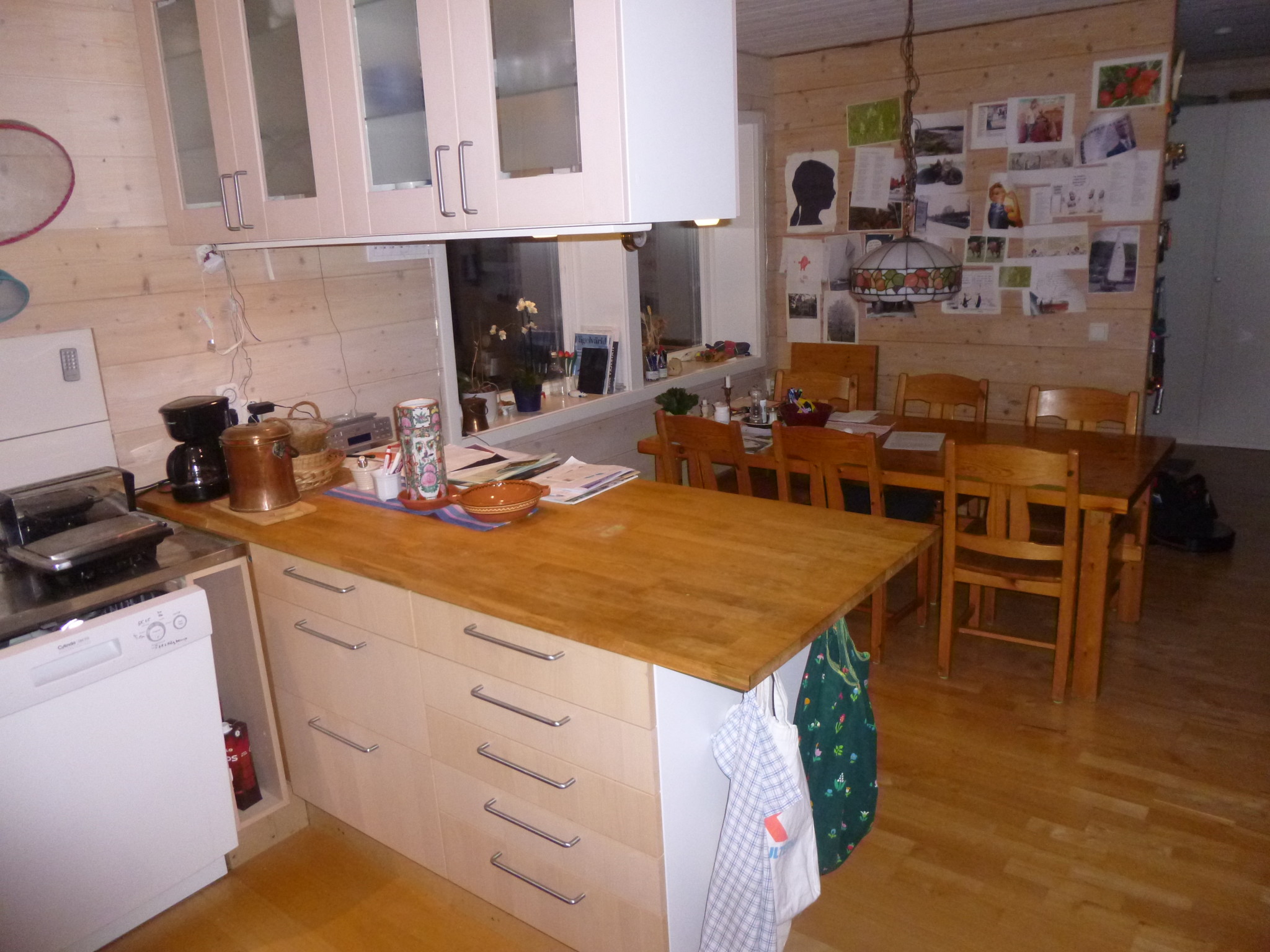
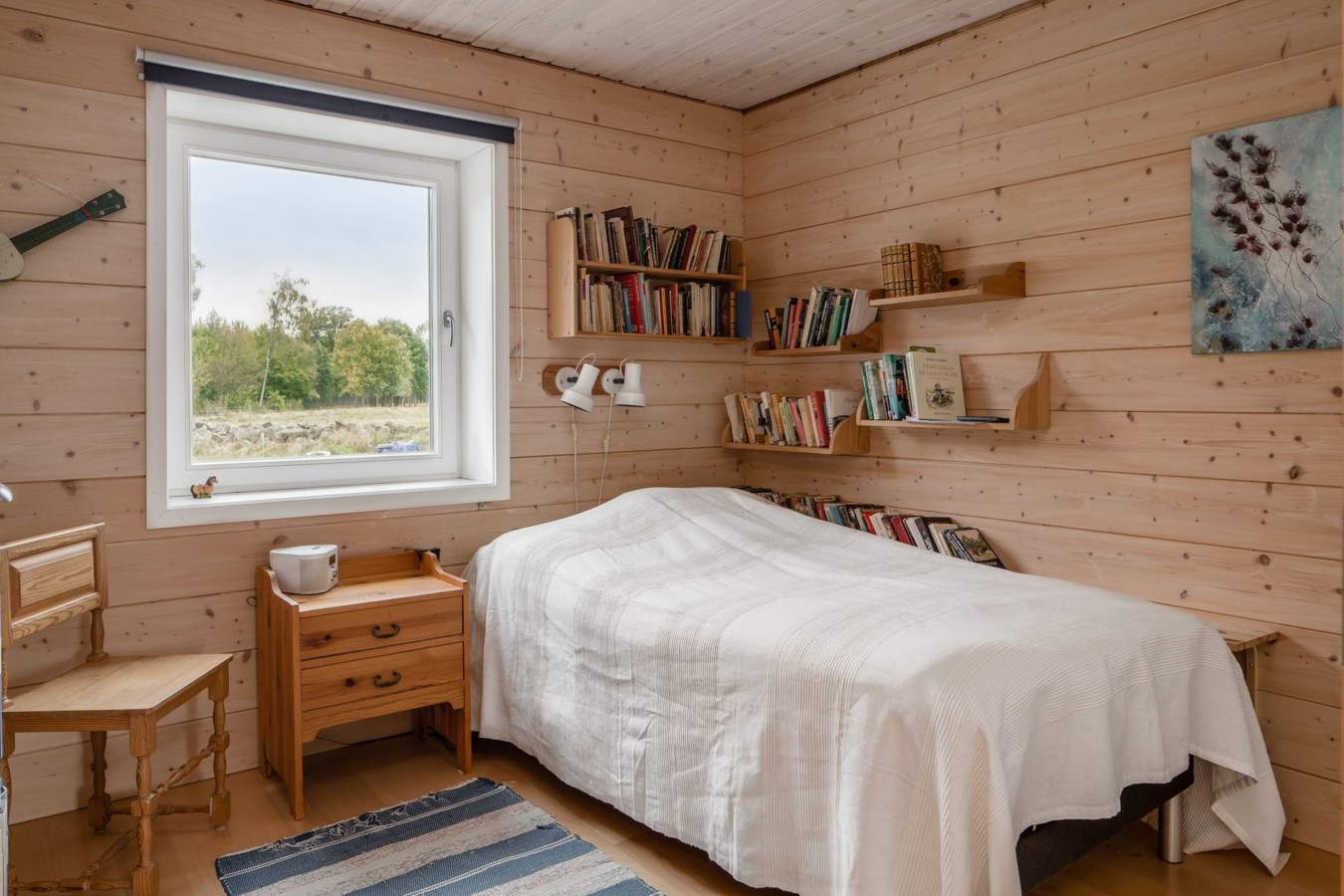
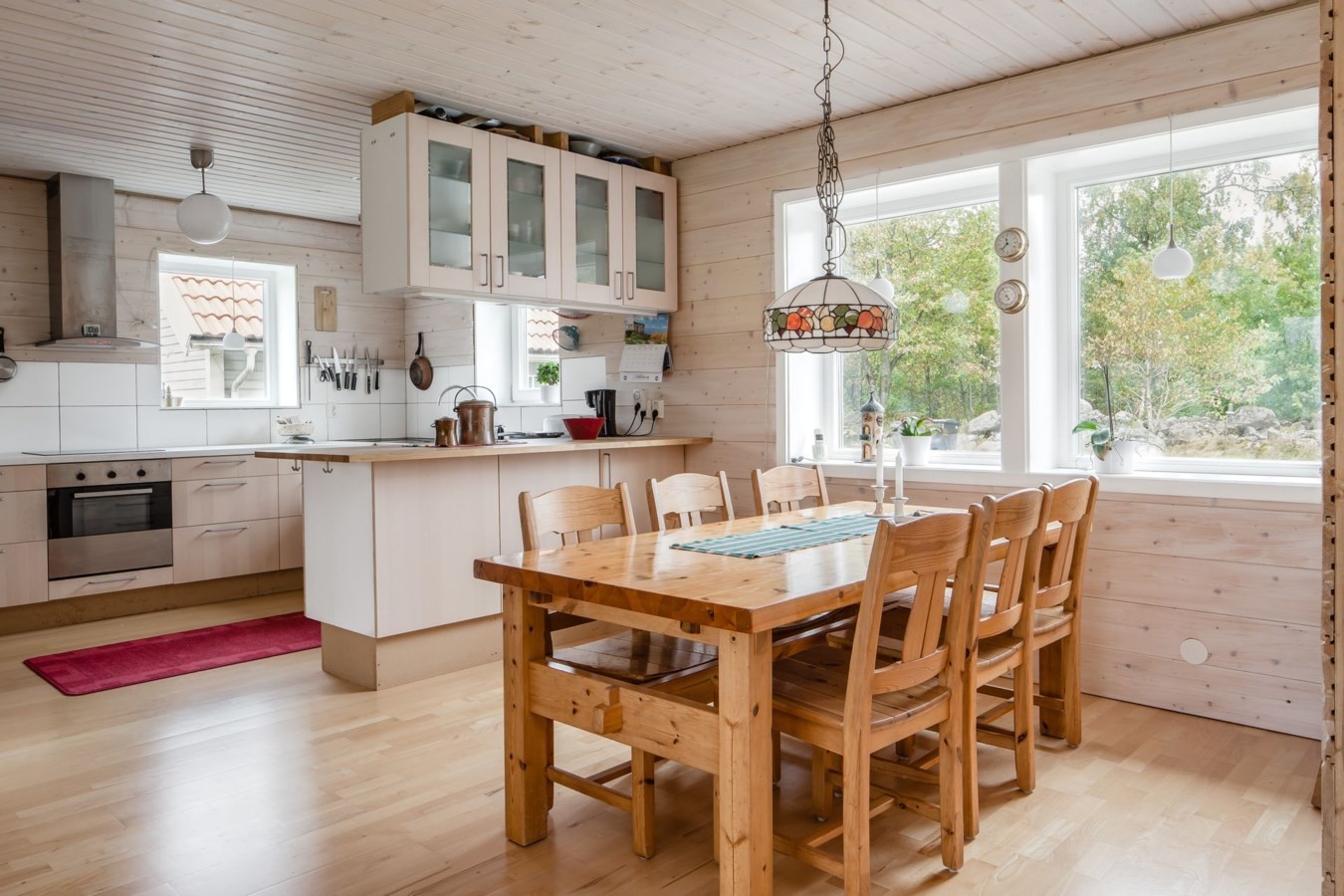
Unfortunately, we sold the house in 2020

Construction rookie
· Stockholm
· 318 posts
Interesting. How does it work with hanging heavier items when you use plasterboard behind the panel?To meet the fire protection class for new single-family homes, at least 13mm of plasterboard is required. What applies to the renovation of older holiday homes is a good question... But plasterboard is very cheap, especially today when OSB has shot up a lot in price. [link]
I myself put beadboard directly against plasterboard with mounting glue. It holds very well and feels "solid".
Plasterboard on walls and ceiling can be the decisive difference between a completely damaged room and a burnt-down house. Gaining time before the fire department arrives.
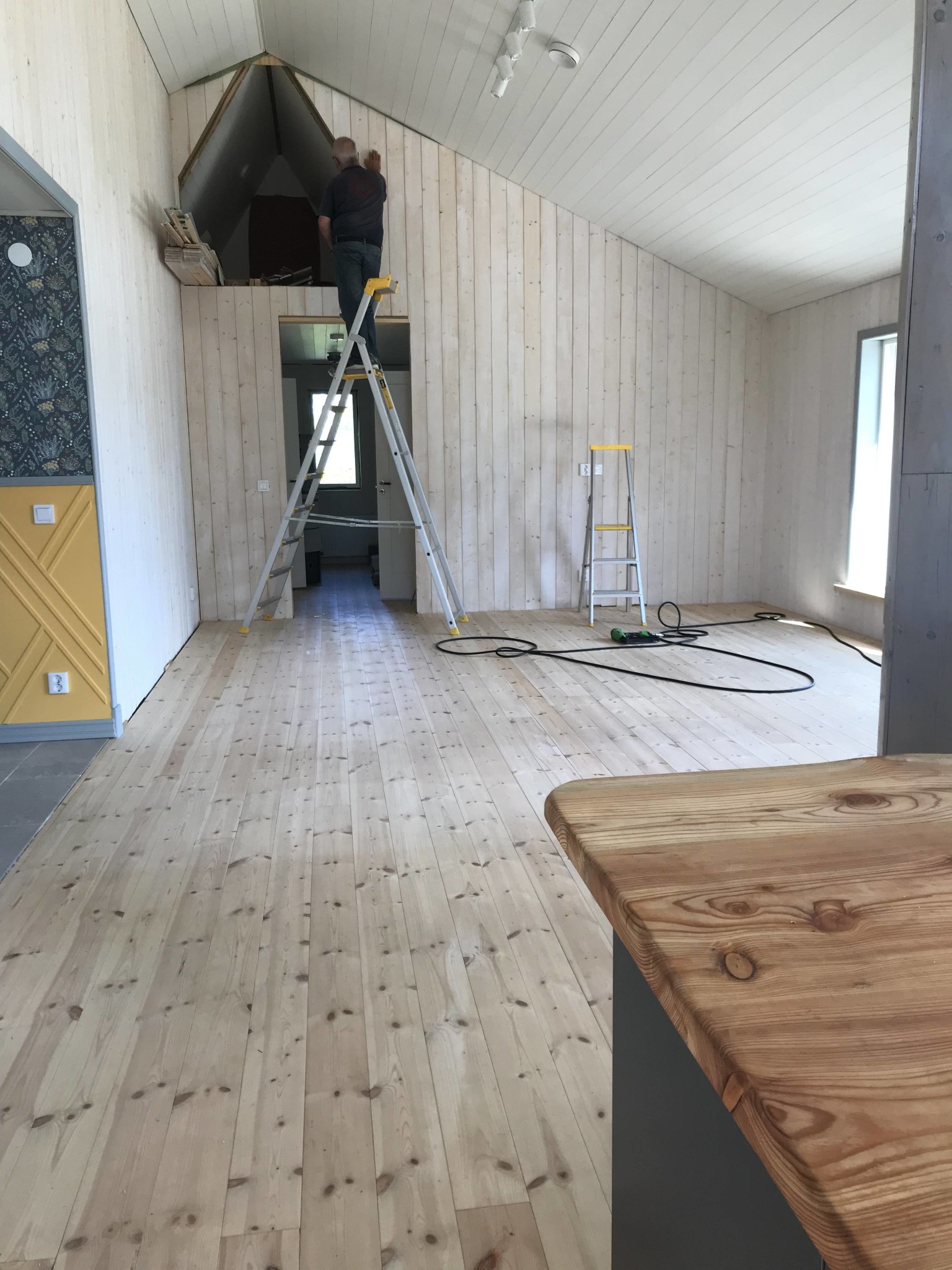
Construction rookie
· Stockholm
· 318 posts
Help a novice understand a bit more. When you say that råspont applies, do you mean under the paneling? And why would one choose it instead of a cheaper material?Tomture61 said:
Råspont is what applies if you skip OSB or plywood
Available in 17 / 20 mm thick. There's a lot of nailing/sawing with råspont.
Prices for different materials, råspont 152:-/ sqm (20 mm) 135:-/sqm (17 mm) Plywood 126:-/ sqm (12 mm) OSB 10 mm 104 :-/sqm
Prices from Byggmax (it took a while to check this)
With drywall anchors, you can hang a heavy TV, at least.
Haven't really hung up many other heavy things though.
Whatever that might be...
Shelves weigh less than a TV.
The plasterboard is stronger today than it was 20-30 years ago.
Tomture61
Self-builder
· Född i Luleå
· 6 578 posts
Tomture61
Self-builder
- Född i Luleå
- 6,578 posts
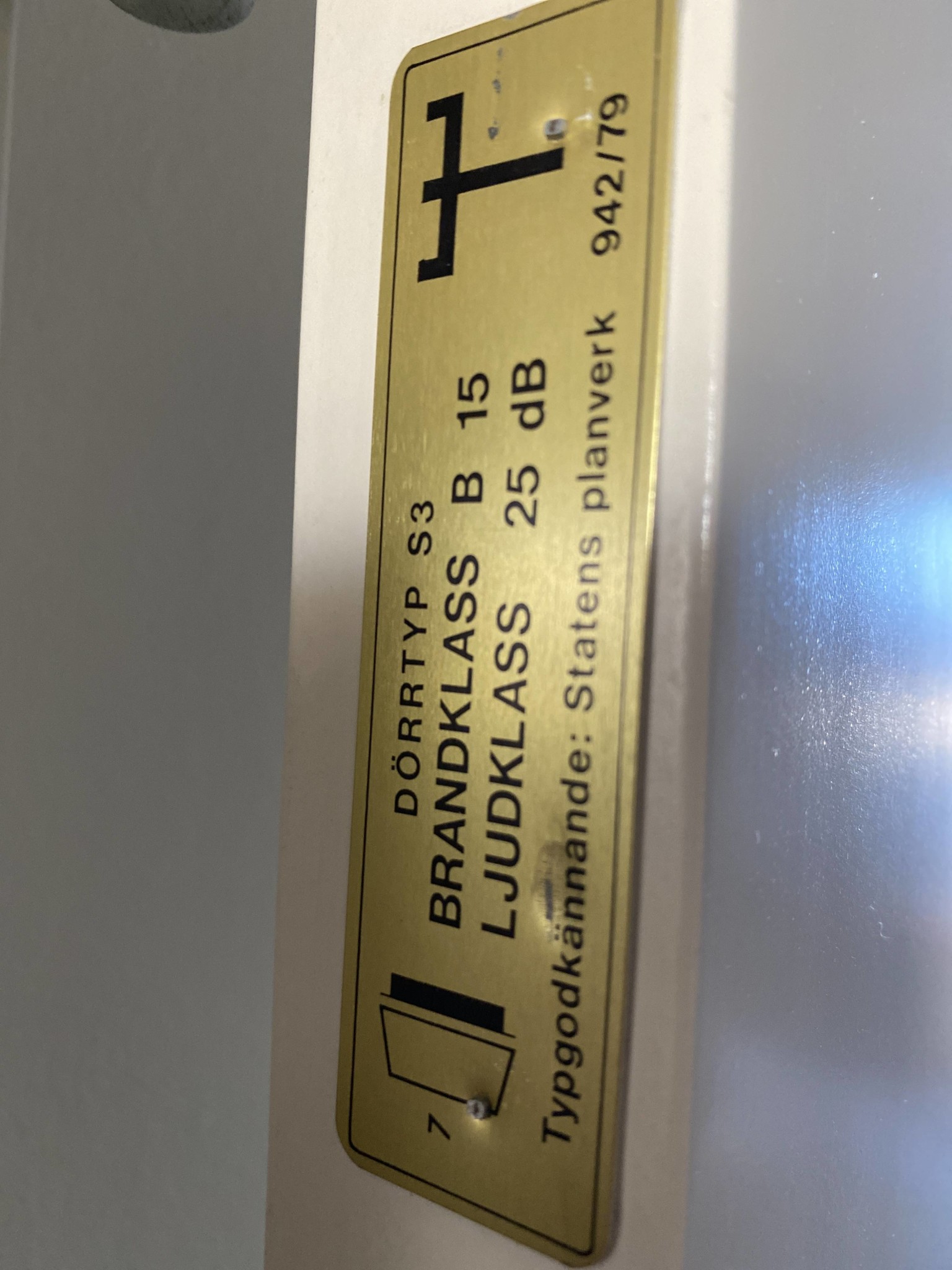
To achieve a quieter wall (room to room or exterior walls), you use at least double layers; three layers can also be used. The absolute cheapest is to use 2 layers of gypsum. If you want to be sure for future mounting of various heavy items, plywood is a good alternative (molly can also be used in just gypsum). If you don't want wood panels behind the gypsum boards, then råspont is left. As many have written in the thread, wood paneling can also be used on walls, on the outer layer. It's advisable to use a gypsum board behind the wood paneling to get a quieter wall.

Construction rookie
· Stockholm
· 318 posts