
Hello
I've been studying hard for months and it still went wrong.
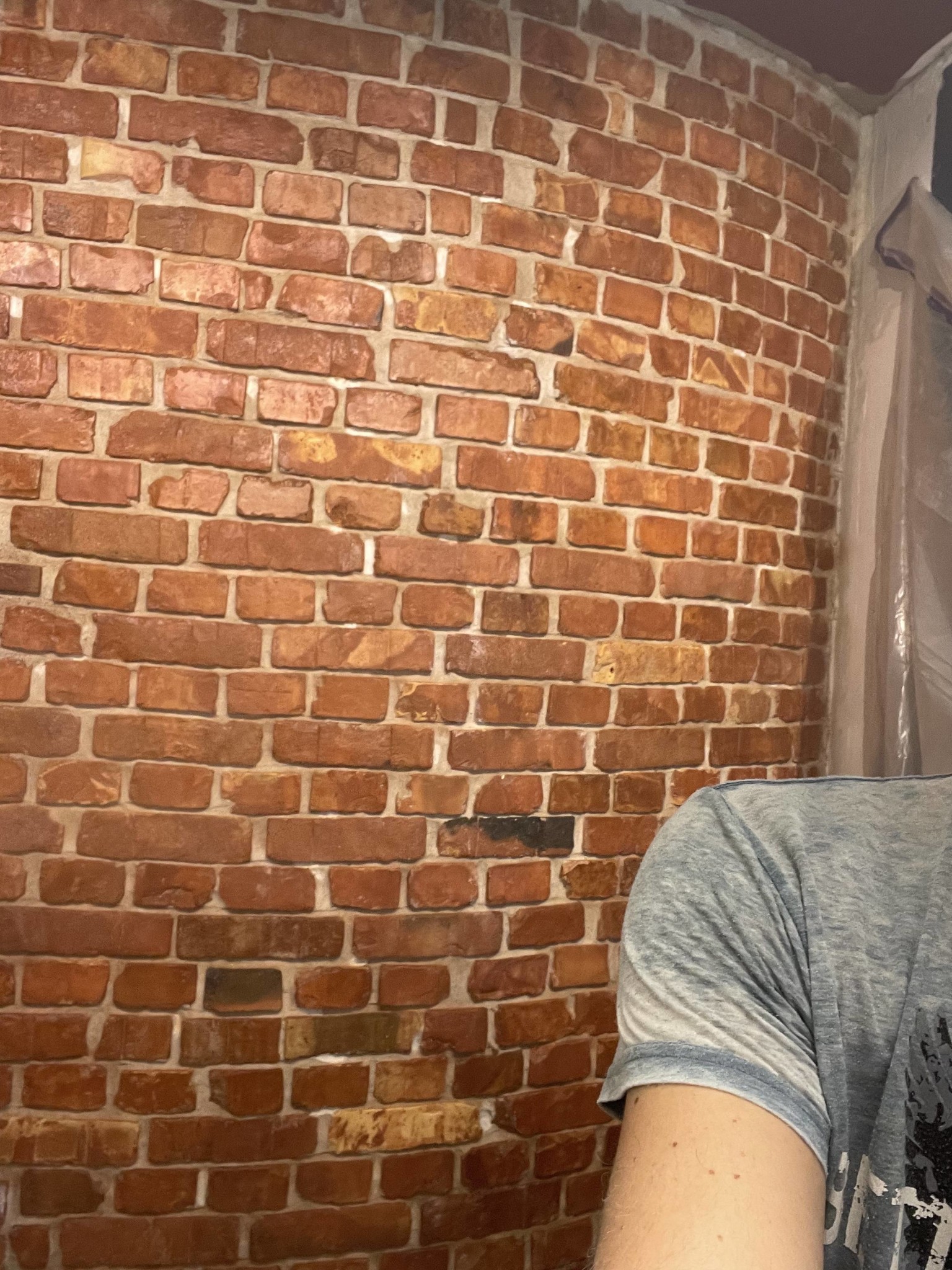
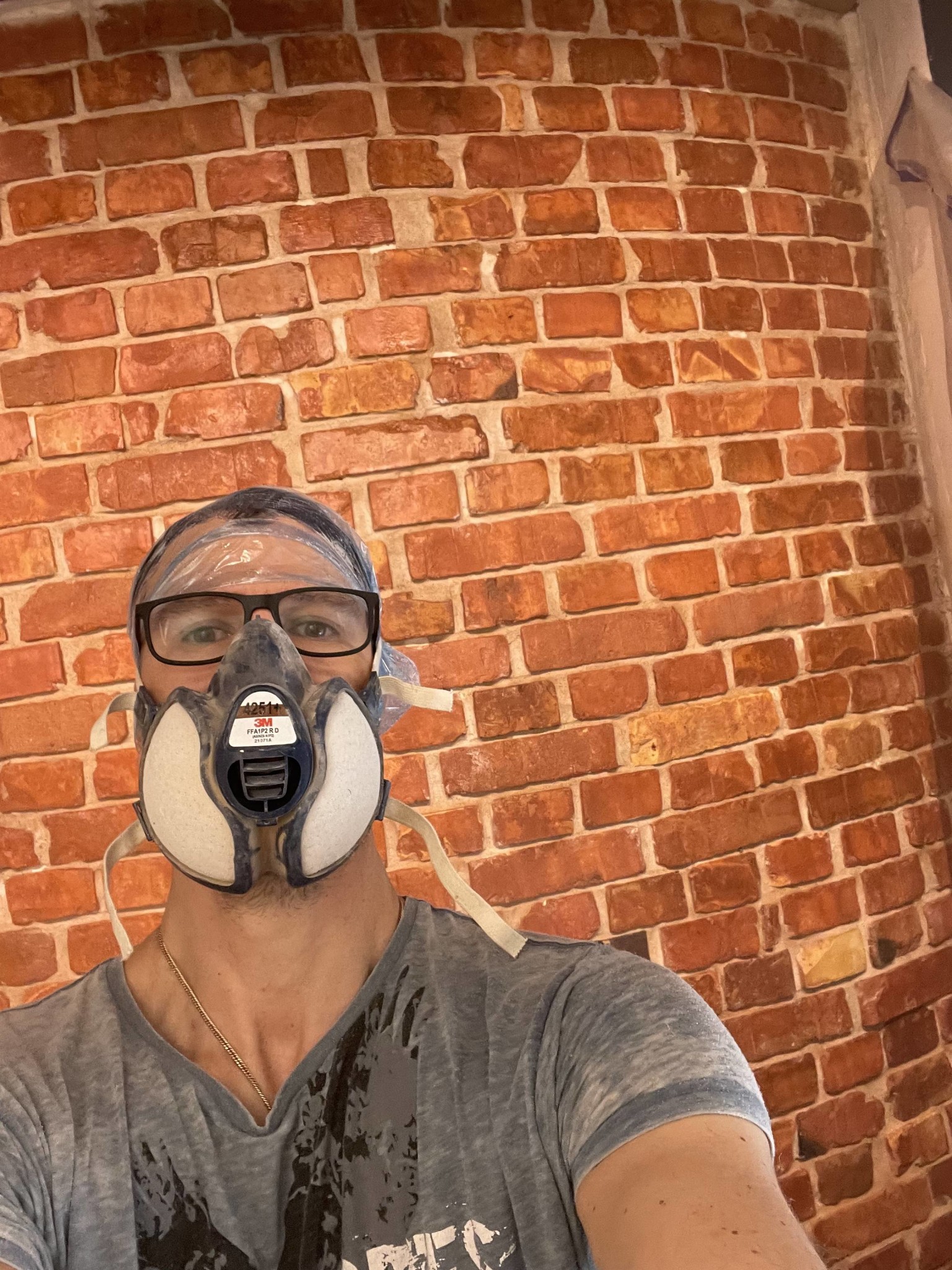
I uncovered a 100-year-old brick wall, routed out the joints, and applied new limestone mortar. Cleaned the bricks mechanically with a steel brush.
Since this room is going to be a cigar room that needs to maintain 65% relative humidity, I bought a 2k matte clear lacquer in a spray can, so the bricks and joints won't absorb moisture from the room.
When I tested lacquering a brick, gray spots appeared on the stone that weren't visible before I lacquered. I googled the phenomenon, and several people say this happened when they lacquer cars and that it's lime. Anyway, I got vinegar and wiped two bricks with it. I read on the spray can that the room should have at least 80% relative humidity when lacquering, so I got my humidifier which I’ve set to 80% now.
I'm planning to test lacquer these two bricks in a couple of hours to see if it's better with high humidity and after the vinegar.
So to the question, do you think it’s lime spots that appear from the clear lacquer? Why? Any tips on what I should do now?
Thanks in advance
I've been studying hard for months and it still went wrong.
I uncovered a 100-year-old brick wall, routed out the joints, and applied new limestone mortar. Cleaned the bricks mechanically with a steel brush.
Since this room is going to be a cigar room that needs to maintain 65% relative humidity, I bought a 2k matte clear lacquer in a spray can, so the bricks and joints won't absorb moisture from the room.
When I tested lacquering a brick, gray spots appeared on the stone that weren't visible before I lacquered. I googled the phenomenon, and several people say this happened when they lacquer cars and that it's lime. Anyway, I got vinegar and wiped two bricks with it. I read on the spray can that the room should have at least 80% relative humidity when lacquering, so I got my humidifier which I’ve set to 80% now.
I'm planning to test lacquer these two bricks in a couple of hours to see if it's better with high humidity and after the vinegar.
So to the question, do you think it’s lime spots that appear from the clear lacquer? Why? Any tips on what I should do now?
Thanks in advance
that's how it turned out after treating the bricks with vinegar and 2k clear coatGeorge M said:
Hello
I've been studying hard for months and it still went wrong
Exposed a 100-year-old brick wall, routed out the joints, and applied new limestone mortar. Cleaned the bricks mechanically with a wire brush.
Since this room will become a cigar room meant to maintain 65% relative humidity, I bought 2k matte clear coat in a spray can, so the bricks and joints don’t absorb moisture from the room.
When I tested spraying a brick with lacquer, gray spots appeared on the brick that weren't visible before. I googled the phenomenon and several mentioned that this happens when painting cars and that it’s lime. Anyway, I fetched vinegar and wiped two bricks with it. Read on the spray can that the room should maintain at least 80% relative humidity when applying clear coat, so I got my humidifier, which I've set to 80% now.
I'm planning to test apply the clear coat to these two bricks in a couple of hours to see if it improves with higher humidity and after the vinegar.
So to the question, do you guys think these are lime stains revealed by the clear coat? Why? Any tips on what I should do now?
Thanks in advance
Click here to reply