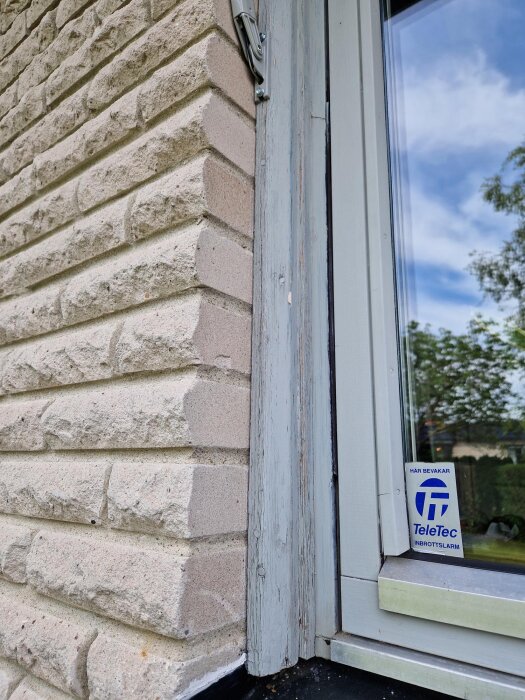
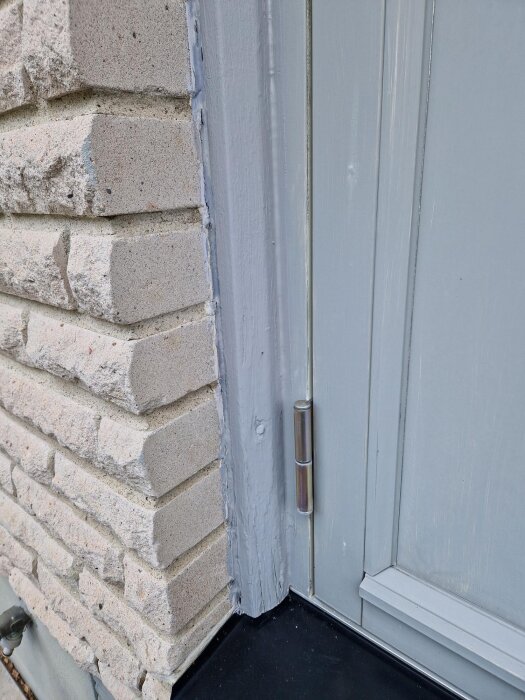
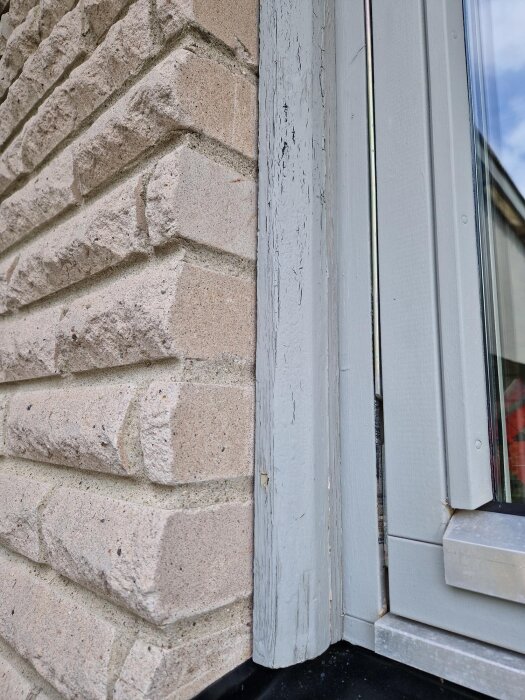
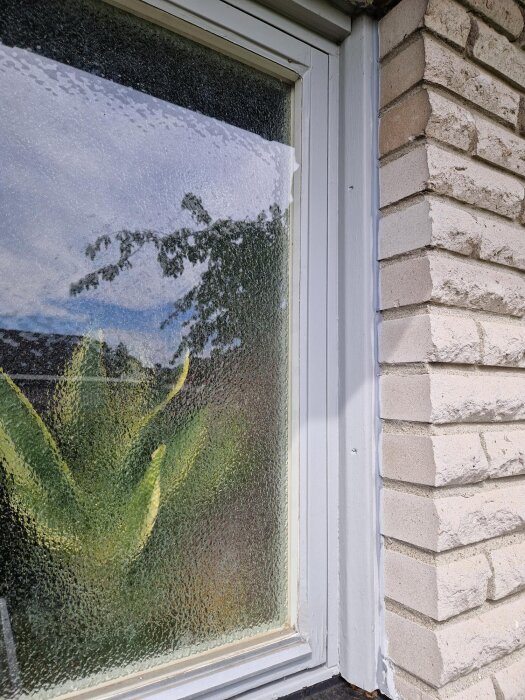
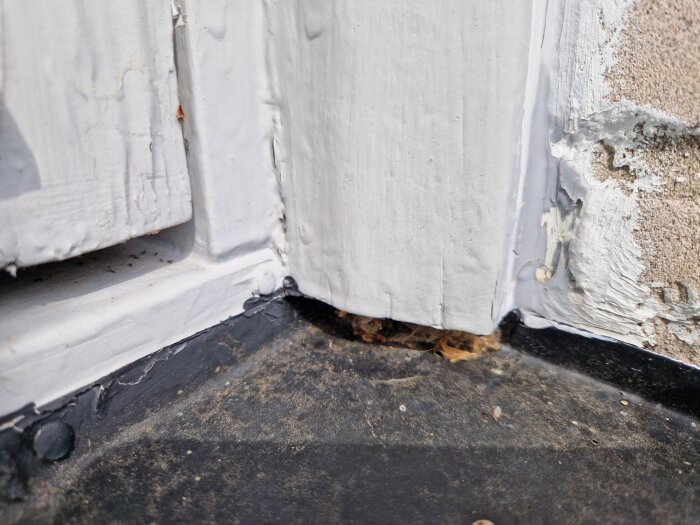
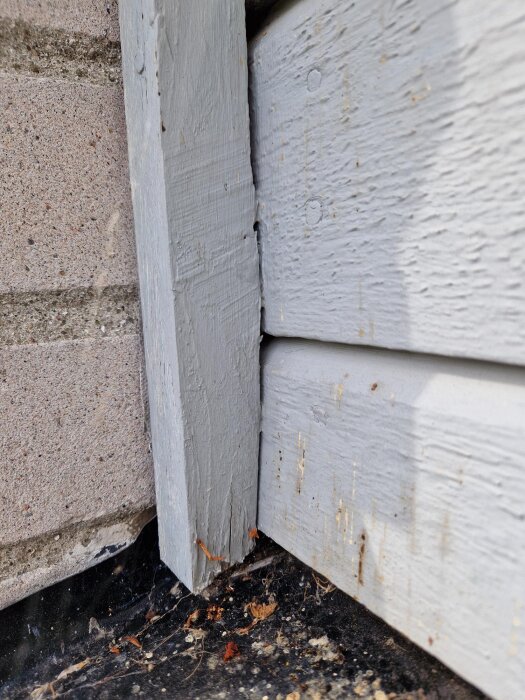
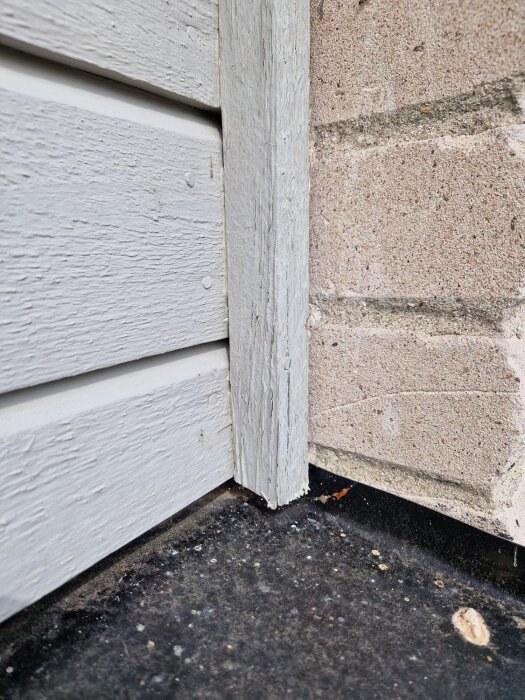
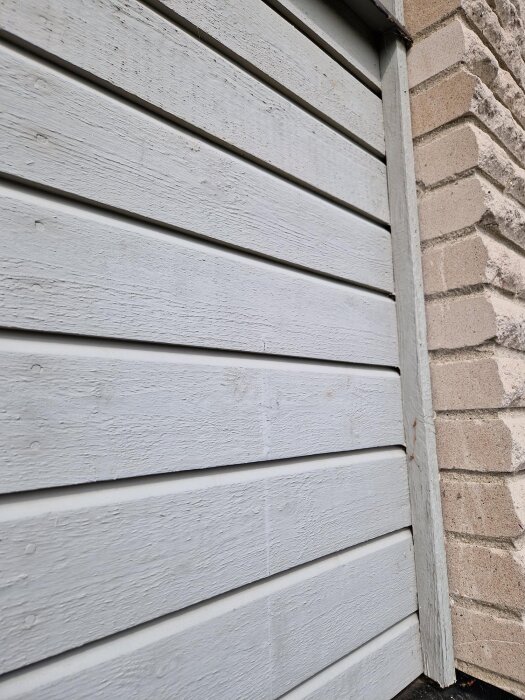
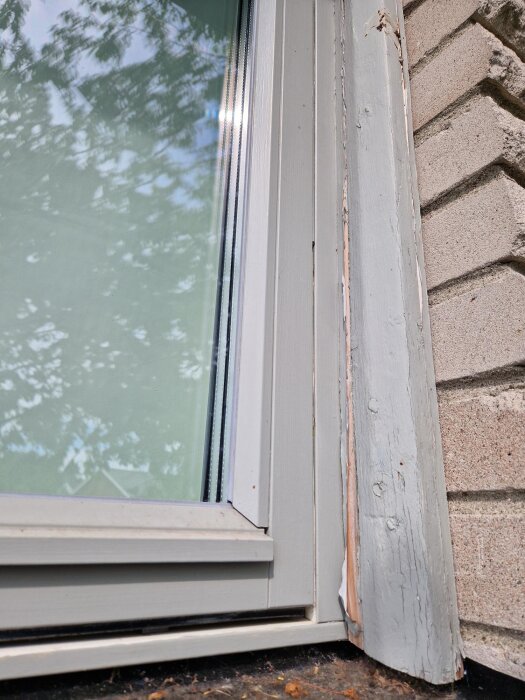
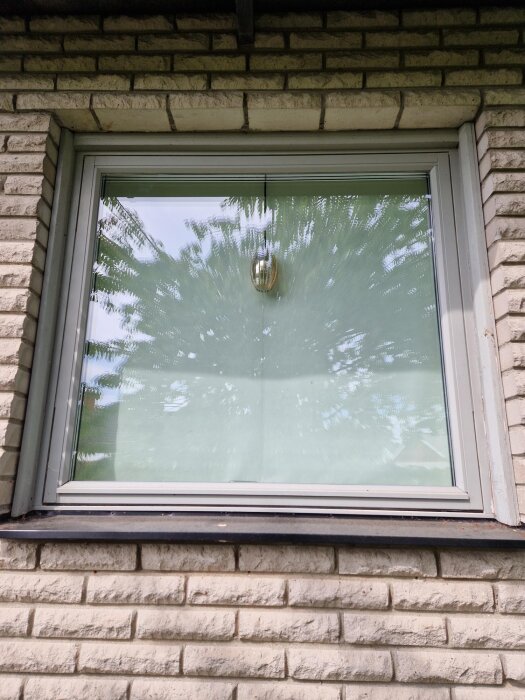
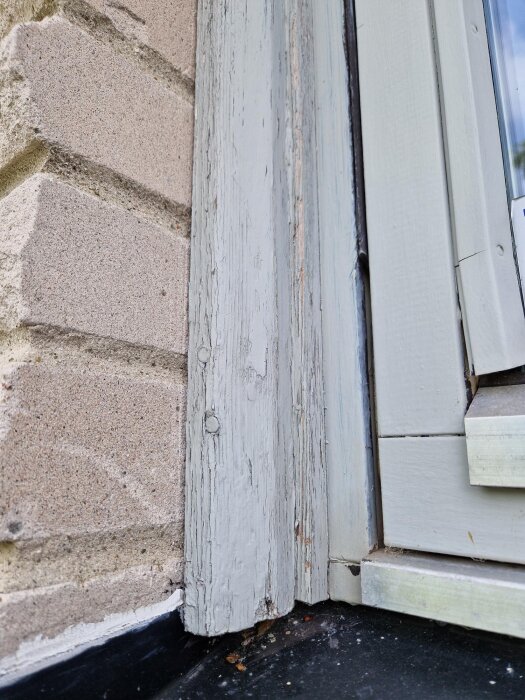
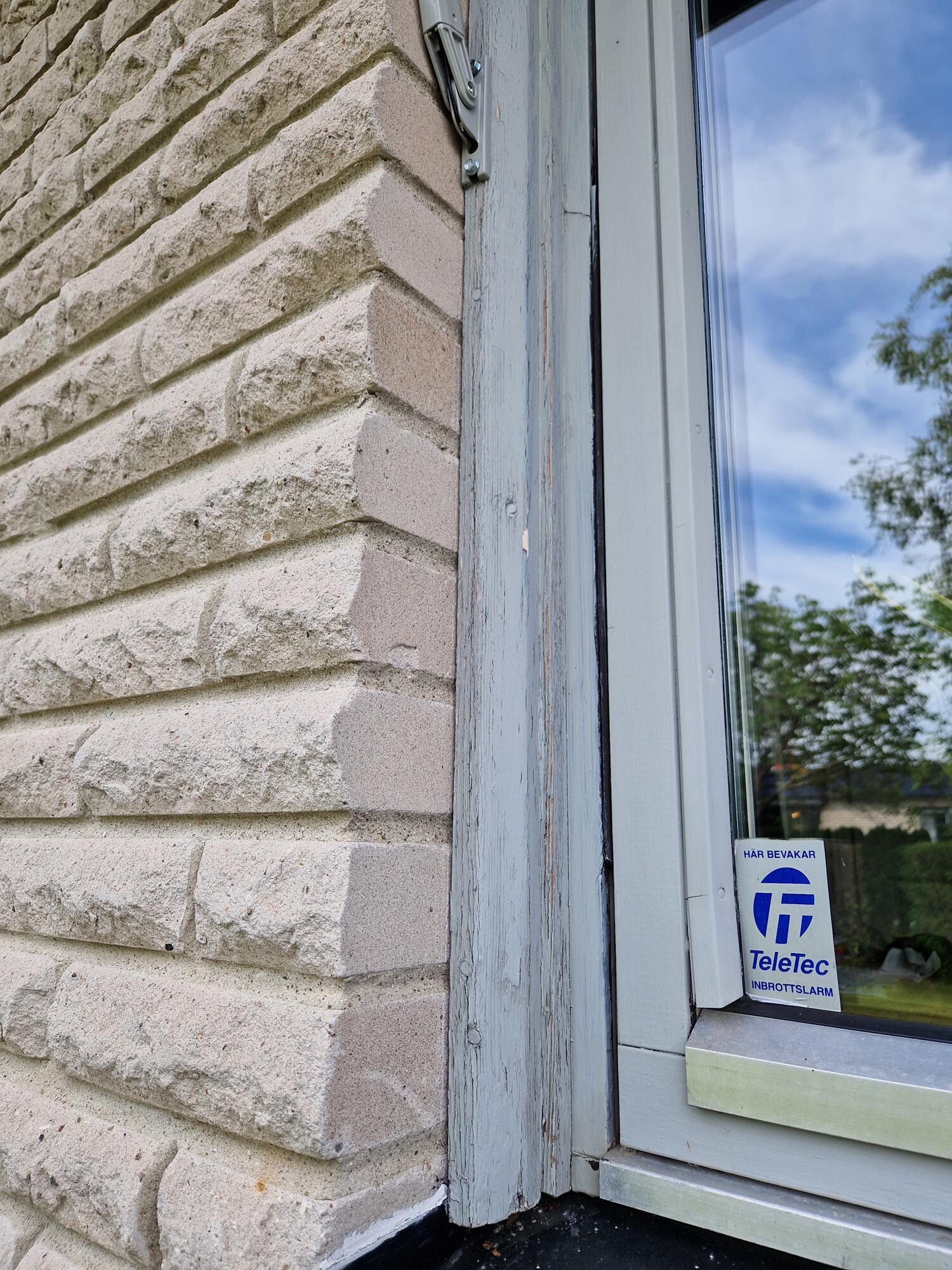
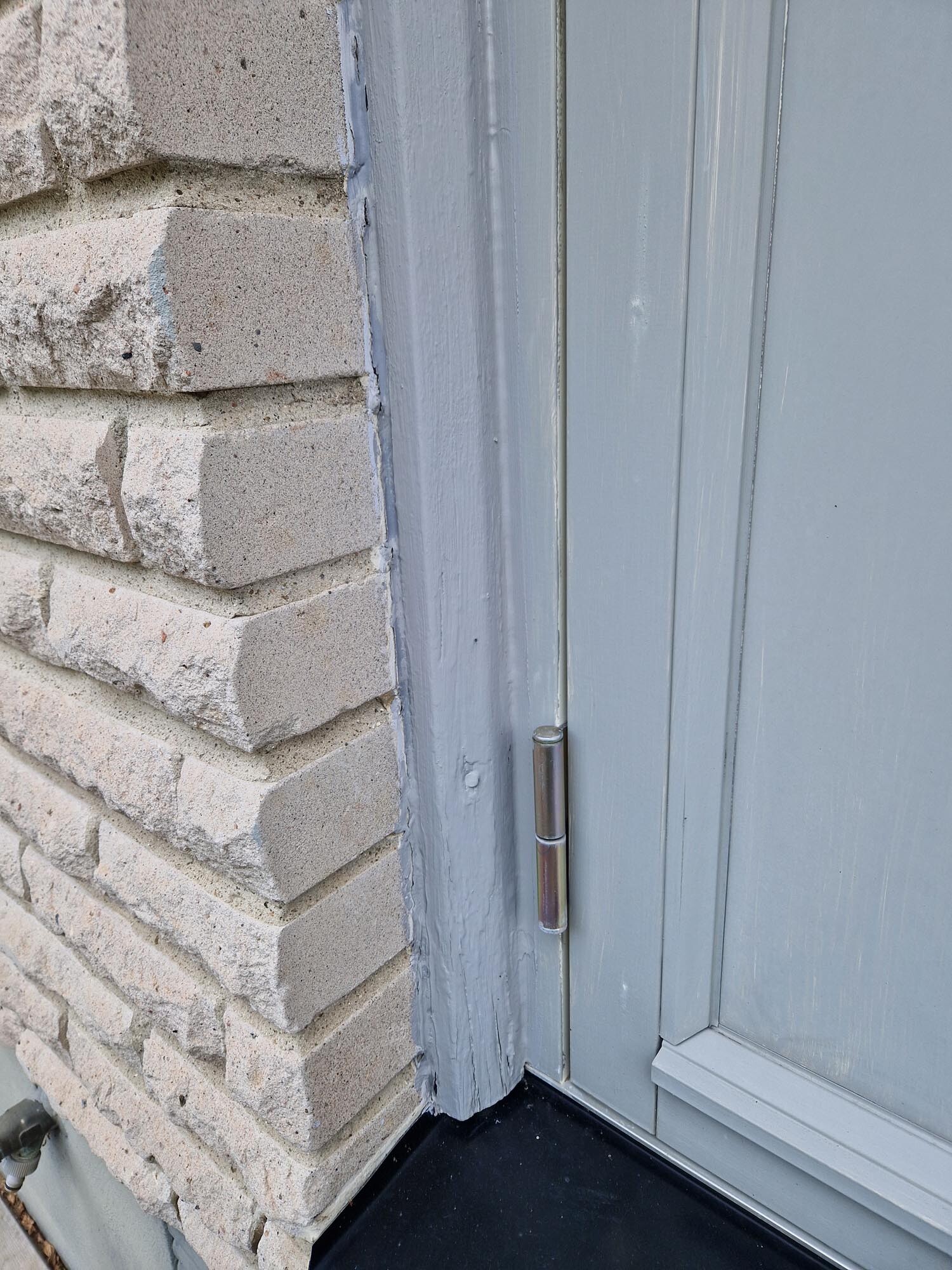
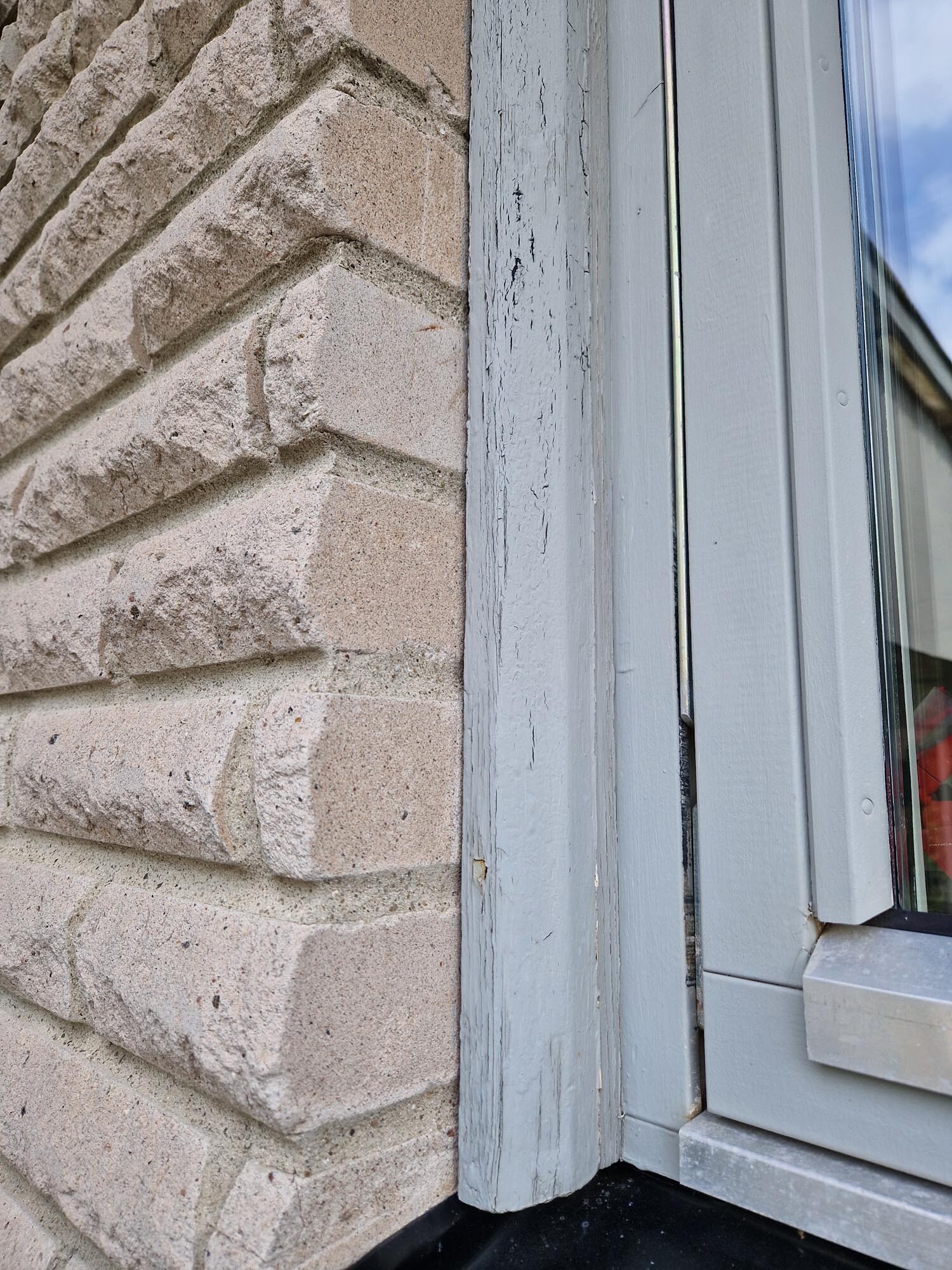
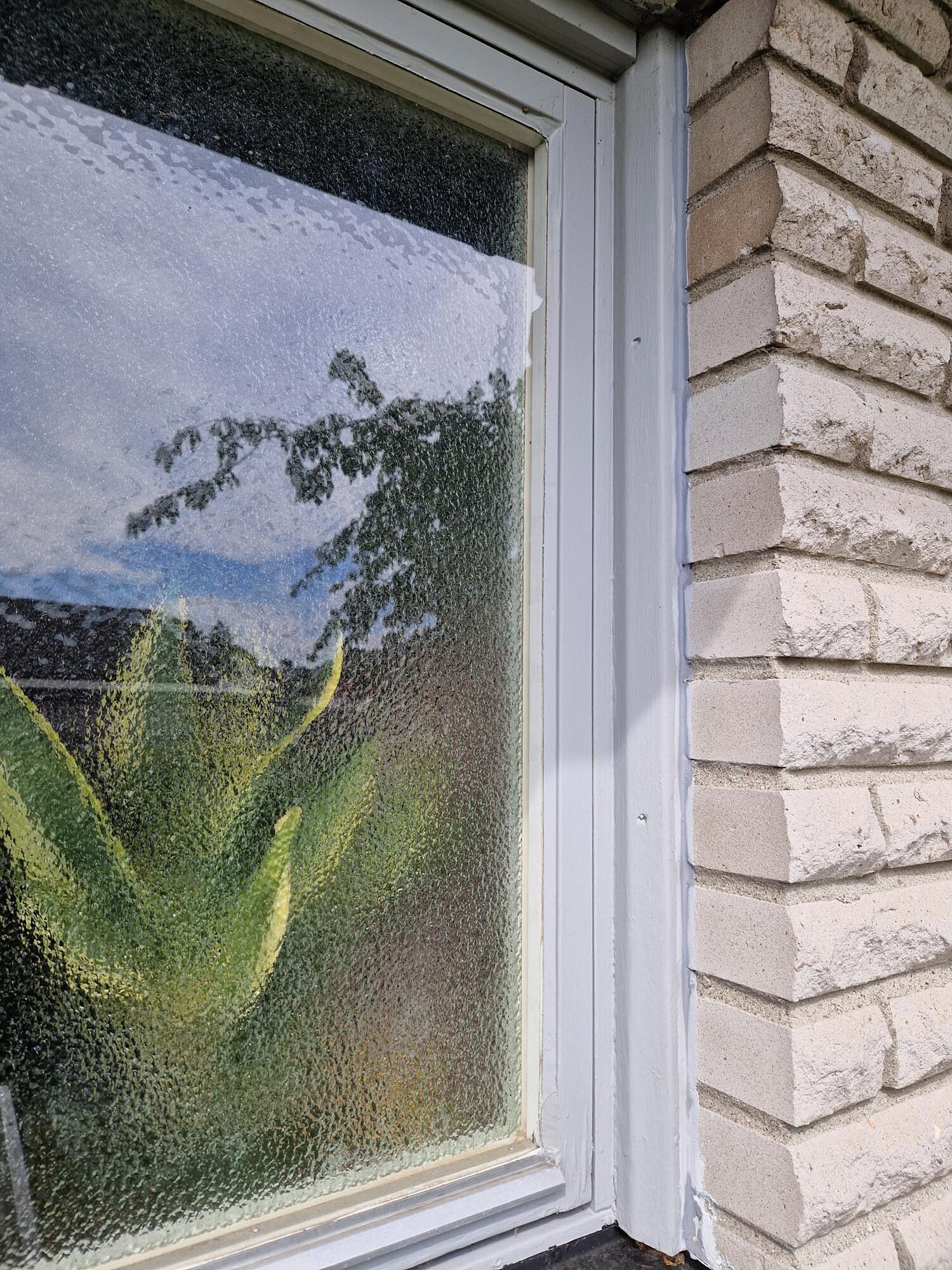
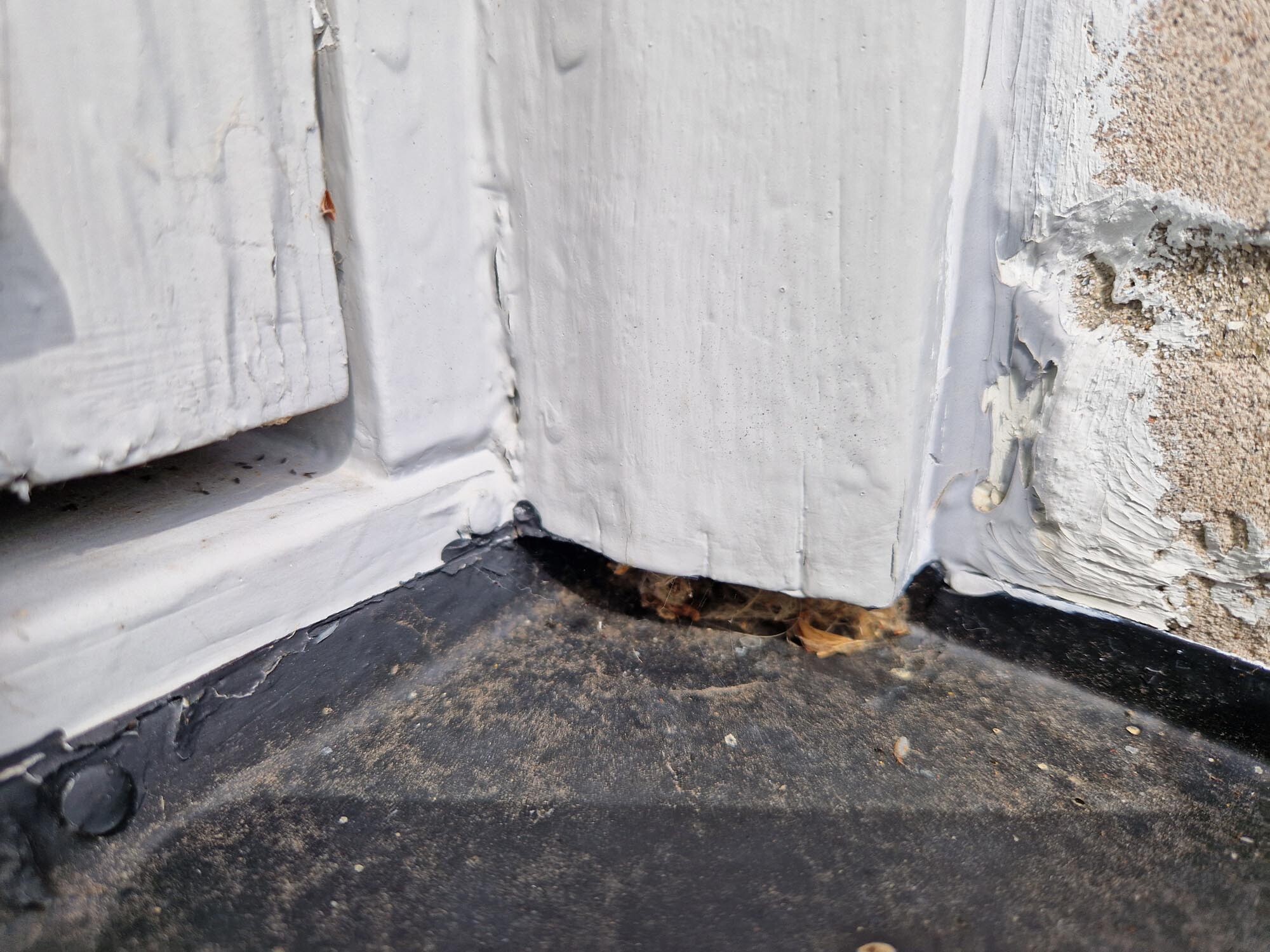
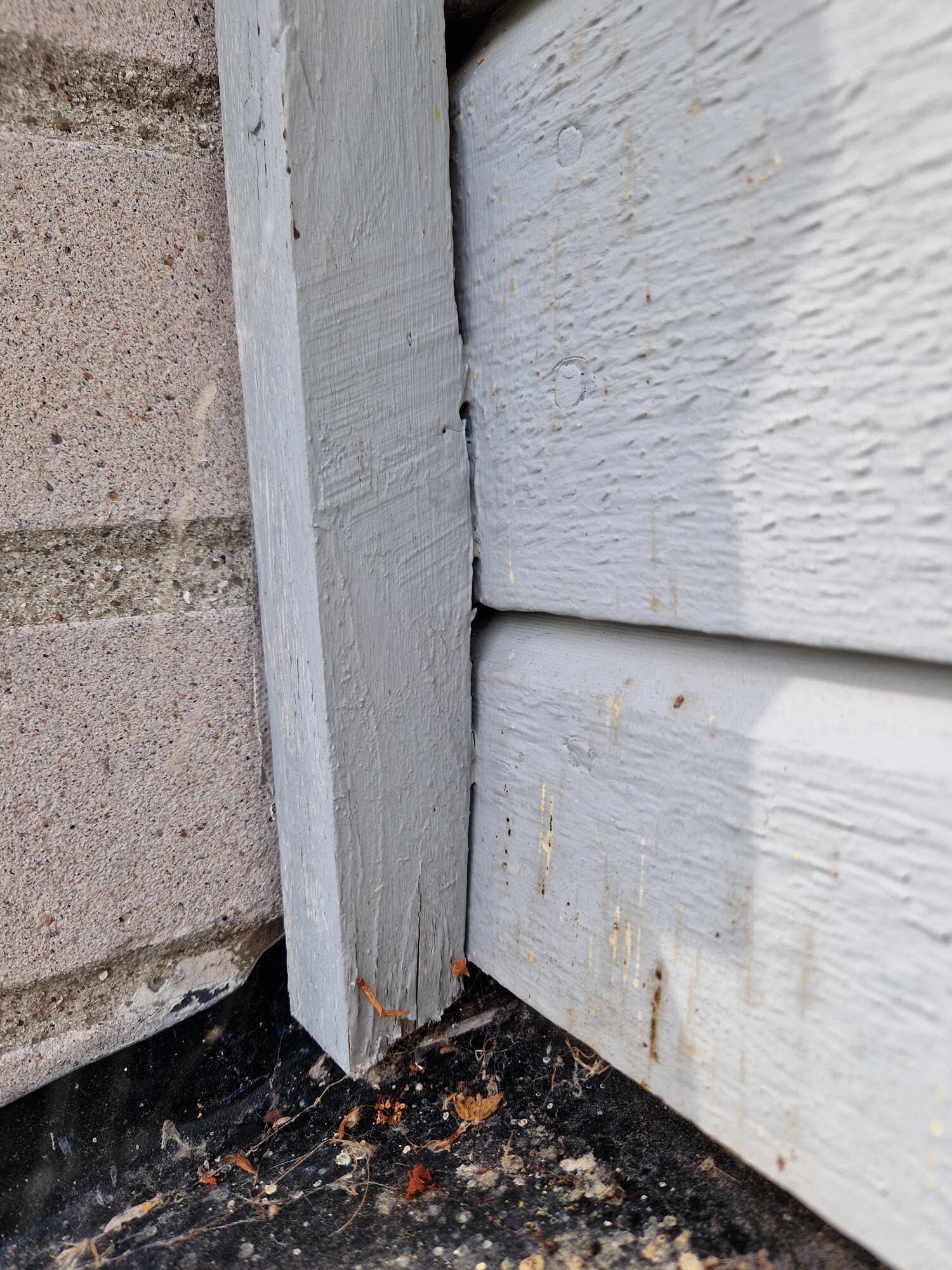
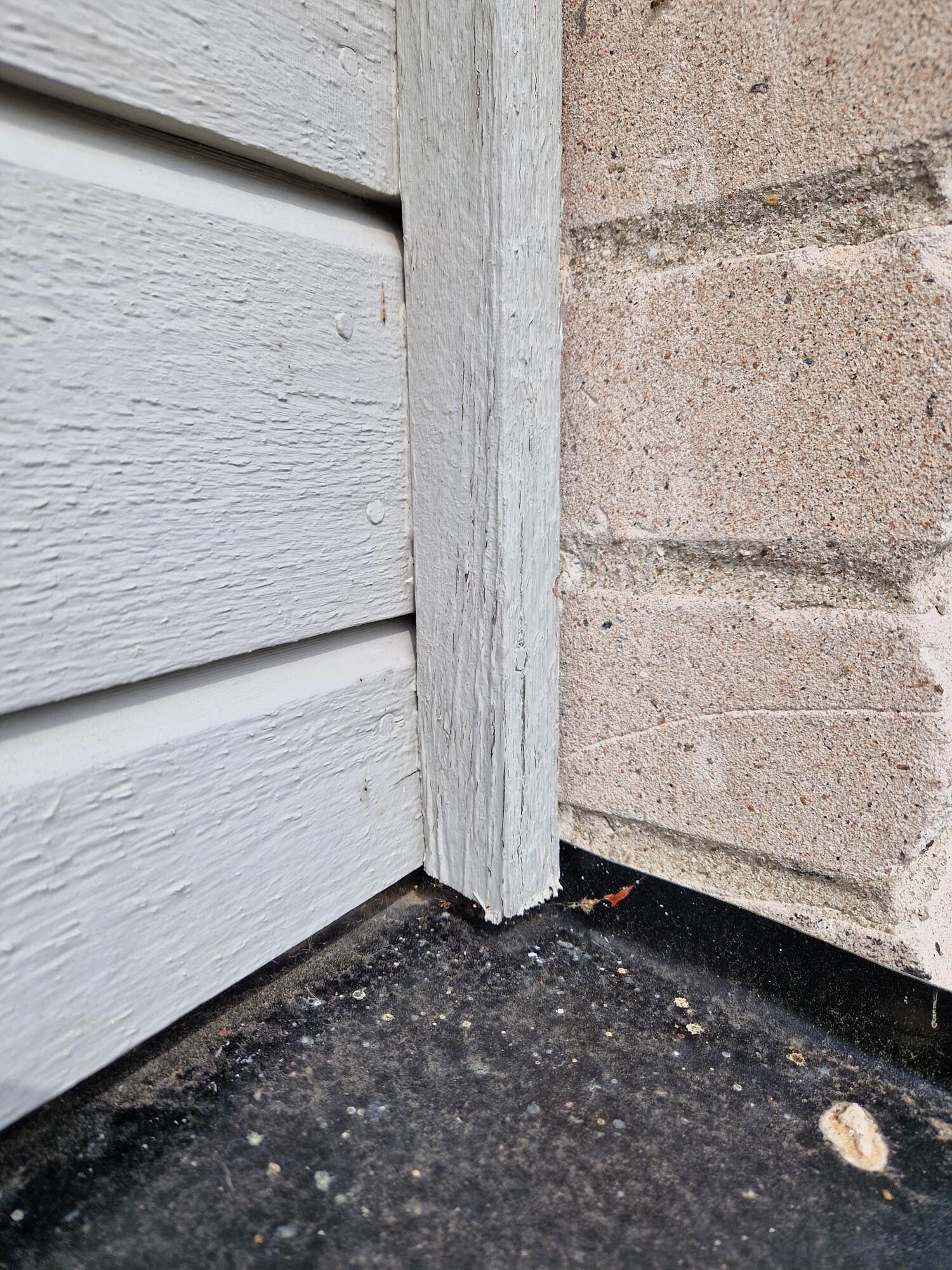
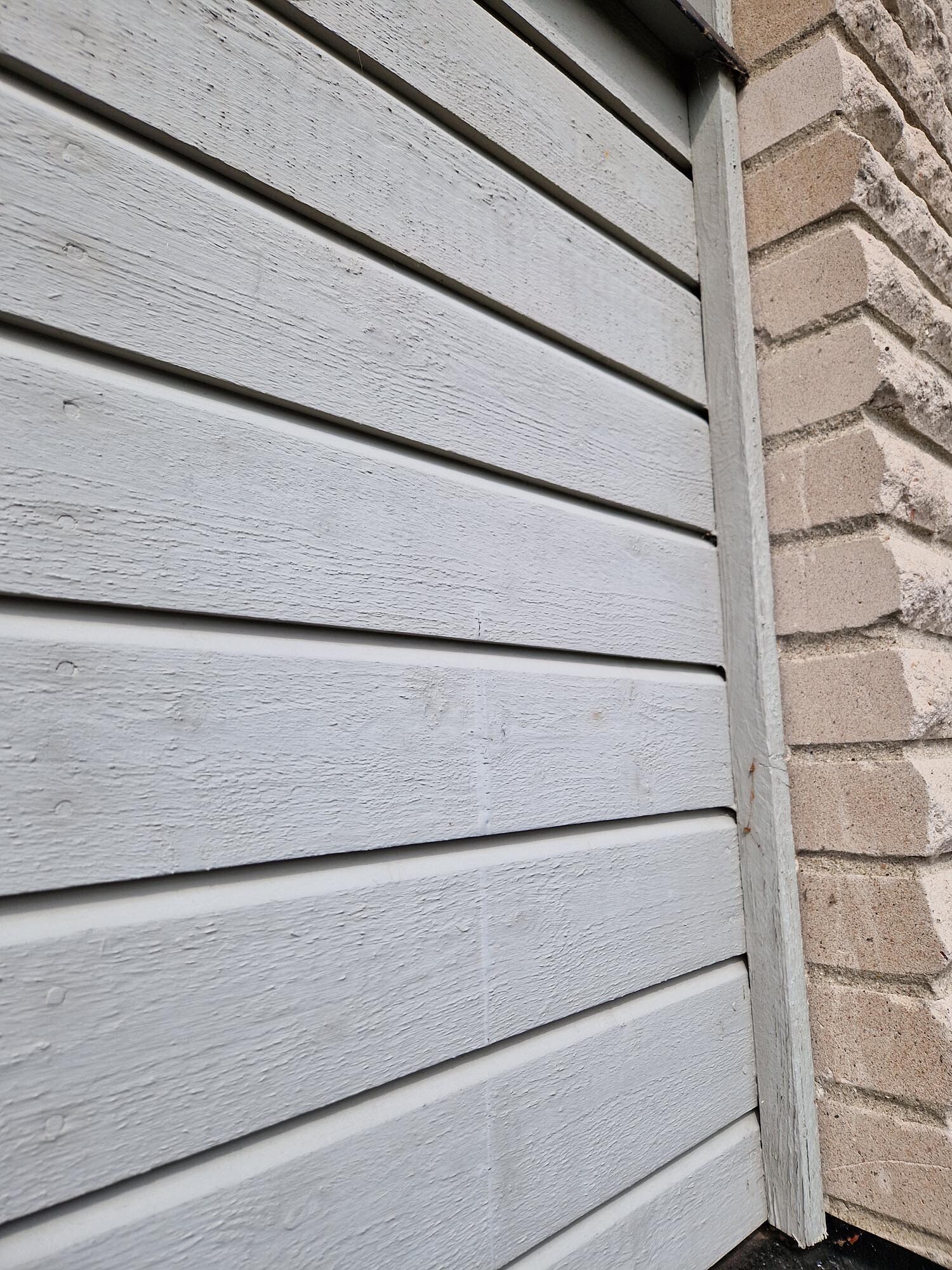
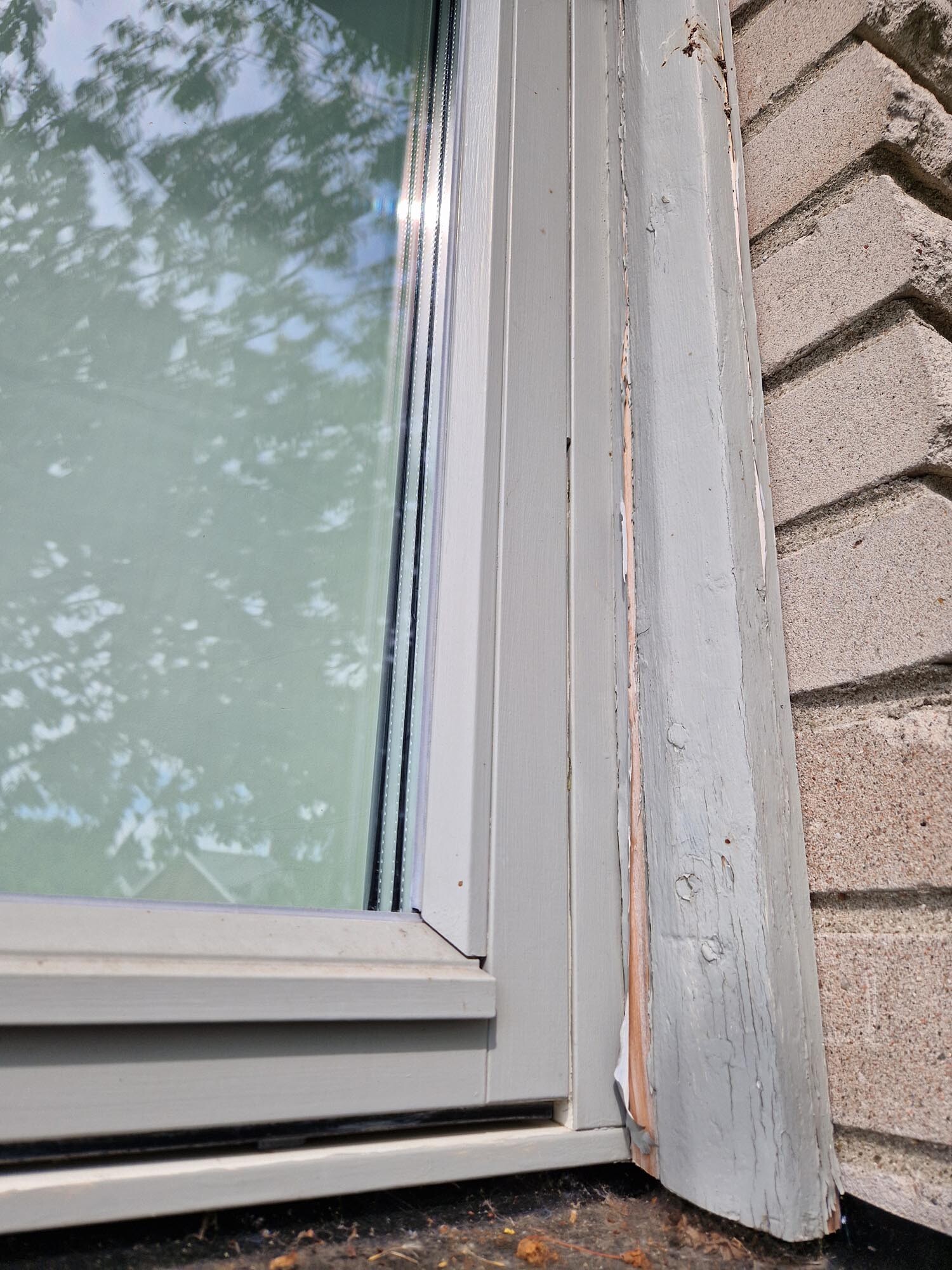
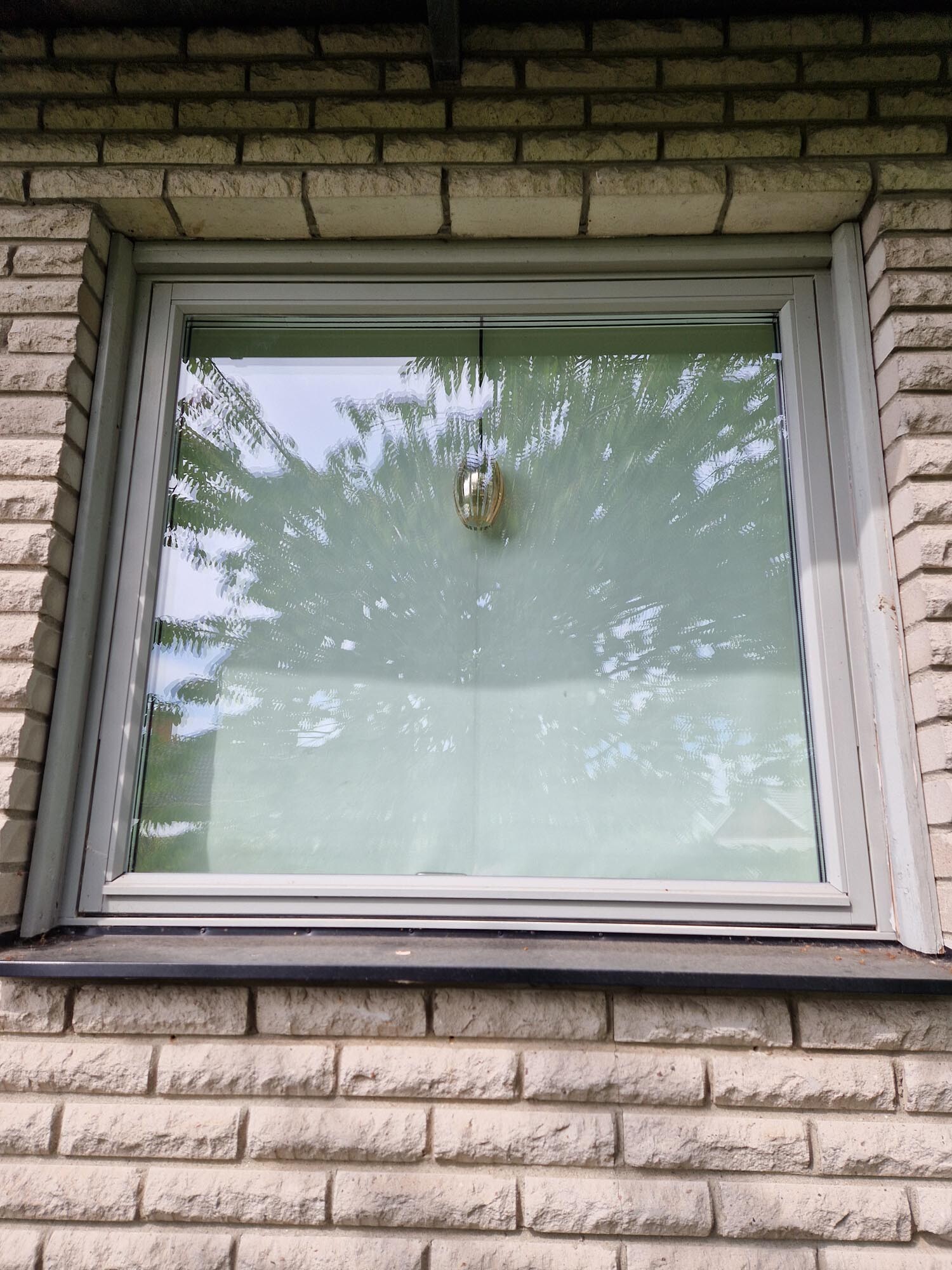
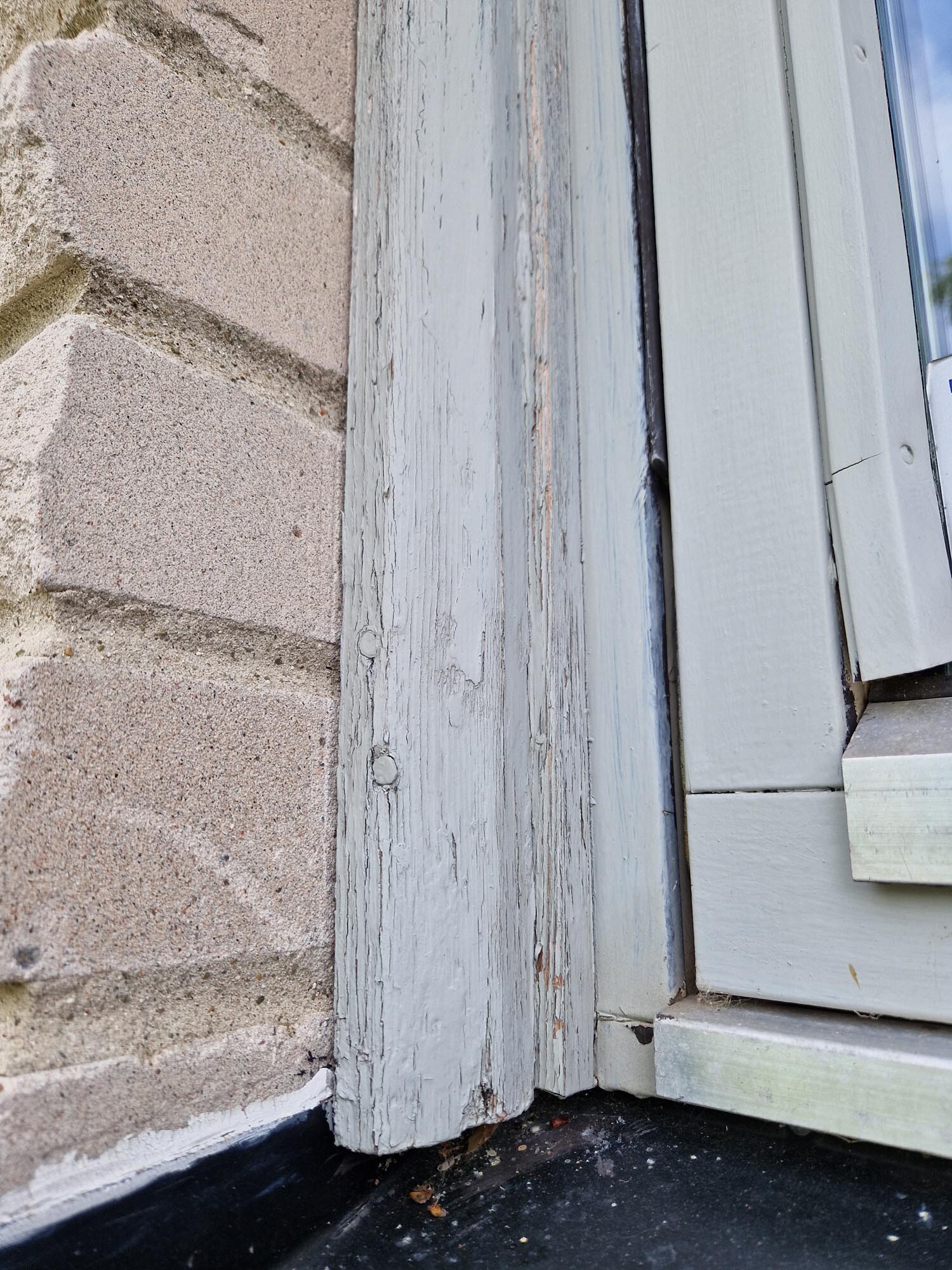
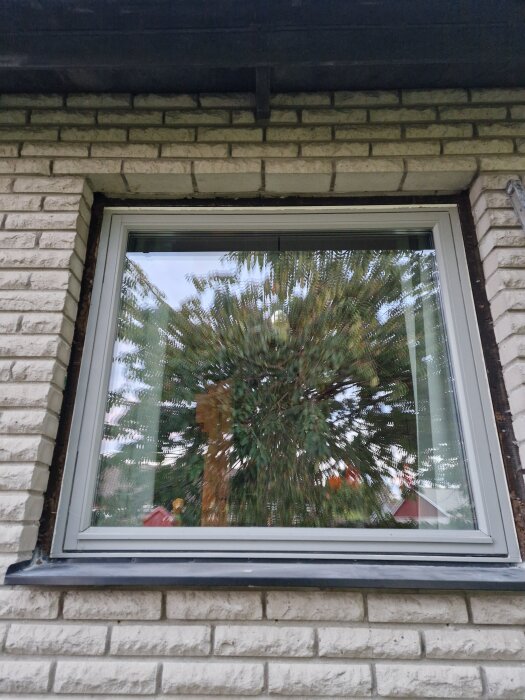
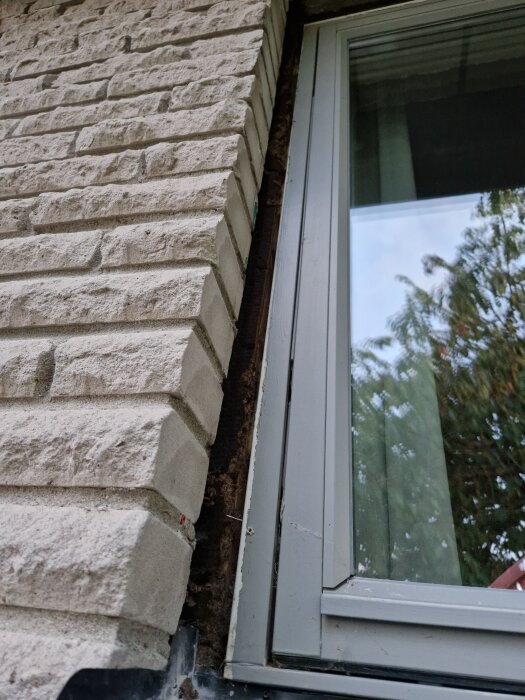
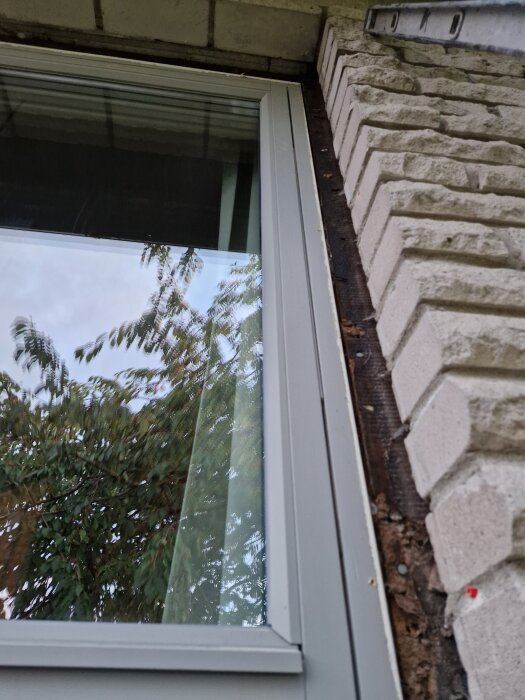
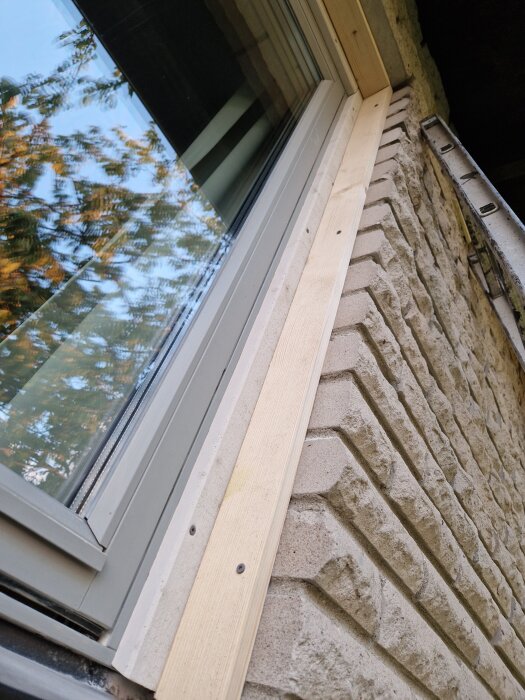
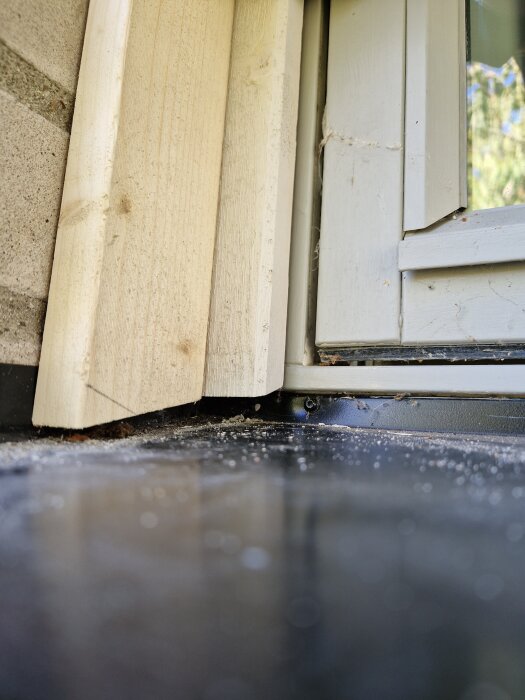
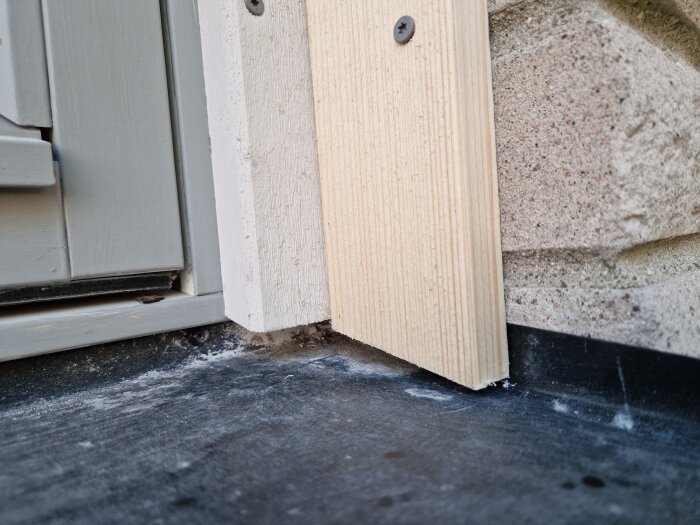
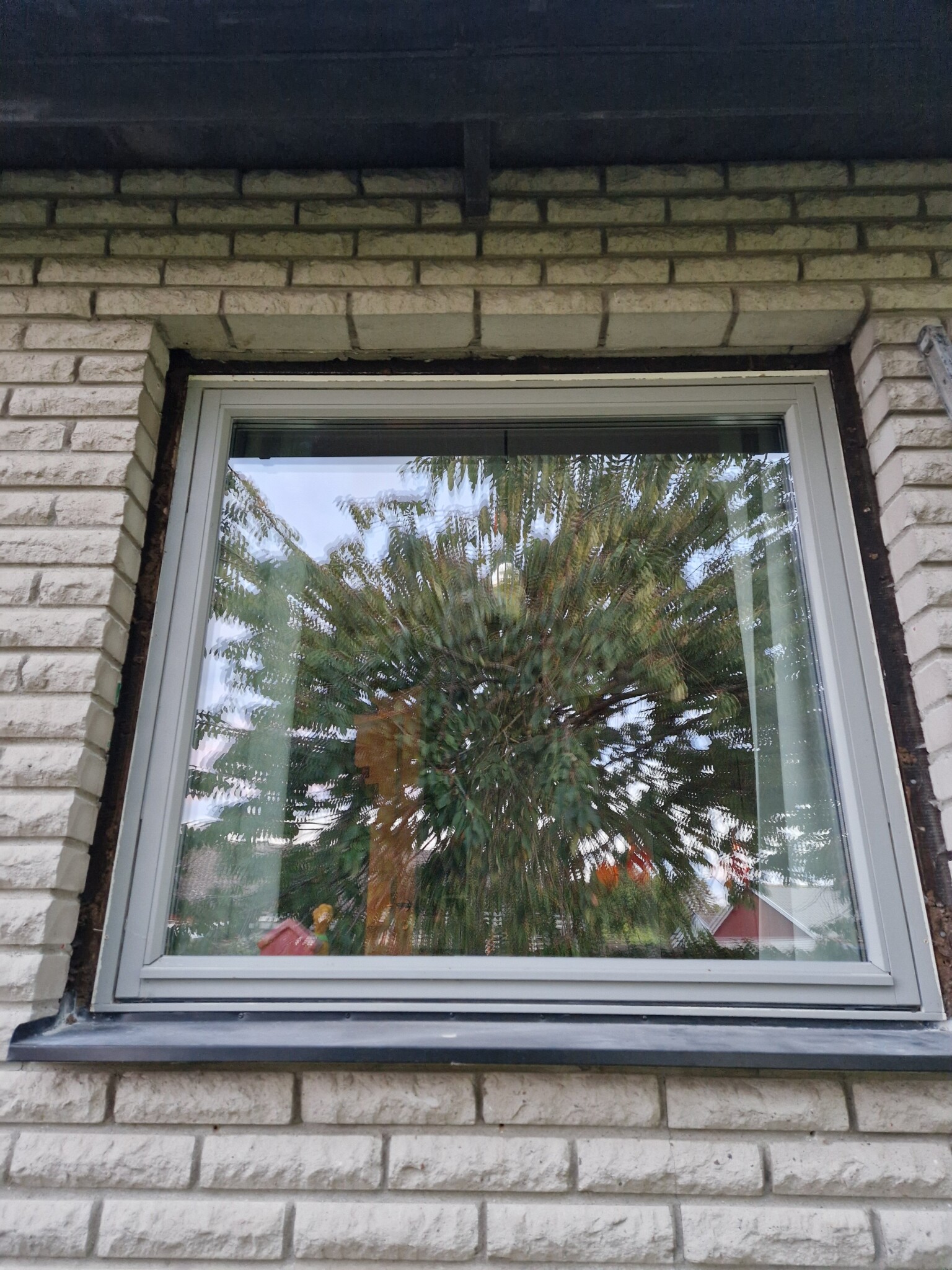
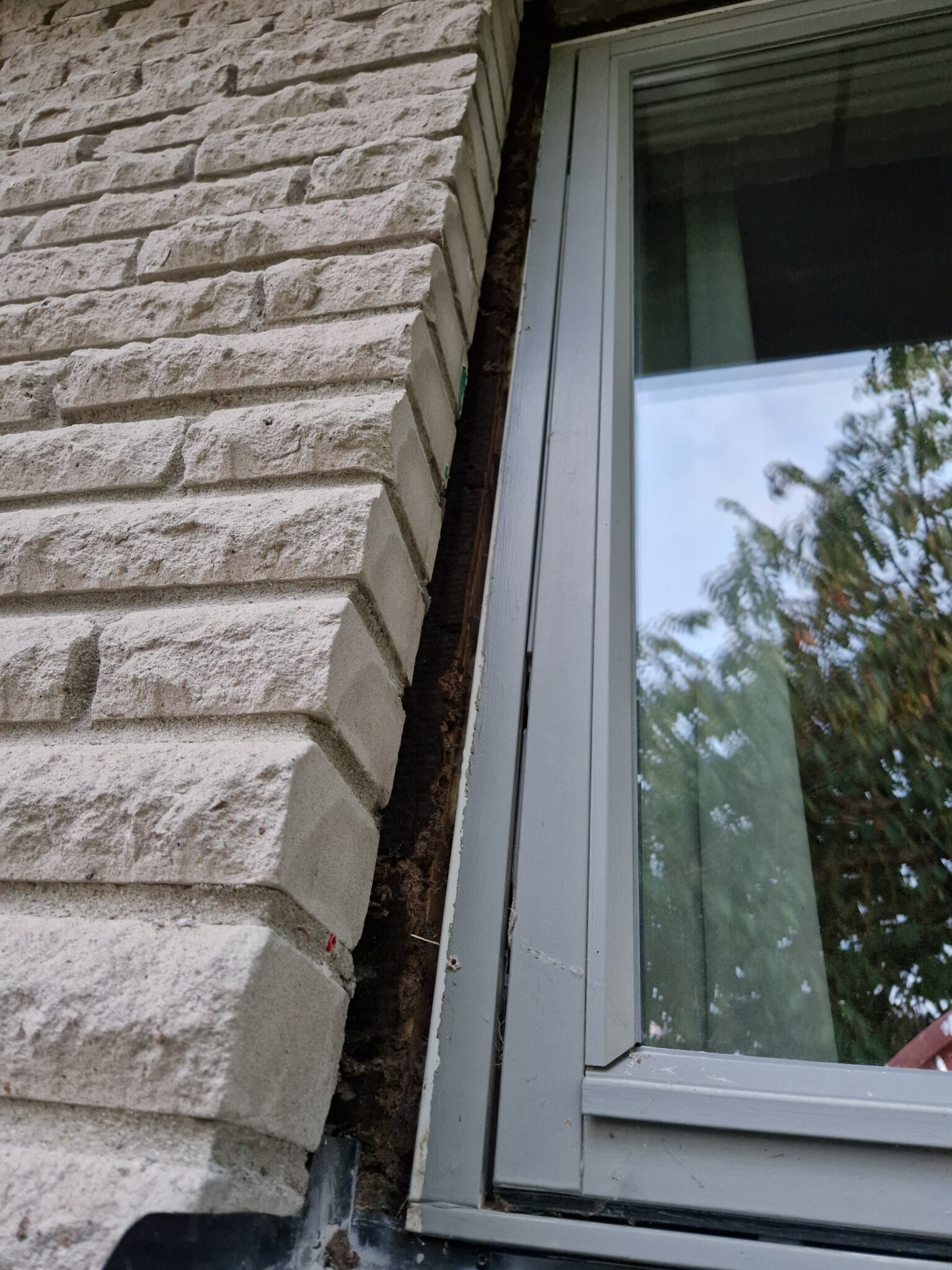
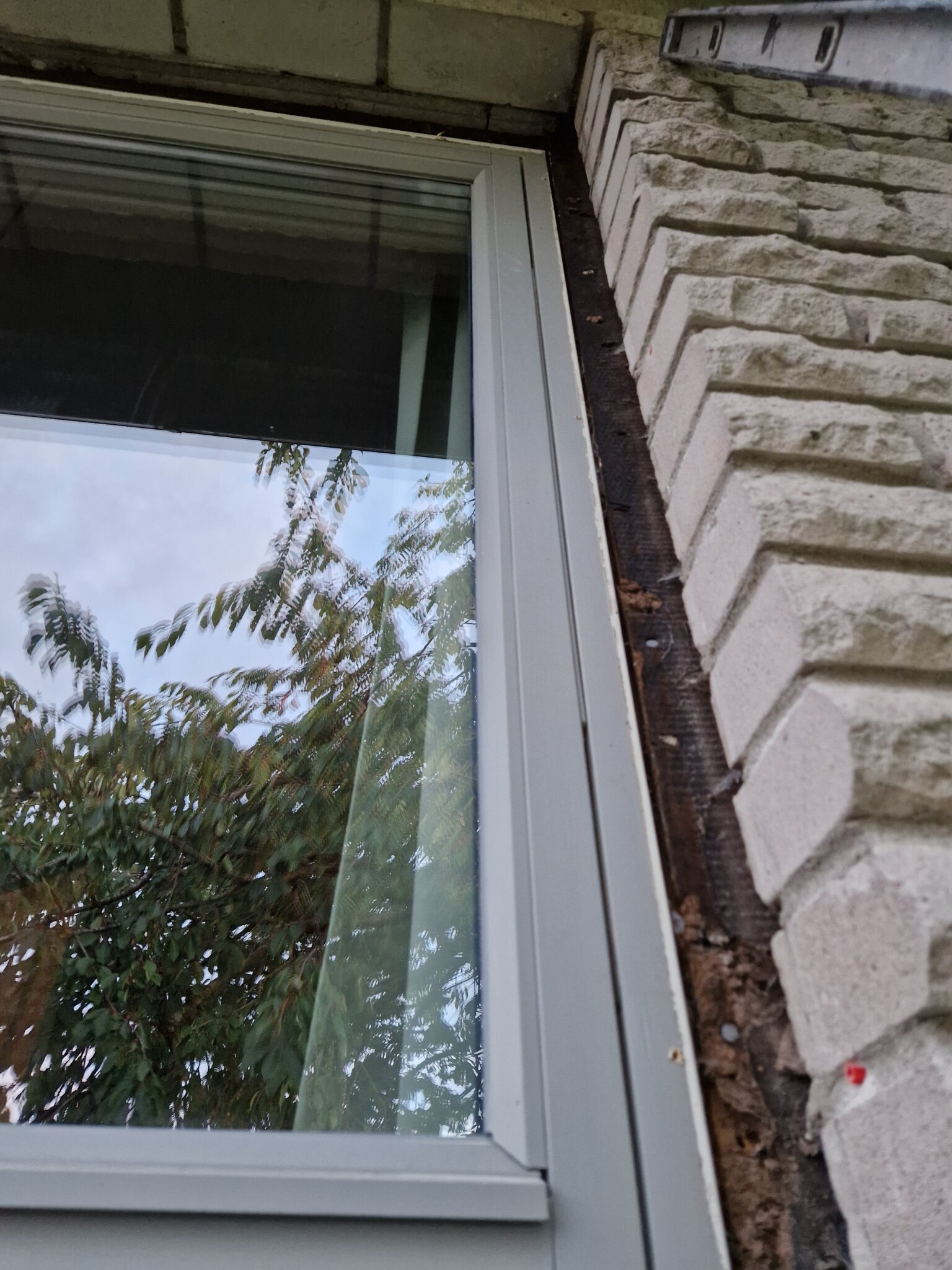
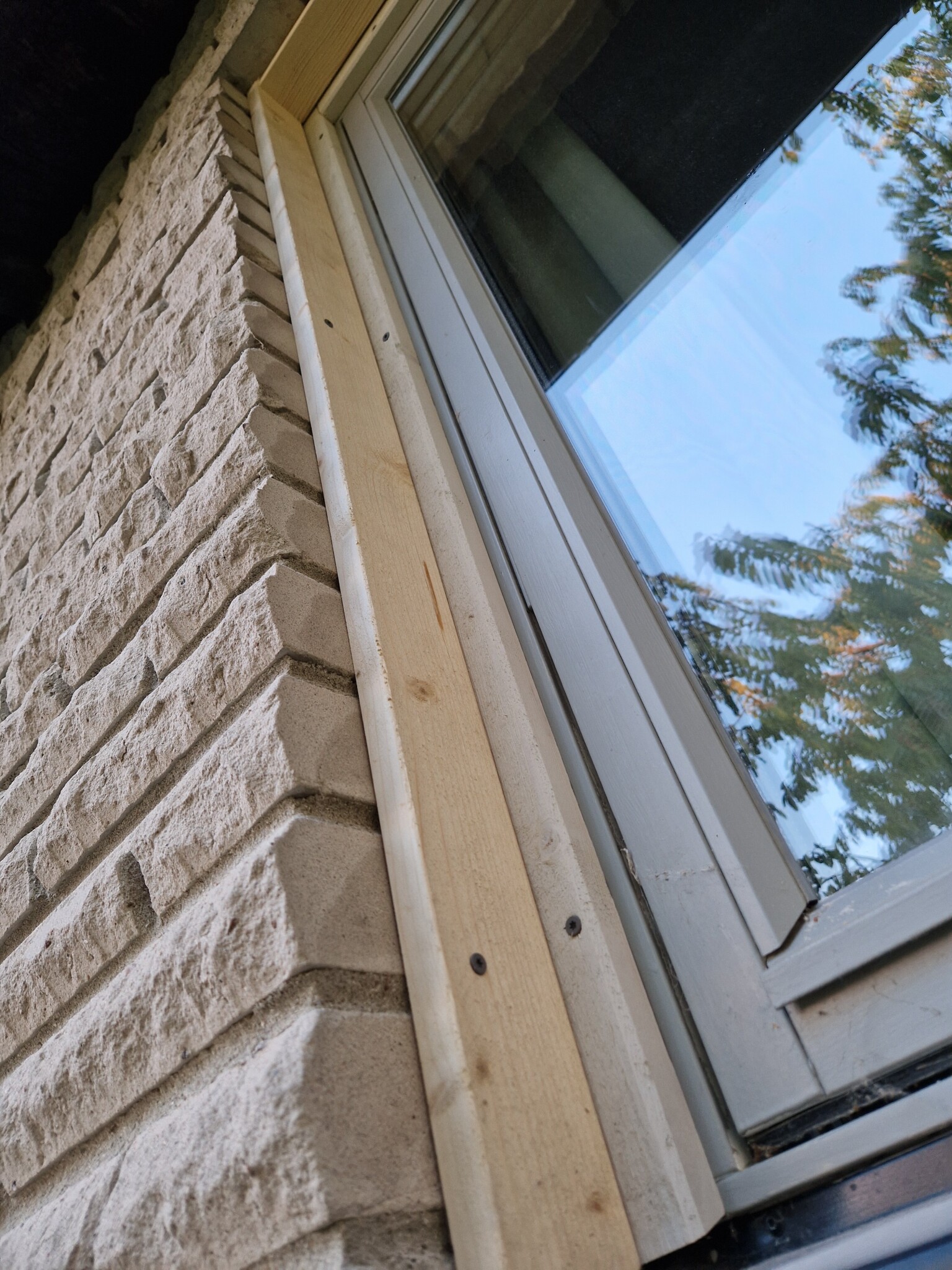
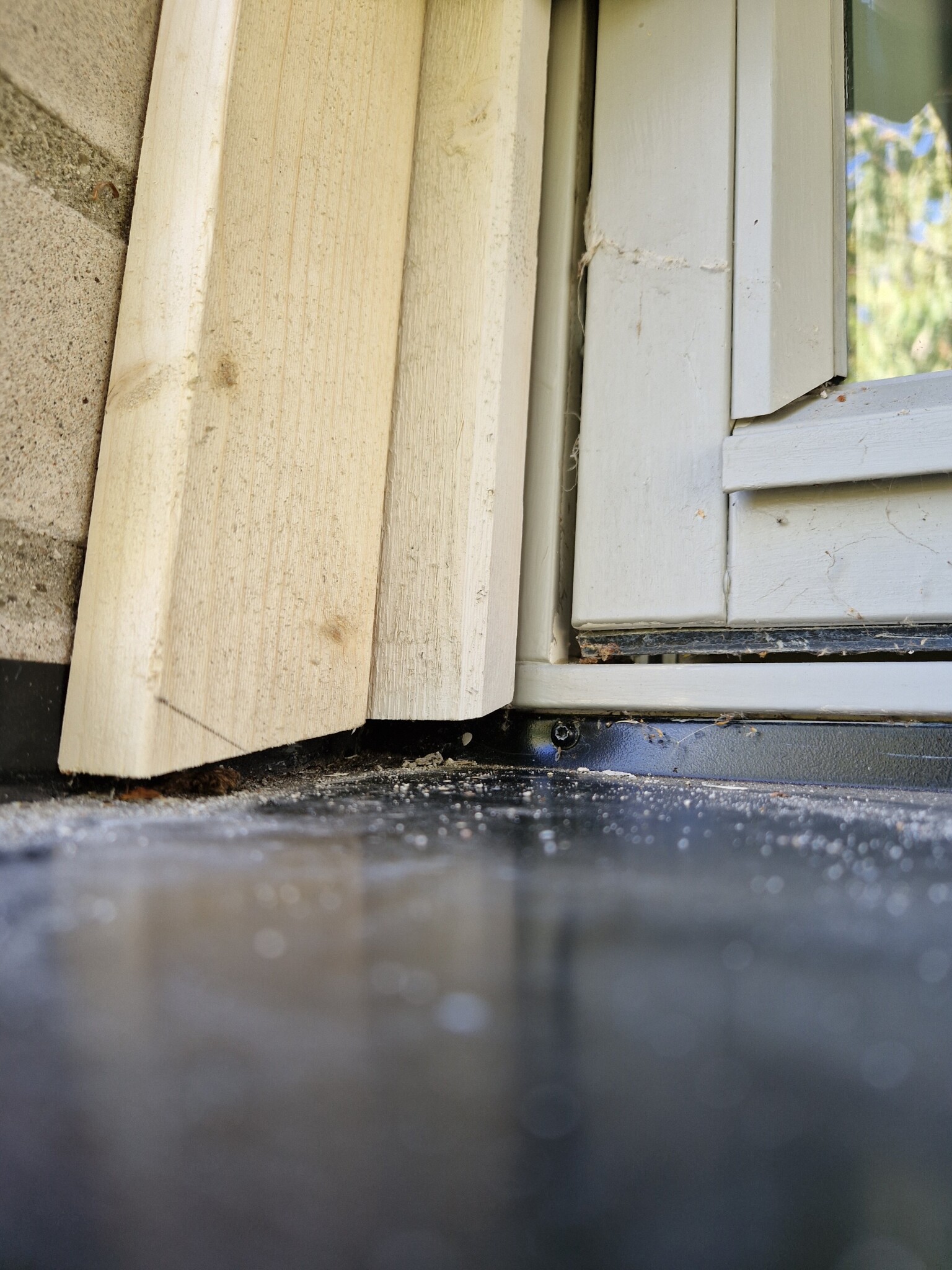
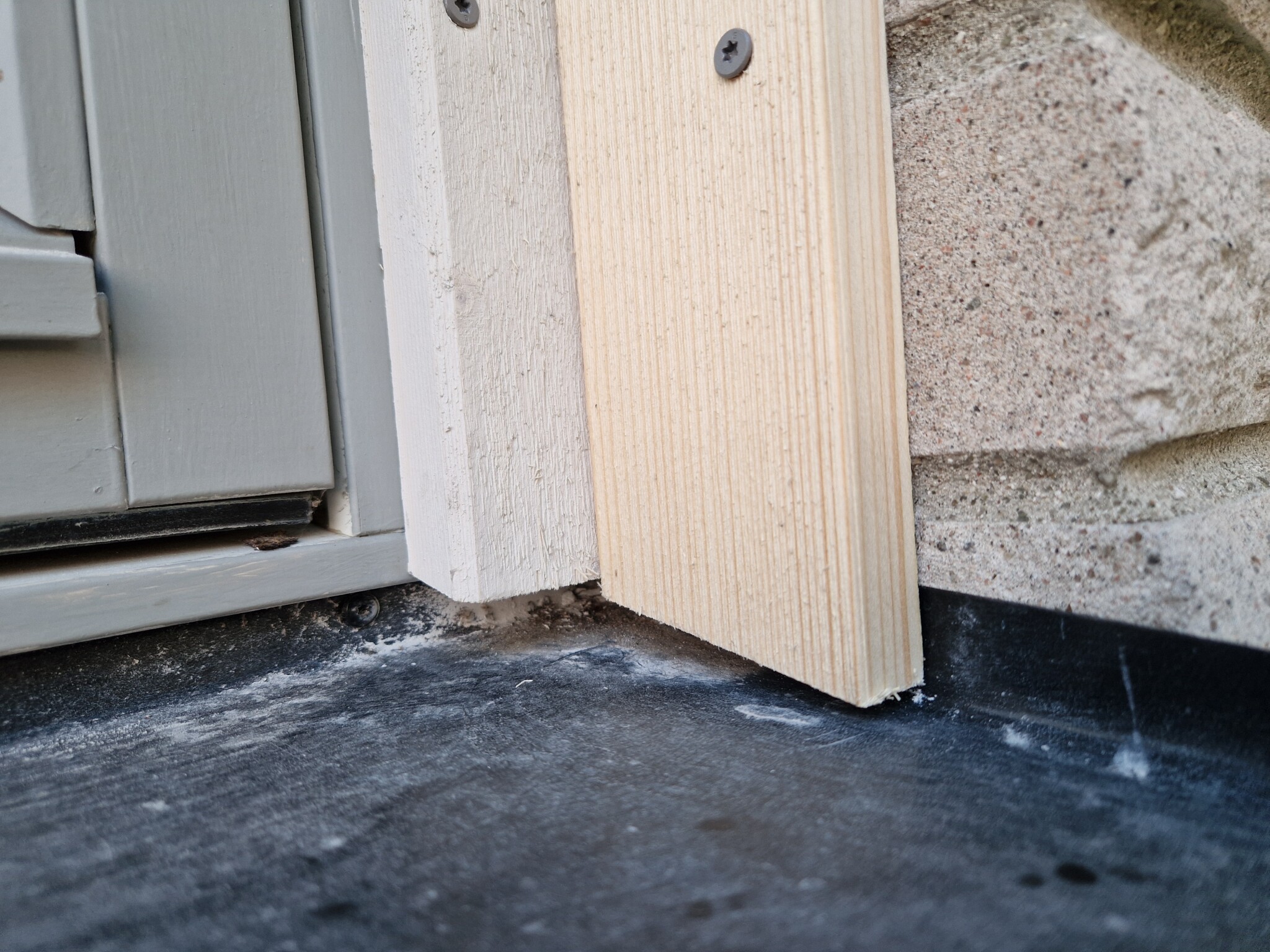
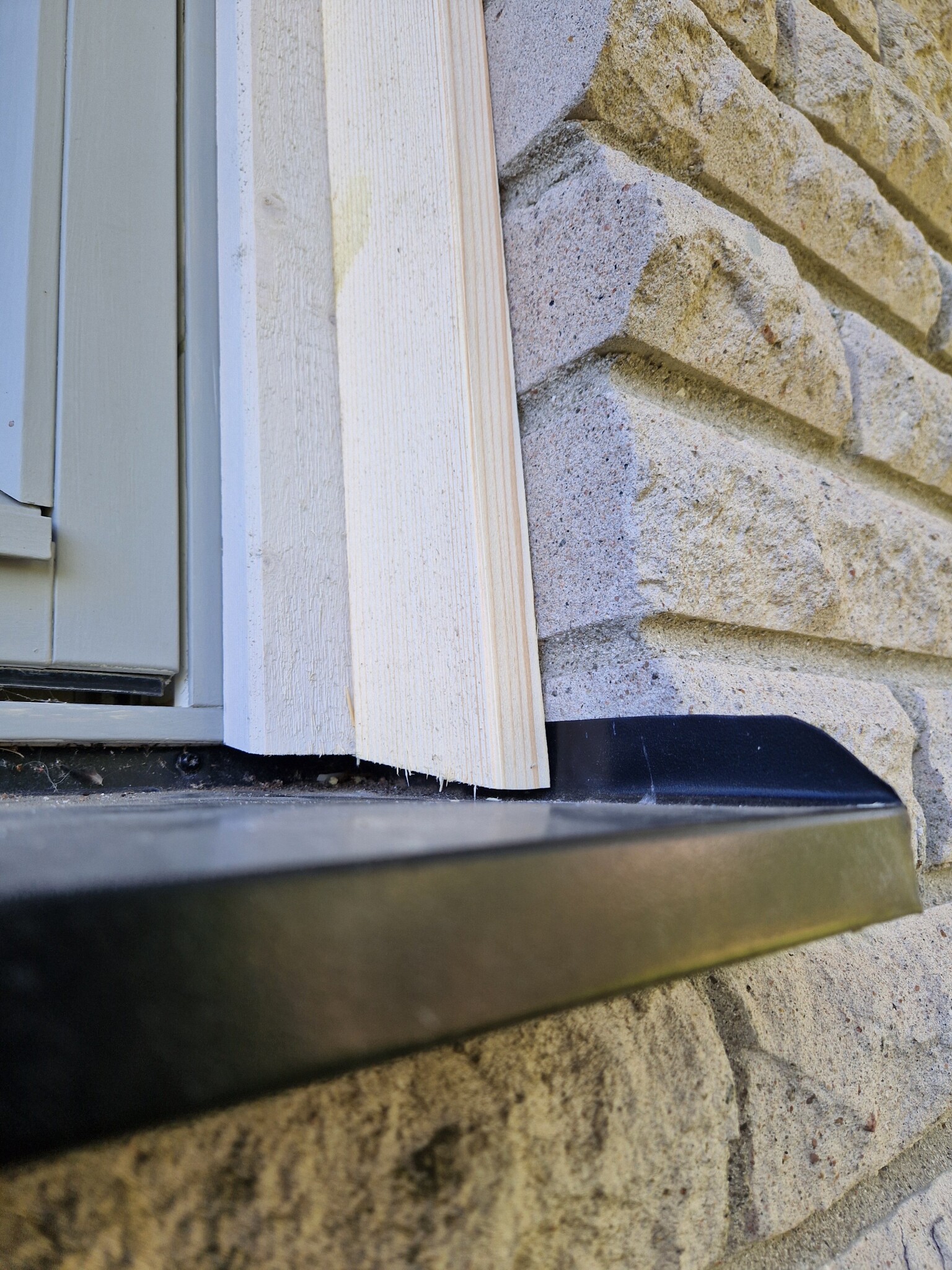
It's time again to maintain the windows, I had hoped they would last longer than 5–6 years. This time I'm considering replacing the trim. Here's how it looks today:
How do you prevent the wood from warping? Should you buy, cut, prime and paint first before installation, or should you cut and install first and paint afterward? Considering the drying times, the job will take a while to complete.
The alternative is, of course, to just scrape, prime and repaint it, if you don't think it will last better with new material?
If you want it to last, do as they did in the old days. It's been known since time immemorial that moisture-exposed wood rots. Consequently, wood of window quality is needed, i.e., slow-grown northern pine or oak (only heartwood for both). Resin-rich wood also works excellently. Then linseed oil paint is used, and the bottom end (end grain) is "impregnated" with raw and then boiled linseed oil until it no longer absorbs, which requires many applications or leaving the moldings to absorb linseed oil overnight.
It is reasonable to assume that the more carefully the work is done and the longer time spent, the longer it will last.
Probably not all moldings need this treatment, only those exposed to frequent sun and rain. Usually, these are the ones facing southward (southeast, south, southwest). Those facing north can manage largely untreated.
As an alternative to the old tried and tested method, one can always go "modern," i.e., replace the moldings approximately every 10 years in the "modern" disposable approach.
Regardless of the method, the pre-treatment of the lower end grain is essential, which must be done before installation.
Thank you, why don't people use pressure-treated wood?
I was thinking of tearing down the casing, measuring the window seams, buying suitable wood, treating the ends (about 5 cm up) with linseed oil and then applying 2 layers of paint. I got a suggestion elsewhere to use varnish solvent-based paint?
It's environmentally unfriendly, but otherwise, it works fine for 20-25 years.
IIronside said:
I got a suggestion elsewhere to use paint based on white spirit?
Well, my experience is that it doesn't work either. It forms a thick, hard layer of paint that cracks when the wood moves with the moisture changes over the year, especially if the wood is exposed to heavy rain and sun. The only sustainable way to touch up the paint when it has cracked after a few years is to scrape it back to bare wood and start over. That's why I've switched to only using linseed oil paint outdoors (as well as Falu paint, Roslagen mahogany, and red tar, but they are not for details like windows, trims, and moldings).
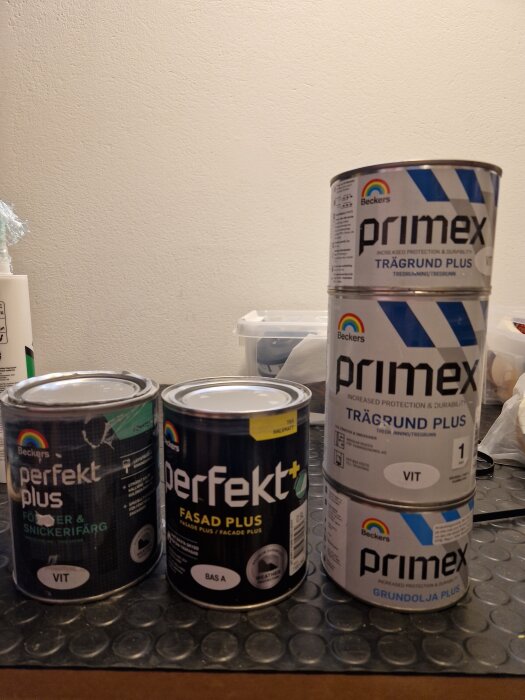
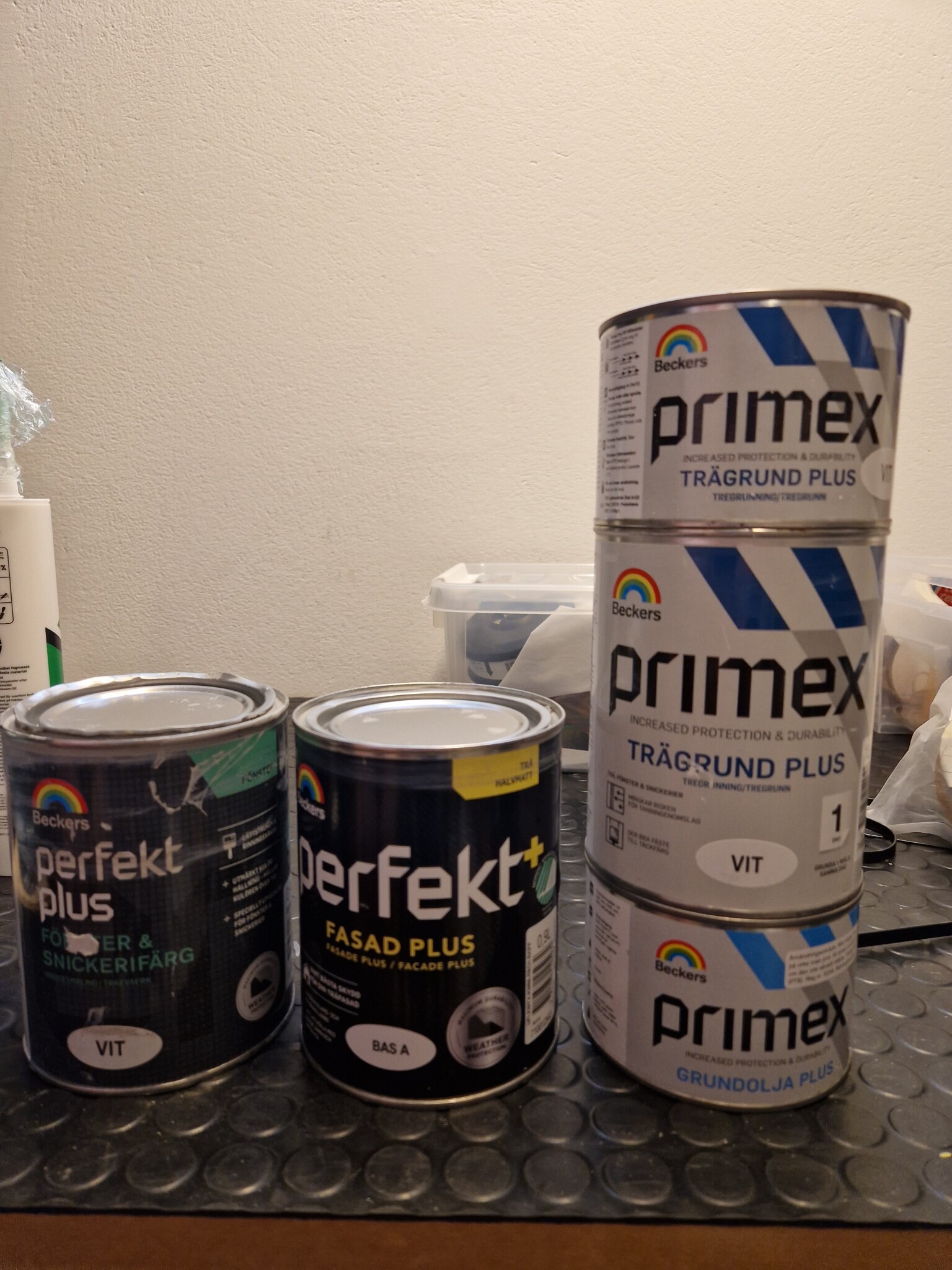
I found this in the woodworking shed, they are from 19, 20, and 22. When we fixed the door casing a few years ago, we used primer oil plus on the end grain, where we wrapped the ends in plastic overnight to really let the oil soak in, then we applied Wood Primer Plus and finally 2 coats from the Window & Woodwork Paint can.
Is this a good option, or should it be replaced with linseed oil and linseed oil paint? Perhaps the paint should be renewed regardless?
If it's alkyd oil paint, it will last for maaaany years on the shelf. It's the water-based paints that might have a shorter shelf life, mostly because they can mold, I think.
If the paint looks okay in the cans, then it should be usable. If you carefully oil the end grain, it might hold up well. It depends a bit on how exposed the trims are to rain and sun.
What's the worst that can happen? The wood could deteriorate at the bottom, but it should take at least 5-10 years, maybe significantly longer before it needs fixing. Unless it's very troublesome to make new trims and/or hard to reach some windows, it might be an acceptable option. Repainting is also quite a bit of work, so the difference might not be that big.
Window trims don't feel super critical compared to a facade.
Here is your text with corrected spelling mistakes (changes in **bold**):
Perfect, took a round to the paint shop and stocked up a bit with the cover paint. Strangely enough, they didn't try to sell me a bunch of extras and said just like you, that the oil, primer, and cover paint are still fine to use even if they are opened, as long as they haven't been kept cold.
Tore down the trim from 2 windows yesterday, realized that age-resistant tape was probably a bit much so I skipped it. I know it was said when I replaced the door that it was no problem to have it open.
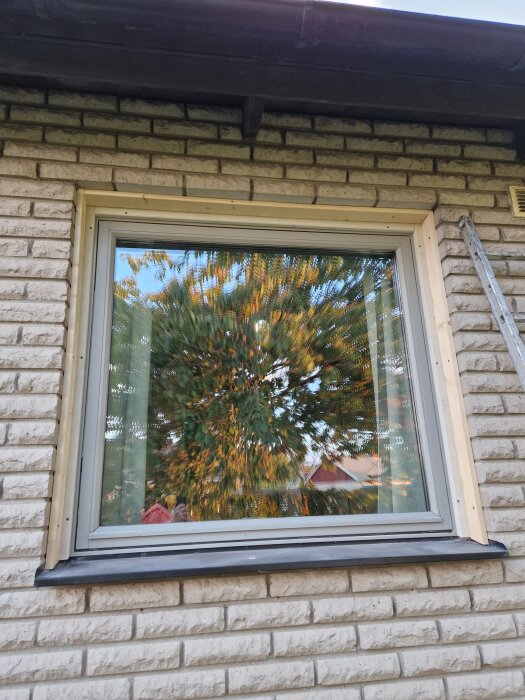
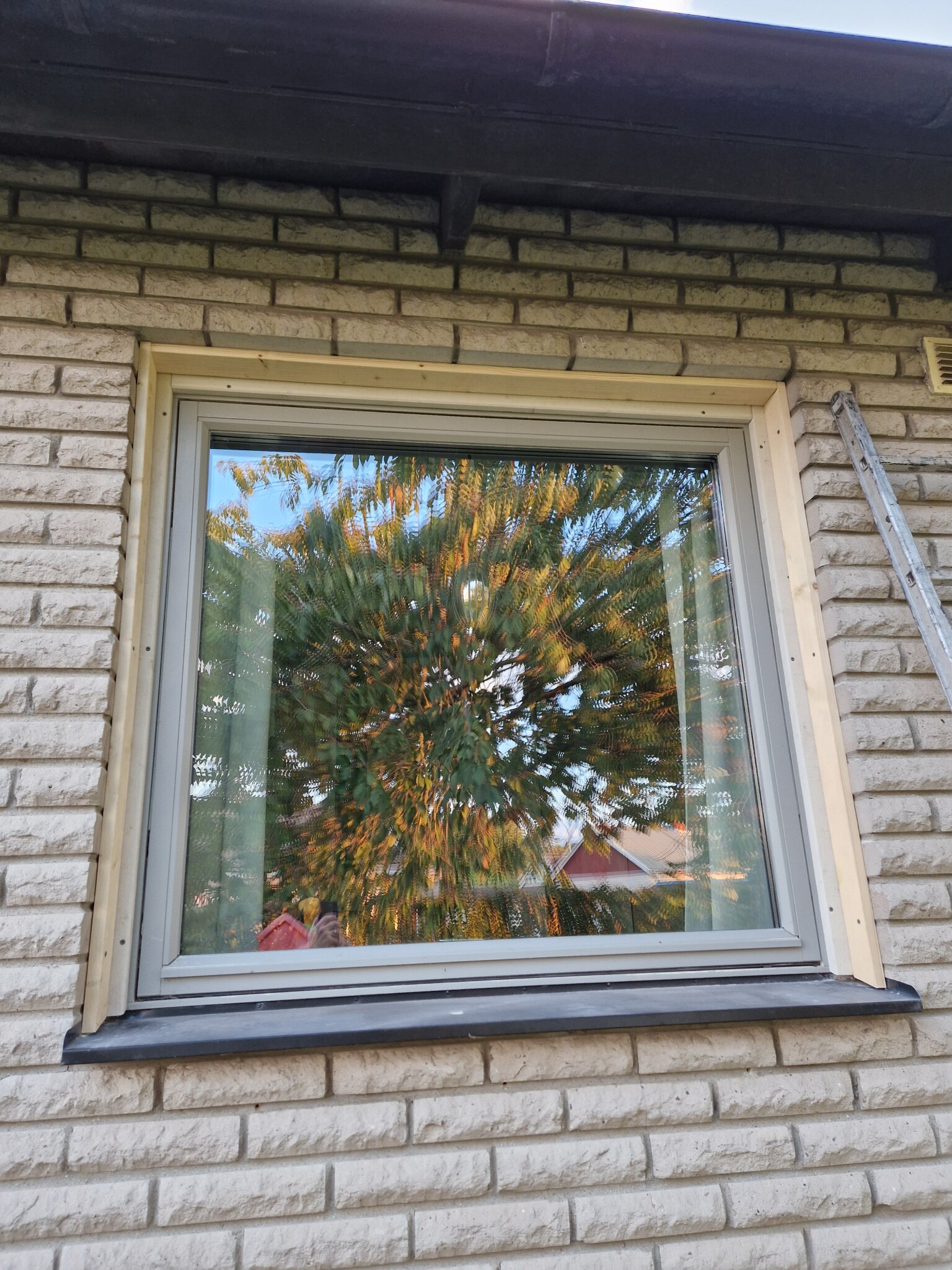
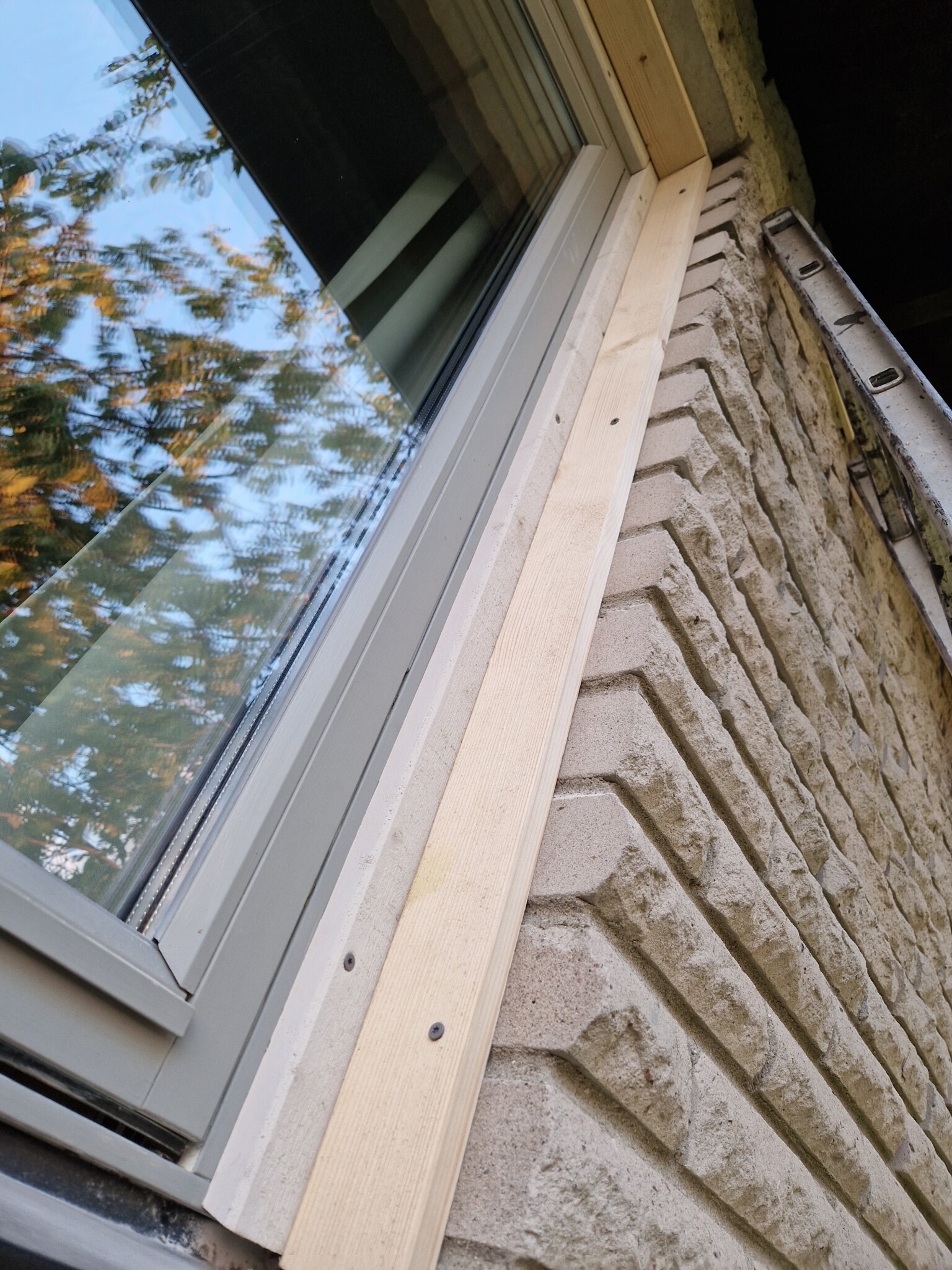
Today I bought materials and started putting together parts for one window, took a little longer than expected but now it's cut to size, disassembled, and ready to be oiled, primed, and painted. I would have liked a drip edge at 15-20 degrees but unfortunately couldn't get more than 12 degrees to make it fit.