What do you mean a facade can't be made of wood? Yes, HE knows I put up base panels on the wall.
The flashing should be installed behind a ventilated facade, not on the ventilated facade. That is the question in the thread from TS about how this should be done.
Yes, lock is exactly that. Yes, installing behind the wind barrier is bullshit and just a way for him to get away with it and say that you little girl don't understand this. I'm actually considering reporting to Arn. Because he has such a crappy attitude.
Farstatjej90 said:
I think if you behave badly, you can expect the same in return. I have no respect for idiots. An eye for an eye.
We have only heard one side's opinion, given the way of expression here, there might be attitude problems on both sides?!
If we can skip the chitchat about who's the dumbest for a moment, I'm still pondering the variant with the flashing behind the weather protection.
I'm thinking of a framed hole around the window, and then you normally extend the weather protection onto these frames, and if it's a fabric, you even fold it into the hole.
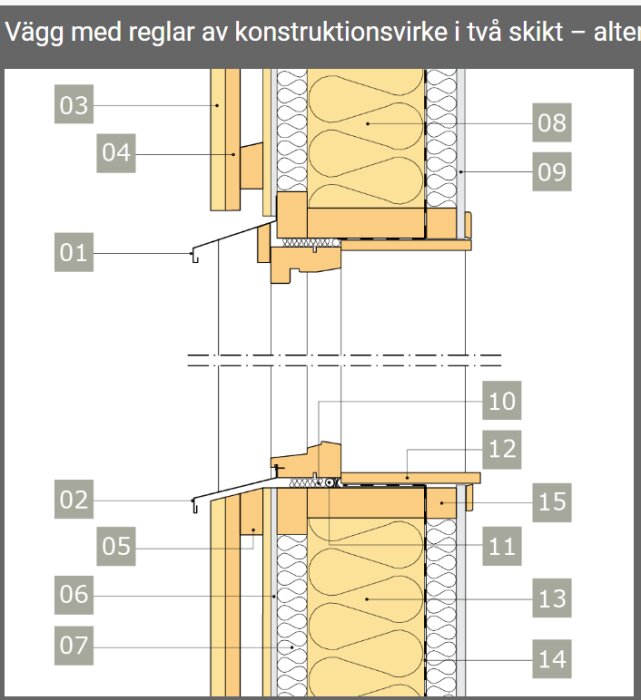
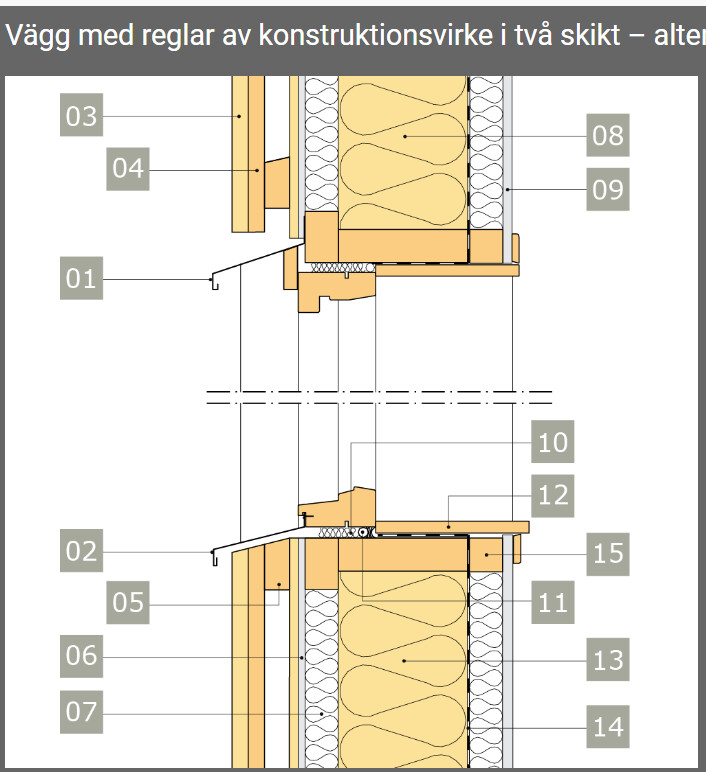
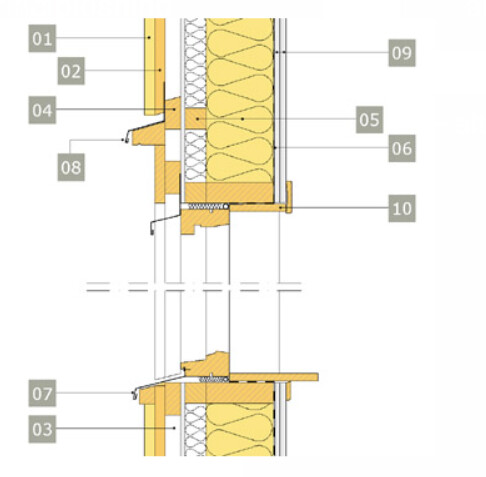
If I'm going to have traditional trim around the window, the flashing ends up a bit higher and not where the weather protection ends, flush with the framework. It's quite well illustrated in the picture from earlier in the thread:
Do you mean that it's standard practice to make a slit in the weather protection to insert the flashing? Or does the weather protection end above and continue below?
...or, do you mean that this method is used when there's no "traditional" trim around the window, placing the flashing lower (sounds more reasonable to me)?
Traditional installation (although I want to have the flashing behind the battens, I don't understand why it's not done like this).
If we can skip the chit-chat about who is the dumbest for a moment, I'm still contemplating the option with the flashing behind the windbreaker.
I'm envisioning a framed hole around the window, and then you typically pull the windbreaker out onto these frames, and if it's a membrane you even fold it into the hole.
If I am to have a traditional casing around the window, the flashing will end up a bit higher and not where the windbreaker ends, in line with the framework. This is illustrated quite well in the picture from earlier in the thread:
[image]
Are you saying that the practice is to make a slit in the windbreaker to insert the flashing? Or is the windbreaker terminated above and continues below?
...or, do you mean this method is used when there isn't a "traditional" casing around the window, and the flashing thus ends up further down (sounds more reasonable to me)?
[image]
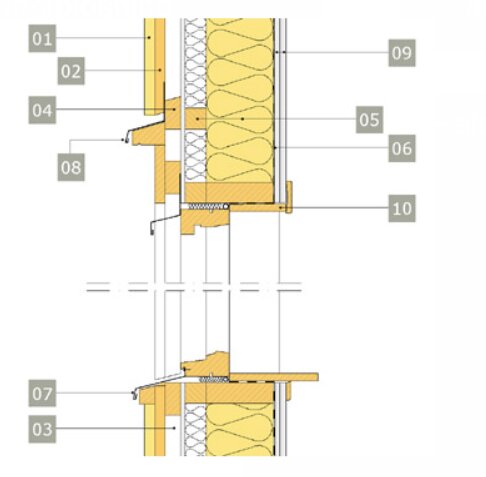
Traditional installation (although I want the flashing behind the nailing strips, I don't understand why this wasn't done here).
[image]
Hi, The two example images are not common installations here on the west coast, at least according to my experience.
You can cut the windproof paper so you can thread in the flashing and then tape with a breathable tape. Note, it's not suitable to use the green diffusion tape as it's a plastic product, this tape is used very often on constructions unfortunately.
Hi, Those two example images are not common designs here on the west coast at least according to my experience.
You can cut the wind barrier so that you insert the flashing and then tape with a windproof tape that is diffusion open. Note that it is not suitable to use the green diffusion tape as it is a plastic product; unfortunately, this tape is very often used in construction.
The flashing is not diffusion-open either, so a little tape probably doesn't make a significant difference.
The sheet is not diffusion-open either, so a little tape probably won't make a significant difference.
That tape is not intended for outdoor use, there is wind protection tape that is meant for the windbreak. Pure laziness not to order the right product in advance.
If we can skip the chatter about who is the dumbest for a moment, I'm still considering the variant with the flashing behind the weather barrier.
I'm thinking of a framed hole around the window, and then you normally extend the weather barrier over these frames, and if it's a fabric, you even fold it into the hole.
If I'm going to have a traditional trim around the window, the flashing ends up a bit higher and not where the weather barrier stops, edge to edge with the framework. This is illustrated quite well in the picture from earlier in the thread:
[image]
Do you then mean that it's practice to make a slit in the weather barrier to insert the flashing? Or does the weather barrier end above and continue below?
...or, do you mean that this method is used when there isn't a "traditional" trim around the window and the flashing thus ends up lower down (sounds more reasonable to me)?
[image]
Traditional installation (although I want the flashing behind the nailing strips, I don't understand why it's not done like this).
[image]
I see that in the upper image the flashing is inserted under the weather barrier, whereas in the lower one, there are double flashings, none of which are inserted under the weather barrier. I wouldn't use these examples.
That tape is not intended for outdoor use, instead there is a windproof tape designed for the wind barrier. Pure laziness not to order the right product in advance.
I see now that they have changed the product description on certain diffusion tapes to indicate they can be used outdoors for the wind barrier, so I retract my statement there!
Note it's not suitable to use the green diffusion tape as it is a plastic product, this tape is unfortunately used very often on construction sites.
If you have 100-150 square meters of diffusion-open weather barrier around the house, then a few tape strips measuring 0.25 square meters together probably won't make much difference?
Additionally, the diffusion-open tape is also a plastic product...
If you have 100-150 square meters of diffusion-open wind barrier around the house, a few tape strips of 0.25 square meters together probably won't make much of a difference?
Moreover, the diffusion-open tape is also a plastic product...
Hi, The two example images are not typical designs here on the west coast at least according to my experience.
I just clipped from Träguiden to have some reference. I agree that the construction above feels a bit strange.
If you cut the wind barrier, do you mean that you tape both on the underside and top side of the flashing, with tape extending over the flashing? The same if you use gypsum as a wind barrier?
I just took information from Träguiden to have some reference. I agree that the over construction feels a bit strange.
If you cut the windproof membrane, do you mean that you tape both on the underside and top side of the flashing, with tape extending over the flashing? The same thing if you use gypsum as wind protection?
If you used gypsum, I believe you should install the flashing before mounting the gypsum.
I just took from Träguiden to have some reference. I agree that the upper construction feels a bit strange.
If you cut the wind barrier, you mean that you tape both the underside and the top side of the flashing, with tape over the flashing? Same thing if you use gypsum as a wind barrier?
You only need to tape the cut you make in the upper part of the back edge of the flashing.
How do you calculate where the window flashing will go?
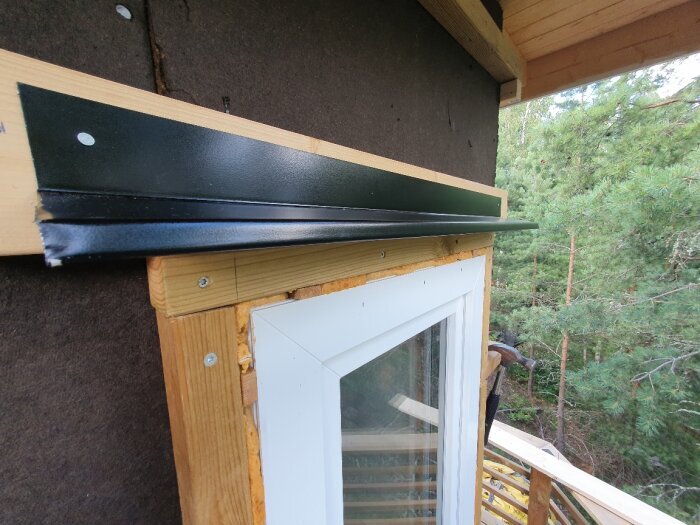
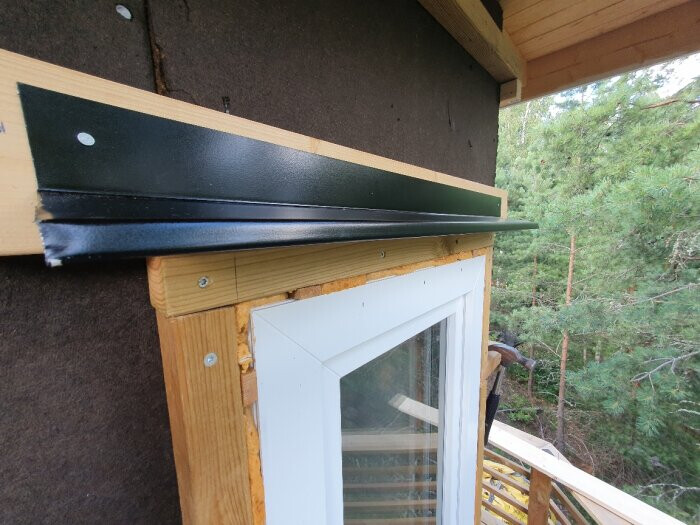
Since I'm replacing with slightly smaller windows and changing them after the facade is finished, I have installed the flashing on top of the panel with an overlap
Vi vill skicka notiser för ämnen du bevakar och händelser som berör dig.

Farstatjej90 said:

MathiasS said:
If we can skip the chit-chat about who is the dumbest for a moment, I'm still contemplating the option with the flashing behind the windbreaker.