But since the snow accounts for such a large part, shouldn't I manage with half, i.e., three if I do it without snow?
Of course, I need to have a sufficiently good beam, but I'm considering tensioning the planned glulam beam directly with shores and making the pillars, so that once the beam replacement is complete, I can take down the wall that's outside.
I have at least one more beam replacement to do. Renting shores quickly adds up in cost, especially when there are so many uncertainties. Additionally, I will have to underpin the posts, which will also take time.
In terms of capacity, 3 will certainly suffice, but the span of the rule between props will be 3 meters instead of 1.2. The question then is where the point loads occur. From a production standpoint, you must work with less deflection than what is acceptable once the beam is in place. From a distance and without having seen how it looks in reality, I hesitate to recommend it.
The meeting where the sliding doors close will only be 40mm. A glulam post is 90mm.
I'm considering if instead of a glulam post, one could use a steel post with really ample thickness and also with flanges at the top and bottom. All to make that middle post as thin as possible.
What do you think?
I will have to order the post specially from a steel workshop, I'm aware of that.
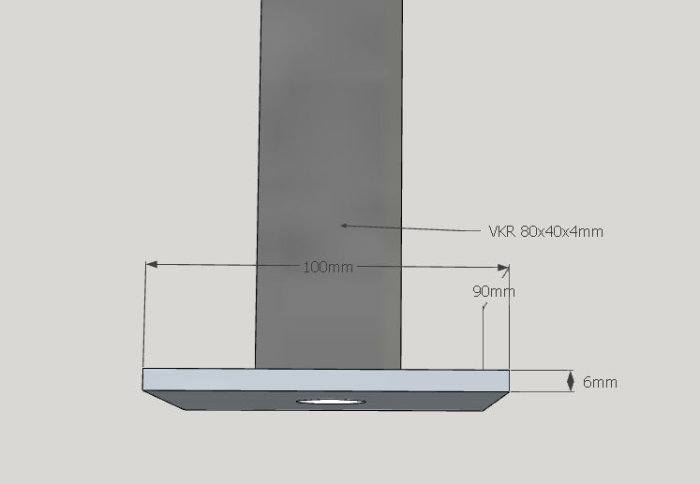
It is significantly less complicated to place a glulam beam on a steel column than the other way around. A VKR tube 80x40 mm with 4 mm wall thickness has at least the same capacity as a 90x90 mm glulam column at the current length.
Alright, now I've moved forward. I'm thinking of replacing the 90x90 wooden pillar with a VKR 80x40mm.
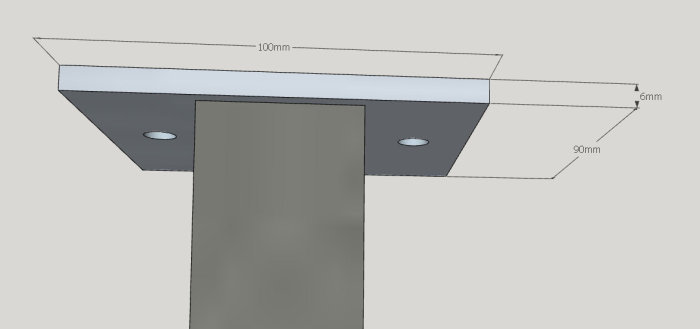
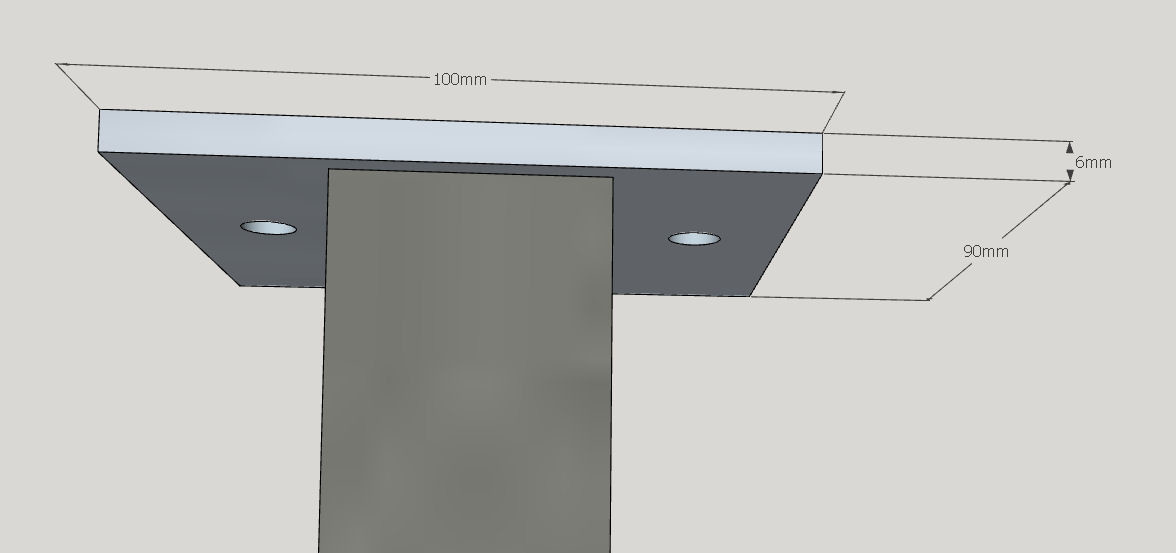
On the upper side (towards the glulam beam), I will weld a plate of 100x90x6mm with two holes for M10 carriage bolts. How long should the carriage bolts be?
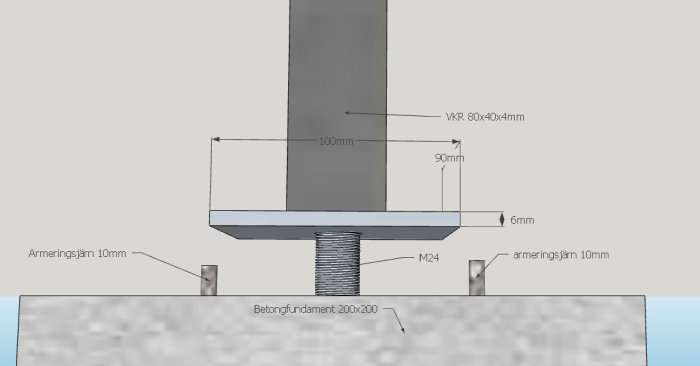
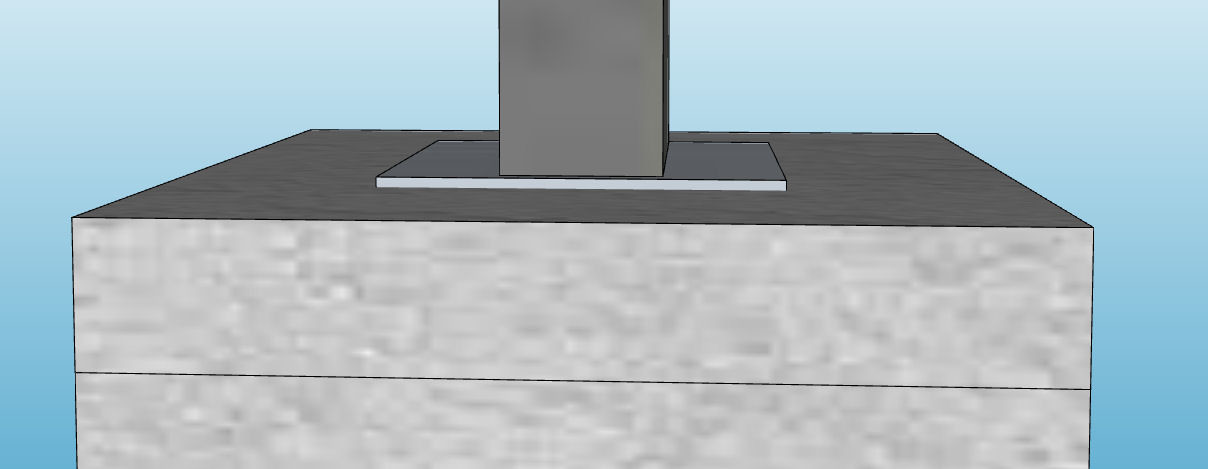
On the underside, I will weld a plate the same size as on the upper side, i.e., 100x90x6 mm. The plate I weld on is stainless steel. In the middle of the plate, I'll make a hole for an M24 threaded rod.
In the concrete foundation that will be cast, I'll attach a threaded rod M24 that sticks up and into the hole on the underside of the column. On the threaded rod, I'll put a nut that I can then use to tension the column against the glulam beam.
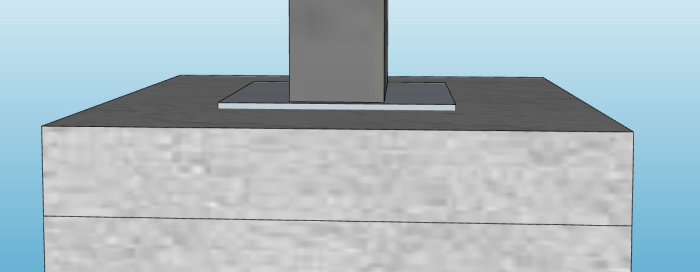
Last but not least, I will grout the fitting, which means the entire bottom plate will rest on concrete.
If the entire threaded rod and nut rust away, at least 95 percent of the stainless bottom plate will rest on concrete.
Stainless threaded rod M24 is super expensive.
What do you think, is it feasible, a good solution?
The task of the French screws is to lock the beam laterally, so they probably don't need to be super long. Maybe 70 mm. The lower construction seems advanced. I think it has to work. When it's time for snow loads, the underpinning is ready.
Yes, the lower part becomes quite advanced, but that's because the glulam beam is placed "inside" the room and therefore ends up outside the foundation wall.
It also adds to the matter that I want to tension the pillars against the beam since I don't think I'll manage to get the pillar heights with such exact precision that they can be hammered or pressed in.
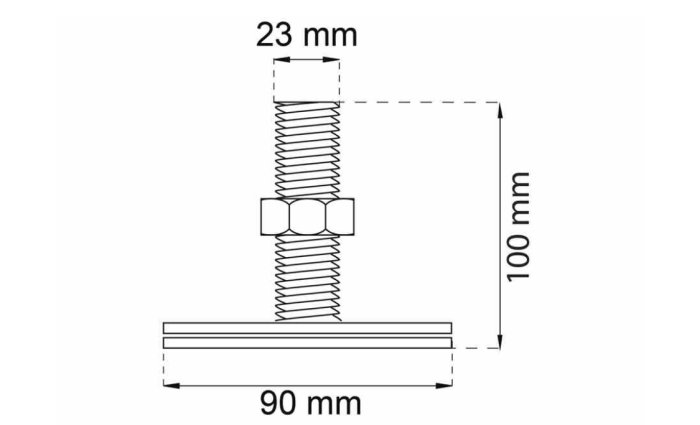
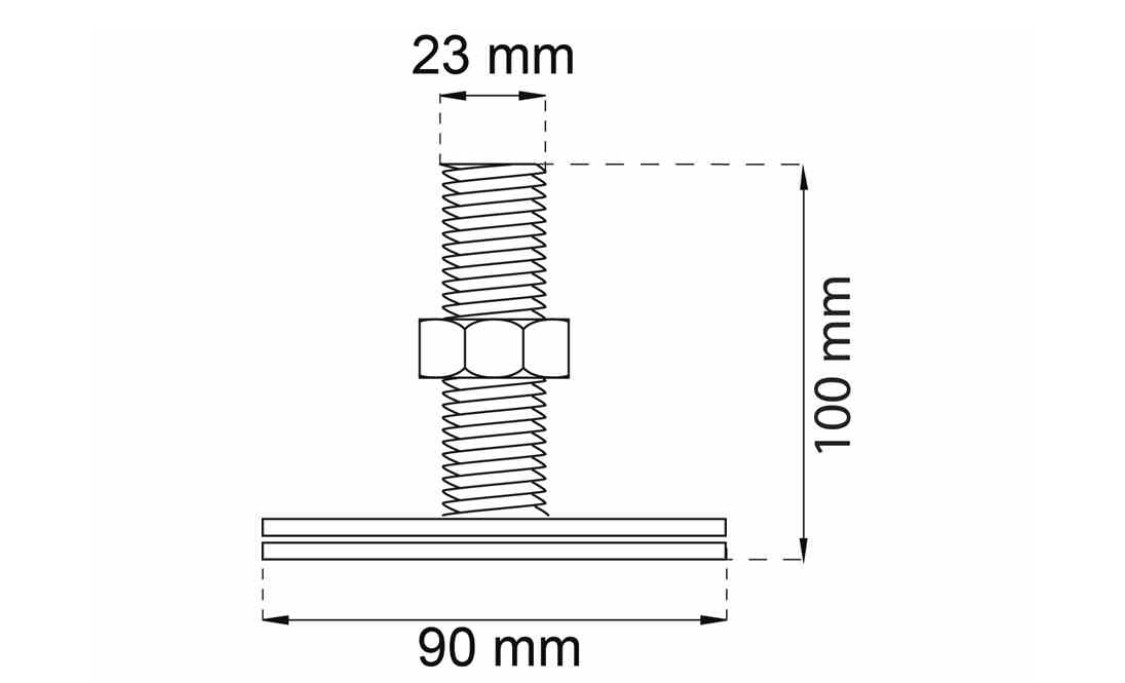
I think I'll skip trying to cast in a threaded rod into the foundation and instead I'll cast in the lower part of a post anchor, Habo 960, in the second casting.
Then I can concentrate on casting the foundation to the right height to then make the attachment, which involves using the nut to press the bottom plate of the Habo against the concrete.
I will use the same principle for the outer pillars, which are 90x90 glulam.