11,394 views ·
22 replies
11k views
22 replies
Old basement wall with insulation?
Hello
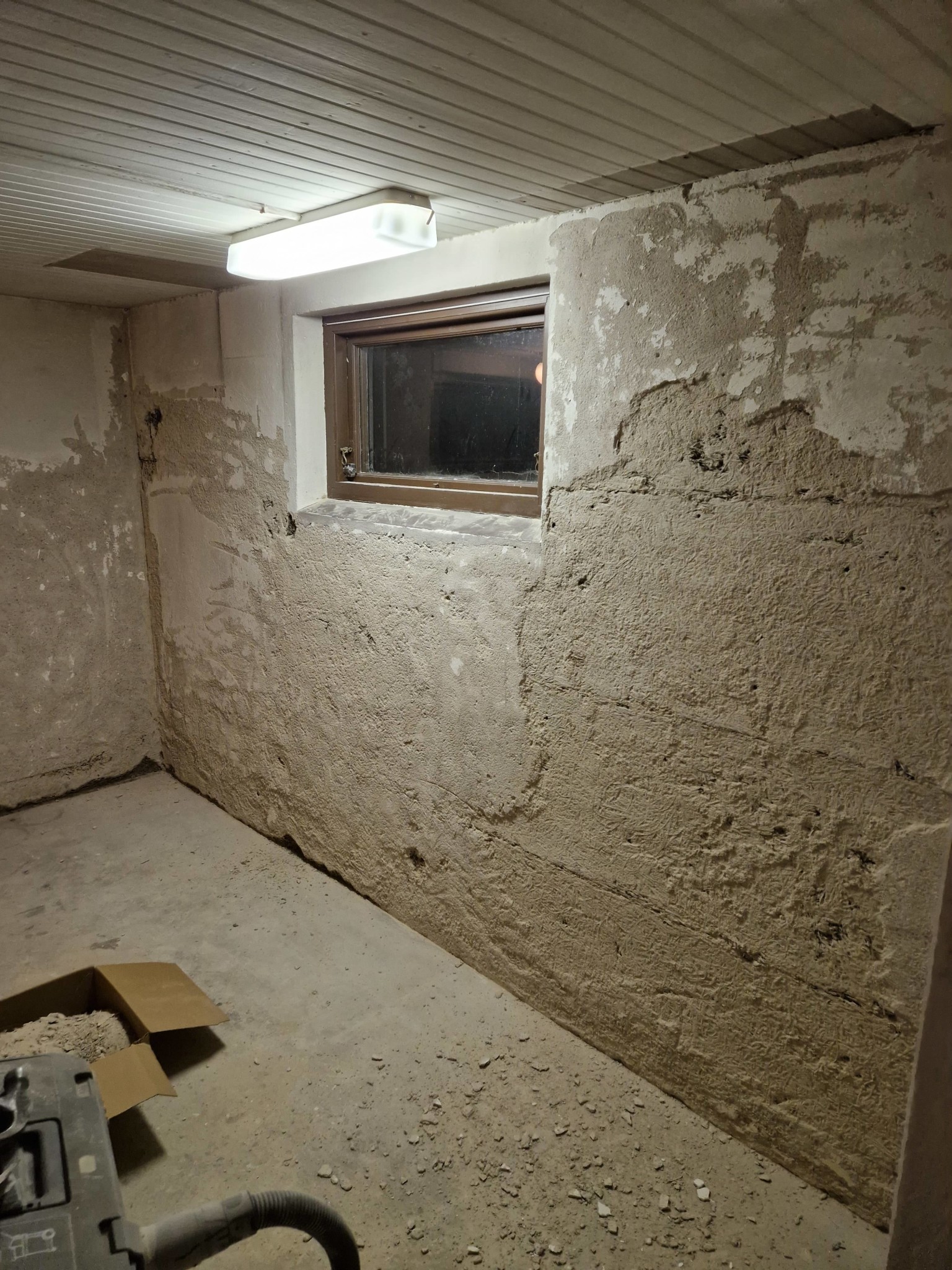
I live in a house from the early 50s built with lightweight concrete. In the basement, we have a "food cellar" where I noticed that the plaster had come loose from the walls. I planned to re-plaster with lime plaster and therefore started scraping off the loose plaster. I then discovered that the basement wall was insulated with some form of plaster mat. I compared with other parts of the basement and found that the mat is about 2-3 cm thick. It's not made of reeds, but rather it looks like paper that has been shredded and mixed with concrete. Does anyone recognize this description?
In any case, it sounds a bit hollow when I tap on it in some places, and I'm wondering how I should secure it before reapplying the plaster. The alternative is to tear it all off and just plaster on the concrete hollow blocks.
Grateful for advice.:S
I live in a house from the early 50s built with lightweight concrete. In the basement, we have a "food cellar" where I noticed that the plaster had come loose from the walls. I planned to re-plaster with lime plaster and therefore started scraping off the loose plaster. I then discovered that the basement wall was insulated with some form of plaster mat. I compared with other parts of the basement and found that the mat is about 2-3 cm thick. It's not made of reeds, but rather it looks like paper that has been shredded and mixed with concrete. Does anyone recognize this description?
In any case, it sounds a bit hollow when I tap on it in some places, and I'm wondering how I should secure it before reapplying the plaster. The alternative is to tear it all off and just plaster on the concrete hollow blocks.
Grateful for advice.:S


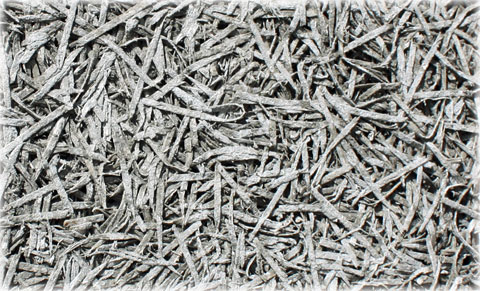
That's exactly what it looks like, and it's probably the closest one can get. I assumed one would use lime plaster, but that might not be certain in this case. Now it seems like the boards are somewhat loose since there is still a hollow sound in some places despite the plaster being gone. Does anyone know how you can fasten them after the fact?
I would remove them. In my basement, the wood chips have a much more wooden surface and often a clearly suspicious dark shade. My 50-year-old walls have admittedly been a bit more exposed to moisture than one would wish (zero rainwater diversion in some corners of the house, and non-existent drainage).
Your boards are probably secured with some nails and a bit of plaster between the concrete hollow block and the board. If the plaster against the concrete hollow block has come loose, it will probably be difficult to get any sensible adhesion.
Maybe I'm a bit conservative, but I don't want wood on the inside of my basement walls, and insulation (especially for basements) should be on the outside.
Your boards are probably secured with some nails and a bit of plaster between the concrete hollow block and the board. If the plaster against the concrete hollow block has come loose, it will probably be difficult to get any sensible adhesion.
Maybe I'm a bit conservative, but I don't want wood on the inside of my basement walls, and insulation (especially for basements) should be on the outside.
 .
.Hello, however, I believe that the nails were only used to fix the plates until the plaster behind hardened. I think it's impossible to nail these if there is a void between the wall and the board, and for them to sit so well that the surface plaster holds even if you just lean against the wall later. But, it's not that hard to try, while the alternative definitely involves a significant amount of work.
Nail plug with a washer might be a solution, I'll give it a try. The boards aren't loose in the sense that they are at risk of falling off the wall, but the hollow sound makes it seem like they aren't properly secured everywhere.

Hi! My partner found this old thread... A question. What kind of polish should I use today on such a basement wall? I started working on an old basement room today and encountered this. Now I need to polish and repair part of the two exterior walls. Best regards, Jörgen.A AndersS said:
Hello!Jörgen Edman said:
Since they were interior walls in the basement, I used gypsum plaster. If you have dry outer walls, you can probably use the same plaster. Easy to work with.
Hi! Thanks for the response! It is drained and insulated. (From the outside) There has been moisture penetration a long time ago, which I have now sanded away and want to tidy up. I've noticed they've repaired with gypsum plaster in other parts of the basement. But is gypsum plaster the way to go, or are there other options? /Jcubix said:
Plaster works well on dry walls!Hello! Thanks for the response! It's drained and insulated. (From outside) There has been moisture penetration a long time ago which I've now sanded away and want to tidy up. They've repaired with plaster in other parts of the basement, I've noticed. But is plaster the right choice or are there other alternatives? /J