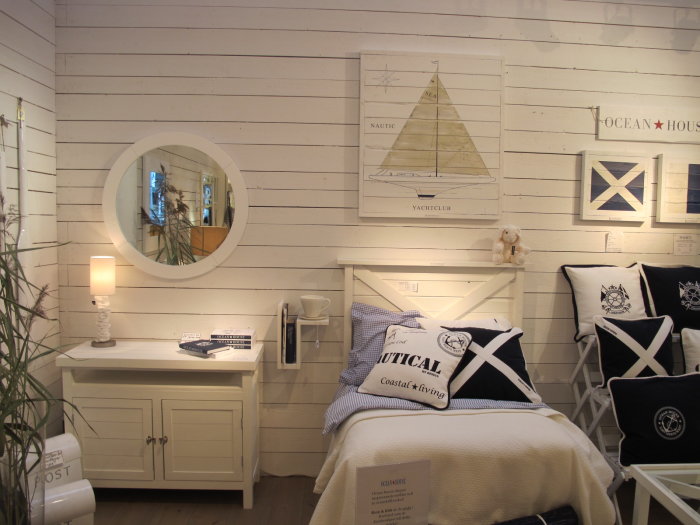
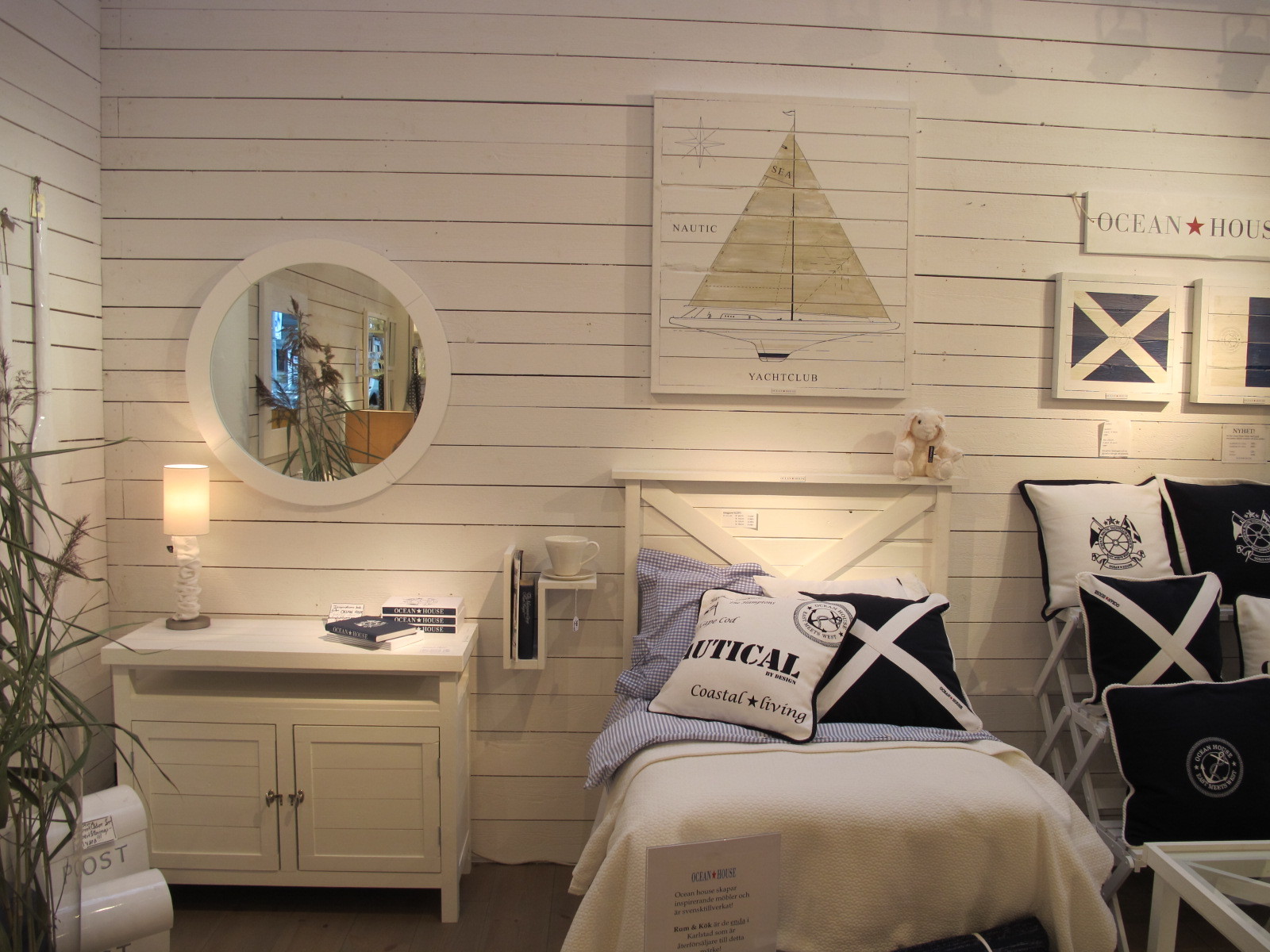
I intend to nail/screw up horizontal wall paneling (cladding) on the inside of an exterior wall, purely for aesthetic reasons (see example in the attached image). The plan is to nail/screw the boards directly against the gypsum and into the underlying wooden stud, with the hope of finding the studs, of course.
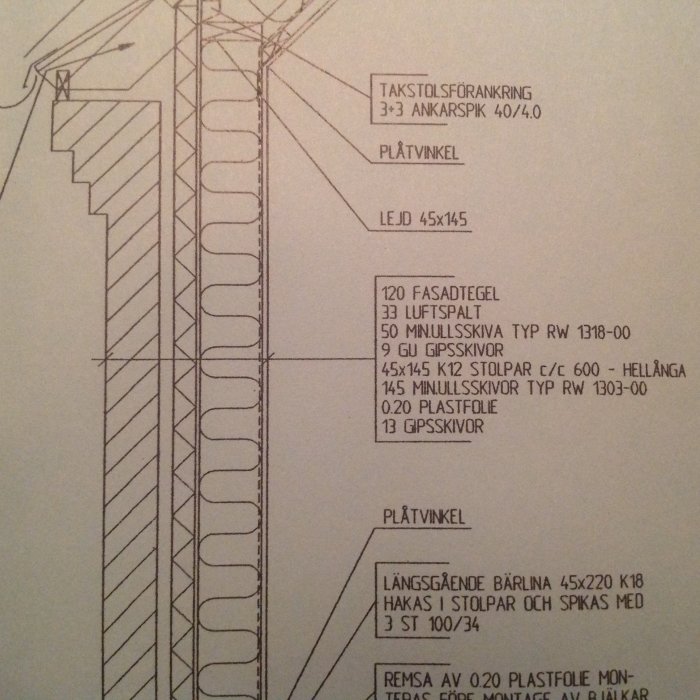
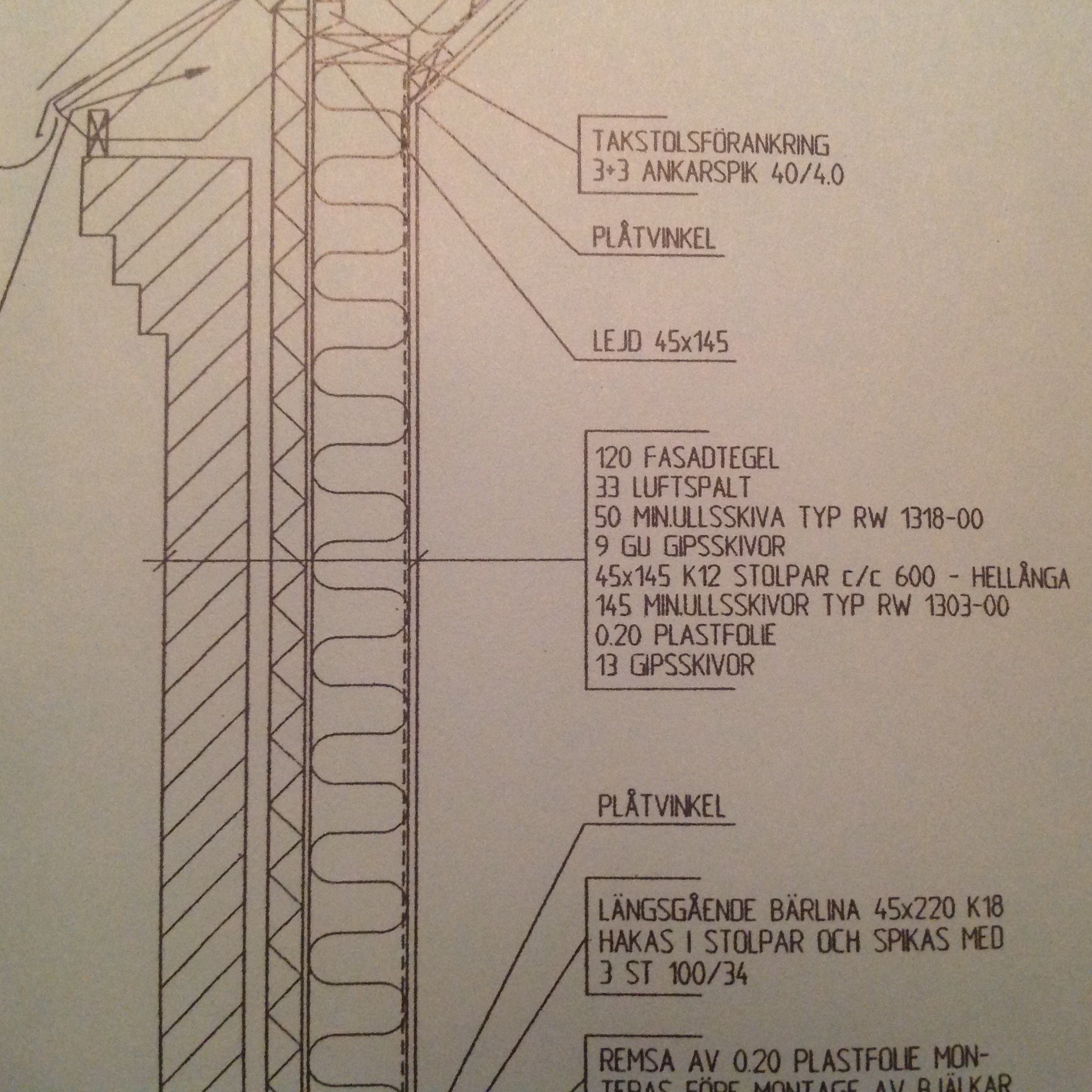
I am attaching an image taken from a construction drawing of the house, which was built in 2002. If I understand it correctly, the vapor barrier/plastic film is located directly behind the outermost gypsum board from the inside, which means I will puncture the film. My question is, could this cause problems in the long run? Or will it be sufficiently sealed against the wooden stud? What happens if I happen to miss the stud when I screw/nail? There is that risk.
What happens if I or another future owner decides to remove the panels?
I find it hard to believe we are the only ones who have had the idea to clad the inside of an exterior wall. If you strongly advise me against doing this, is there another suitable way to attach the cladding (non-tongue and groove)?
I would be grateful for constructive responses from those who really know this.
Okay. However, it's not very nice to leave a misplaced nail in the panel. I guess I'll have to putty in that case.
It's common for paintings, shelves, and other things to be hung on the wall. How does the builder (Skanska in our case) envision this working in such a construction? The average person hardly thinks about nailing/screwing into the wooden studs. It must be a common construction.
Attach battens (28x70) on the outside of the drywall on each stud first and secure them with 4-4 screws. Then nail the panel to the battens. This way, you avoid puncturing the plastic in so many places and you don't have to worry as much about missing the studs
It is becoming more common to place the plastic offset 45mm into the wall in newer houses. This is because it becomes so difficult to make it completely airtight otherwise. All the electrical wiring, screws, and penetrations puncture the plastic in this construction. But it seems to work quite well anyway. I don't think it's the end of the world if there are a few small holes
Hello, I don't have the answer to your question, the others have good answers:
I would like to recommend Byggmax tips, where you place a black building felt behind and then leave a 5mm gap in between, it looks really stylish with a really dark gap that gets highlighted, I've done this myself in the living room. https://www.byggmax.se/gor-det-sjalv/vagg-golv-och-tak-/kla-in-vagg-med-panel#ReadMore
Johnsvi: Yes, that could indeed be an idea. However, I want it to build as little as possible. Is there anything thinner than 28 mm battens? By the way, what is the 4-4 screw?
Daydreamer: Yep, wind barrier works probably fine, or black paint of the cheaper kind. Advantages, disadvantages?
5 mm sounded quite a lot to me, especially if the panels shrink a bit more when they dry out completely (even if the panels are left out for a few days before being put up).
----
I was thinking of alternating a bit randomly with 95- and 70 mm panels.
Johnsvi: Yes, that could be an idea. However, I want it to build as little as possible. Is there anything thinner than 28 mm battens? By the way, what is the 4-4 screw?
Daydreamer: Yep, windproof paper probably works well, or black paint of the cheaper variety. Advantages, disadvantages?
5 mm sounded quite a lot to me, especially if the panels shrink even more when they dry out completely (even though the panels are left to rest for a few days before being put up).
----
By the way, I also thought about alternating a bit randomly with 95 and 70 mm panels.
You can use 21 mm battens as well, thinner than that and it would be difficult to make it sit properly. Oh, I meant 4-5 screws in each batten piece. There are also thinner panels available if you want to save even more. But 42 mm isn't that much anyway.
The gap almost doubles after it has dried properly. We used a folding ruler between each plank and it turned out to be double afterward.
Color/wind barrier works either way, if you use a narrower gap, nothing is needed. Bought 21x145 pre-primed and planned to paint it again later, but thought it looked nice and raw with all screws visible, so it stayed that way. Have received a lot of praise for the wall!
I might be unnecessarily worried about puncturing the moisture barrier, but it is definitely an advantage if you can reduce the number of holes as much as possible. I will probably try Johnsvi's idea with battens.
Found some other threads/links related to the topic:
Picking up the thread again since I haven't yet mounted the panel; other things have come up.
What do you think about gluing the battens to the drywall (on the wallpaper) with something like PL600, instead of screwing or nailing them? This always concerns the exterior wall as discussed above.
I have a question about the next wall, which is an interior wall that forms a corner with the other one. I have a fireplace by this wall, and the panel wall can only be a max of 20 mm (must be at least 100 mm to combustible materials from the fireplace). Even if I plane down both the panel and the batten, it might be difficult to make it fit. Do you think 10 mm on each board would work? If not, how do I install the panel without battens when the wall is framed with metal studs?