
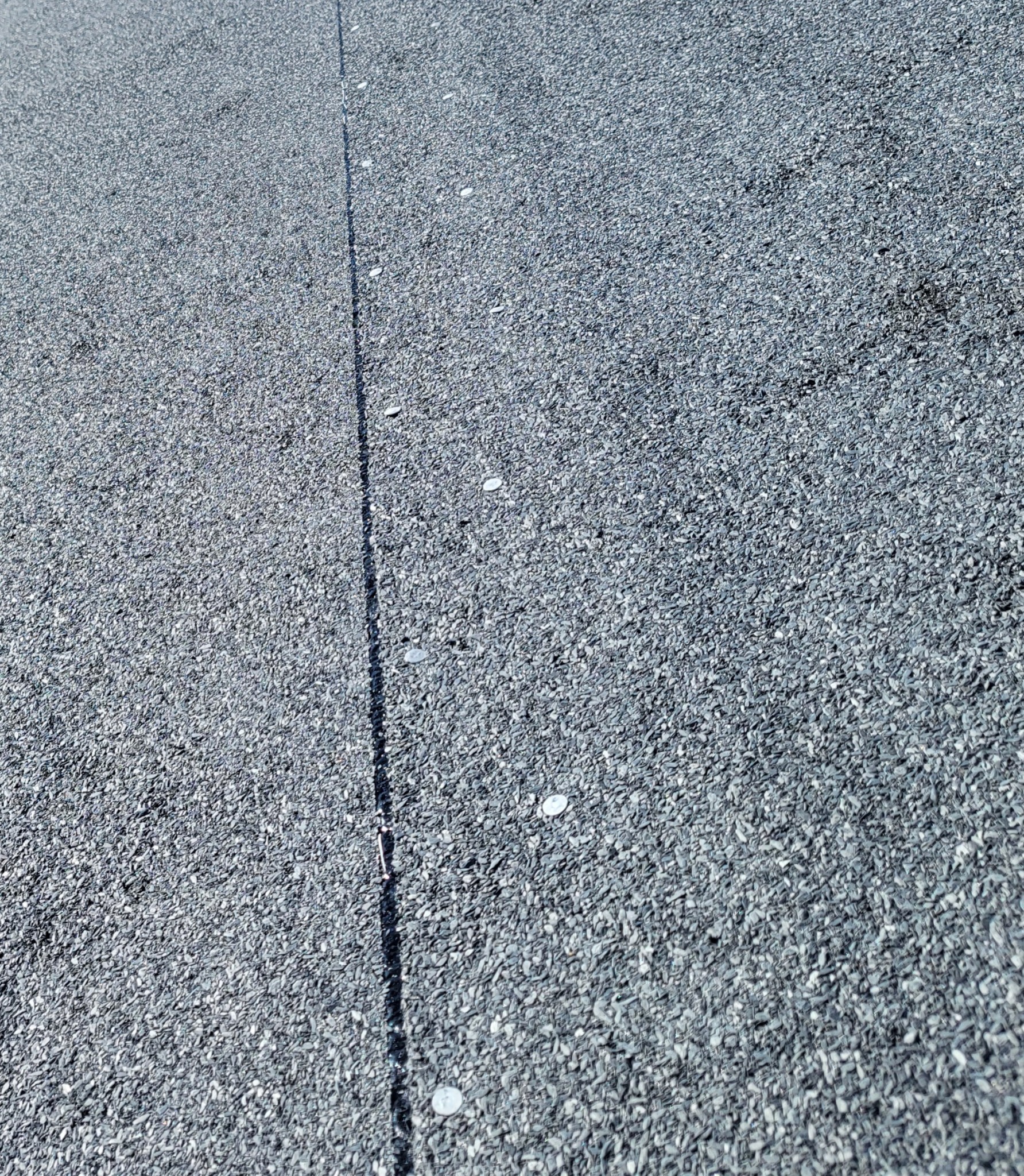



When I replaced my roof that had staples in exactly the same way, I had rot and needed to replace each row of the roof decking under the seams. So no, unless that is a special model specifically approved/recommended by the manufacturer, there is no reason to accept that.


All assembly instructions I find mention hidden nailing, the next sheet should be glued over, so there I would probably say "Do It Again, Do It Right!" to that. Request reference to installation instructions from the manufacturer if someone claims that it works.
Only applying roofing tar on the nails is practically like just fixing a future hole with tar and hoping it won't get damaged by the nails over time. It will probably work for many of the nails, but there are many nails...H Hälva said:
Follow the manufacturer's instructions on how to repair holes in the surface felt.

That "carpenter" might need to be nailed down himself in an appropriate way, with a follow-up question if that's good enough and feels right?
What a BLOCKHEAD!
Just tear it down and redo it depending on the circumstances.
What a BLOCKHEAD!
Just tear it down and redo it depending on the circumstances.

It's not just the surface paper that needs to be replaced after such a blunder. Both layers must be removed and replaced after the underlying surface has been carefully checked to ensure no nails are left without heads or other sharp objects after tearing it off. It's a hell of a job that needs to be done and they probably won't be happy, but unfortunately, that's how it is sometimes when the body is quicker than the brain.
I wouldn't accept adding another layer on top either, which might be the carpenter's easiest solution. You'll end up with even more ridges where water will stand, and a large number of nails with quite thick layers of paper underneath that flex when you walk on the roof, which can work through the next layer.
I wouldn't accept adding another layer on top either, which might be the carpenter's easiest solution. You'll end up with even more ridges where water will stand, and a large number of nails with quite thick layers of paper underneath that flex when you walk on the roof, which can work through the next layer.
Click here to reply