
Hello
We live in an old house where a window has been replaced with something like a plywood piece in an old pantry. The plywood piece is on the outside of the wall, facing south. We use the room as a bedroom where I and two small children sleep. The room has, in addition to the old window now covered with plywood, one other window. In the frame above the window, there is a small opening that can be opened/closed for airflow. Otherwise, the room lacks heating, as it relies on the radiator in the adjacent bedroom (no door between the rooms). Electricity is available to install a heater in this room.
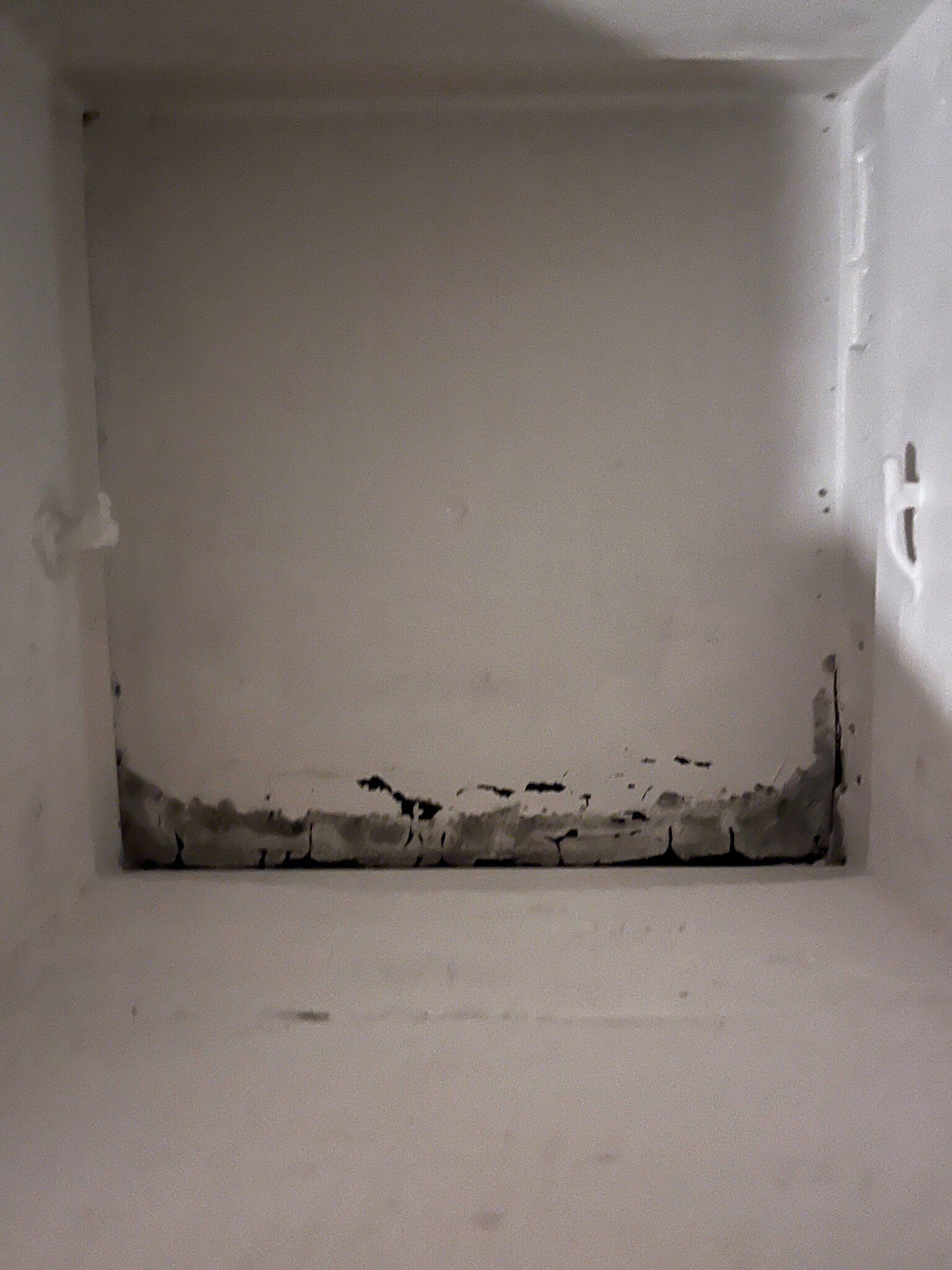
We have now discovered mold growth on the inside of the plywood piece, see attached image. I have measured the temperature of the plywood piece, and it is about 5 degrees Celsius now that it is -8 outside. What should we do to prevent mold growth?
We live in an old house where a window has been replaced with something like a plywood piece in an old pantry. The plywood piece is on the outside of the wall, facing south. We use the room as a bedroom where I and two small children sleep. The room has, in addition to the old window now covered with plywood, one other window. In the frame above the window, there is a small opening that can be opened/closed for airflow. Otherwise, the room lacks heating, as it relies on the radiator in the adjacent bedroom (no door between the rooms). Electricity is available to install a heater in this room.
We have now discovered mold growth on the inside of the plywood piece, see attached image. I have measured the temperature of the plywood piece, and it is about 5 degrees Celsius now that it is -8 outside. What should we do to prevent mold growth?

Self-builder
· Stockholm
· 8 798 posts
Looks like you have some form of moisture problem as it seems affected at the bottom.G gustaviania said:Hello
We live in an old house where a window in an old pantry has been replaced with something like a plywood piece. The plywood piece is on the outside of the wall, southern exposure. We use the room as a bedroom, where I and two small children sleep. The room has, in addition to the old window which is now a plywood piece, also a window. In the frame above the window, there's a little grille that can be opened/closed for airflow. Otherwise, the room lacks heating, as it benefits from the radiator in the adjacent bedroom (no door between the rooms). Electricity is drawn in for the possibility of installing a radiator in this room.
We have now discovered that mold growth has appeared on the inside of the plywood piece, see the attached image. I measured the temperature of the plywood piece and it is about 5 degrees Celsius now when it is -8 outside. What should we do to prevent mold growth?
Most likely, the moisture is coming from outside so you need to address that before replacing any affected material and fixing/painting.

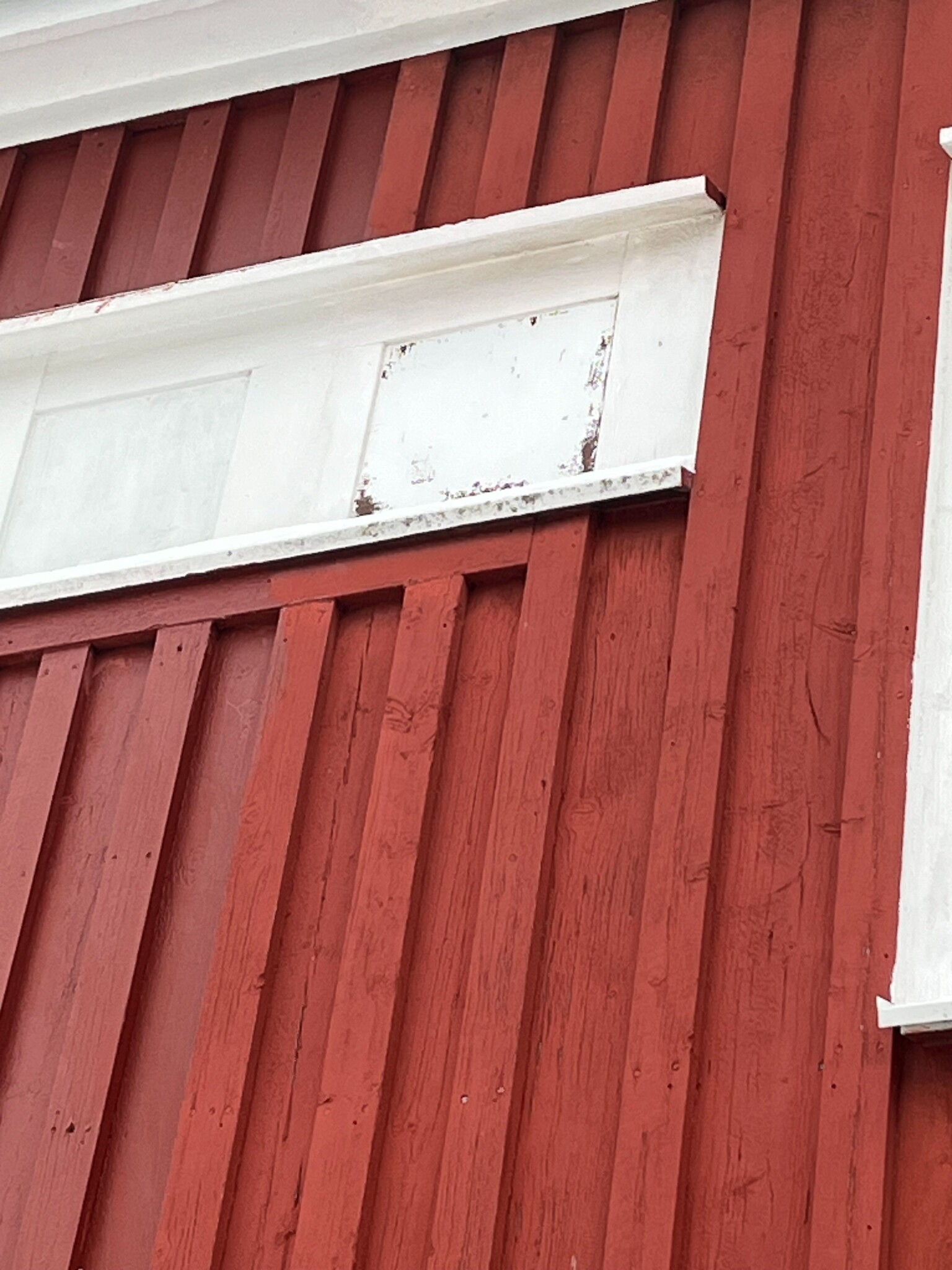
Thank you for your responses. Attached is a photo from the outside, where you can also see the neighbor's plywood piece on the left (semi-detached house).
I agree that it is due to moisture. When I touch the plywood piece, it feels cold and damp (my finger becomes moist).
Could the moisture be due to the fact that there are three of us (two children, one adult) sleeping in the room, thereby contributing to higher humidity? That, combined with the temperature difference between inside/outside and the air in the "hatch" being stagnant?
I agree that it is due to moisture. When I touch the plywood piece, it feels cold and damp (my finger becomes moist).
Could the moisture be due to the fact that there are three of us (two children, one adult) sleeping in the room, thereby contributing to higher humidity? That, combined with the temperature difference between inside/outside and the air in the "hatch" being stagnant?
Self-builder
· Stockholm
· 8 798 posts
It looks like the neighbor has taken care of their facade more recently, and perhaps also checked the "window"?G gustaviania said:Thanks for your replies. Attaching a photo from the outside, where you can also see the neighbor's plywood piece to the left (semi-detached house).
I agree that it is due to moisture. When I touch the plywood piece, it's cold and damp (my finger gets wet).
Could the moisture be because we are three people (two children, one adult) sleeping in the room, hence contributing to higher humidity? Together with the temperature difference between inside/outside and the still air in the "hatch"?
Now, it's not visible in the photo: What does it look like at the bottom edge of the board? Could water/snow collect there, which could leak in and over time corrode the construction?
It could also be condensation from the inside, but I assume it's not just a single board but at least two boards with some type of insulation between them? Otherwise, you'll have both moisture and cold issues (a single plywood board provides practically no insulation at all).
I didn't build this; it was like this when we bought the house, but I think your description matches how it appears to be constructed. See the attached image with the depth from the inside wooden board to the inside wall.Bart said:
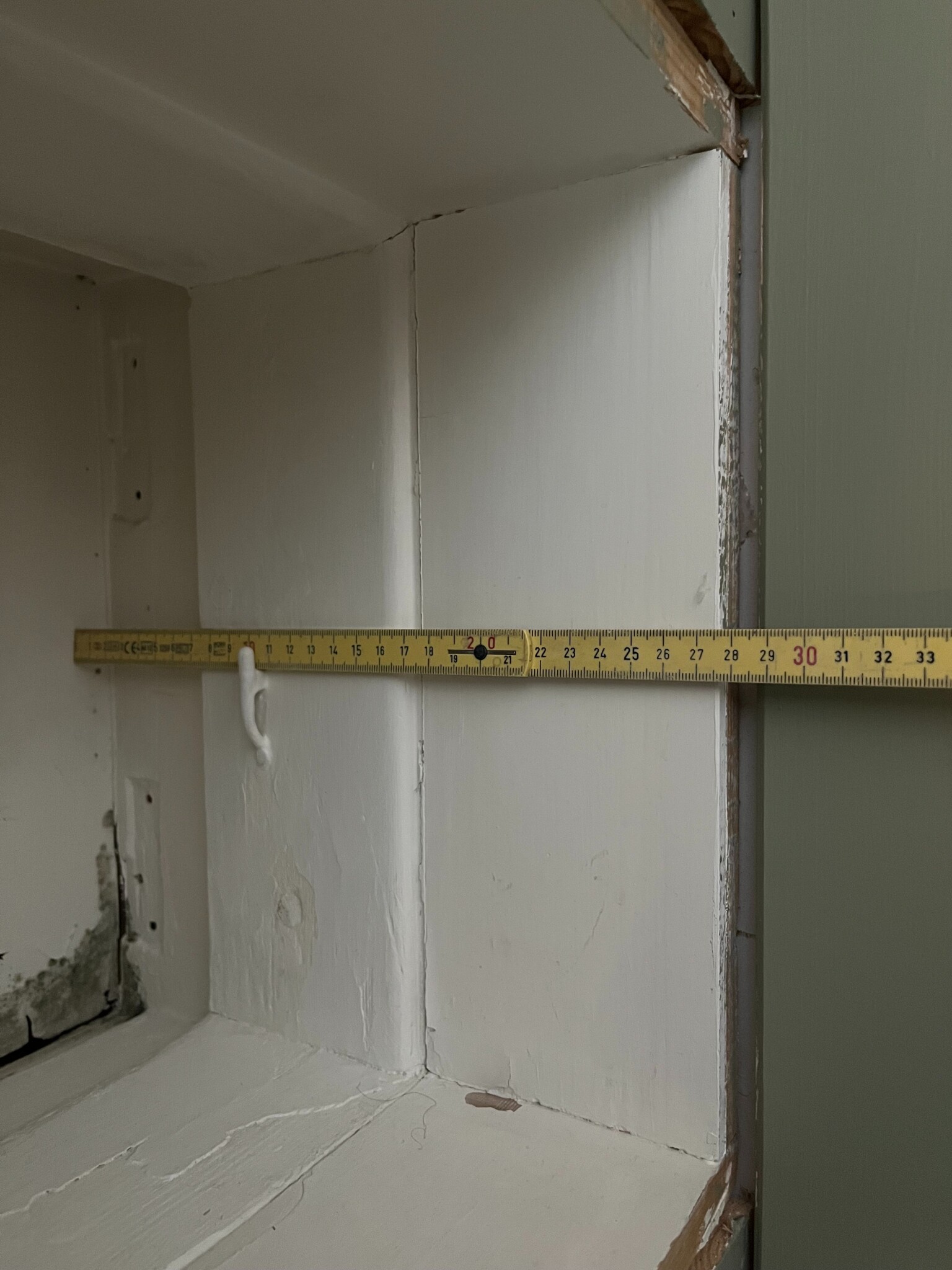
Unfortunately, I think it is only a simple board (the previous owner "built" this; it was like this when we took over the house, so I can't know for sure just by looking). See the new picture I attached in another reply in the thread, where I show the depth from the inside of the board to the inside wall.It looks like the neighbor has taken care of their facade more recently, and perhaps also checked out the "window" at that time?
It's not visible in the photo: How does it look at the bottom edge of the board? Can water/snow accumulate there, which could leak in and over time corrode the structure?
It could also be condensation from inside, but I assume it’s not just a simple board but at least two boards with some kind of insulation between? Otherwise, you will have both moisture and cold problems (a simple plywood board basically does not insulate at all).
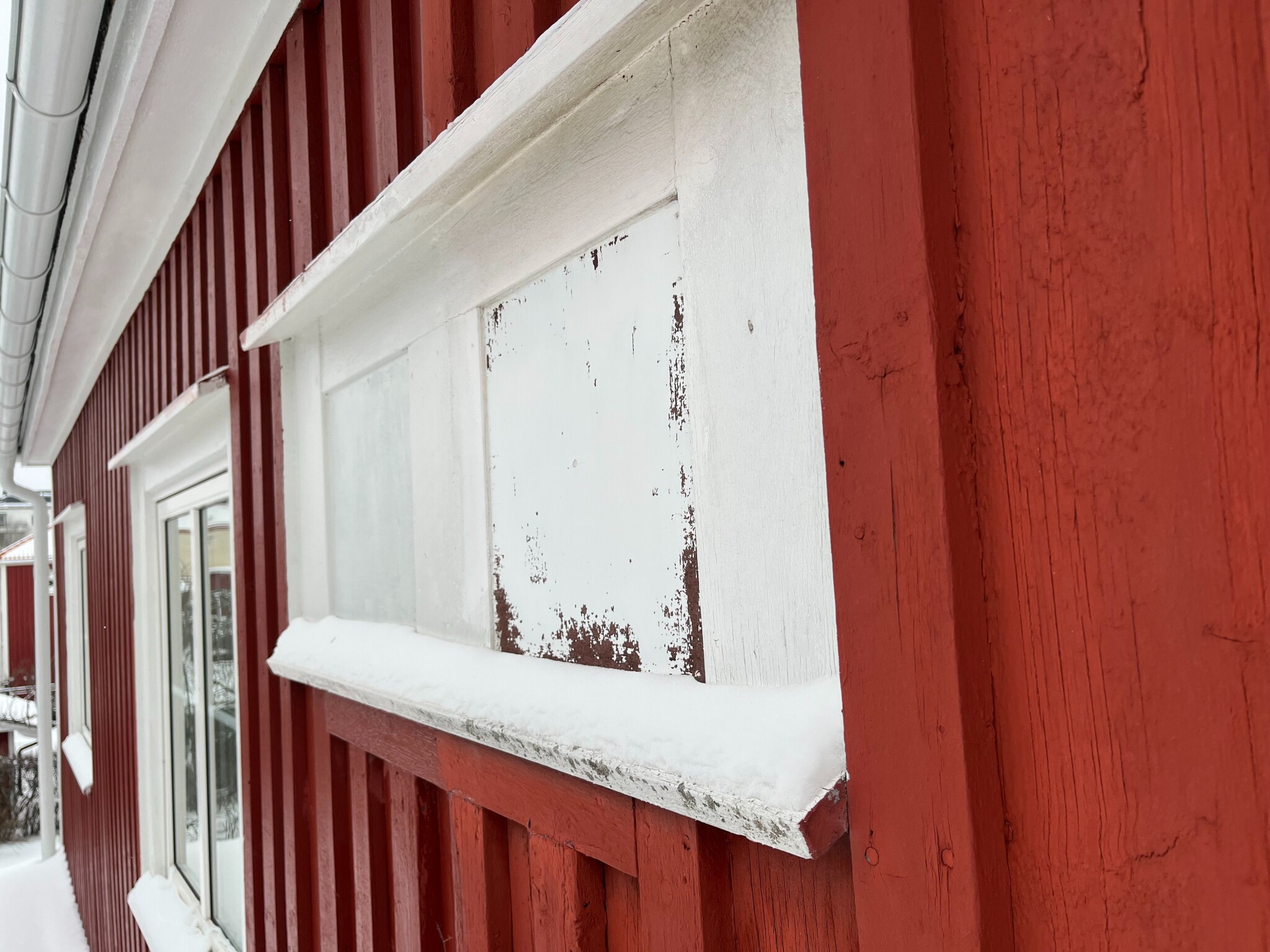
The neighbor painted their facade this past summer. I don't think it looks like moisture could accumulate (except for the snow, of course) there since it seems to have a good slope on the "windowsill". See attached close-up.
Self-builder
· Stockholm
· 8 798 posts
I would have replaced the board (it seems to have served its purpose), installed insulation (maybe 50mm polystyrene or whatever fits), and then another board on the inside.G gustaviania said:Unfortunately, I think it's just a simple board (the previous owner "built" this, it was like this when we moved into the house, so I can't know for sure just by looking). See the new picture I attached in another reply in the thread where I included the depth from the inside of the board to the inside wall.
The neighbor repainted their facade this summer. I don't think it looks like moisture can accumulate there (apart from the snow) as it seems to have a good slope on the "window sill." See the attached close-up.
On the outside, I would then use facade sealant (or similar - but NOT silicone) around to seal it properly, both to prevent water/meltwater from seeping in over time and to seal against draughts, and then paint.
That way, you should have a solution that works over time, warmer and reduced cold drafts and less risk of condensation inside.
A quick solution, if you can't do the entire job now in the winter, is a polystyrene board that you press on the inside for now as noted above, and then do the renovation when the weather is warmer. It won't remove the mold, but it will give some insulation against potential spores for a short time at least. But it must be addressed, I believe, otherwise there's also the risk of moisture damage spreading down into the window frame/facade over time...
Thanks for the input! There's no problem with the rest of the wall. The long-term solution is to install a window to try to recreate how it looked before.
Yes, condensation forms on the hatch so it is definitely too cold. Shot with an IR thermometer on the inside the other day and then measured about 5 degrees.M mgranbom said: