
3,777 views ·
9 replies
4k views
9 replies
Moisture in unstable plastered wall.
I have a condominium where there is some moisture in the exterior walls, I noticed it when I had glued drywall on the plaster in the bedroom, which then started to smell like mold. The house is built of brick, followed by some black insulation, then plaster.
I have now removed the drywall so only the plaster remains, but there are large cracks in the wall and I feel that it "sways," which is why I drywalled it in the first place.
If I fully plaster it, the cracks will reappear, so my question is, what can I do?
Thanks!
I have now removed the drywall so only the plaster remains, but there are large cracks in the wall and I feel that it "sways," which is why I drywalled it in the first place.
If I fully plaster it, the cracks will reappear, so my question is, what can I do?
Thanks!
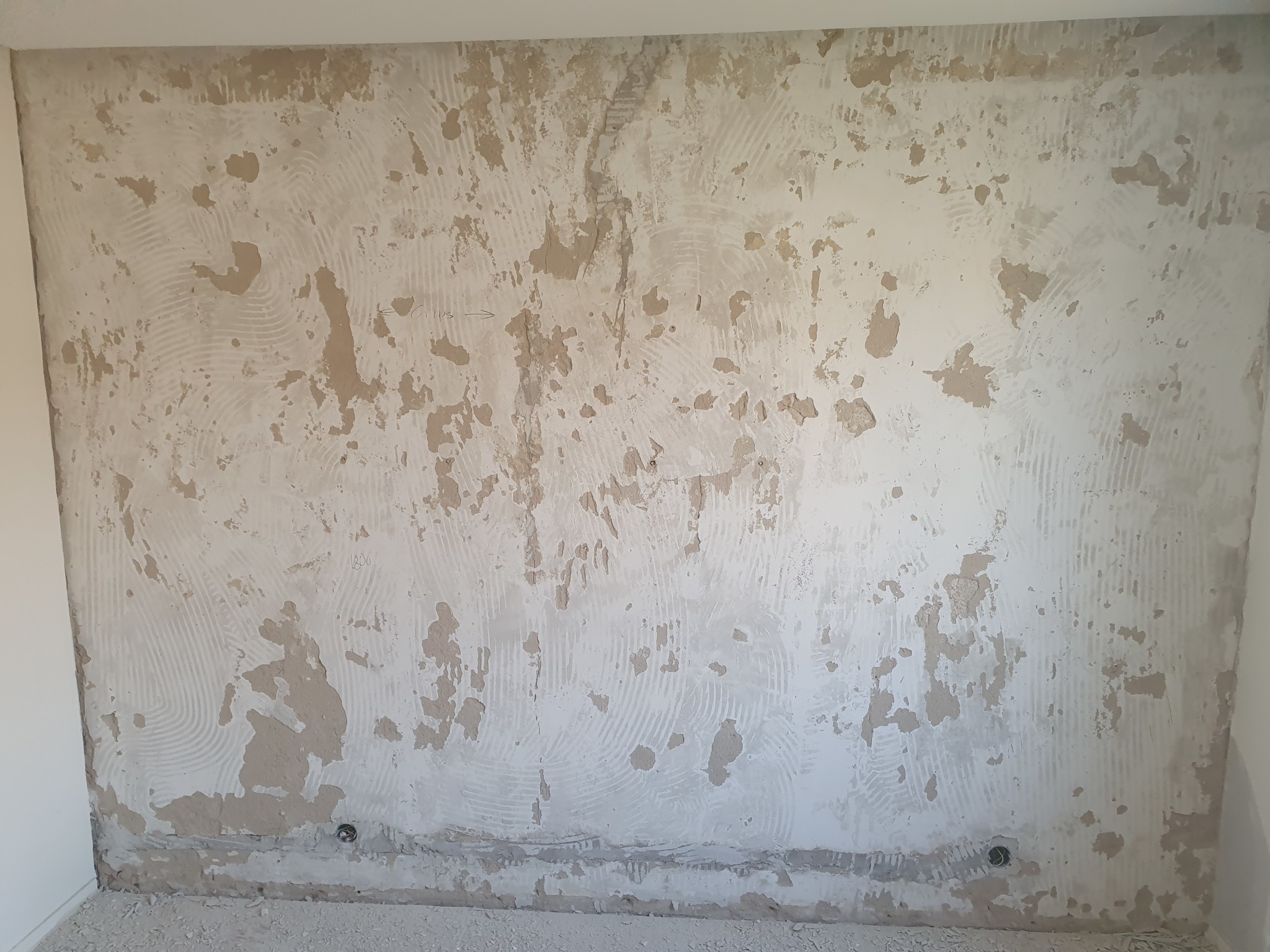

My apartment is on the third floor, so just brick, insulation, and plaster

Step one should be, of course, to find out why it is moist, but if you just want to create a decent wall that doesn't crack, you can frame up a new one just in front of the old one.B Bygginator said:I have a condominium where there is some moisture in the exterior walls, noticed it when I had glued drywall to the plaster in the bedroom, which then started to smell like mold. The house is built of bricks, followed by some black insulation and then plaster.
I have now removed the drywall so only the plaster remains, however, there are large cracks in the wall and I feel that it is "wobbly," which is why I drywalled it in the first place.
If I do a skim coat, the cracks will reappear, so my question is, what can I do?
Thanks!
The outer wall was repointed four months ago, so no more moisture should be coming in.
When I renovated the apartment six months ago, I discovered moisture in the living room wall, and Anticimex installed a dehumidifier. So the board is aware of the problem, but as mentioned, it has been addressed with new joints. However, the old moisture still remains.
I'm thinking I wanted to fix the bedroom before contacting them again since I caused mold by installing drywall, and I don't want them to focus on that if I file a report.
Is it possible to add framing and install regular drywall without it molding?
Isn't there some type of moisture-resistant drywall that wouldn't mold? Or would I be blocking the ventilation in the wall then?
I don't have much knowledge on this subject.
When I renovated the apartment six months ago, I discovered moisture in the living room wall, and Anticimex installed a dehumidifier. So the board is aware of the problem, but as mentioned, it has been addressed with new joints. However, the old moisture still remains.
I'm thinking I wanted to fix the bedroom before contacting them again since I caused mold by installing drywall, and I don't want them to focus on that if I file a report.
Is it possible to add framing and install regular drywall without it molding?
Isn't there some type of moisture-resistant drywall that wouldn't mold? Or would I be blocking the ventilation in the wall then?
I don't have much knowledge on this subject.
If the wall "wobbles" when you press on it, the plaster has likely detached more or less completely from the wall due to moisture. The correct approach would be to knock down the plaster and replaster, but the bricks should be dehumidified first.
When the board became aware of the moisture in the living room, was no investigation done on the remaining exterior walls? It seems like that would be a reasonable course of action. If they are thick brick walls, they can hold a lot of water, so more dehumidification might be appropriate.
It doesn't seem to make much sense for you to fix the wall before it has been inspected and the underlying problem has been addressed.
You should have reported to the board as soon as you discovered that the wall was "wobbling."
When the board became aware of the moisture in the living room, was no investigation done on the remaining exterior walls? It seems like that would be a reasonable course of action. If they are thick brick walls, they can hold a lot of water, so more dehumidification might be appropriate.
It doesn't seem to make much sense for you to fix the wall before it has been inspected and the underlying problem has been addressed.
You should have reported to the board as soon as you discovered that the wall was "wobbling."
Have spoken with the board and a moisture measurement is booked. Probably a company will come after the dehumidification to replaster the wall. So it will probably mean moving out for a month.
Thanks for all the help!
Thanks for all the help!
That sounds good. I hope the measures go quickly and smoothly for you.B Bygginator said:
Click here to reply