
6,071 views ·
8 replies
6k views
8 replies
Mistake with plastic under chipboard flooring and fiberboard at the bottom?
Hello,
We had to tear up the kitchen floor to replace a bottom board that had come loose because there's no room to crawl under that part of the house. We have a slab/crawl space foundation.
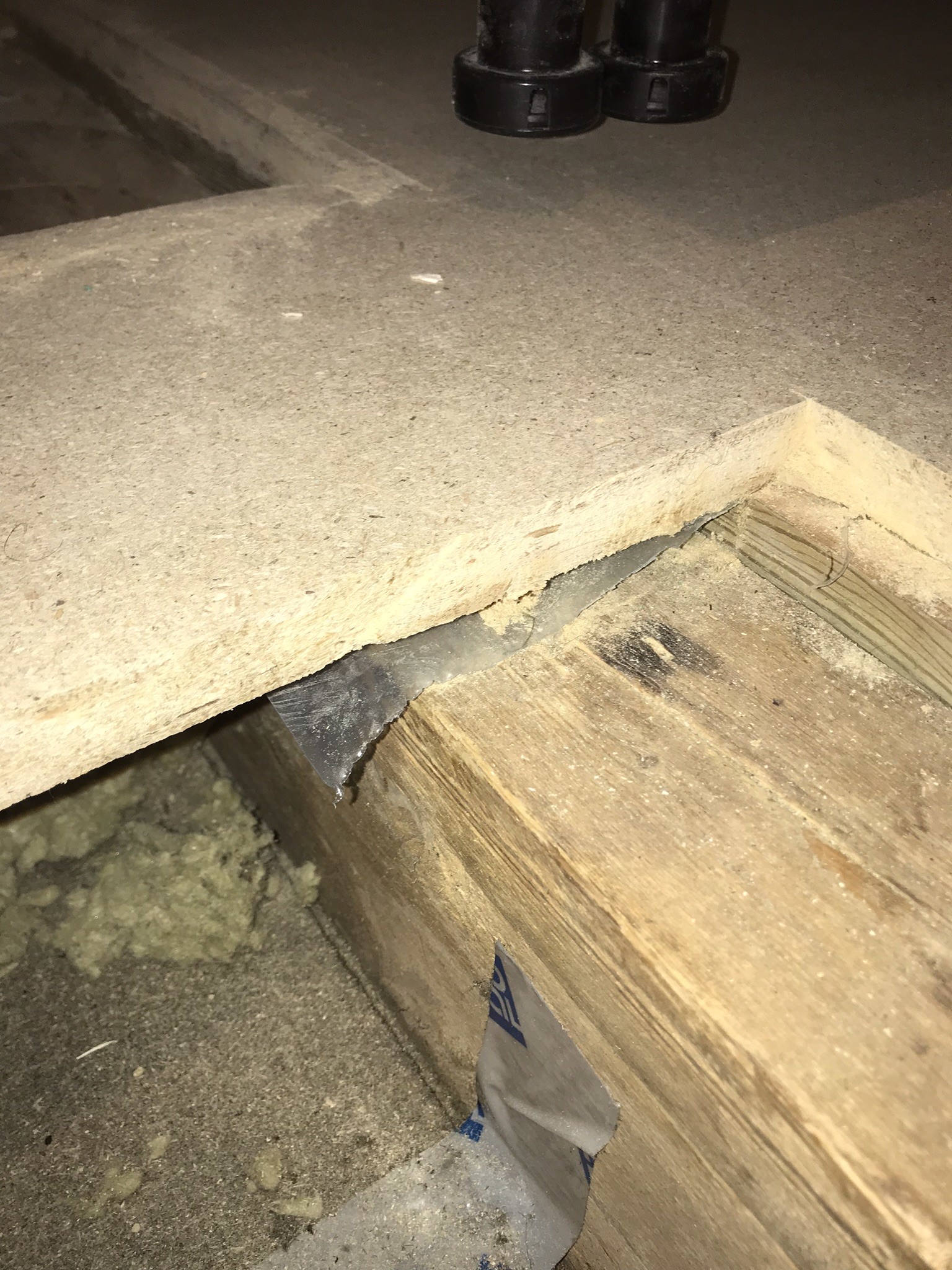
We discovered that there is plastic under the particle board, and we've been told this is wrong because moisture can get "trapped" in the joist between the asfaboard and plastic.
What we have is: Asfaboard-joist with loose wool insulation-plastic-particle board-parquet.
Is this wrong? In that case, we're wondering if we can claim it on the seller's hidden defects insurance.
We had to tear up the kitchen floor to replace a bottom board that had come loose because there's no room to crawl under that part of the house. We have a slab/crawl space foundation.
We discovered that there is plastic under the particle board, and we've been told this is wrong because moisture can get "trapped" in the joist between the asfaboard and plastic.
What we have is: Asfaboard-joist with loose wool insulation-plastic-particle board-parquet.
Is this wrong? In that case, we're wondering if we can claim it on the seller's hidden defects insurance.
Not something you normally do. But you don't seem to have any damage, and it's hard to claim anything from the seller. Hidden defects are compensated with the value the house would have been sold for if the problem had been known. And replacing the chipboard floor, to be able to remove the plastic, can't cost much. Hardly worth arguing about.M SimonTrygg said:Hello,
We had to tear up the floor in the kitchen to replace a subfloor board that had come loose since there's no room to crawl under that part of the house. We have a crawl space.
We then discovered that there is plastic under the chipboard, and we've been told that this is wrong because moisture can "get trapped" in the joist between the asphalt board and the plastic.
What we have is: Asphalt board-joist with loose wool insulation-plastic-chipboard-parquet.
Is this wrong? What we're considering is whether we can claim this on the seller's hidden defects insurance.
It could indeed become a big job if all the floors need to be torn up. But I see a problem in that you don't have any damage. I'm not sure how you would pursue the case. Maybe you should bring in a moisture expert to check the moisture content in the joists. There might be elevated moisture levels that haven't caused damage yet. The loose fill might have been able to manage it. Since you can't get down into the crawl space, it might be a good idea to check there as well while you're at it.M SimonTrygg said:

You don't seem to have any moisture problems now, but if the moisture increases, pressure-treated wood can/will smell quite bad. Not good, in other words.M SimonTrygg said:
I can, in a way, agree with Erik. Flooring companies often require plastic between the chipboard and parquet. The question is what difference it makes if it is under the chipboard instead. However, you absolutely can't have both, i.e., both under and over the chipboard. In any case, there is no subfloor construction that recommends plastic in the actual subfloor.
I think you should definitely bring in an expert. That looks pretty new, and there are no problems yet. But you need to know if problems might arise and what the solution would be if that happens.
Forestia, which manufactures floor particle boards, states that the vapor barrier should be placed UNDER the floor particle board. So if you follow the manufacturer's advice, there is nothing wrong with having the plastic under the floor particle board.
It can be a bit difficult to seal any penetrations, but if the existing penetrations are properly sealed, it should work.
It can be a bit difficult to seal any penetrations, but if the existing penetrations are properly sealed, it should work.
Click here to reply