
Hello
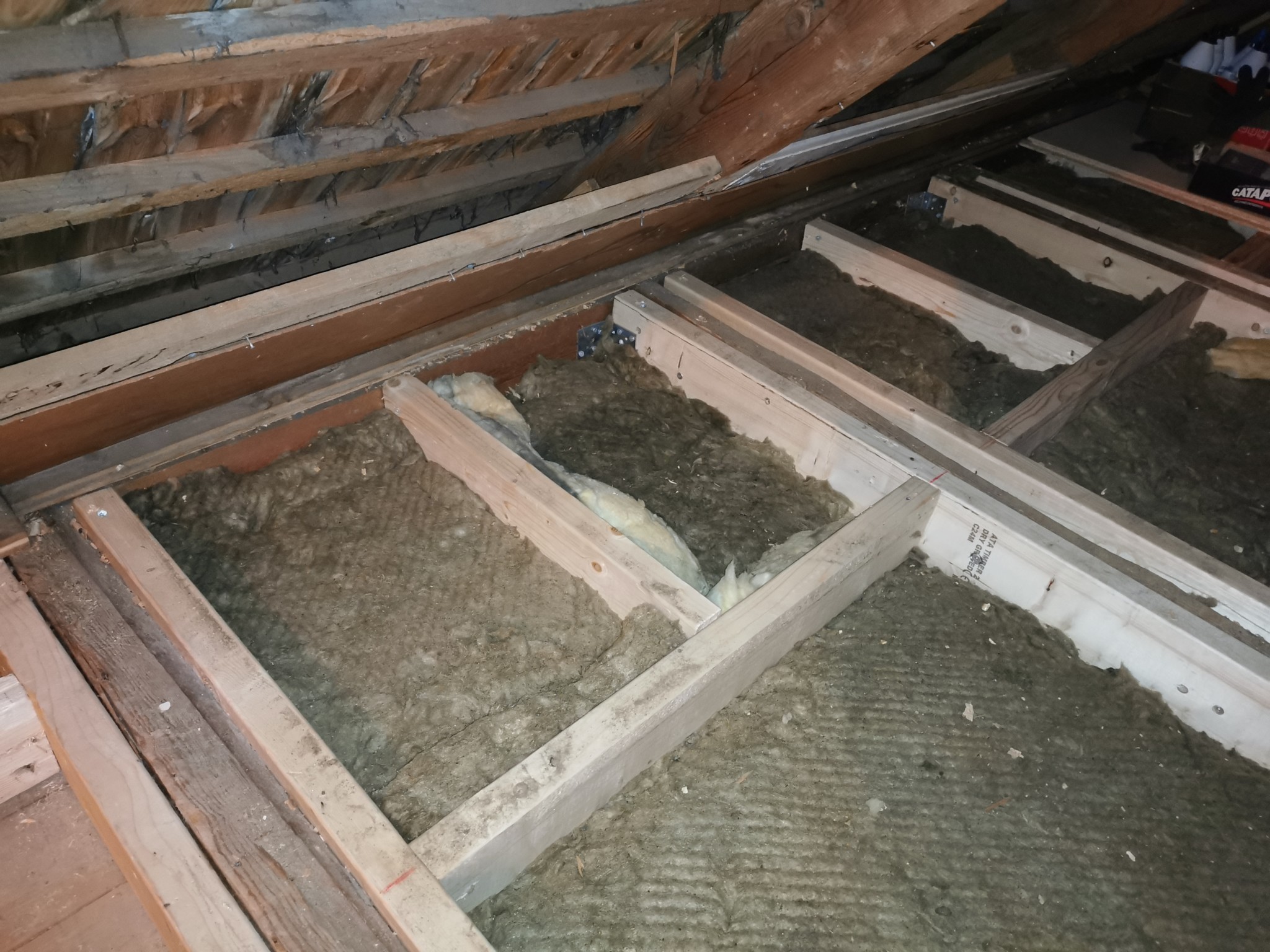
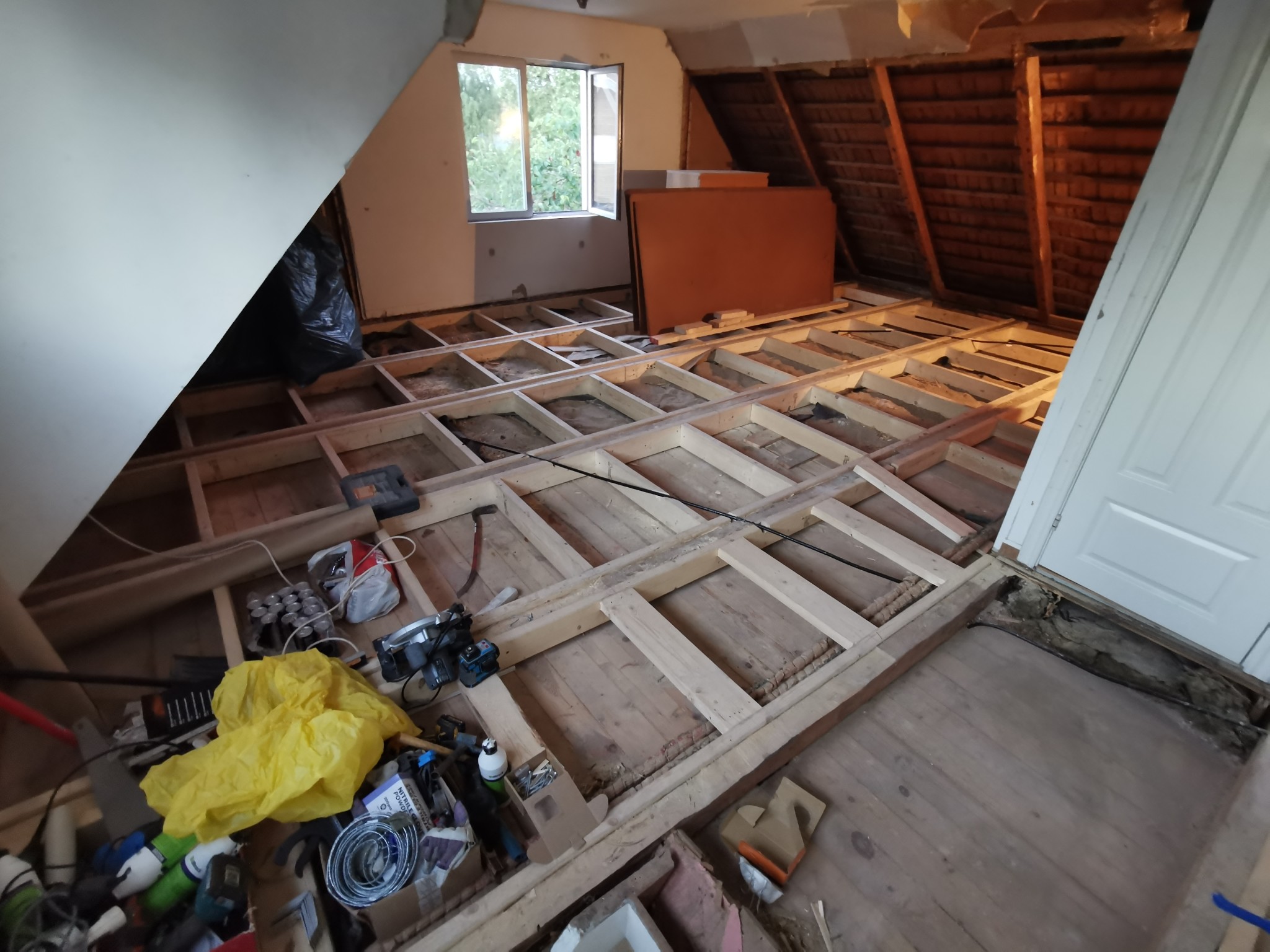
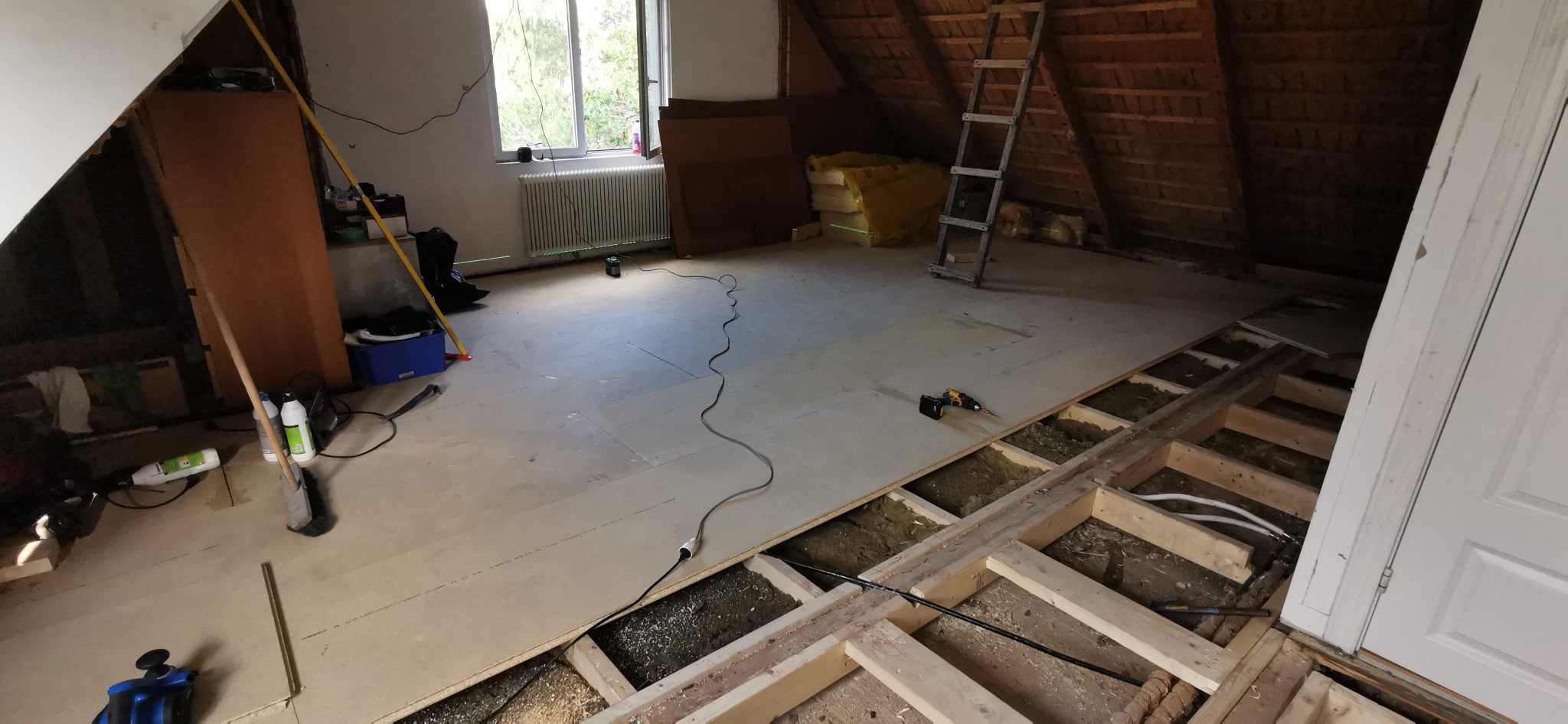
We have cc100 on the intermediate floor, the house is from 1930 and the beams are 145x80 (not very high). I'm considering screw-gluing 120x45 c24 studs on each side of the beams to level the floor and then placing noggins (95x45 or 120x45) to get cc60 between them to be able to lay chipboard on top. Is this a good solution? Are there possibly better solutions?
We have cc100 on the intermediate floor, the house is from 1930 and the beams are 145x80 (not very high). I'm considering screw-gluing 120x45 c24 studs on each side of the beams to level the floor and then placing noggins (95x45 or 120x45) to get cc60 between them to be able to lay chipboard on top. Is this a good solution? Are there possibly better solutions?
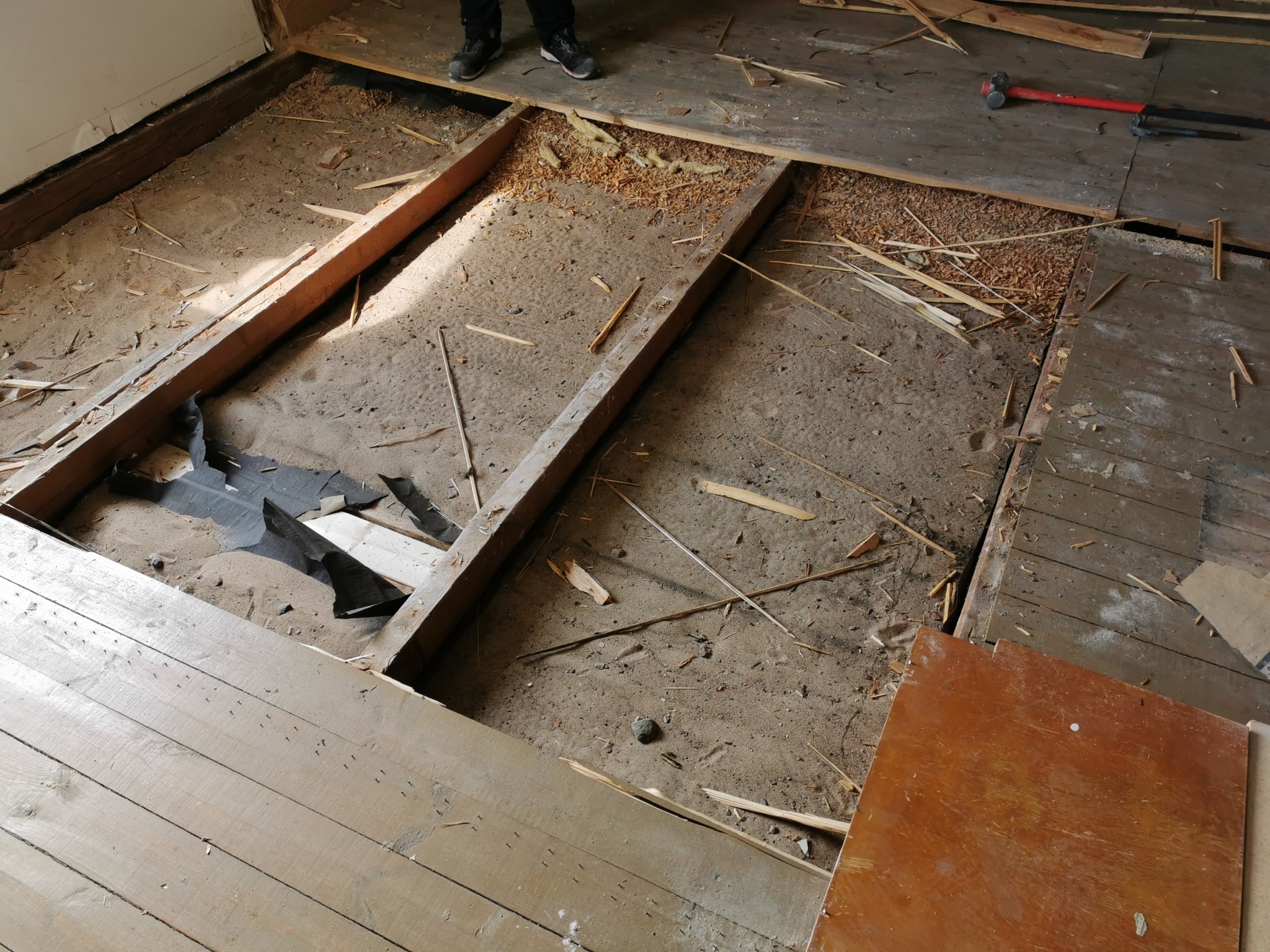
I think you are thinking correctly. Attaching new joists with screws and glue on each side of the existing ones is a very good method. Besides reducing the cc measurement and significantly strengthening the flooring, you also get the opportunity to level the entire floor so that it becomes straight. Start from the highest point of the existing flooring and set the new joists at the same height as this level.


Wouldn't it be more efficient to take one of those studs, switch it to a 145a, and move it to the middle of the compartments 
(Of course, you can also keep it and just add a stud)
Shortening cc60 is a very time-consuming job and quite difficult to get really right.
(Of course, you can also keep it and just add a stud)
Shortening cc60 is a very time-consuming job and quite difficult to get really right.
Last edited:
Click here to reply