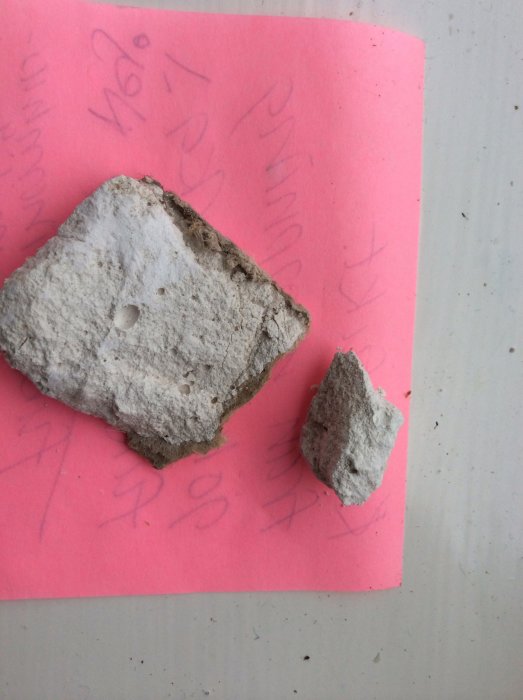
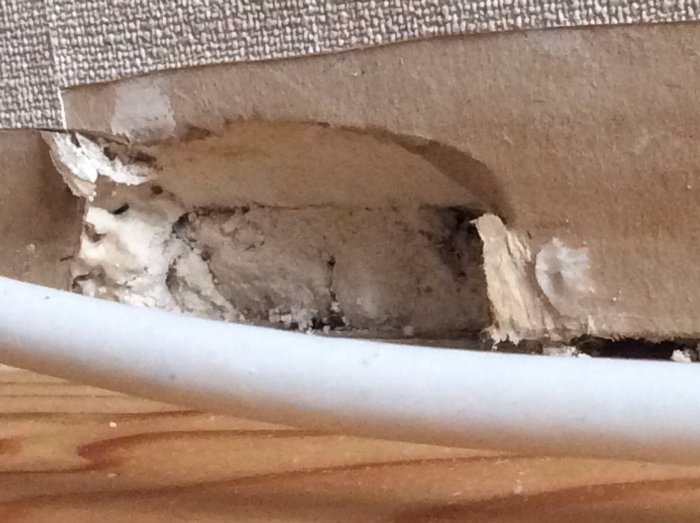
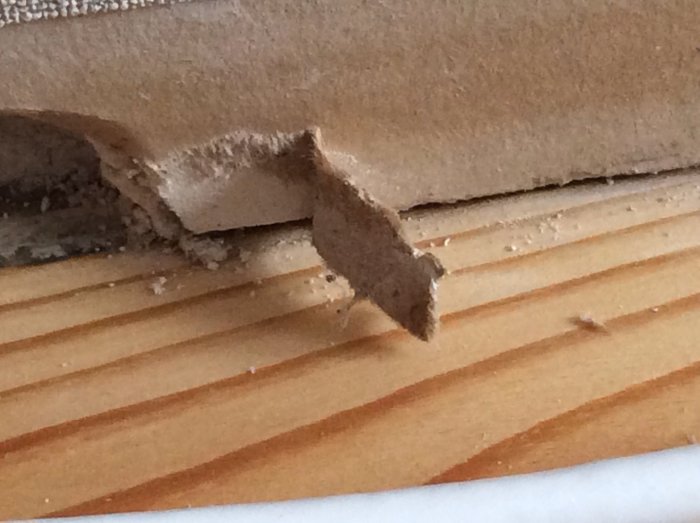
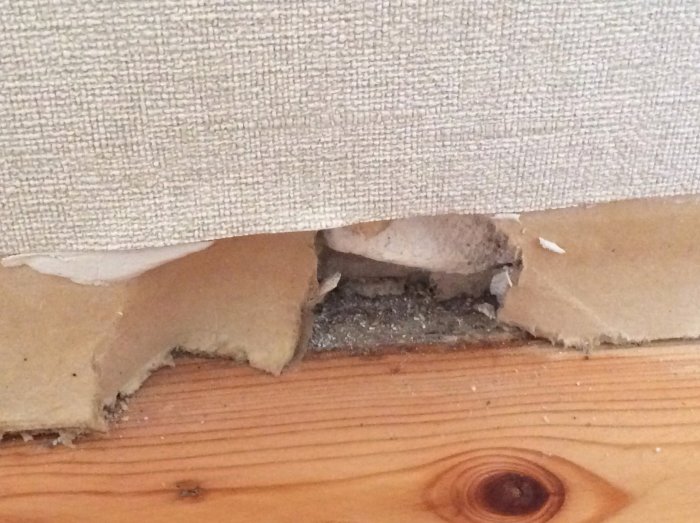
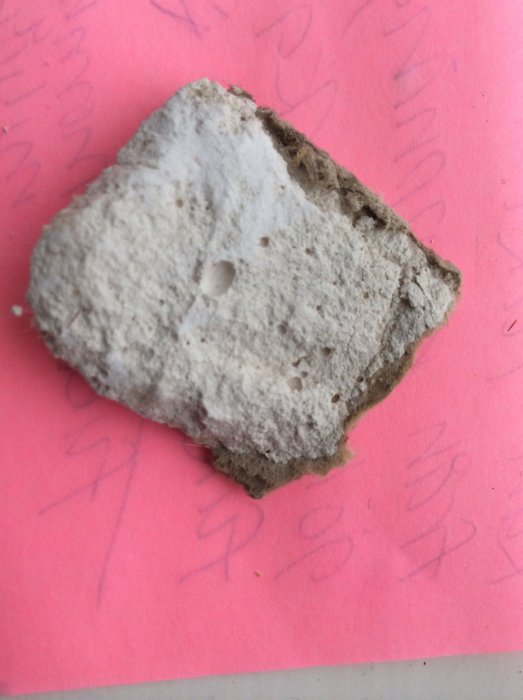
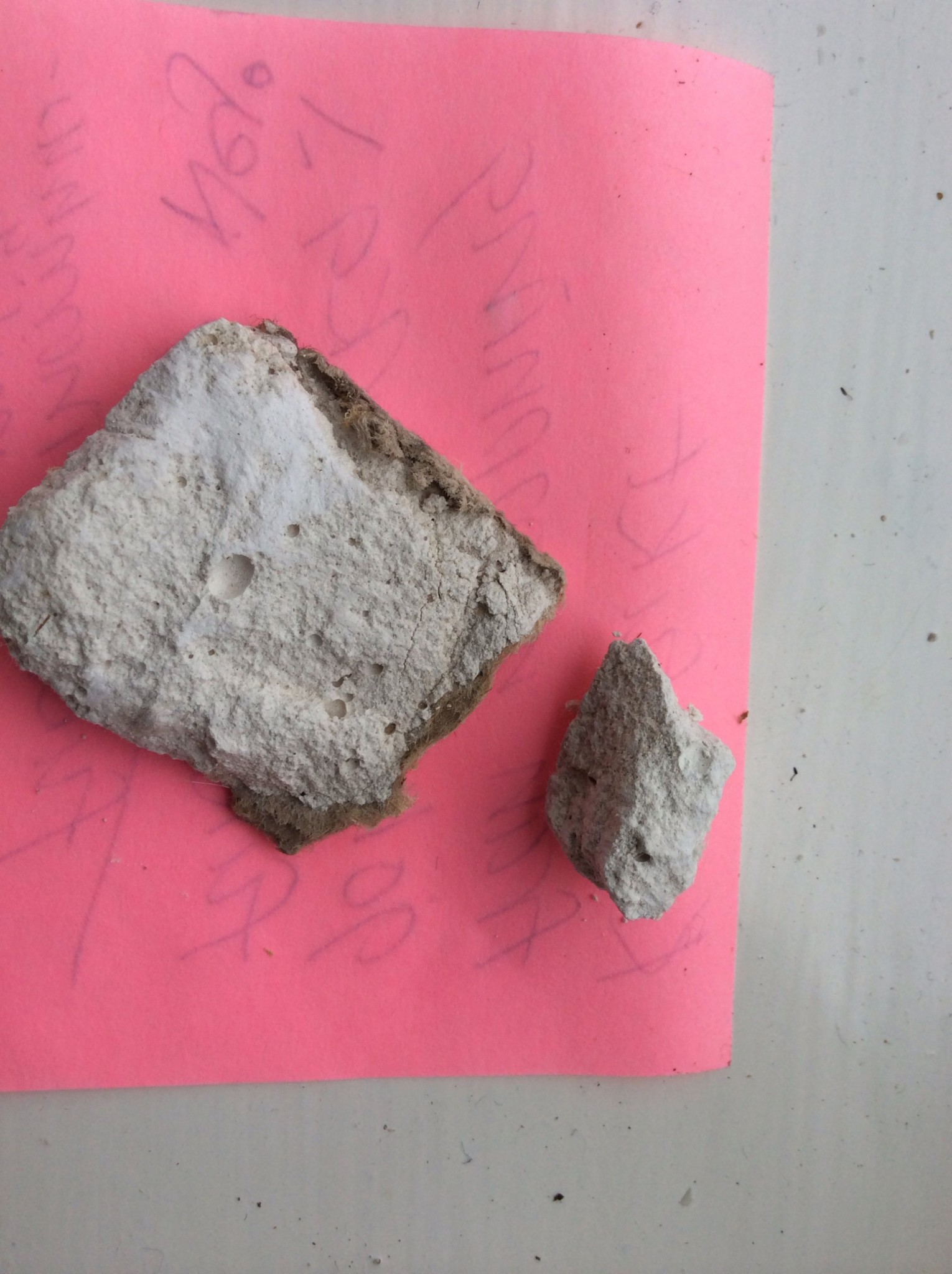
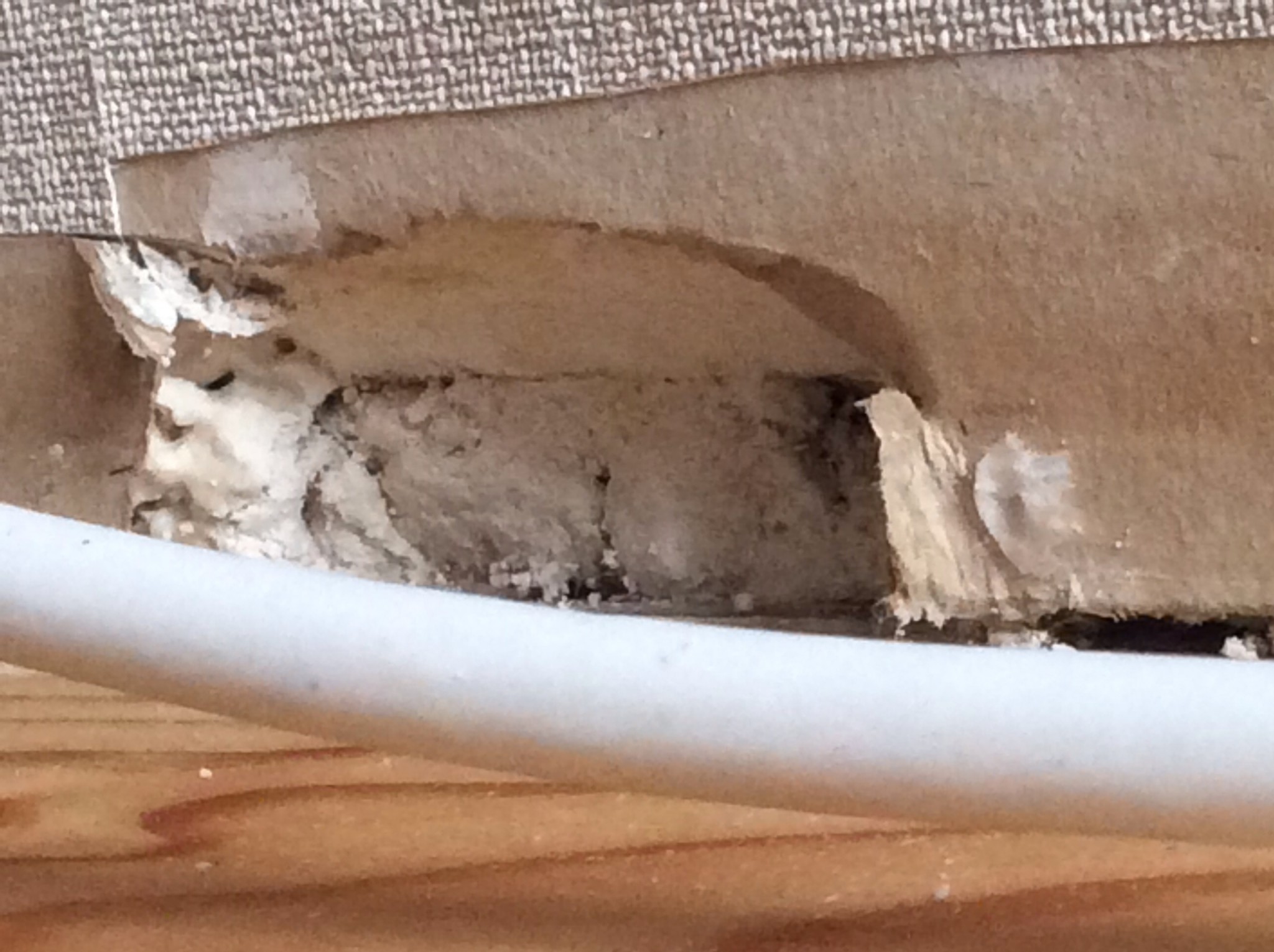
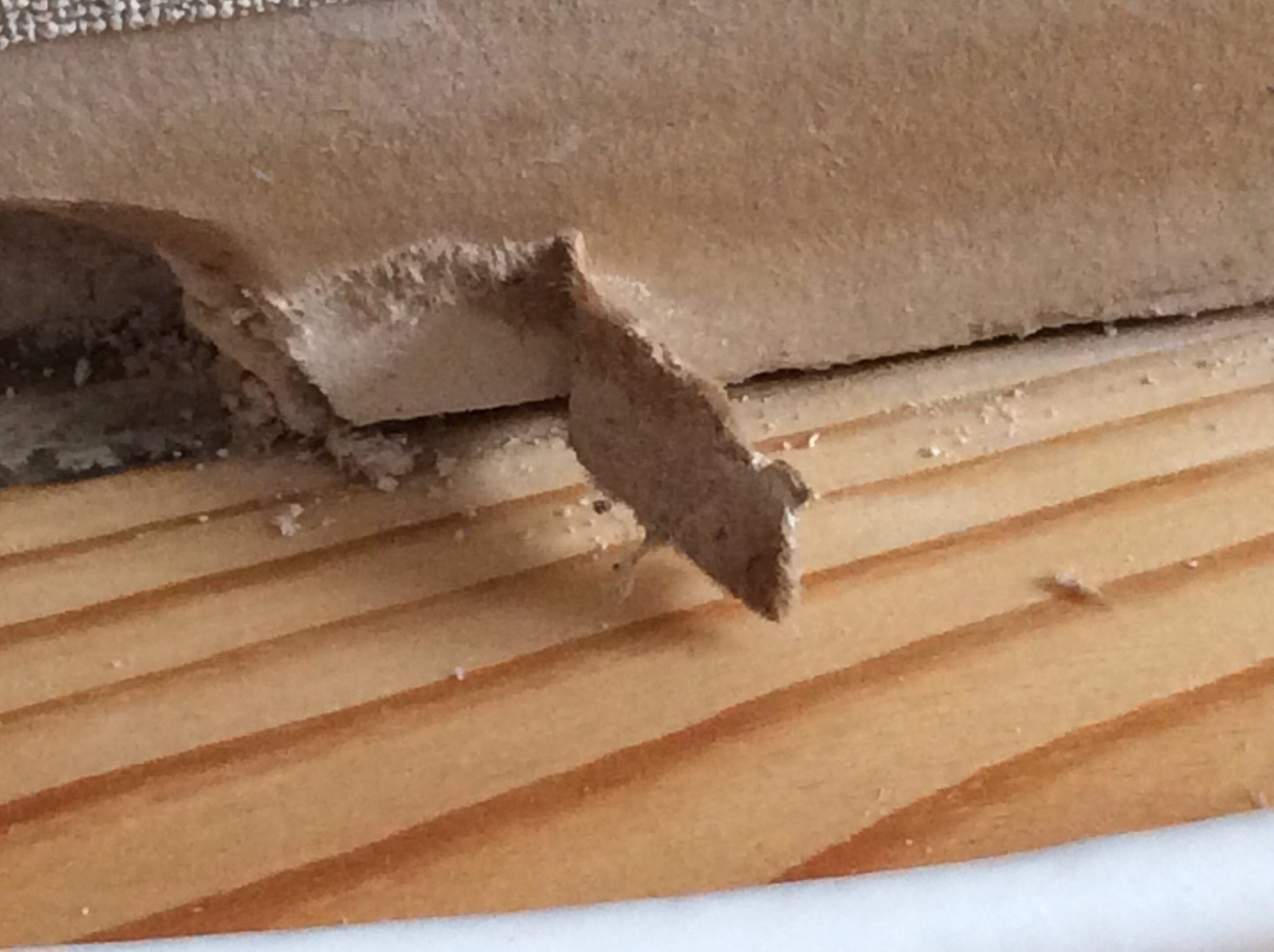
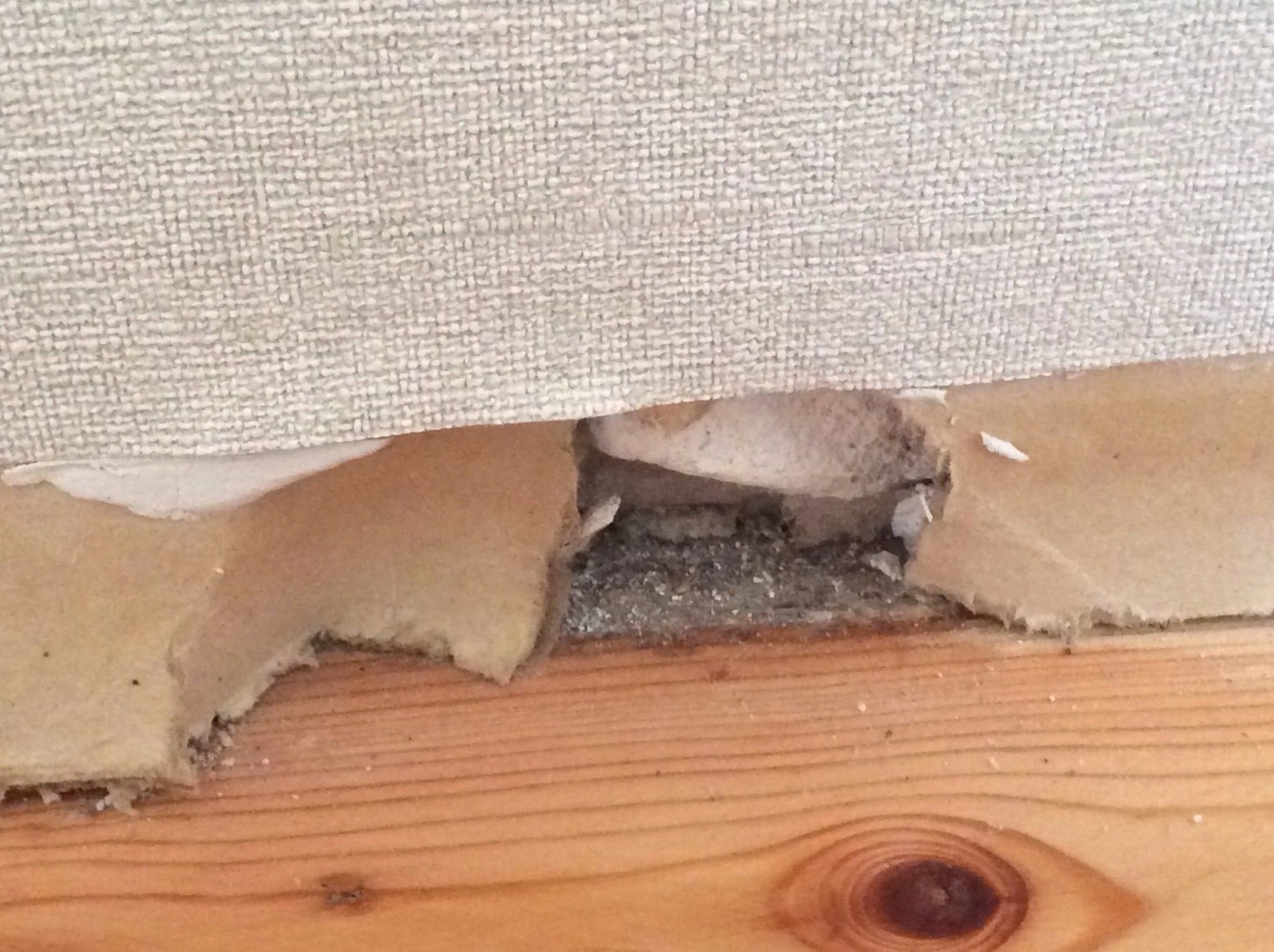
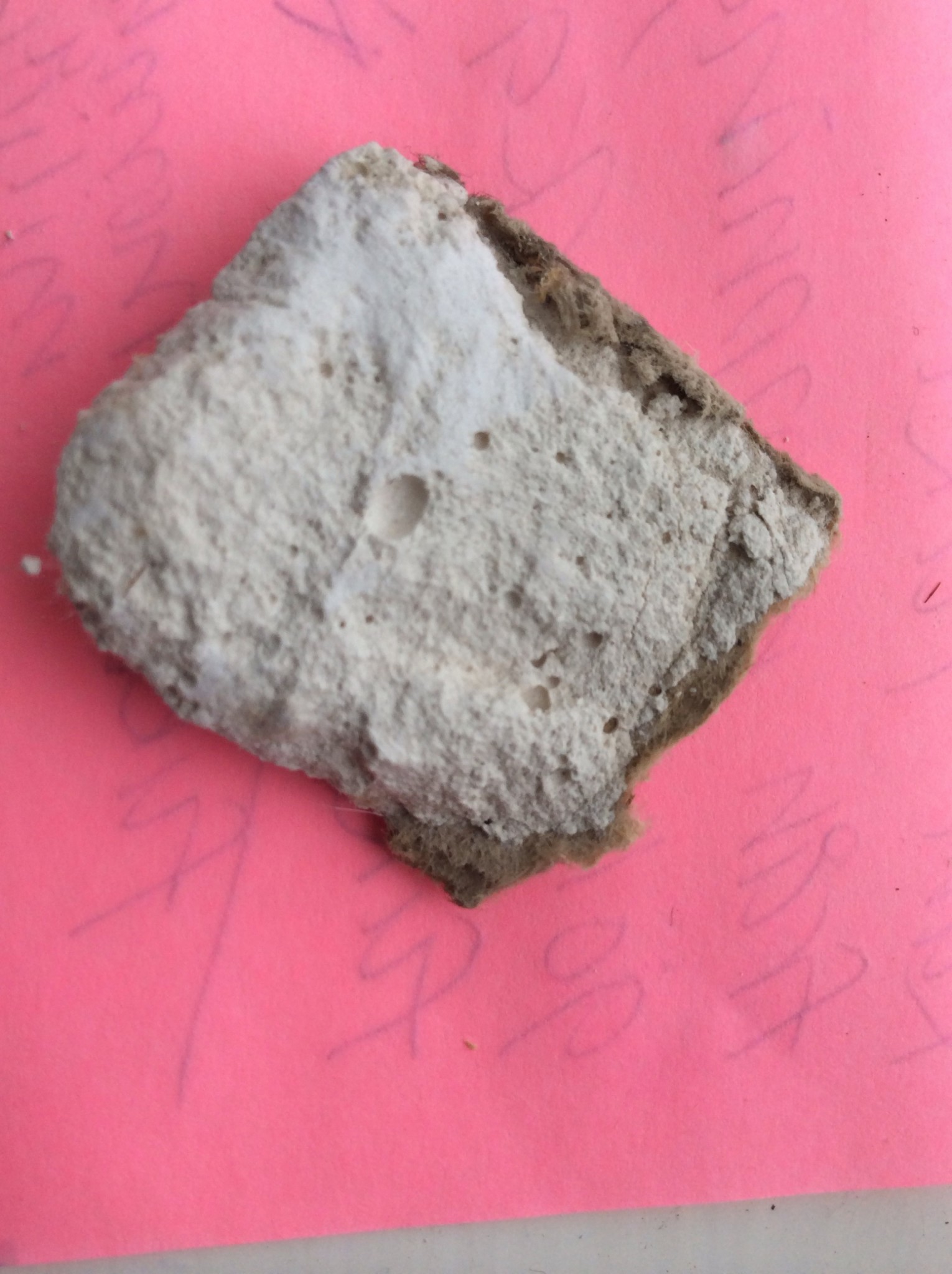
This material was found in the wall when the baseboards were removed in connection with floor renovation.
What do you think this material is?
Some old wood fiber board? I seem to see long "straws" in the brown material.
Old plasterboard with some kind of paper on it?
The white part was quite crumbly.
Asbestos warning or "calm down"?
Don't "argue" with me about being asbestos-phobic, I already know that. I am only seeking if anyone has real facts. I know some plaster used to contain asbestos, but I don't know if it was common in plasterboards in walls in "ordinary" homes?
The cake you managed to get loose looks like plaster. I've never heard of asbestos in drywall. When was your house built?
It seems like 3-4 threads are started every day with people posting poor-quality pictures asking if things contain asbestos. I have two general pieces of advice for all of you:
1. Stop tearing apart your houses.
2. Hire a professional who can remove and send it for analysis.
(3. Stop making threads about it.)
What do you mean by cleaning solutions?
"Unfortunately," the new baseboards are already nailed up, so I can't access the material anymore..
Everything happened so quickly..
However, I wanted to ask in anticipation of any future renovations.
The house was built in 1893, renovated in stages over the years..
Gypsum plaster? What is that? Not drywall then? I thought it looked like drywall too, but maybe you mean that it is both drywall and then gypsum plaster as well?
But, what do you think about the brown material that the white seems to be on top of?
Is it like a thin wood fiberboard on top of the drywall or some type of paper attached directly to the gypsum?
It could be a kloasongvägg, i.e., a plastered wooden wall, and most likely gypsum plaster. Later on, plasterboard may have been added on top of this. What you see that appears fuzzy is either the paper on the plasterboard or a wallpaper. Asbestos doesn't look fuzzy. The fibers are too small to be seen with the naked eye.
What do you mean by cleaning solutions?
"Unfortunately," the new floor moldings are already nailed up, so I can no longer access the material..
Everything happened so fast..
However, I wanted to ask for any future renovations.
The house was built in 1893, renovated in stages over the years..
Gypsum plaster? What is that? Not drywall, then? I thought it looked like drywall too, but maybe you mean that it is both a drywall and then gypsum plaster as well?
But, what do you think about the brown material that the white seems to sit on?
Is it likely a thin wood fiberboard on top of the drywall, or some kind of paper attached directly to the gypsum?
Thank you in advance!
ah, it's supposed to stay.
if you were planning to tear it down then cleaning for the dust.
paper gypsum paper
all the pieces you have are covered with paper
Yes, it's still there.. Unfortunately, the old wooden floors are probably uneven, so the new baseboards have quite large gaps in some places between the floor and the underside of the baseboard, meaning it's completely open towards this material. So, the dust you see in the picture easily comes out of the large gaps under the baseboards. But, the annoying thing is that I can't access it now to reach the material and send it for analysis. The pictures of the material I posted in this thread were taken during the renovation, but unfortunately, I've managed to lose the material... There is loose dust (clearly visible in picture 2).
What would you do?
"Paper gypsum paper, all pieces are covered with paper," what do you mean SBH? I'm not quite following.
What I find "fuzzy," what do you mean falkn? I don't think I've written about anything fuzzy.. Do you mean the brown material?
I just thought of something else: This material is located near the chimney.
Does that increase the risk that it might contain asbestos, as a heat protection?
I have found several threads here on the site claiming that there used to be gypsum boards with asbestos in them, also in the material/paper above the gypsum. Among others, "academia" has written about it in a thread before.
If you read this academia, I would also appreciate your input on these questions!
Thought of another thing: This material is close to the chimney.
Does it increase the risk that there might be asbestos in the material, as heat protection?
I have found several threads here on the site claiming that there were gypsum boards with asbestos in the past, even in the material/paper on top of the gypsum. Among others, "academia" has written about it in a thread before.
If you read this, academia, I would also appreciate your input on these questions!
My input is that there could be asbestos in the boards, most likely in the surface layer if so. Only analysis can provide a definite answer. Sorry, but it's not possible to draw any conclusions from a photo or from the fact that the boards are close to a chimney (even if that makes it more likely to contain asbestos).
Regarding asbestos in gypsum boards, it would most likely occur primarily in gypsum boards specifically made for fire protection. These could be made of gypsum with a surface layer containing asbestos. Possibly asbestos in the gypsum too, I don't know, but it seems pointless as fire protection; if so, it would have been to strengthen the durability of the gypsum board.
Asbestos fibers to strengthen durability in gypsum are likely longer and visible to the eye on fracture surfaces and edges under magnification.
"Normal" gypsum boards shouldn't contain asbestos, even if it has occurred.
Can't you seal the gap between the floor and the boards with something?
If they don't touch the discs, they aren't dangerous, if they start thinking about demolishing more, then you should send samples for analysis to know. Otherwise, you can only guess.
The sealing should then be done between the floor and the now-mounted baseboard. The question is what I could use.. Trying to caulk with some form of flexible sealant, I'm not sure if it will work. It often dries and separates when the wood moves, etc. Grateful for suggestions on what I could do!
Would anyone just leave it as it is? Ignore the asbestos risk?
Academia, you write that asbestos has been found in drywall, both in the surface layer and in the gypsum itself. What cases do you know of where asbestos has actually been found in drywall, in the surface layer or in the gypsum itself?
Has it been about drywall in regular private homes or rather in industries or in other special environments that more often require fire protection, etc.? Where have you found information about confirmed cases of asbestos in drywall?
Are there cases where asbestos has been found in plaster?
The pictures again:
Doesn't anyone think the brown looks like "regular" wood fiberboard, tretex or similar?
Or "regular" paper found on "regular" drywall, like you write about SBH.
The brown is clearly visible in pictures 3, 4, and 5.
First and last picture.
What do you think it is?
Looks like large "holes" (air bubbles) in the white...
Part of drywall, plaster, or what? Can there be such large "holes" in a "regular" drywall or does it lean more towards plaster that might be mixed on-site? Hence the air bubbles, I reckon.
Sprutasbest, could it look like that... Maybe I'm completely off track, but it just came to mind.
Maybe not something typically used in private homes, but it's right by an old chimney.
First and last picture. What do you think it is? Looks like large "holes" (air bubbles) in the white.. Part of a drywall, plaster or what? Could there be such large "holes" in a "regular" drywall, or is it more likely plaster that someone might have mixed themselves? Hence the air bubbles, I reckon.
Sprutasbest, could it look like that... Maybe I'm completely "off track" now, but just came to think of it. Maybe not something that was commonly used in private homes, but it's right by an old chimney.
Thanks in advance!
It's not sprutasbest, you can forget that completely. The holes may possibly come from air bubbles in poorly mixed plaster.
Anyone who would just leave it exactly as it is? Ignore the asbestos risk?
I would have submitted a material sample for analysis to begin with. Regardless of whether the result shows it is asbestos or not, I would have left it in place. If it is asbestos and it can create dust, I would ensure that dust does not reach the living space, i.e., seal it with a list or sealant if it creates dust on its own. Otherwise, it can stay there as long as you don't start tearing down or drilling into it excessively...
Stina71 said:
Academia, you write that asbestos has been found in drywall, both in the surface and in the gypsum itself. What cases do you know of where asbestos has actually been found in drywall, in the surface or in the gypsum itself?
Asbestos was put in all sorts of things back in the day, including gypsum and joint compound between drywall. And typically in gypsum blend for "popcorn" textures.
"Asbestos was sometimes used in plaster, and certainly in joint compounds and in some finish textured paints ("popcorn-style"). Even without asbestos, plaster and drywall dust can be a respiratory irritant or hazard, making steps to minimize dust and to control where it goes important, along with proper personal protective gear. If all that's needed are minor repairs to the finish wall surfaces and you are adding a patch not demolishing the walls, leaving the existing material in place is not itself a hazard. Asbestos is not radioactive - it does not emit harmful particles unless it is disturbed." http://inspectapedia.com/interiors/Plaster_Systems_in_Buildings.php
Gypsum is also not pleasant to inhale. Gypsum is a mineral that is extracted from rock, and is rarely pure from other carcinogenic minerals that come with it, silicates including quartz, etc. Just to give you some perspective.
Stina71 said:
Has this been in regular residential houses or rather in industries or other special environments that more often require fire protection, etc.?
It occurred in both residential homes and industries, but possibly to a greater extent in industries.
Stina71 said:
Where have you found information on confirmed cases of asbestos in drywall?
Personally, I learned this during training a long time ago (related to a profession I had). It's not news to me, nor particularly surprising.
You can search yourself: https://www.google.se/search?q=asbestos+in+plaster
Stina71 said:
Are there cases where asbestos has been found in gypsum plaster?
Yes, certainly. As contamination or intentionally mixed component. However, I don't know to what extent it was done.
Stina71 said:
The pictures again:
No one thinks that the brown looks like "regular" wood fiberboard, tretex, or similar?
Or "regular" paper found on "regular" drywall, as you write about SBH.
The brown is clearly visible in pictures 3, 4, and 5.
I don't think it looks like the regular paper you see on drywall. The material in your pictures contains fibers of some kind. It could be wood fibers, cellulose, or asbestos, or a mix of these. It can't be determined from a picture.