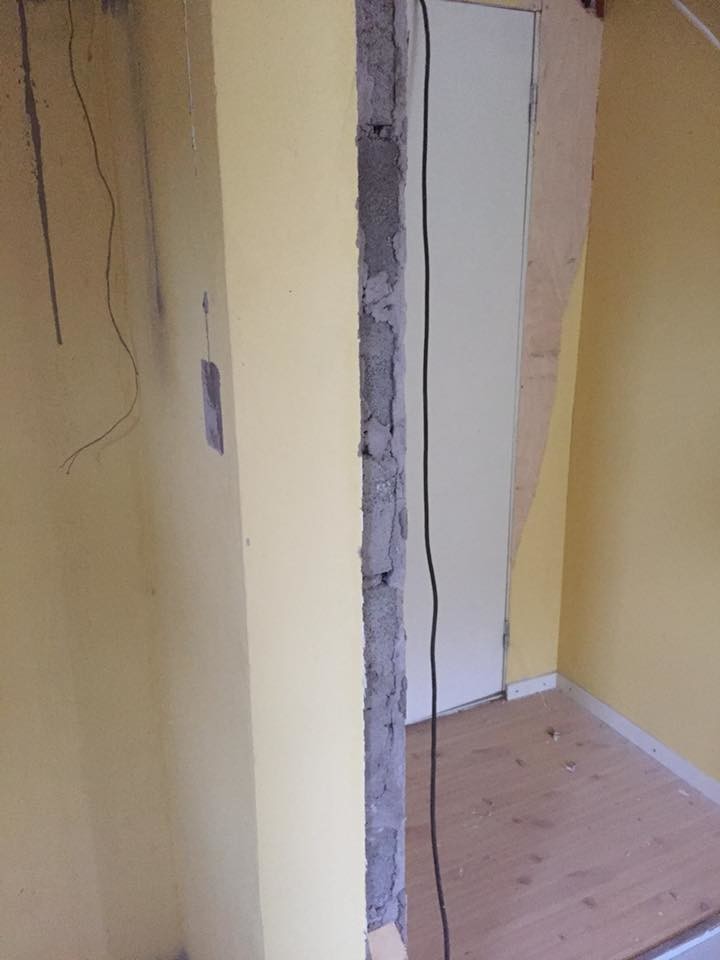
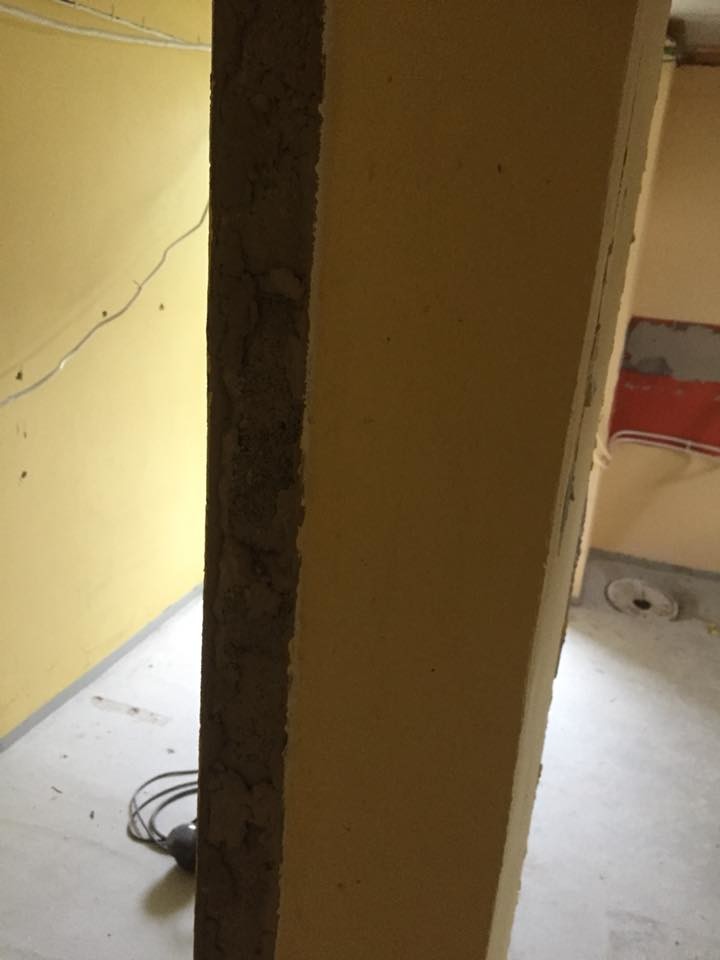
I'm going to fill in an opening left by a door in the basement, which will become a laundry room. One side will be tiled, and the other I'll put plaster on. The wall where the opening is made of lightweight concrete blocks covered with plaster. What material should I use to fill the opening and be able to tile on one side and plaster on the other?

My first thought was to use wooden studs and place a sill in between. Cover this with plywood and drywall, then prime it to keep moisture away.

What do you think about that? Any other ideas?
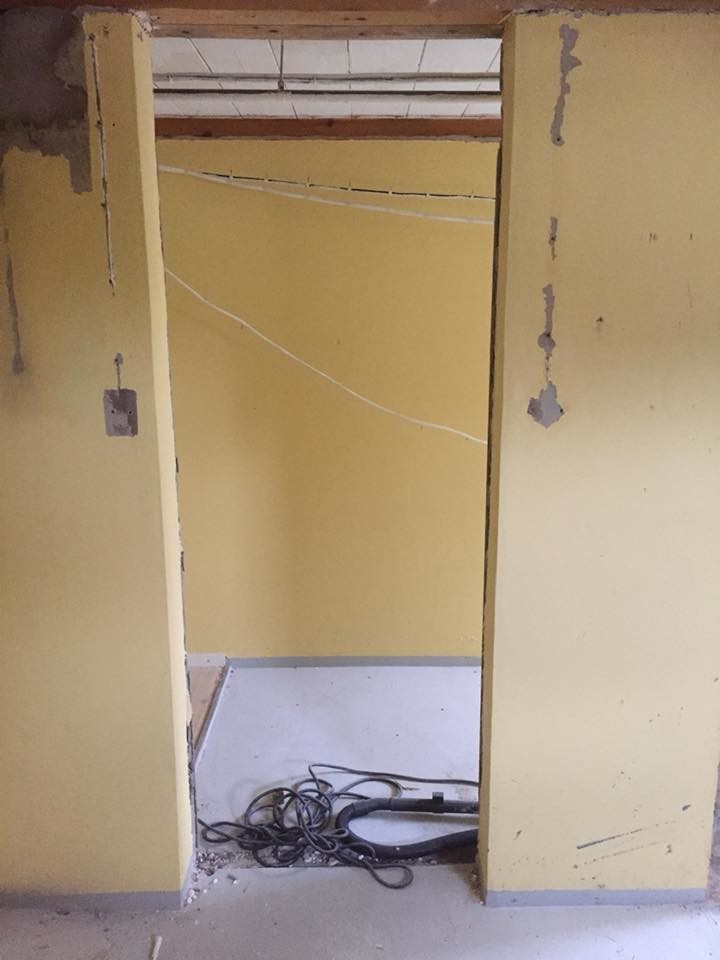
 
  • An opening in a basement wall with yellow plastered surfaces and exposed wiring on the floor, intended to be closed for a laundry room project.
  • Yellow basement wall with an opening where a door was removed, partially filled with a rough concrete edge, wires hanging adjacent. Room has wooden flooring.
  • Wall opening in a basement with exposed concrete edges, prepared for closure as part of a laundry room renovation project.
Why not continue with leca?
 
Feels like it is harder, but maybe it isn't?
 
Leca is so much fun to work with. Kind of like building with LEGO bricks. It's the best entry-level material to get into the world of masonry and plastering. It's also cheap, and easy to modify, so it's not the end of the world if you make a mistake now and then.
 
  • Like
Mike_the_pip3
  • Laddar…
S sole_oggi said:
Feels like it's harder, but maybe it's not?
I laid Leca for the first time last summer, if you liked Lego as a kid, you'll think it's super fun :)
Buy a blade for the reciprocating saw so you can cut, I tried an angle grinder first but a saw blade was much easier to get it straight/neat I thought.

Try it! I thought it was a blast!
Don't forget to throw in some reinforcement every 3 rows or so.

:D
 
  • Like
Alfredo
  • Laddar…
PNO PNO said:
Leca is so much fun to work with. Kind of like building with Lego bricks. The best entry material available for getting into the world of masonry and plastering. It's also cheap, and easy to modify, so it's not the end of the world if you make a mistake sometime.
Haha didn't see your post first, you're also referring to Lego :cool:
 
It sounds like lekablock is best. I need to read up on how to do this in the best way. Is it necessary to use reinforcement?
 
Since it is a basement, you also have some moisture from below to consider, so keep wood away from the construction.
 
  • Like
BirgitS
  • Laddar…
S sole_oggi said:
It sounds like lekablock is best. I need to read up on how to do this in the best way. Is it necessary to use reinforcement?
There's a lot on YouTube :)
I don't dare to say "required" for reinforcement,
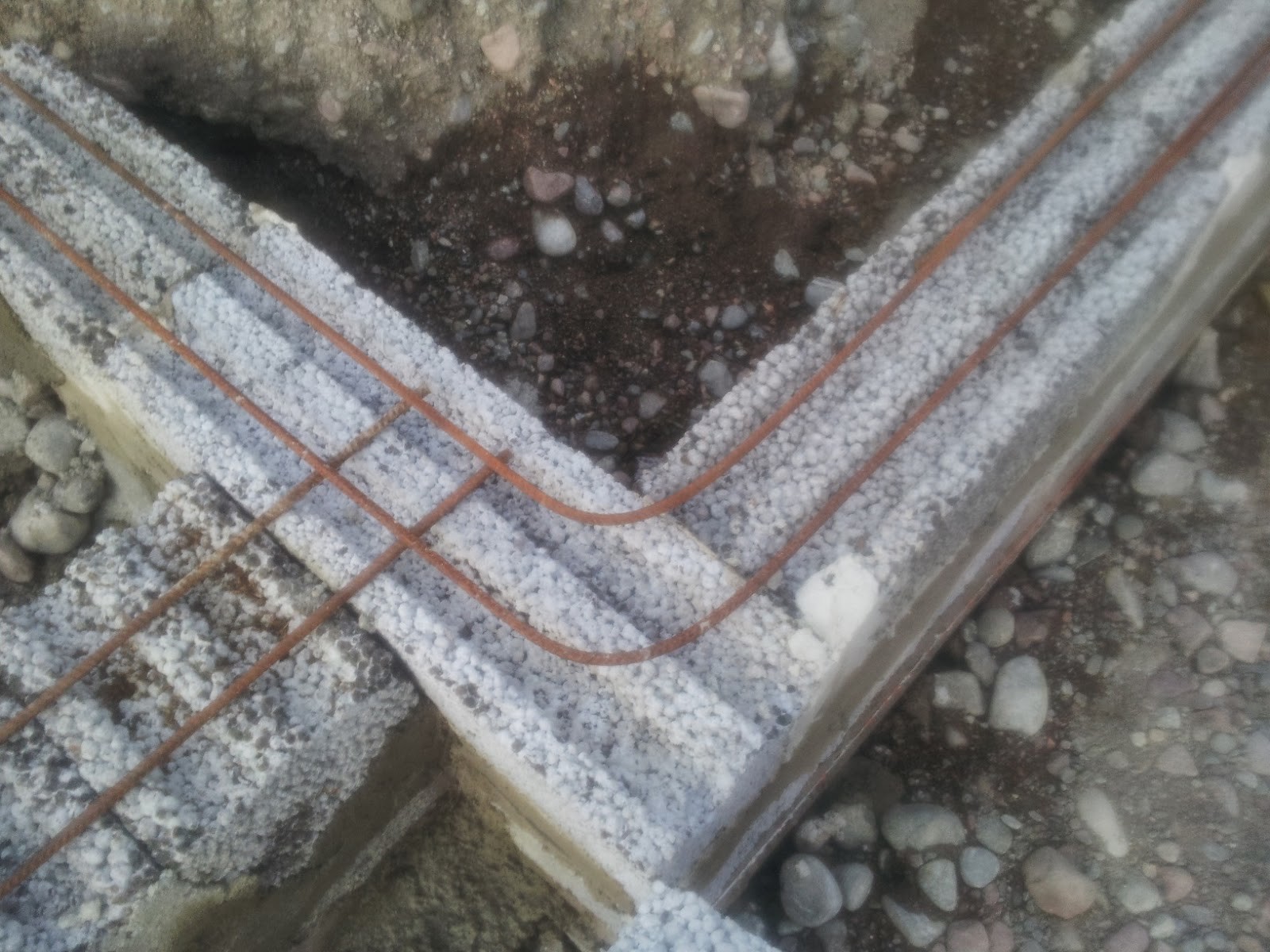
but buying 2 bars for 100SEK and throwing them in every 3-4 rounds and you're safe, I thought :)
 
Mike_the_pip3 Mike_the_pip3 said:
There's a lot on YouTube :)
I'm not sure about the "requirements" for reinforcement,
but buying 2 rods for 100SEK and throwing them in every 3-4 rounds should keep you safe, I thought :)
Should it be placed in the joint between the lecablocks?
 
S sole_oggi said:
Should it be placed in the joint between the lecablocks?
Exactly
As below (but you should knock off the edge in the corners)

Concrete corner with rebar reinforced edges, gravel around, needs chipping of the corner edge for construction.
 
Mike_the_pip3 Mike_the_pip3 said:
Exactly
Like below (but you should knock off the edge in the corners)


[image]
Thanks!!
 
Click here to reply
Vi vill skicka notiser för ämnen du bevakar och händelser som berör dig.