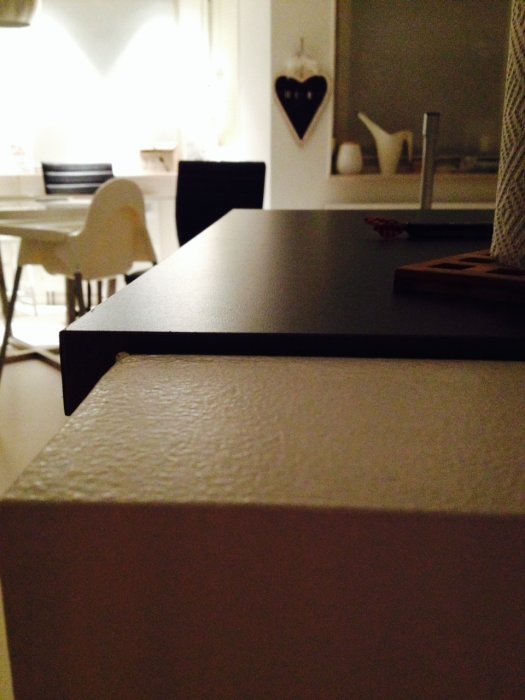
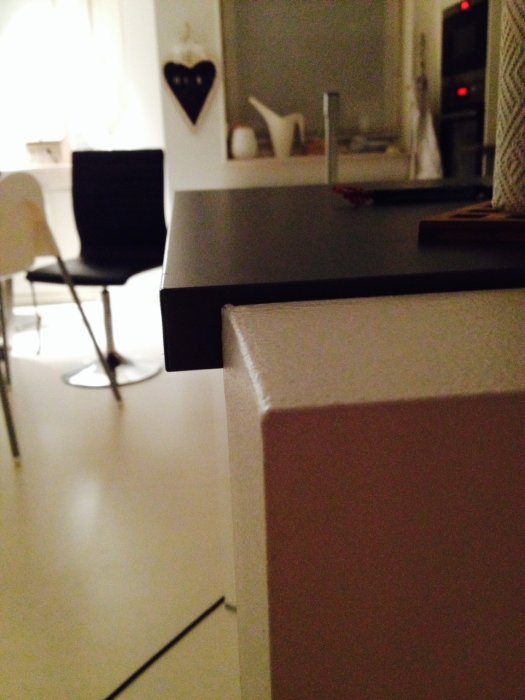
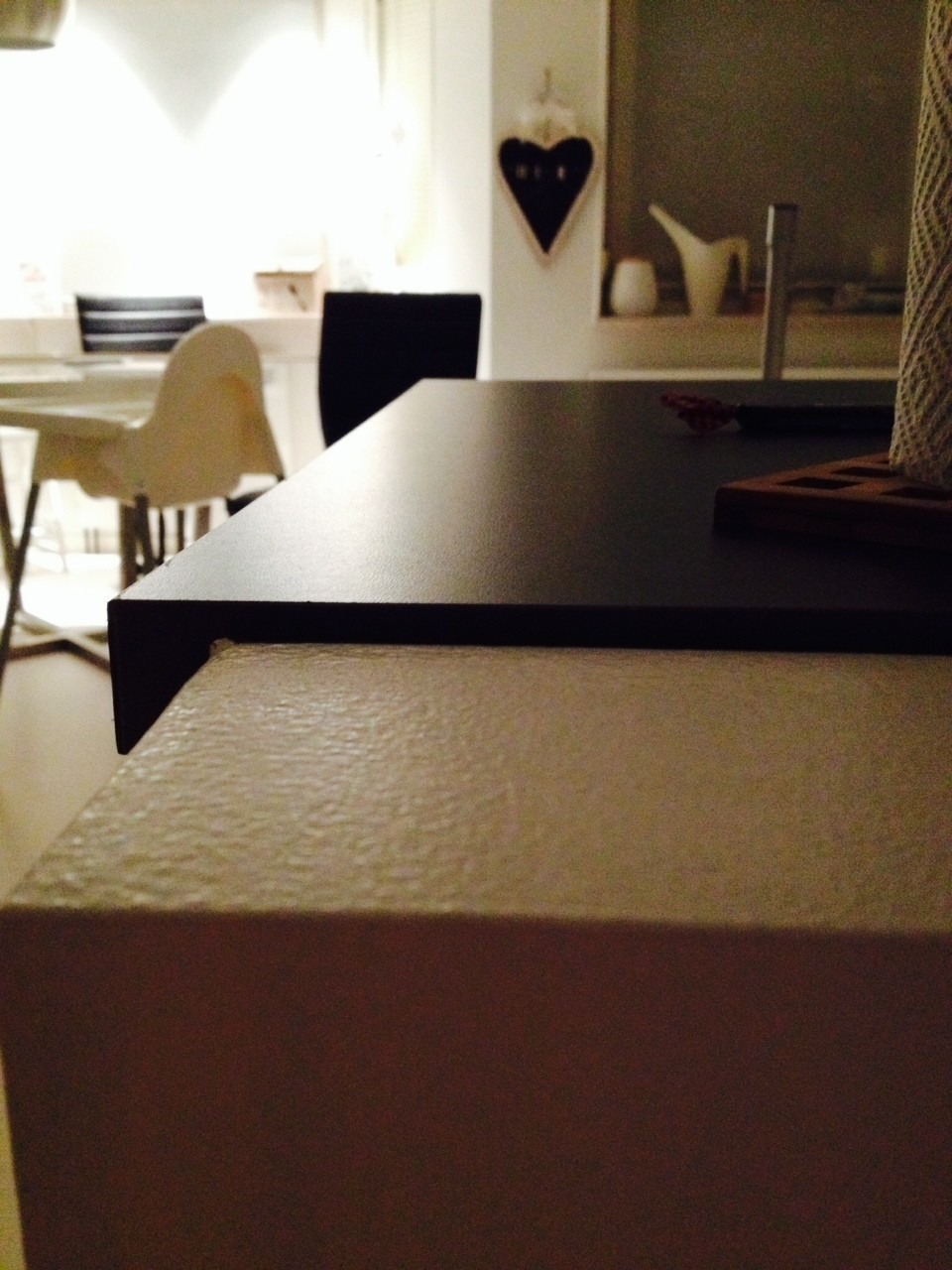
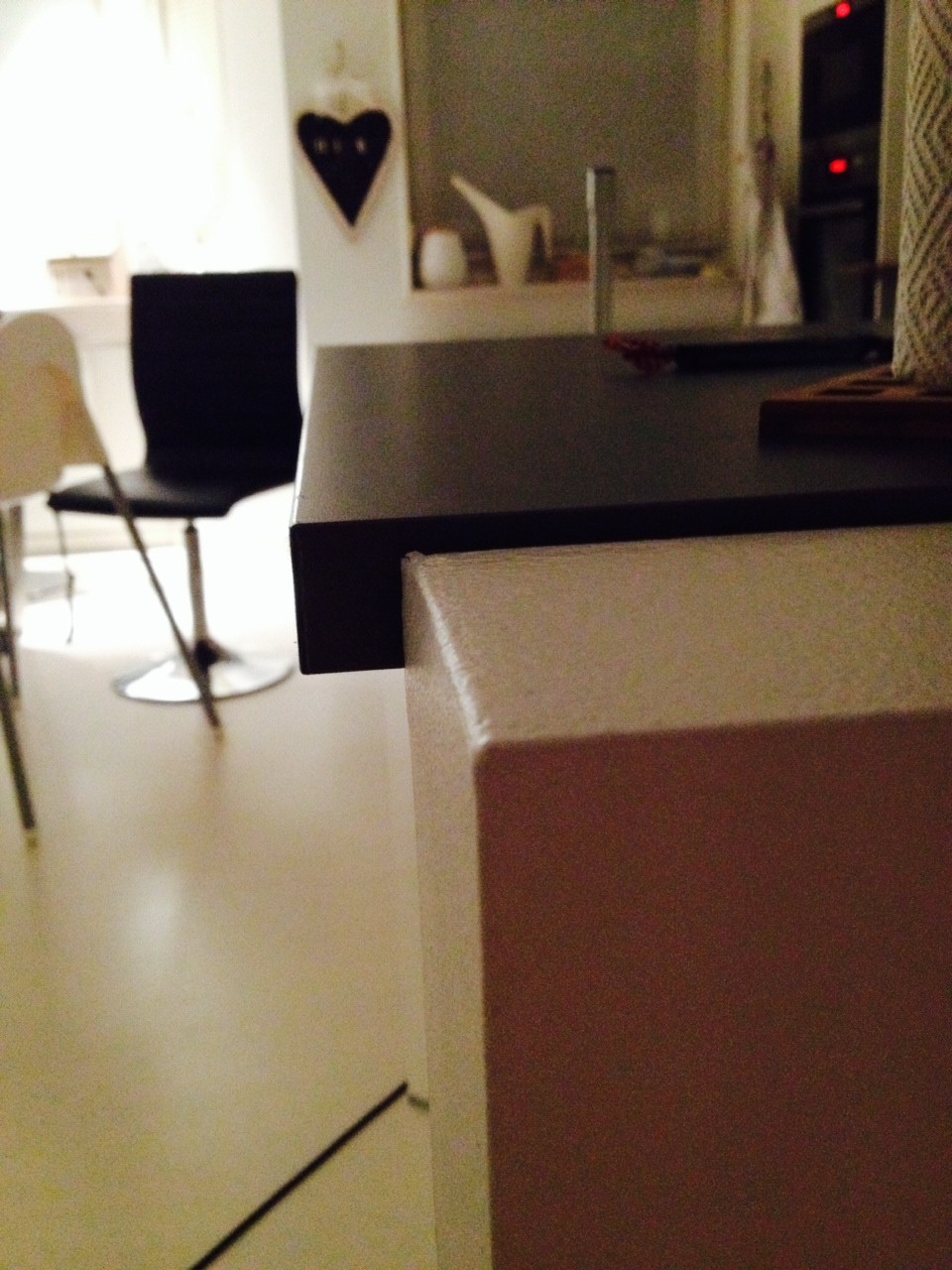
I have installed a new kitchen, the previous countertop was level with the wall in front of which one has opened up to create a more open feel in the kitchen. I want to raise the white wall so that it is exactly level with the countertop. How should I proceed, which materials, filler, etc., are needed? We are talking about approximately 0.5-1cm that I need to raise.
Then you can also see that the countertop is too long. I want to make a small block extending from the wall to cover the part of the countertop that sticks out. Is there a suitable material to solve this?
Finally, I was just thinking of painting with wall paint like the rest of the wall is painted with.
The wall is built of plasterboard, which is then covered with some kind of covertapet and then painted with white wall paint.
But the caso product, is that the one you should use?
The easiest way is probably to put a strip from a plasterboard; the renovation gypsum is only 6 mm. If there's a varying height difference, as you mentioned, you can put small strips of masonite underneath to make it fit better.
To extend the wall, simply screw on a suitably thick strip that you then attach the gypsum to. Alternatively, you can apply multiple layers of gypsum. Feel free to add a corner guard.
The wall is made of plaster which is then covered with some kind of wallpaper that is then painted with white wall paint. But that caso product, is that the one to use?
Then you should probably do as mexitegel wrote instead...
The easiest way is probably to add a strip from a plasterboard, the renovation plaster is only 6 mm. If there is a varying height difference as you write, you can place small strips of masonite underneath to align it better.
To extend the wall, you simply attach a suitably thick strip to which you screw the plaster. Alternatively, you can add multiple layers of plaster. Please also add a corner protection strip.
Of course, you extend the wall first
Ok, so I attach 6mm plasterboard, but I still need to plaster the gypsum afterwards to get a smooth surface that I can paint with wall paint, right?
The strip idea was smart, alternatively building several layers of plaster as you mentioned. But again, do I use regular wall filler on this to even out and take up certain variations in the distance?
Yes, you fill where you've screwed, and since the drywall is thin, you should screw at 30 cm intervals and ensure to prop up the drywall so it doesn't sag.
You benefit from being precise with the drywall so it's at the right height and fill as little as possible.
I would have placed a wooden board instead. A leftover piece from a countertop or something similar. Cut to size, put it in place, trace it, and then bring out the belt sander and sand down to the marking. That way, you avoid corner protection strips and other hassle.
Hi, I was just at Bauhaus, they couldn't really help me. Their thinnest gypsum is 6mm, but the problem is I don't have 6mm all the way; on one side it's 6mm, but towards the other end, it might be only 4mm. What can I use if gypsum, which is too thick, won't work?! This is getting frustrating... One thought I had was to simply put a thin masonite board in place and underneath I would lay something like tile adhesive with varying thicknesses along with it so that I can just press the board until it's level with the countertop?
I don't quite understand how it looks, but wouldn't it be best to saw down the wall a few cm so that it becomes straight and place a piece of the same countertop there as well?
I would probably have extended the wall with several layers of drywall or alternatively a thin board covered with drywall. Then primed and raised the height with gypsum plaster. Then you can glue paper strips over all the seams, putty, sand, and paint.
Vi vill skicka notiser för ämnen du bevakar och händelser som berör dig.