
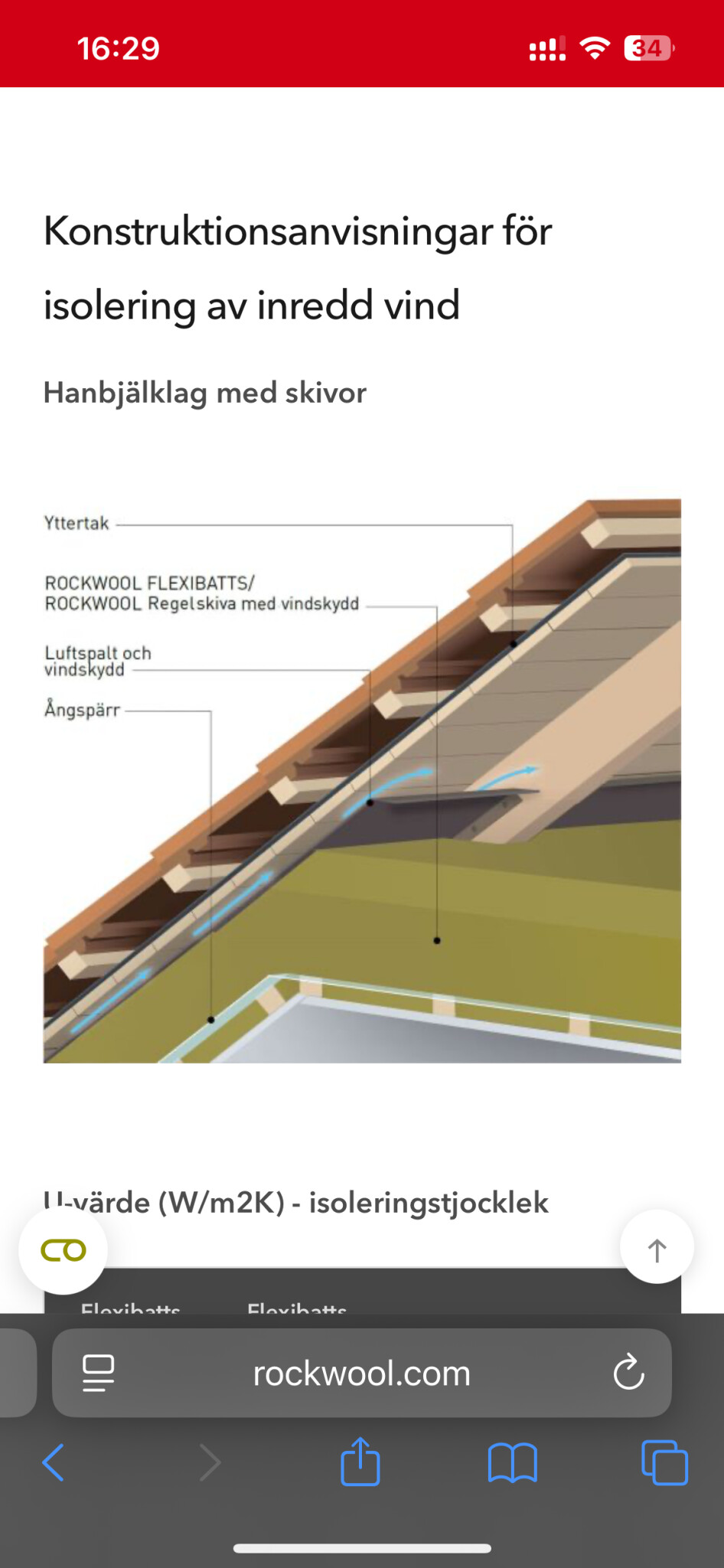
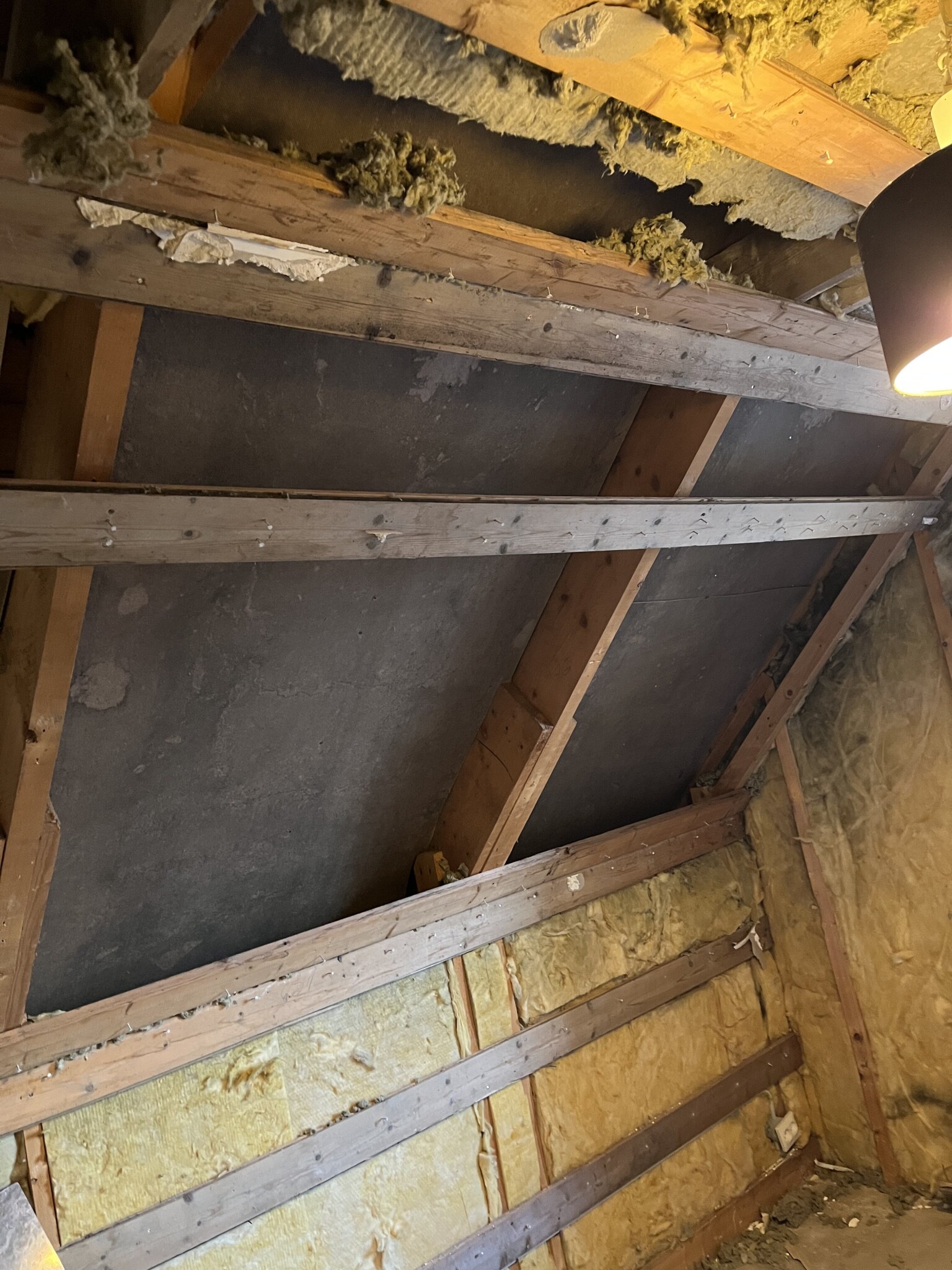
need tips to move forward. I have torn down all the plasterboard walls in one of the upstairs rooms to create an air gap between the insulation and the roof sheathing. I have set ventilation 30 mm with masonite, insulation 175, vapor barrier/vapor retarder, 45x45 studs horizontally 45 insulation. Would it work to do it this way?
Should I choose a vapor retarder or a vapor barrier?
I have natural ventilation in the house. I'm considering if it's enough to install fresh air ventilation in all rooms, is that sufficient?
Should I choose a vapor retarder or a vapor barrier?
I have natural ventilation in the house. I'm considering if it's enough to install fresh air ventilation in all rooms, is that sufficient?
Oh dear. It was bold to tear down before winter without knowing how you will build up. Do you know why? It may help with the tips from here.
Will there be more insulation than before? Is the room (rooms, the entire upper floor?) going to change function? Wet room with moisture load and sealing layer? Will you continue with natural ventilation? In practice, it is usually one bathroom fan per toilet and a kitchen fan. Then you typically have supply air vents, at least in the bedrooms. If you increase the insulation in the sloped ceiling, try to match the same amount in the knee wall and floor as well.
Will there be more insulation than before? Is the room (rooms, the entire upper floor?) going to change function? Wet room with moisture load and sealing layer? Will you continue with natural ventilation? In practice, it is usually one bathroom fan per toilet and a kitchen fan. Then you typically have supply air vents, at least in the bedrooms. If you increase the insulation in the sloped ceiling, try to match the same amount in the knee wall and floor as well.
All insulation is of course back in place after I arranged a ventilation gap.Karrock said:
Oh dear. That was bold to demolish before winter without knowing how you will build up. Do you know why? That might help with tips from here.
Will there be more insulation than before? Will the room (rooms, the entire upper floor?) change function? Wet rooms with moisture load and waterproofing? Will you continue with natural draft? Typically, there is a bathroom fan for each toilet and a kitchen fan. Then you usually have air supply vents at least in the bedrooms. If you increase the insulation in the slanted ceiling, try to match the same amount on the catwalk wall and floor as well.
I just want tips regarding vapor barrier/vapor check before I rebuild with OSB and gypsum.
The plan is to add 45mm of insulation after the barrier/check.
I am stuck on what is best suited. I have ventilation in the eaves and gable vents on both sides up near the ridge.
Regarding ventilation, currently there are no fresh air vents in the room. The room is and will remain a small bedroom.
There is a bathroom fan in the bathroom on the 1st floor, it will be installed in the toilet on the upper floor and in the laundry room in the basement. Of course, there is also a kitchen fan.
If you do all the rooms upstairs and are careful with the tape, plastic/vapor barrier should be the best option. Otherwise, I think a vapor retarder would suit the house better. This bedroom can definitely have a vent slit in the window or one on the wall. Sound-dampened ones from fresh are quite nifty, I think.
All the rooms on the upper floor will be done, but not simultaneously. Therefore, I am considering if one can do room by room with a vapor barrier and then "wrap" the whole room with the barrier. I know that you should ideally wrap the entire upper floor before building the rooms, but that is not possible for us, so we are taking it room by room.If you are doing all the rooms on the upper floor and are careful with the tape, plastic/vapor barrier should be the best option. Otherwise, I think vapor brake suits the house better. This bedroom can well have a vent valve in the window or one on the wall. Soundproofed ones from Fresh are quite nice, I think.
Click here to reply