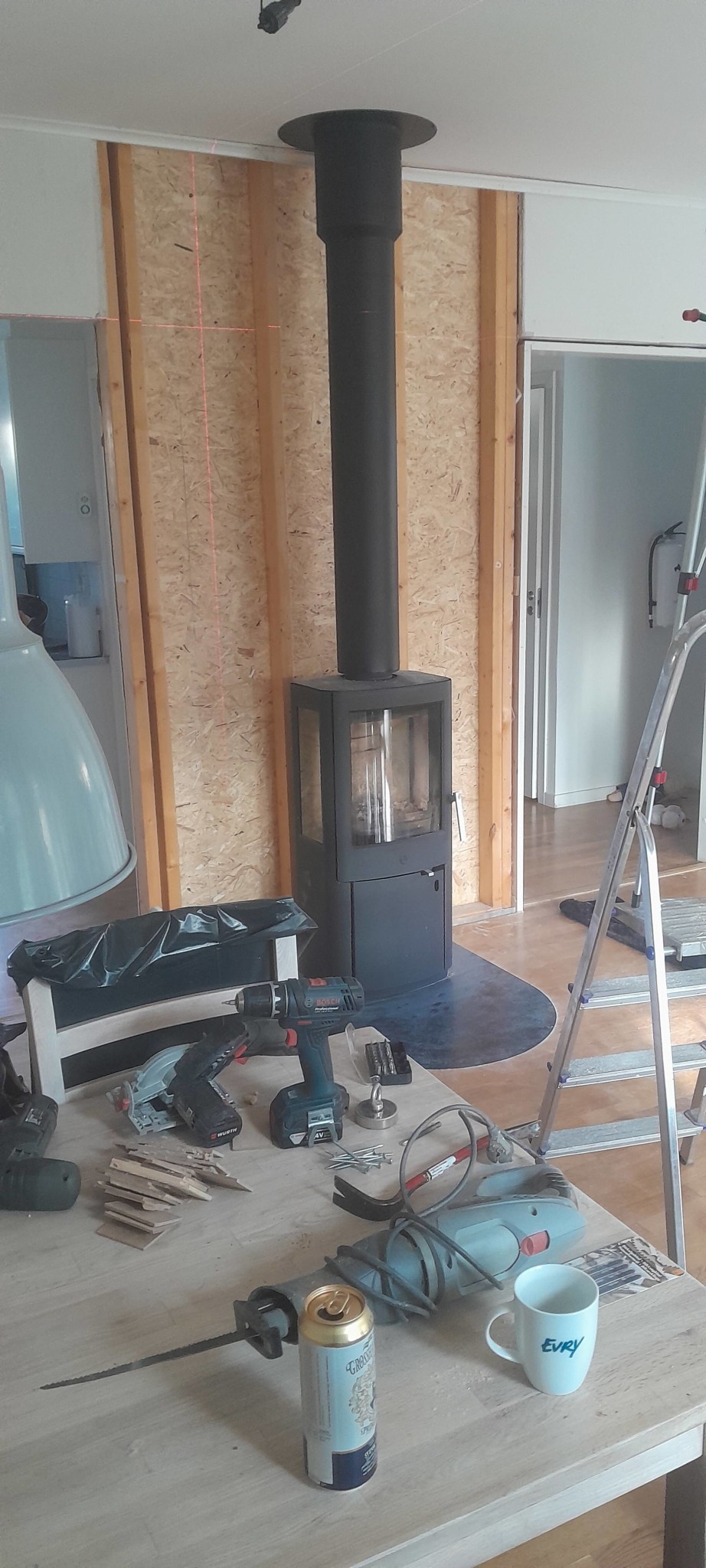
According to the man's friend, the carpenter, we can open 30cm on each side of this load-bearing small wall and reinforce with double studs on the sides. Does anyone know if this is correct?
Isn't it possible to have a single thread for all your stove and wall behind the stove-related questions? That way, everything can be addressed there. There's no need for a new thread for each specific construction element involved. If you have a carpenter who has already looked at it all, I don't really understand what more it could add here since it doesn't sound completely off with what he's saying anyway…
If you already have a carpenter who has looked at it all, I don't quite understand what this will add here since it doesn't sound completely crazy what he is saying…
Carpenters are not specialists when it comes to load-bearing walls; it's a structural engineer who should be involved before making a building notification to the municipality about modifications to load-bearing structures.
Carpenters are not specialists when it comes to load-bearing walls; a structural engineer should be involved before making a building application for alterations in load-bearing structures to the municipality.
True. Certainly more specialized than the answers generated by 5 different threads here... But we don't know if the carpenter in question also has structural engineering competence, so generally, you're probably right but in this case, you don't know and can only assume.
True. Certainly more specialists than the responses generated by 5 different threads here… But we don't know if the carpenter in question also has structural engineering competence, so generally you're right, but in this case, you don't know and can only assume.
Answers to questions about load-bearing walls currently rarely receive knowledgeable replies, so when I see one, I usually recommend hiring a structural engineer instead.
Structural engineers typically don't work as carpenters due to the salary structure, but it can certainly occur, though it is likely uncommon. There are several threads where people have relied on what carpenters have said and done with load-bearing walls, which has ended in major problems requiring everything to be redone.
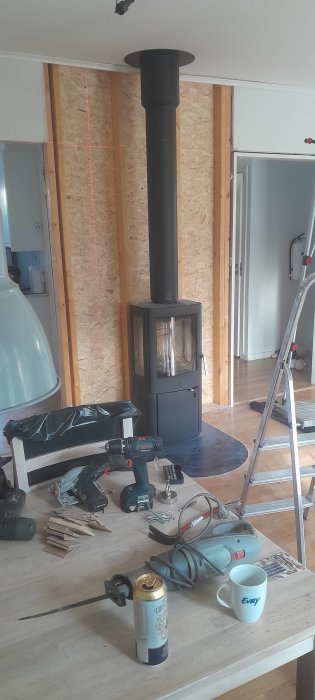
What makes you think a beam is needed based on what's in the picture? If the rafters are on the outside, I don't understand why it should be necessary.
Load-bearing walls carry loads, and over (door) openings, you typically need a beam to distribute the burden above out to the sides so that the top of the frame isn't overloaded. Over a regular door, it's not much of a beam, e.g., 70x70, but the longer the opening, the more substantial beam is needed.
In not too old houses, the rafters typically run across the load-bearing central wall.
Load-bearing walls carry loads and over (door) openings, you usually need a beam to distribute the above load to the sides so that the upper part of the frame is not overloaded. Over a standard door, it's not much of a beam, e.g., 70x70, but the longer the opening, the stronger the beam needed.
In not-too-old houses, the roof trusses normally lie across the load-bearing central wall.
But there's nothing in the picture that indicates a roof truss is above the opening in this case. It's just a guess, and people here seem to think all craftsmen are idiots and can't assess a construction.
But there's nothing in the picture that indicates a truss is above the opening in this case. It's just a guess and people here seem to think all craftsmen are idiots and can't assess a construction.
It's the entire load-bearing wall that takes the load from the roof, the floor above, etc. The load is distributed throughout the entire wall. It's not about point loads just under the trusses. In this case, we don't even know if there's a floor above or not, so it seems you're guessing that there isn't an upper floor since you're constantly talking about trusses.
There are certainly craftsmen who understand house construction, structural integrity, etc., but there are also craftsmen who don't at all and do it completely wrong. Neither you nor I know which category TS's carpenter belongs to.
The entire load-bearing wall supports the load from the roof, upper floors, etc. The load is distributed throughout the whole wall. It is not a matter of point loads just under the roof trusses. In this case, we don't even know if there is a floor above or not, so it seems like you are assuming there is no upper floor since you keep talking about roof trusses.
There are certainly craftsmen who understand house construction, strength of materials, etc., but there are also craftsmen who do not and make mistakes. Neither you nor I know which category TS's carpenter falls into.
But now you are really rambling. Since there is no standing top plate or beam in the wall, it is the vertical studs that carry the load. The studs and other elements only prevent the studs from moving sideways and thus buckling.
Click here to reply
Vi vill skicka notiser för ämnen du bevakar och händelser som berör dig.



BirgitS said: