Have been in contact with a carpentry firm but have now given up after at least 10 contacts without results. So I'm trying here.
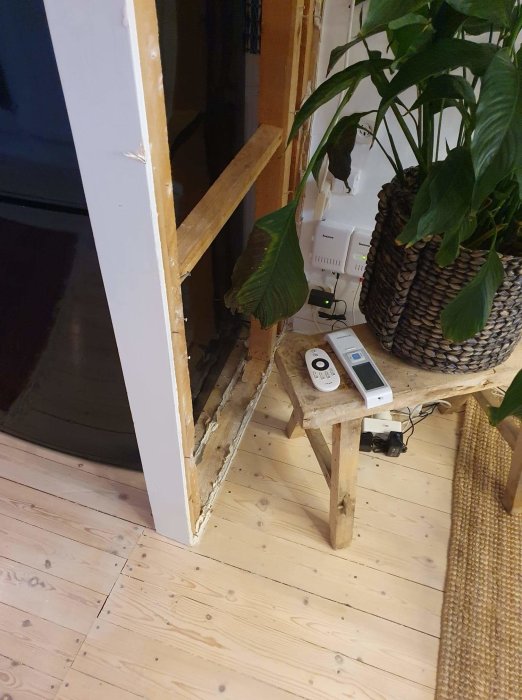
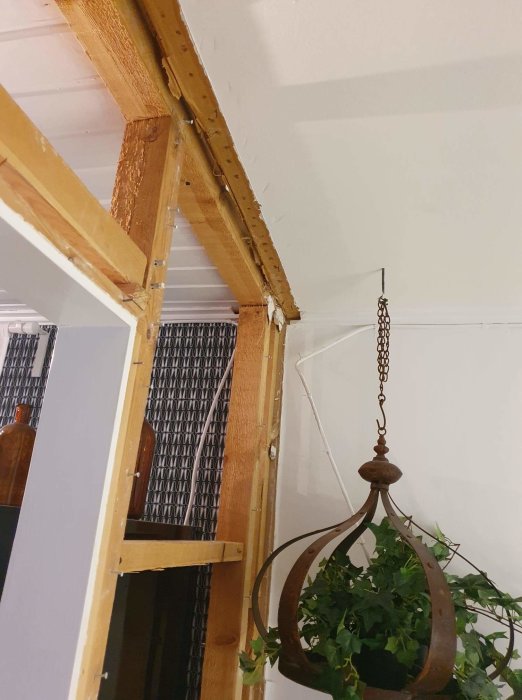
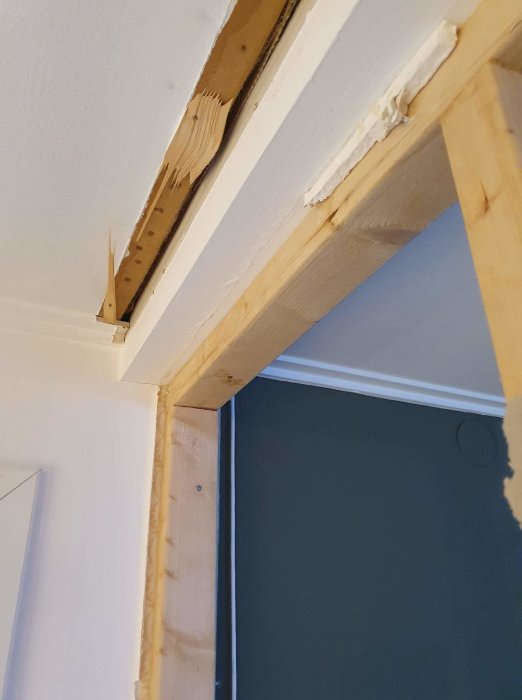
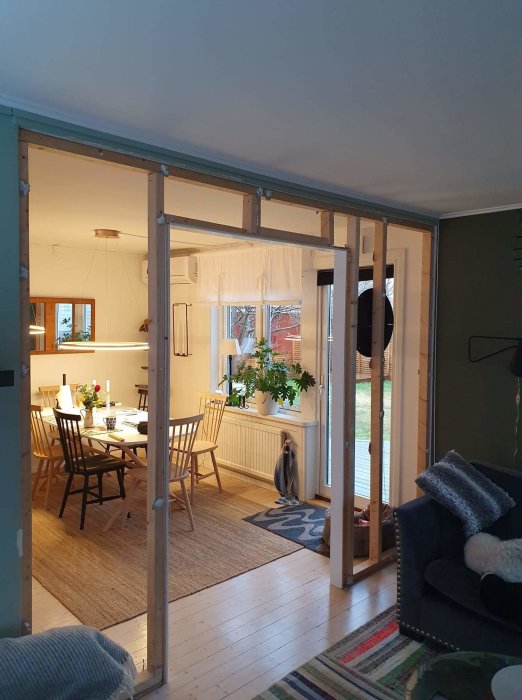
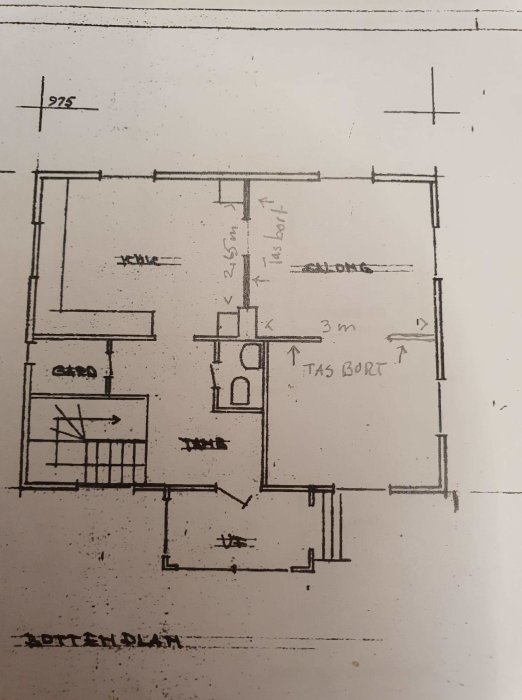
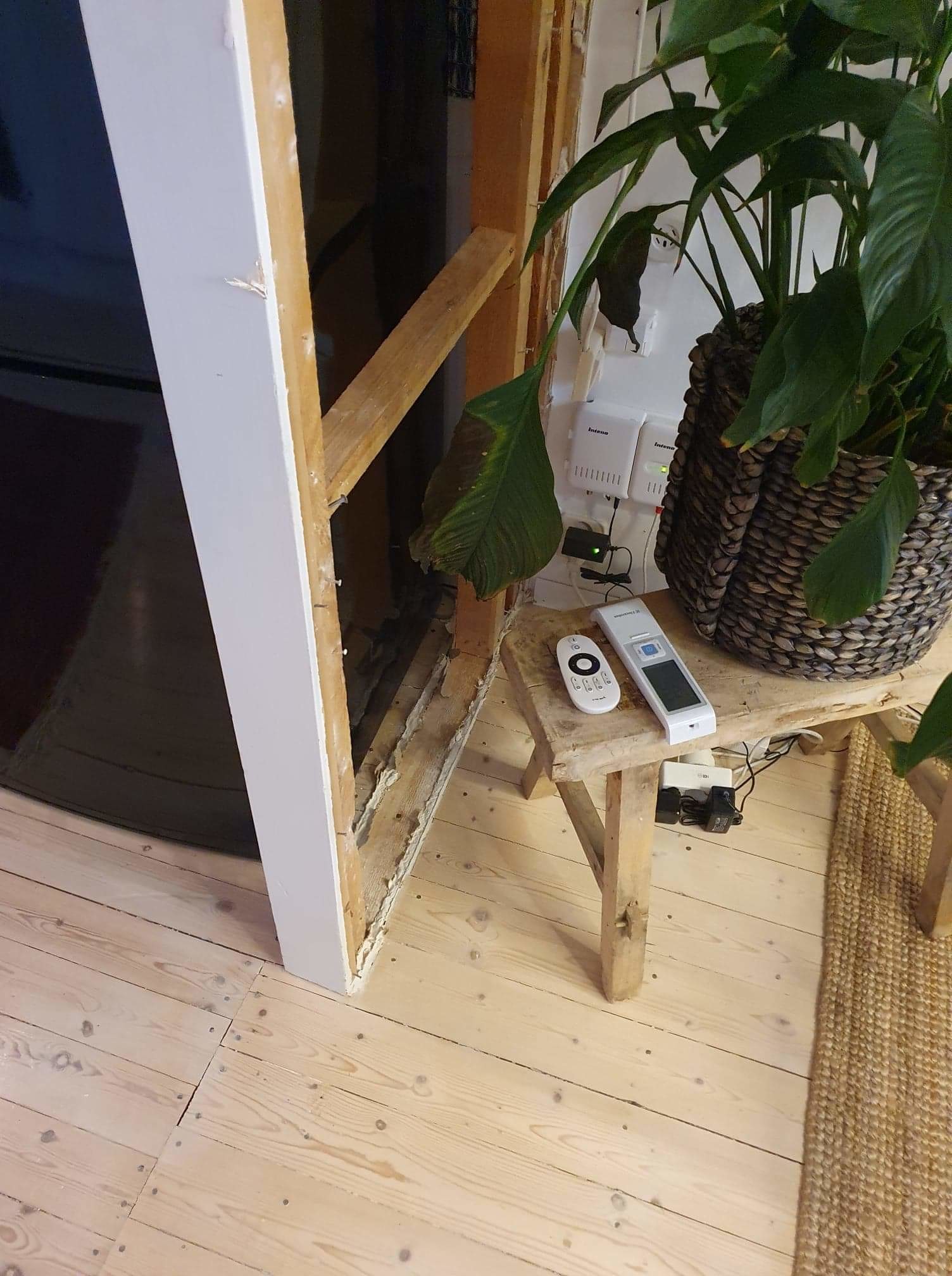
I have interior walls between the kitchen and dining area, and also between the dining area and living room in a house from 1927. Now we're planning to make some changes and are thinking of removing these walls. The wall between the dining room and the living room already has a beam as it was removed back in the 1960s. But 10 years ago, a bathroom was made on the upper floor with a self-leveling floor. Probably a small wall was put up again to get some support. I have removed the drywall on it and there is absolutely no pressure on the few studs that are now standing there. But I plan to place a laminated beam under the existing one to ensure good support for the bathroom above. The beam that is there now is 120 mm high with a width of 170 mm. My question is whether a beam measuring 225 x 90 would be sufficient if placed under the one already in place? The length of the beam will be 3 m.
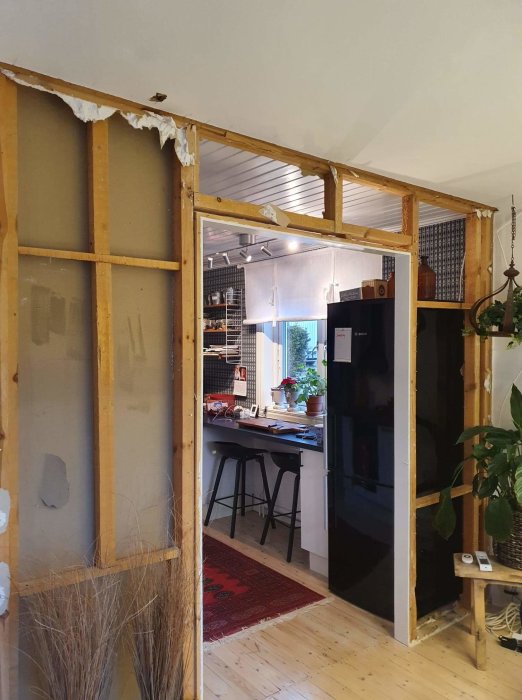
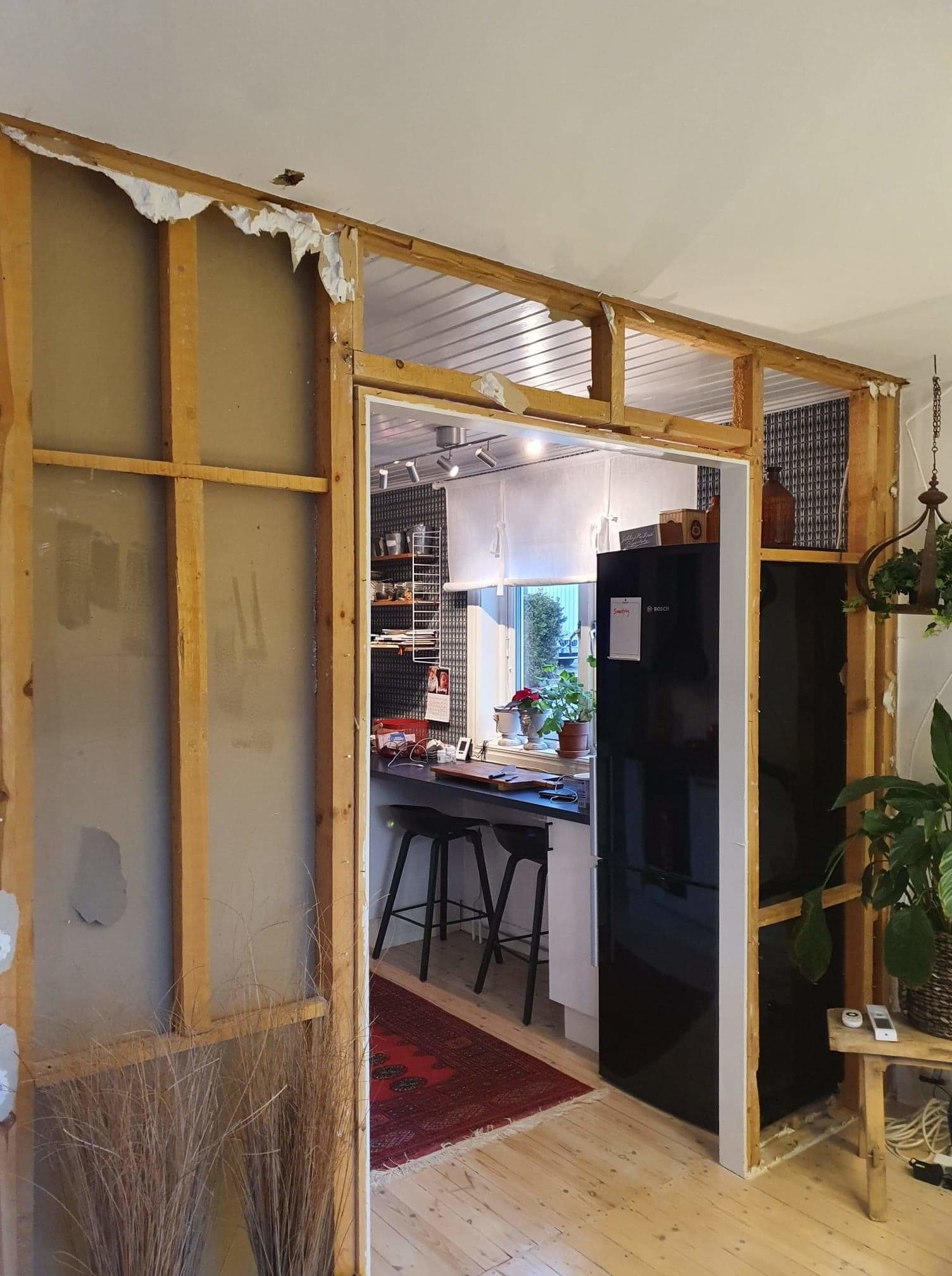
Between the dining room and the kitchen, we want to open up but are unsure if we need to place a beam there as well? There it will be an opening of 2.65 m. Sending some pictures and hope there is someone who would like to give us some information about the problem.
Thank you in advance.
Håkan
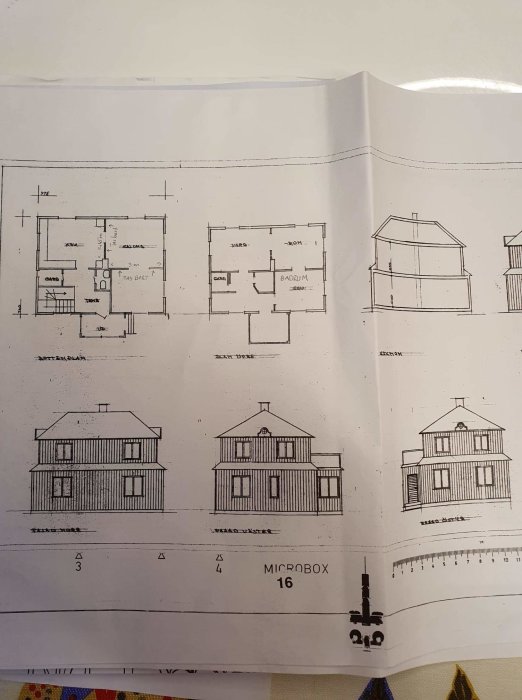
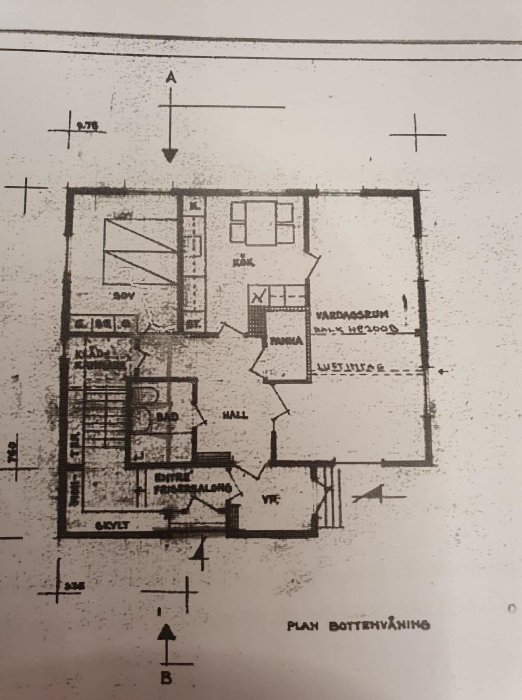
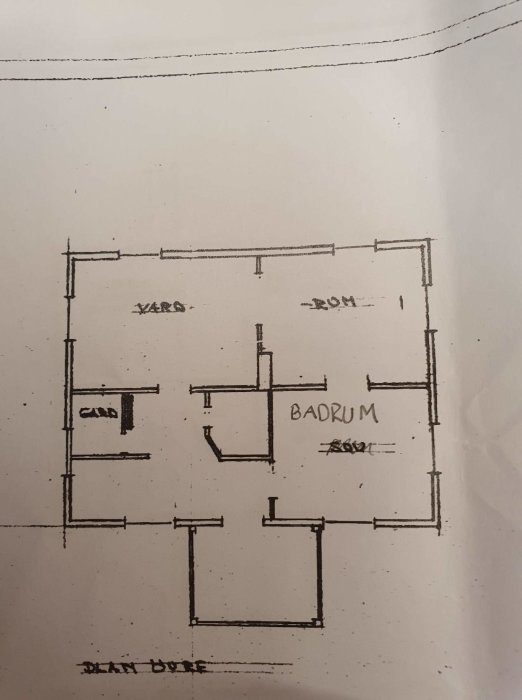
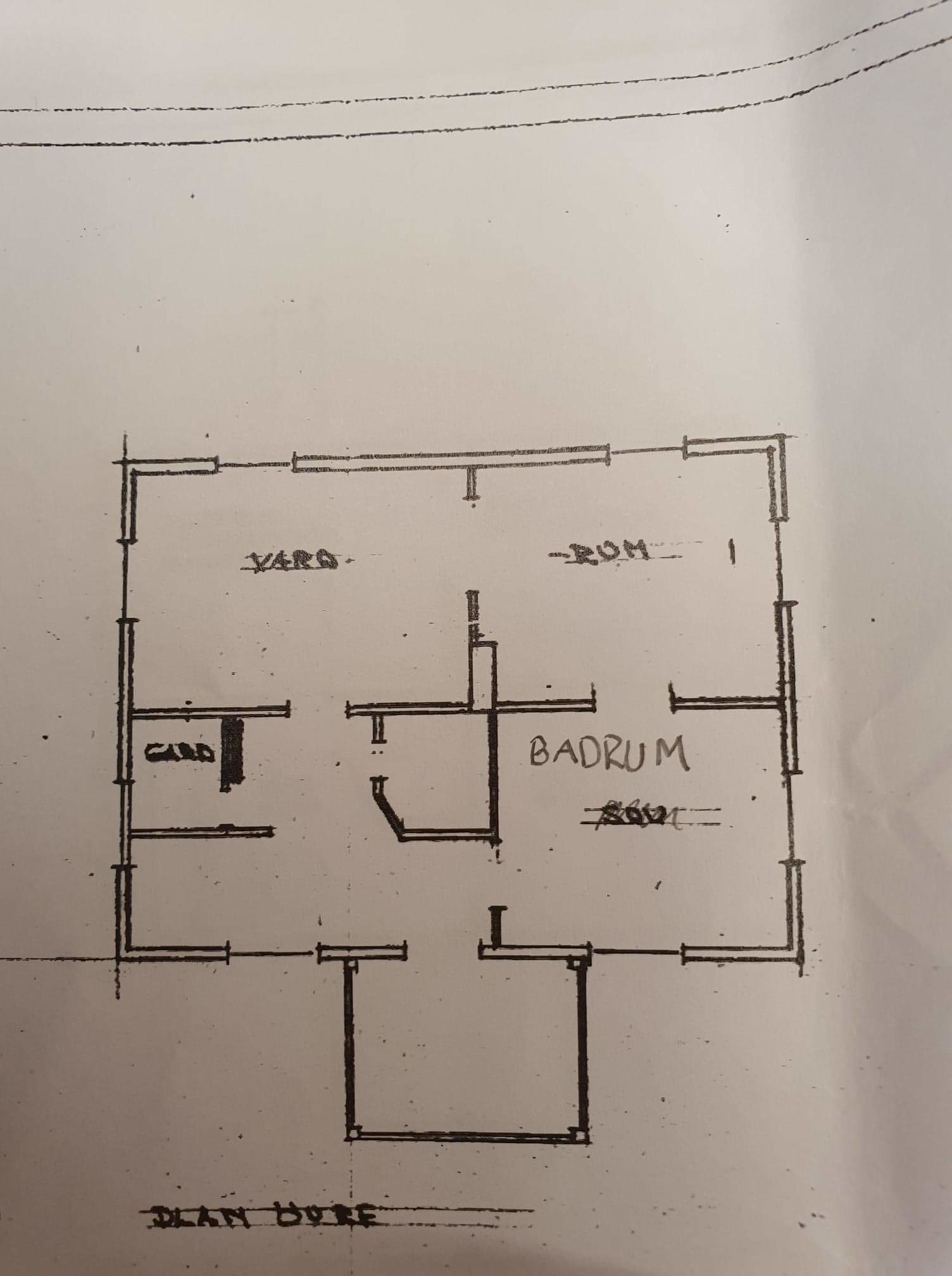
Partition walls are never original in houses from 1927. If you read the drawings, you'll see that the old plank walls were replaced during a renovation with walls in new positions. The house has an elegant and original design as the upper floor is slightly set back in relation to the ground floor on all sides. How this has been solved structurally, especially near the gables, is not entirely clear. Therefore, all walls should be considered as load-bearing for the time being. Above the wall between the living room and dining room, there is a steel beam, an HEB 200. It is quite substantial. If it is still there, hardly any laminated beam is needed.
Thank you for the response. Unfortunately, I don't think it is a steel beam anymore. If there is one, it is hidden up in the ceiling. Would one then have placed a wooden beam of 170 x 120 under it? Because that's the only thing you see today.
Regards
Håkan
Difficult to assess. Placing a 170x120 beam where 120 is the height suggests a lack of knowledge about building construction. 170x120 corresponds to 45x187. Not much to go on in this context. I think you need to check if the steel beam is still there.
Couldn't resist checking right away. There is a beam inside the floor structure and then they have built it in. So then I don't need another beam on that wall? What size glulam beam do I need for the wall between the kitchen and dining room when there will be an opening of 2.65 m? The house is located in southern Värmland.
Regards, Håkan
If the opening under the steel beam has not been widened, you don't need to do anything. I don't think a glulam beam between the kitchen and dining room is needed. If you still want to install one, you can choose 90x180, which is the smallest standard dimension not produced by splitting. With a span of 2.65 m, it can handle a load of around 500 kg/m without bending too much.
If the opening under the steel beam hasn't been expanded, you don't need to do anything. I don't think a glulam beam is needed between the kitchen and dining room. If you still want to install one, you can choose 90x180, which is the smallest standard dimension not produced by splitting. With a span of 2.65 m, it can support a load of around 500 kg/m without bending too much.
If the opening under the steel beam hasn't been expanded, you don't need to do anything. I don't think a glulam beam is needed between the kitchen and dining room. If you still want to install one, you can choose 90x180, which is the smallest standard dimension not made by splitting. With a span of 2.65 m, it can handle a load of around 500 kg/m without bending too much.
Hello!
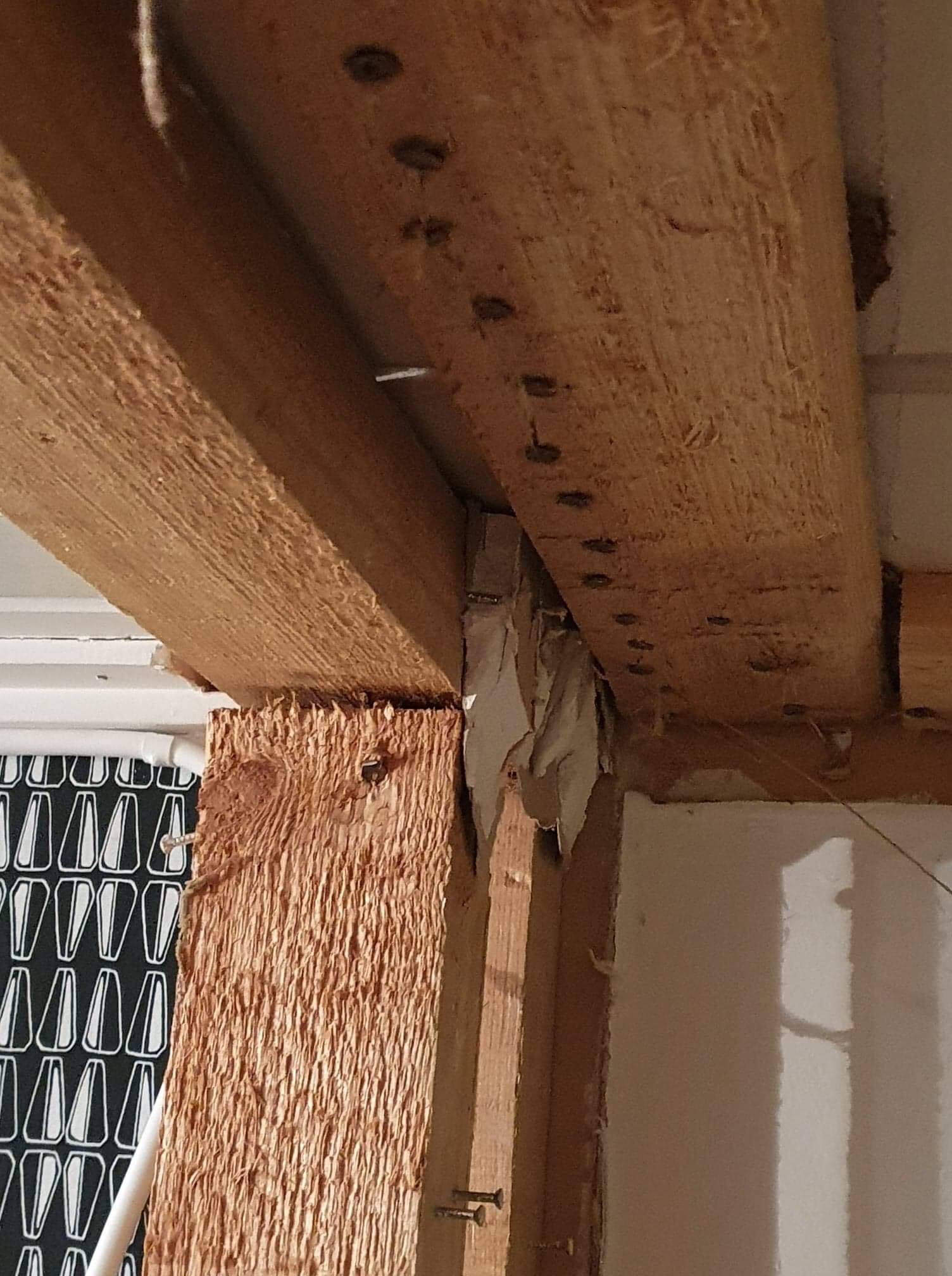
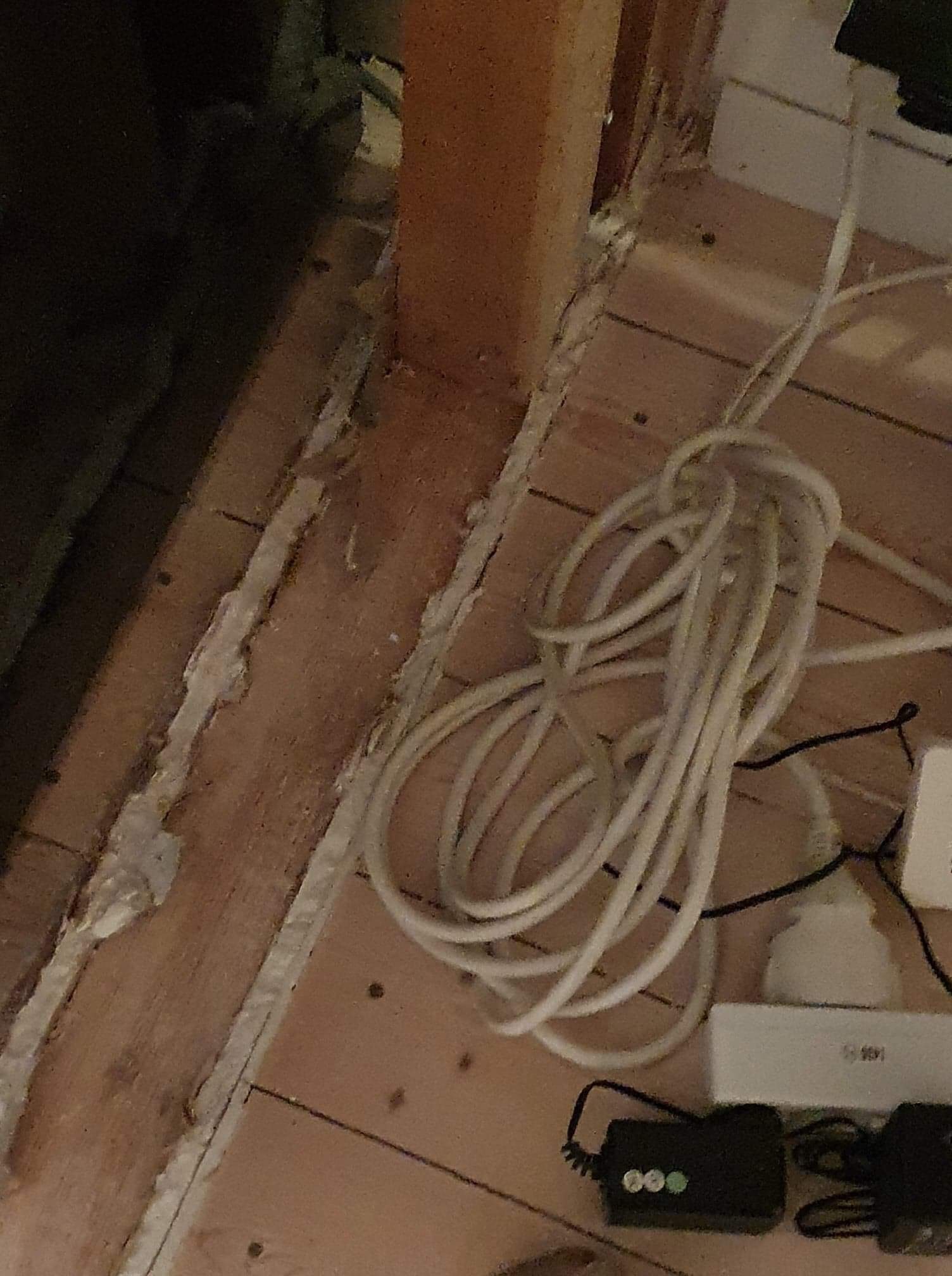
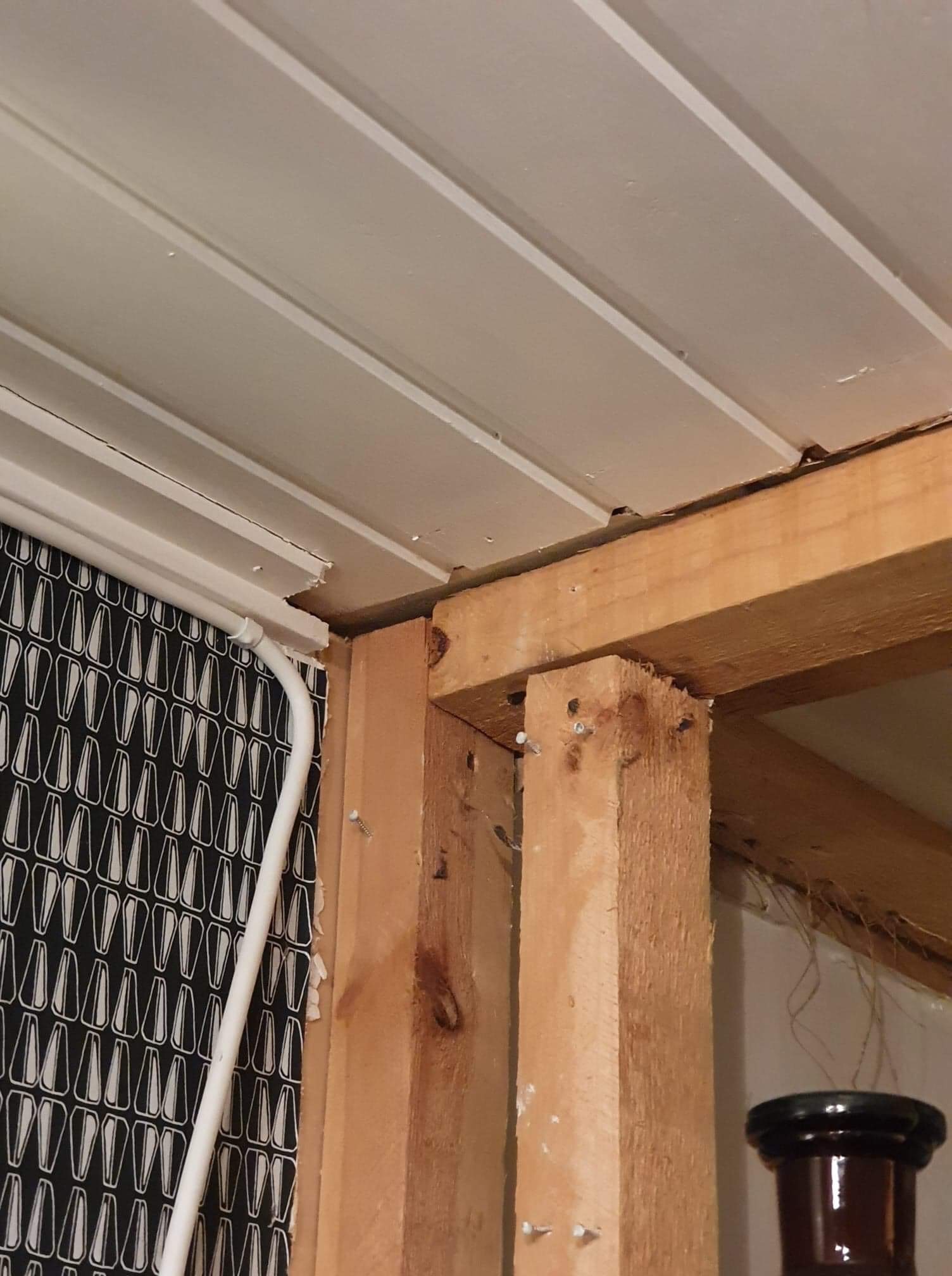
I'm about to work on this wall. You mentioned that I probably didn’t need a beam. I'm sending some pictures to see if you think it's okay without one? I would prefer to go without a glulam beam. Doesn't seem to be any significant pressure on the current studs.
Have a nice weekend!
Håkan Stålberg
It is a partition wall added afterwards in connection with a renovation. As it is constructed, it has never been able to handle significant loads, so it does not need to be replaced.