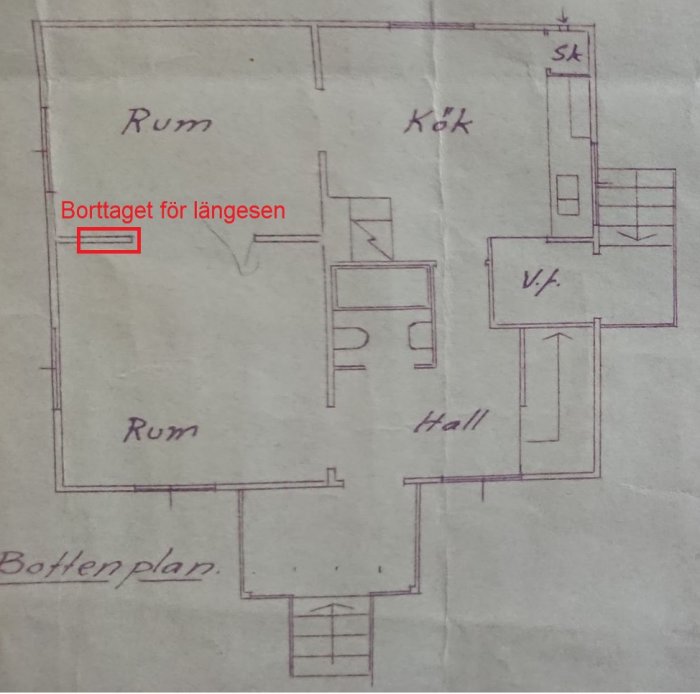
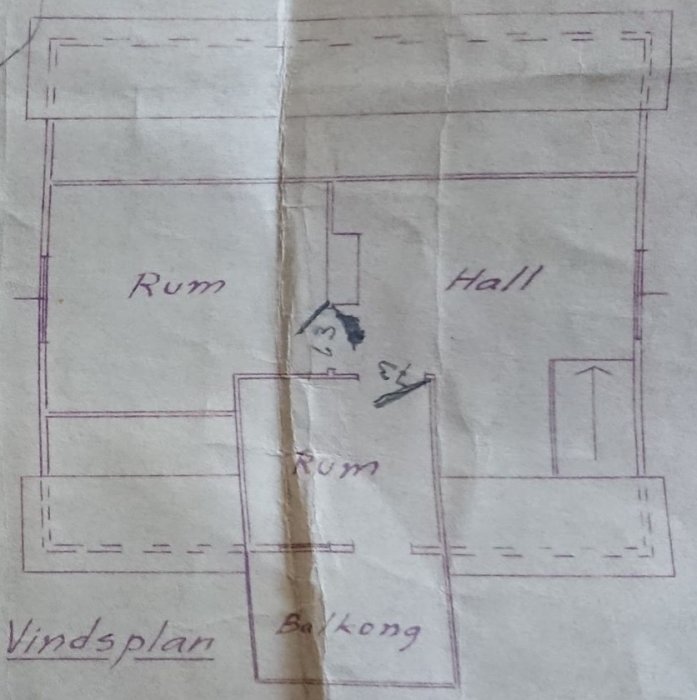
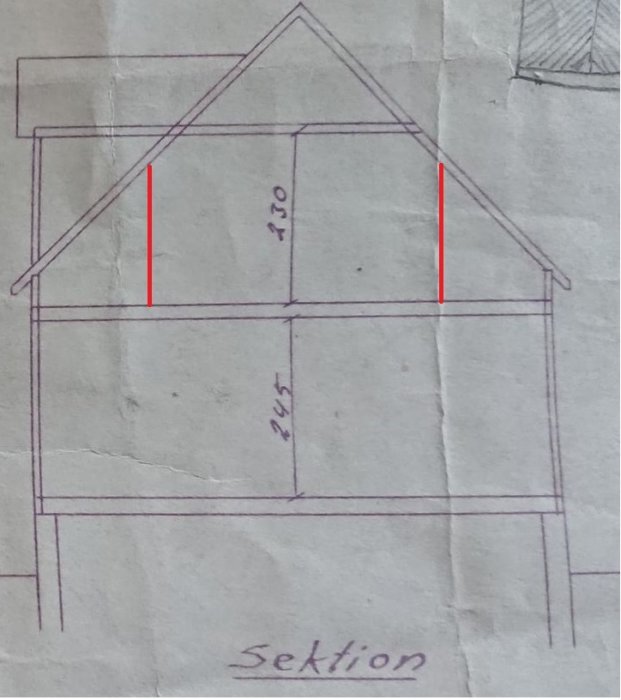
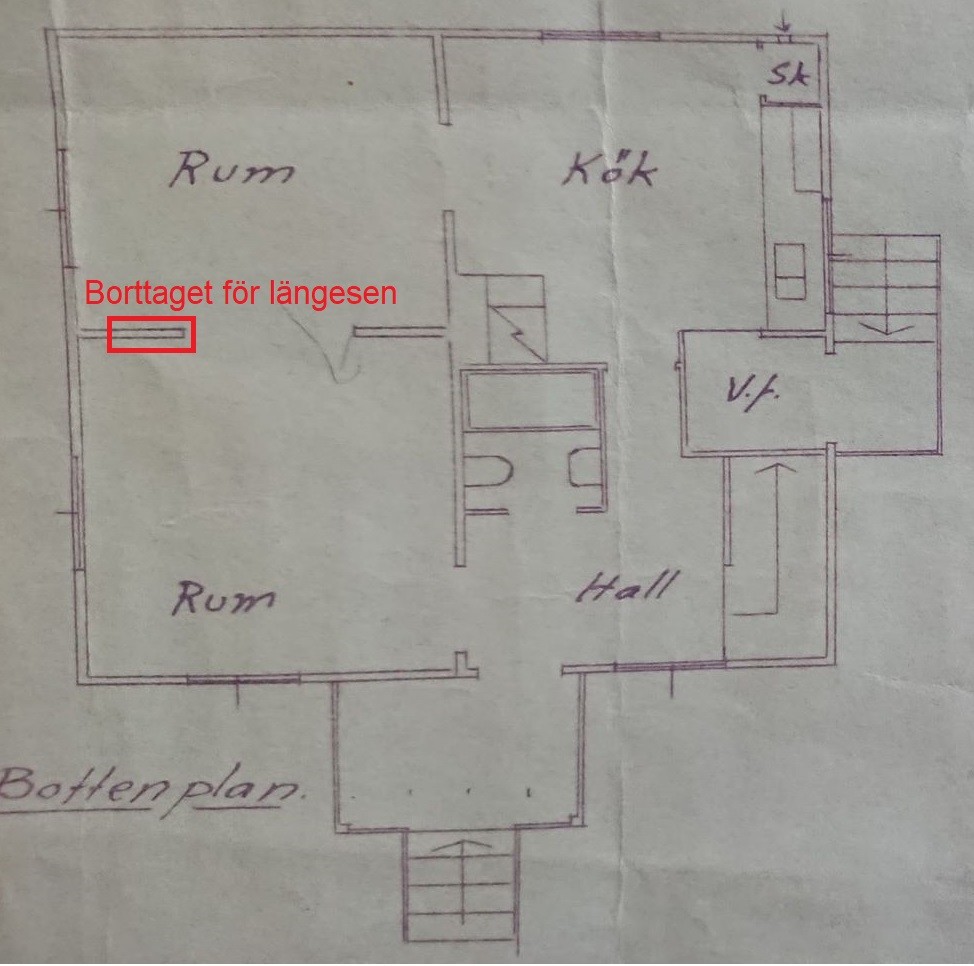
We have just bought a small house from 1939, approximately 6.5 x 7.5 m. I'm not sure which walls are load-bearing and about the solutions that seem to exist in the house.
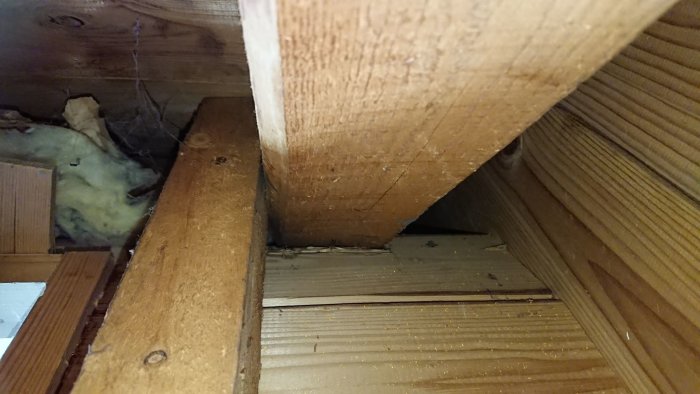
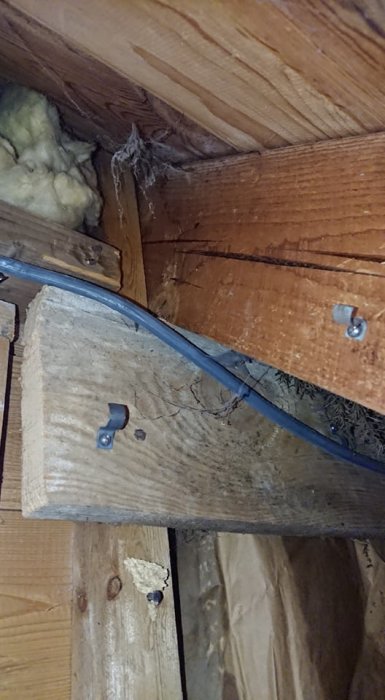
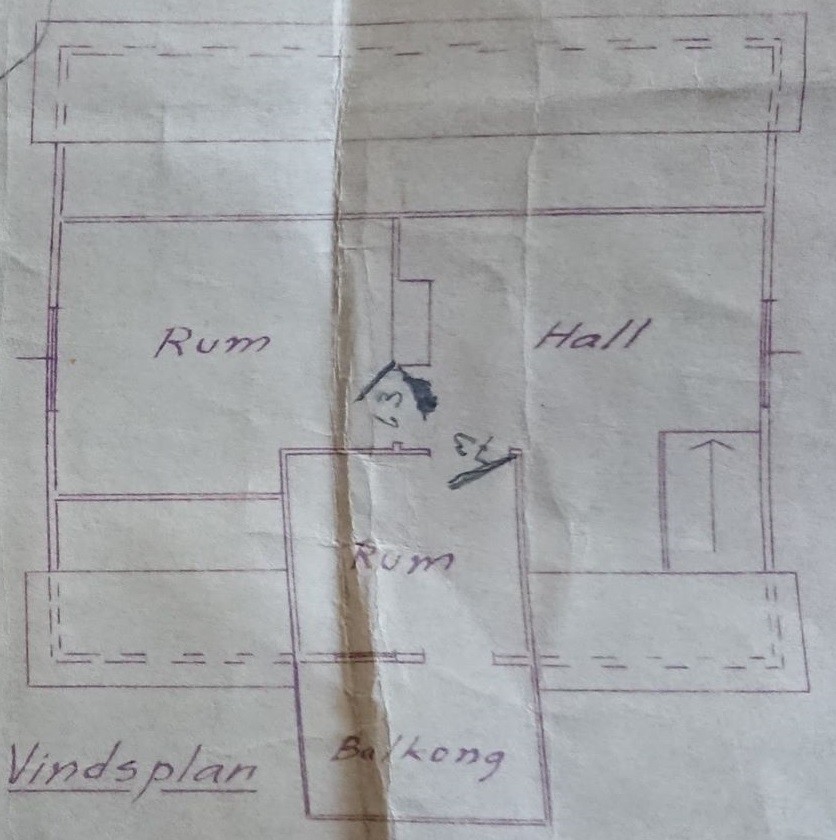
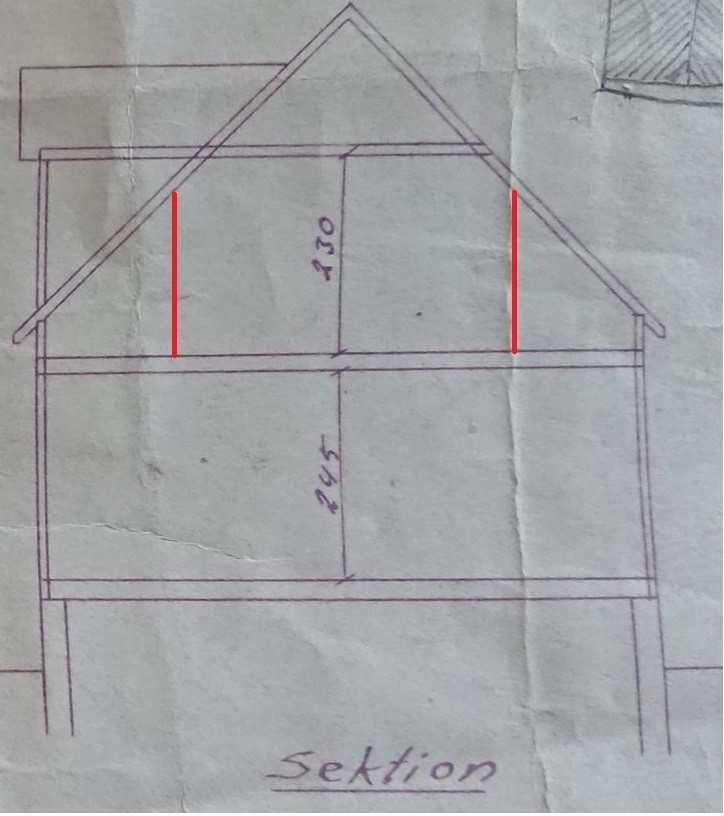
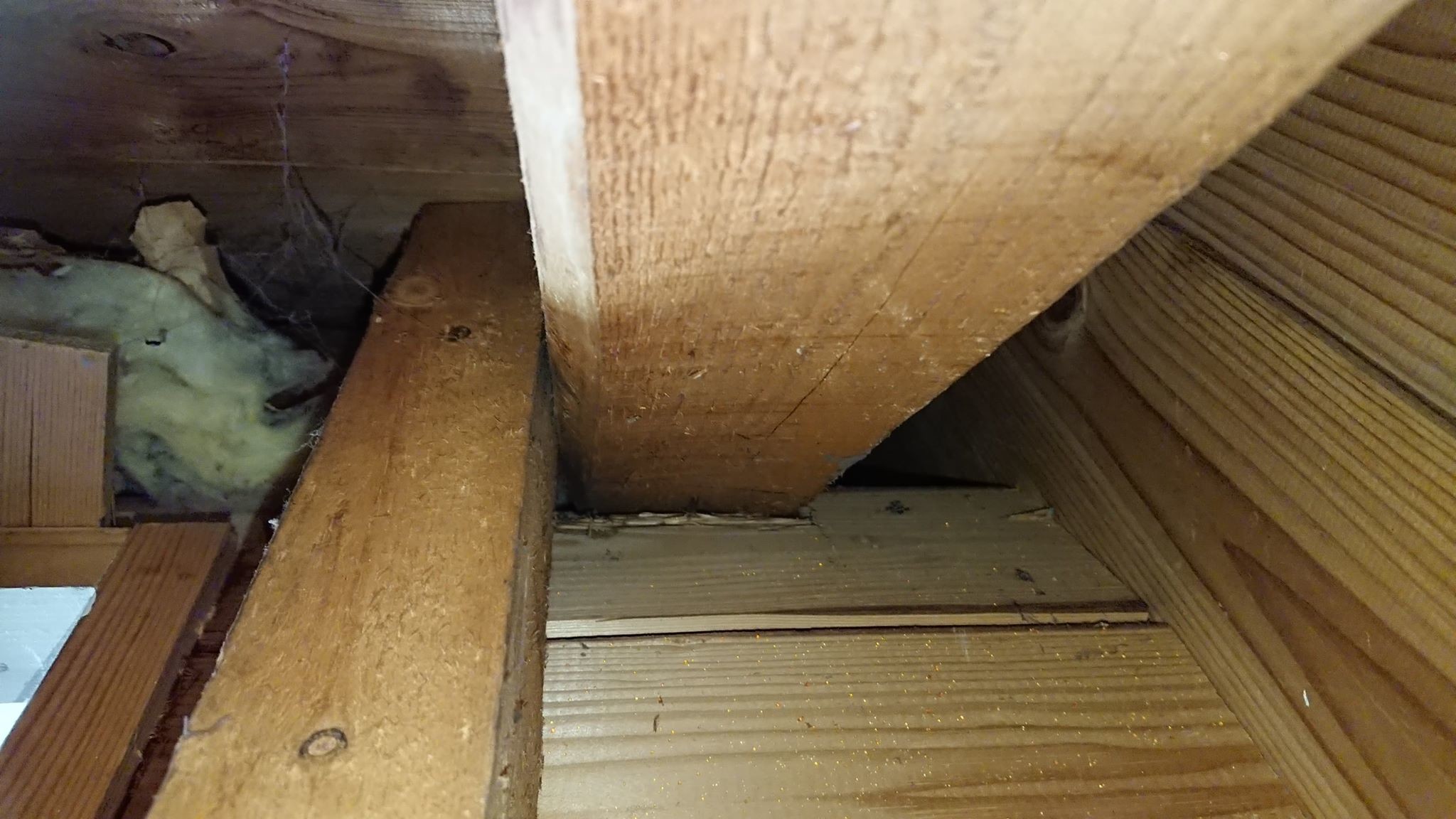
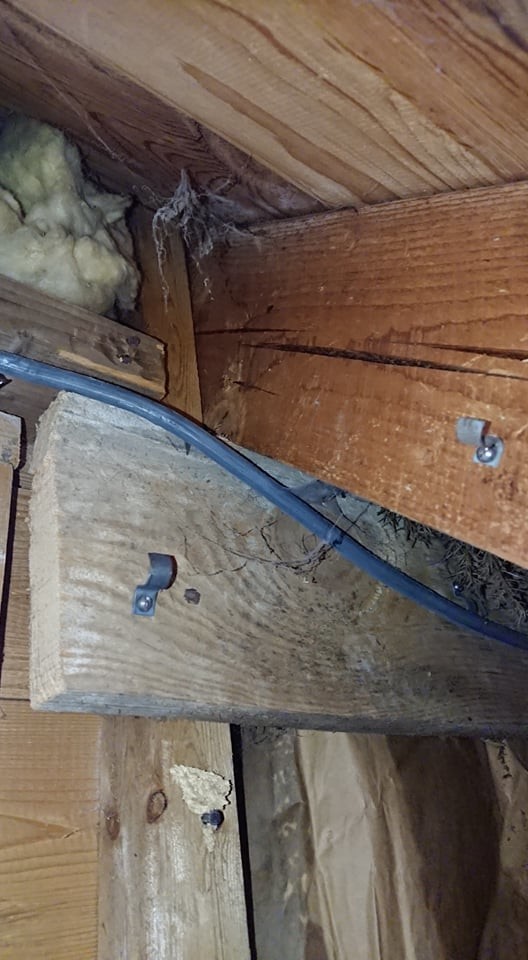
Especially, I'm wondering about the attic. We want to clear it out and renovate everything due to water damage and poor layout. We want to move the knee walls further out. But since there seem to be no roof trusses, I assume that the knee walls are part of a framework? But the studs really don’t appear to be constructed to carry the entire roof. However, there are tongue and groove planks in all the walls, which I understand can be load-bearing? These are the drawings we have; the municipality doesn't seem to have more. The pictures are from the attic.
There is a ridge-transverse wall on all floors, but when we had a carpenter from a large company at home who is going to build the bathroom, he was quite sure that this was not load-bearing on the ground floor and suggested that we remove part of it to get a larger bathroom, which we discarded because we don't want a smaller living room. But can a transverse wall support a dormer?
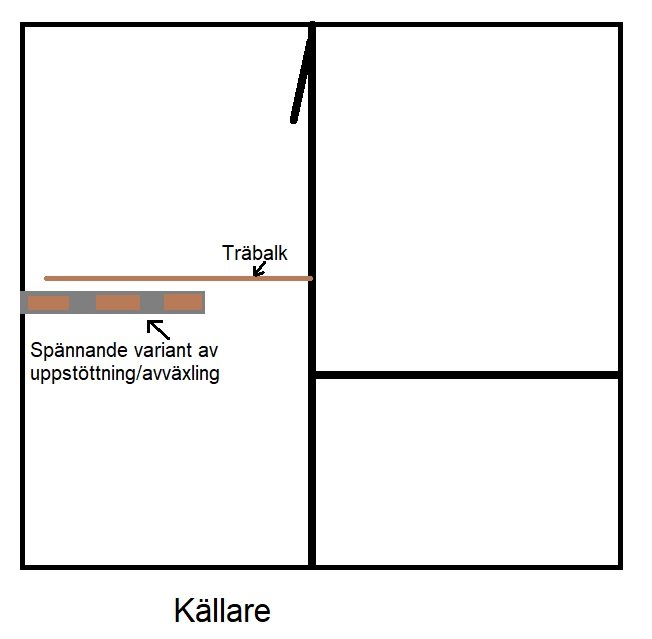
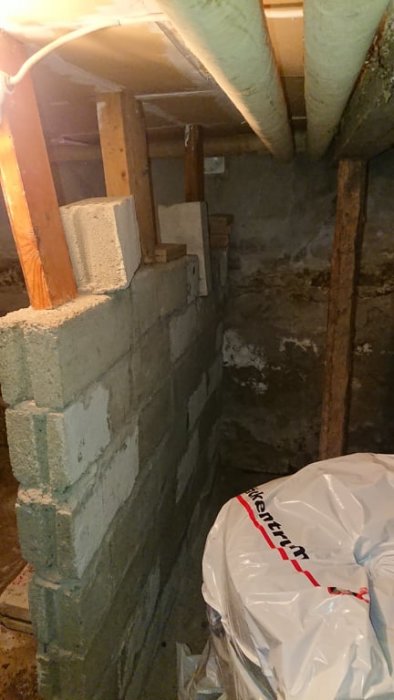
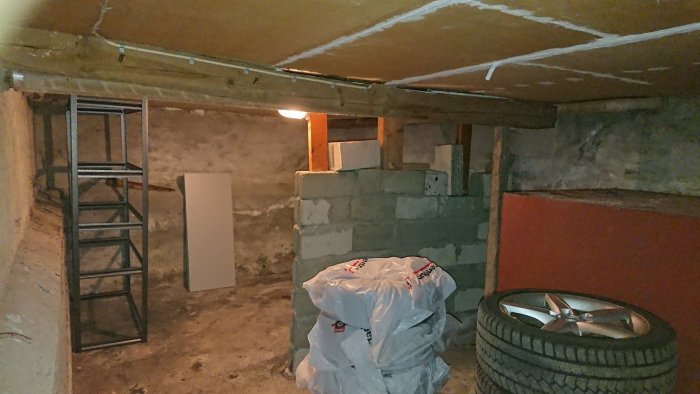
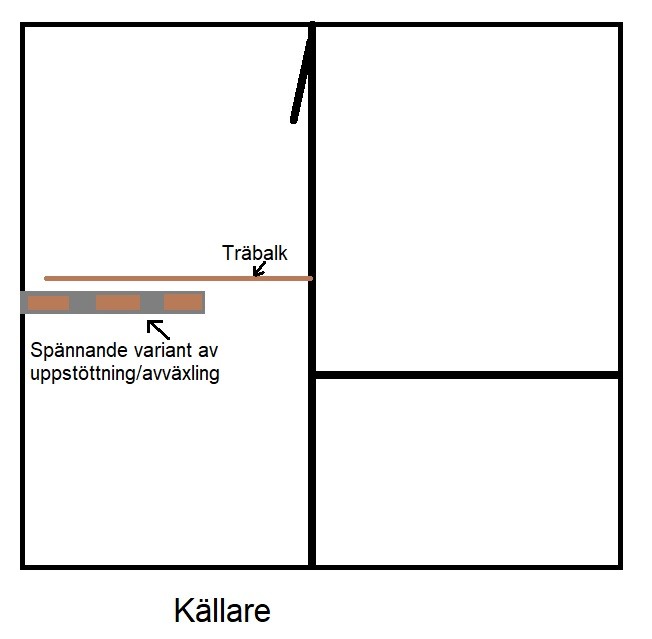
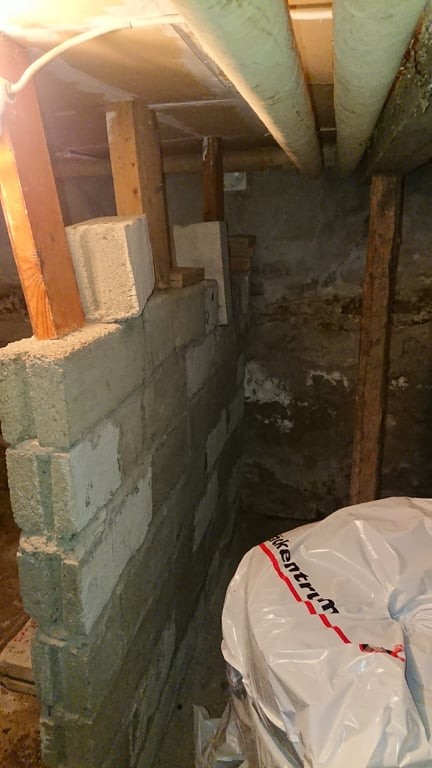
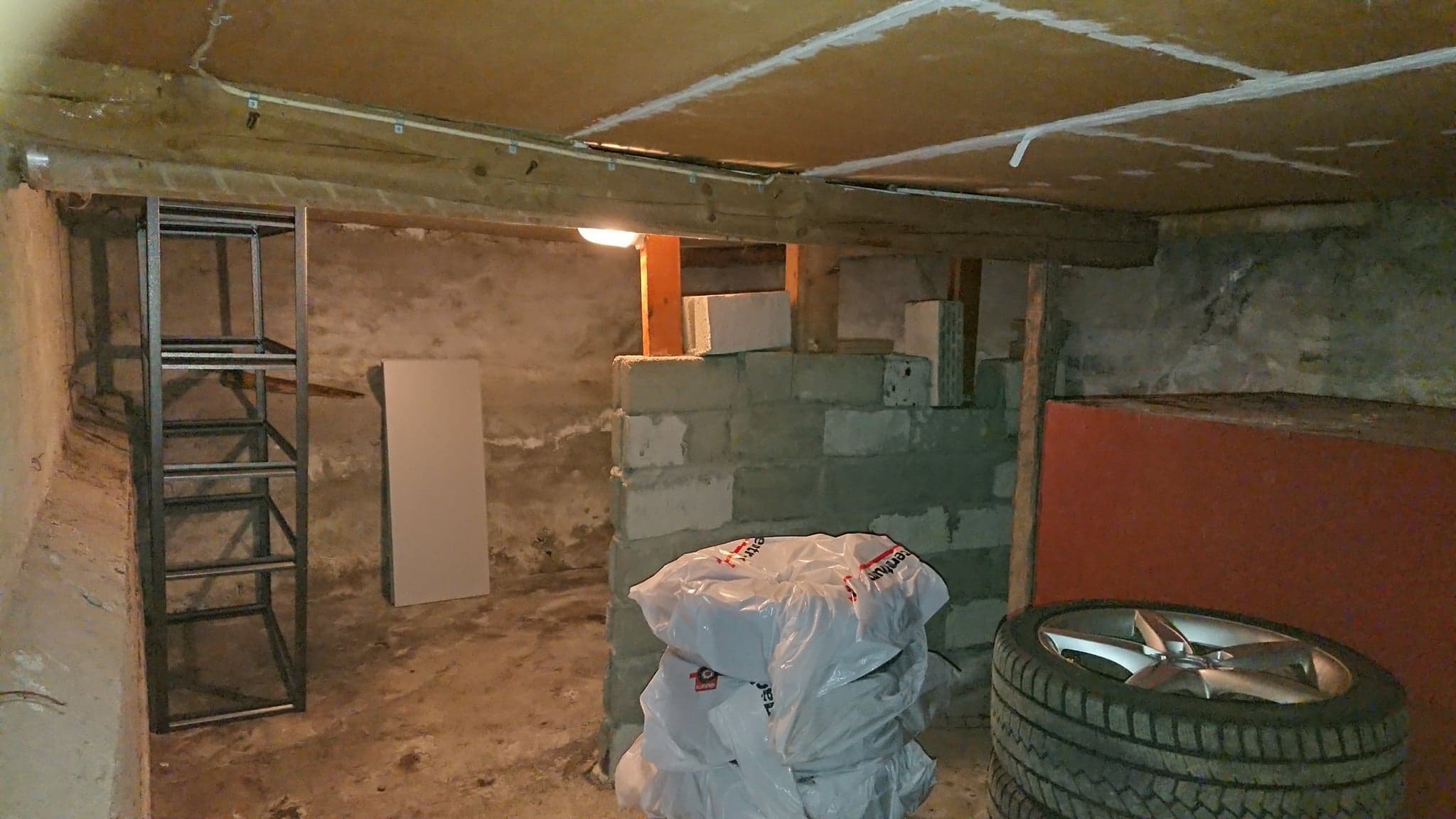
And what on earth has happened in the basement? Three carpenters and an inspector have seen this without reacting. We think it looks very strange.
So normally, the wall that runs parallel to the ridge is a heart wall. There's no such full wall anywhere here. In the basement, there is a wooden beam and something that looks very homemade. On the ground floor, part of the heart wall is removed, and there's probably a beam along the ceiling. So do we only have two beams supporting the entire house? The house is otherwise extremely robust.
Do you have any thoughts? I understand that a structural engineer can help us with this? We feel we need drawings of the entire house. Where can we find a structural engineer who can help us with this? We live in the countryside in a small area in southern Sweden. The nearest big city is Kristianstad (40 km).
Houses with plank frames are a bit tricky. All walls can be more or less load-bearing regardless of direction. Not all floor joists need to run in the same direction. To see the direction of the floor joists, you must look at the floorboards on the floor above (which are laid at a 90° angle). On the upper floor, no walls are load-bearing except possibly the knee wall. In the basement, a (poor) reinforcement has been made for unclear reasons. I think you can start by drawing up the house to scale. Get a laser measure and measure so that the wall thicknesses are also shown. If you are going to make major alterations to the load-bearing frame, you need help from a structural engineer, but first, you need to find out what is load-bearing.
Click here to reply
Vi vill skicka notiser för ämnen du bevakar och händelser som berör dig.