Hello! I'm trying to figure out this issue with load-bearing walls. I live in a two-story townhouse where the rafters in the attic appear to be of the self-supporting type. On the second floor, in the middle of the house, there is a fairly narrow (10cm lightweight concrete) partition wall running along the ridge and across the rafters.
What I'm wondering is whether it is load-bearing or just a partition wall. The ceiling is plastered, and it looks like the entire ceiling is plastered in one piece across the whole floor, meaning it doesn't end at the walls but is also plastered "above the wall."
In some places, there are also gaps between the wall and the ceiling, and I think this shouldn't be possible if there was a load on the wall. Also, how could they have plastered "above" the walls if these had been load-bearing?
Note that I'm not about to take down walls, just wanting to understand if I'm thinking correctly in theory.
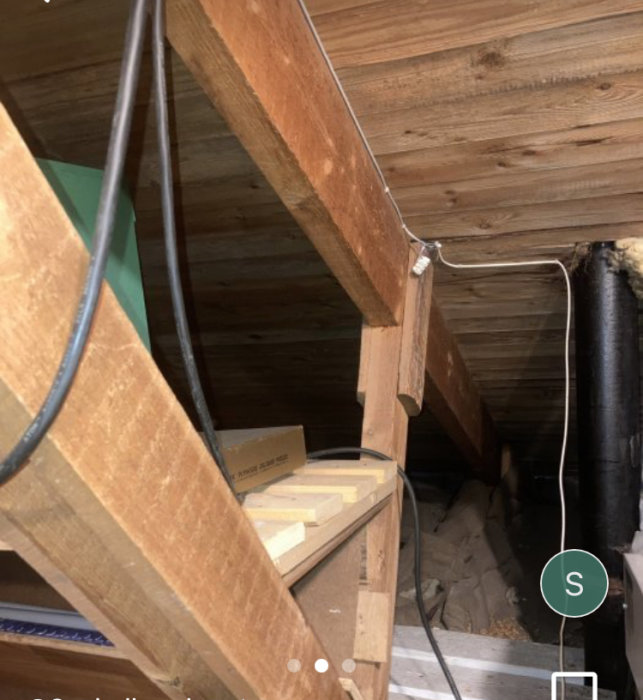
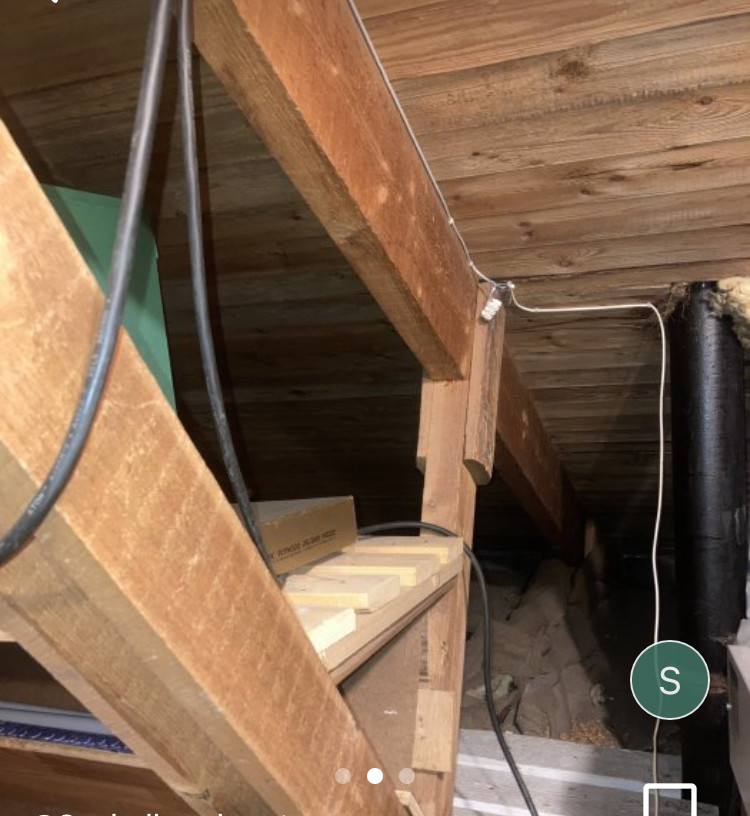
Sending a poor picture of the rafters
Unfortunately, I don't have section drawings
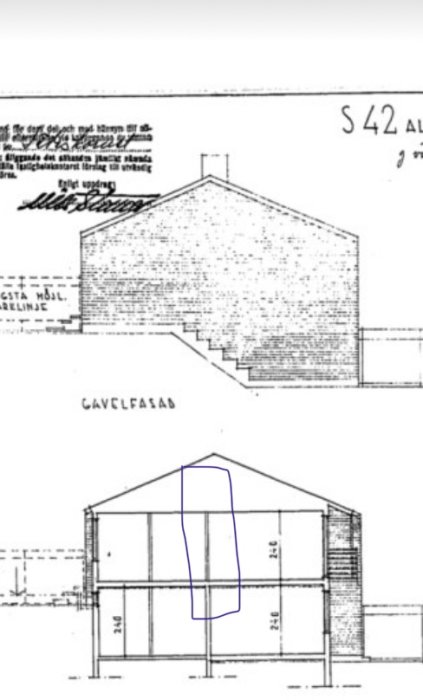
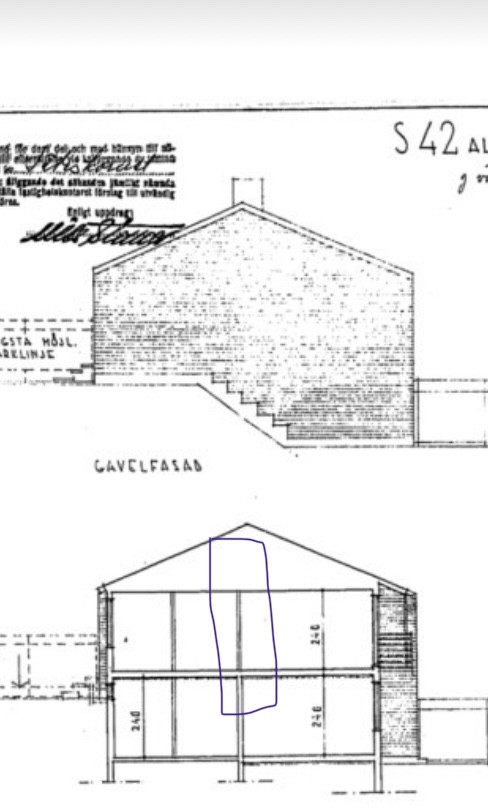
But here you can see the wall in question (only the wall on the upper floor)
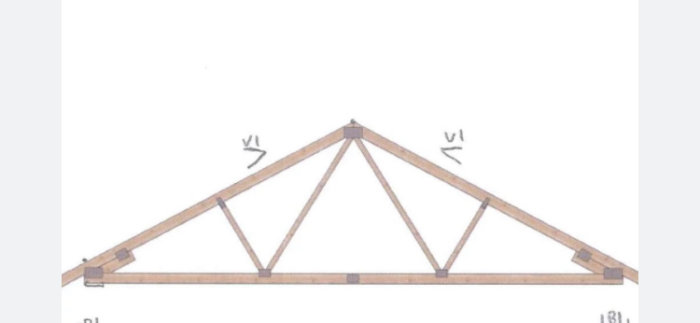
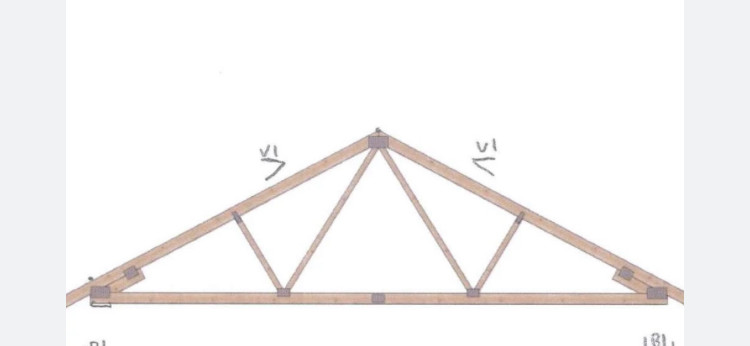
Undeniably difficult to see if the trusses look like W.
As you write, it is normal for trusses to be self-supporting and that no wall on the floor below the attic is load-bearing. However, this assumes that no additional load is added to the attic.
Well, they are truss rafters or they look like according to the borrowed image below.
So, in theory, no interior walls are load-bearing since the truss rests on the exterior walls? (The span is 7.7m between the exterior walls)
How does it work if you have a load (e.g., ventilation unit, about twenty moving boxes, strollers, and other stuff in the attic)? Do the interior walls help stabilize the construction, or is it negligible?
so in theory, no interior walls are load-bearing since the rafters rest on the exterior walls?
Yes, that's correct.
SSnabelhund said:
How does it work if you have loads (like an HVAC unit, a dozen moving boxes, strollers, and other stuff in the attic? Do the interior walls help stabilize the structure, or is it negligible?
I'm not an expert, just an enthusiastic amateur But if you start loading an attic more than what the rafters are designed for, I understand that this can cause movements in the framework, which in turn could lead to, for example, the floor settling and starting to load a wall below. But I could be wrong. Now what you're listing sounds like quite little compared to a thick layer of snow, for which the rafters should be dimensioned.
Your drawing shows that the span between the outer walls is about 8m. In this case, it can be a load-bearing wall. Remember that during construction, the structure carries only its own weight. Then there is the weight of the roofing material, wind load, snow load, etc.
Click here to reply
Vi vill skicka notiser för ämnen du bevakar och händelser som berör dig.



 But if you start loading an attic more than what the rafters are designed for, I understand that this can cause movements in the framework, which in turn could lead to, for example, the floor settling and starting to load a wall below. But I could be wrong. Now what you're listing sounds like quite little compared to a thick layer of snow, for which the rafters should be dimensioned.