
3,469 views ·
18 replies
3k views
18 replies
Load-bearing or non-load-bearing?

Hi,
I'm in the process of tearing down a wall where there have been two wardrobes. Now we are thinking of taking down the beams and putting up a fence by the stairs instead so that we can get more space for the kitchen.
Can anyone explain if this wall is load-bearing or not?
I am attaching a couple of pictures for further review.
Best regards, AWWE
I'm in the process of tearing down a wall where there have been two wardrobes. Now we are thinking of taking down the beams and putting up a fence by the stairs instead so that we can get more space for the kitchen.
Can anyone explain if this wall is load-bearing or not?
I am attaching a couple of pictures for further review.
Best regards, AWWE


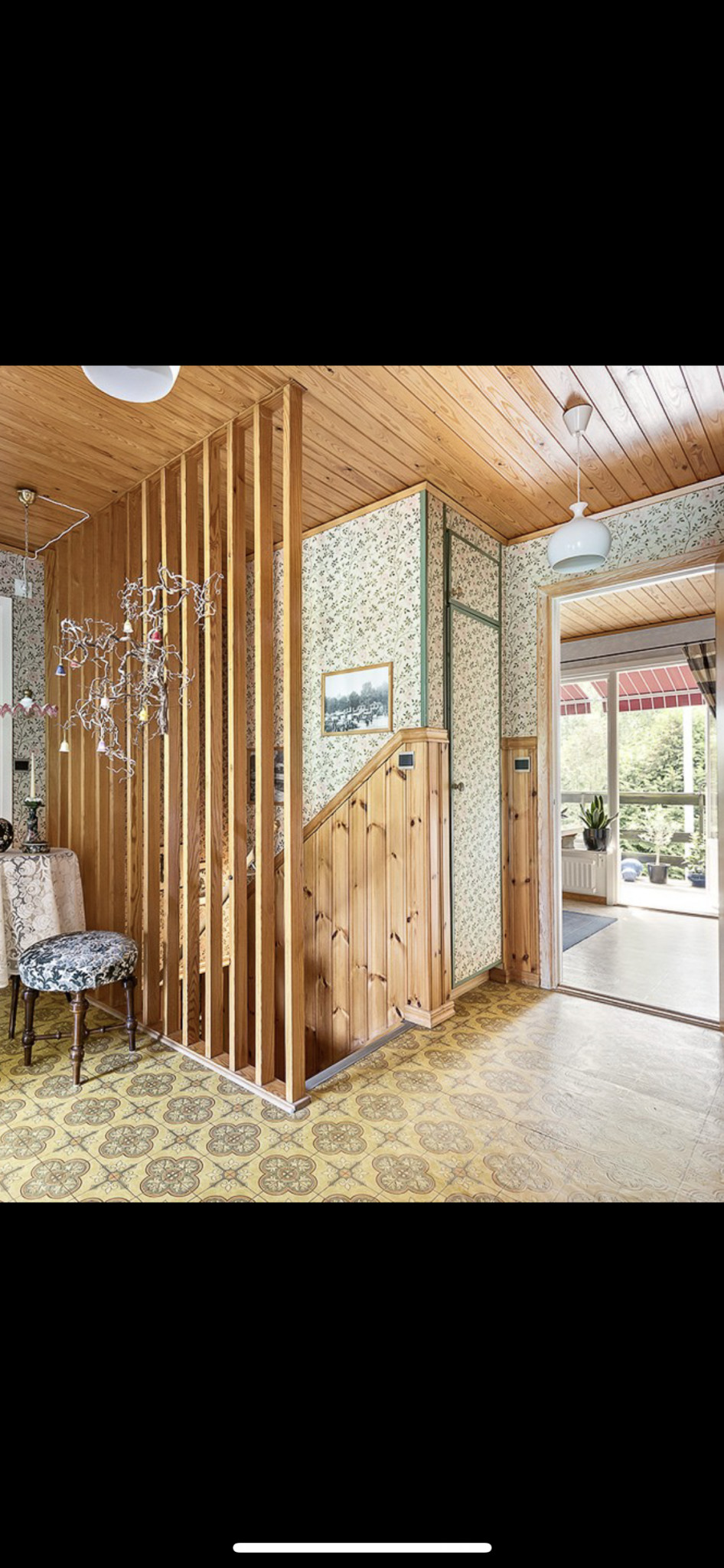

It is difficult to assess just with the help of photos. Floor plans are a good first step.
What do you mean by bad tone? I just conveyed information that the floor plan for our house does not show anything about load-bearing. The floor plan only shows lines for the walls. With the pictures, you can highlight the studs, which is more than what the plan shows. That's why I published the pictures. There are people who have more knowledge in the area of load-bearing and non-load-bearing walls than I do. They usually have an eye for what appears to be load-bearing or not.C C.Lundin said:

A floor plan provides an overview of a building's framework. Often, knowledge of construction techniques is required to interpret it. It never states on a drawing what is load-bearing or not. You can never rely on the dimensions of studs when assessing what is load-bearing, except that some constructions can be excluded.

It cannot be ruled out that some of them are load-bearing. Since the floor structure is 9.3 meters wide, the floor joists for the upper floor need two supports. One is given, namely the wall between the corridor and the bedroom. The other can either be in the other corridor wall or in line with the walls currently in question. In the living room, there is likely a beam in the ceiling or hidden in the floor structure. If there is a visible beam in the living room ceiling, it provides the answer; otherwise, one must look at sectional drawings or search for other traces.
Upper floor? I interpreted it as the closet to be demolished is located on the ground floor in a house with a basement. And directly above the closet is the attic/roof structure = no more floor above the closet.J justusandersson said:It cannot be ruled out that some of them are load-bearing. Since the floor structure is a full 9.3 meters wide, the floor joists for the upper floor need two supports. One is given, namely the wall between the corridor and the bedroom. The other can either be in the other corridor wall or in line with the currently relevant walls. In the living room, there is likely a beam in the ceiling or hidden in the floor structure. If there is a visible beam in the living room's ceiling, it provides the answer, otherwise one must look at section drawings or search for other clues.
Right or wrong?

It is a split-level house, a one-story house with a basement. Just as you understood, there is no upper floor, just a small "attic"/roof structure. You are absolutely rightD daugaard said:
The staircase is unclear on the drawing, but if it is a split-level house, there are likely self-supporting truss rafters above, and then no walls are load-bearing. It is sufficient to confirm that there are truss rafters.