
26,079 views ·
77 replies
26k views
77 replies
Load-bearing or non-load-bearing, two structural engineers say different
I thought the same spontaneously and started tearing down happily but got uncertain with such varied opinions. Everything else in the house is so darn well-built that I still tend to trust those trusses.Nissens said:

Got it, tricky to assess. It depends on the input in the calculation and what you want to achieve.Vrana said:
Of course, the safest approach is to go with the most conservative assessment.
Yes, I mean it depends on whether they built free-standing roof trusses according to the description. That is to say; do you know if they followed the description, or alternately, if the description accurately describes your house?

If the structural engineer hasn't seen the construction with their own eyes, I wouldn't demolish. You say there aren't complete drawings, so how can anyone assess without a site visit?
If they are truss roof trusses, and the house is not located north of Dalarna, I can't imagine it being load-bearing. Since there is no floor structure, other than the roof itself, there are no loads. Other than the self-weight and snow load, of course. It's almost difficult not to support over 8 meters.Can't find any drawings of the roof trusses. However, it is quite a low-sloped roof with a 6-degree angle. It's hard to see anything at all in the small, small attic plus it's full of wood shavings. However, we will vacuum it out in the spring and install cellulose insulation, so maybe we can see more then.
I think the neighbor's structural engineer was referring to the basement level. There the wall is guaranteed to be load-bearing and should not even be replaced with glulam.
Regards, a former building designer.

That's how it looked in my previous house.Hello! We have a long and narrow one-story house with a basement made of brick. Between the floors, there is a concrete slab. According to the original drawings from '67, only the exterior walls are load-bearing, but there are 8 m between them. Low-pitched roof. There is a wall running along the entire length of the house on the ground floor according to the plan.
We asked a structural engineer + constructor if it was possible to remove the wall between the kitchen and the living room, and they said it wasn't load-bearing. The neighbor happens to have an identical twin house and has been thinking the same thing, the engineer they hired says it is definitely load-bearing and even advises against a laminated beam, insisting on a steel beam.
How can it differ so diametrically? Anyone with similar experiences?
I got the advice to install a laminated beam (asked 8 carpenters, 7 said the same thing) when I tore down that wall, and not to do it in winter with snow load on the roof.
Tore it down during summer, and the roof "sagged" a couple of centimeters.
But I didn't feel nervous about it, just finished, and later lifted it with a 2-ton jack to get the laminated beam in.
But the laminated beam was absolutely necessary.
Put a beam there, and it’s done, or alternatively place a beam on top of the collar ties to relieve the trusses that will be hanging. The width of the opening doesn’t look like it would be more than 3-4m maybe?Hello! We have a long, narrow one-story brick house with a basement. Between the floors, there's a concrete slab. According to the original drawings from '67, only the outer walls are load-bearing, but it's 8 m between them. Low-pitched roof. On the ground floor, there's a wall running the entire length of the house according to the drawing.
We asked a structural engineer about removing the wall between the kitchen and the living room, and they said it wasn't load-bearing. Our neighbor happens to have an identical twin house and was thinking the same, and the engineer they hired said it absolutely is load-bearing and even advises against using a laminated beam, insisting on a steel beam instead.
How can it differ so drastically? Anyone with similar experiences?

I think most people are cautious because there are many parameters to consider and don't want the roof to collapse on you and your family 😀
Can you see what dimensions the truss has on the beams at the bottom and top? Is it a truss, i.e. zigzag?
Probably, you can remove that part of the wall, but a thought from someone who has long experience with house surveys. Even if the truss is self-supporting at the construction, all structures sag a bit. If it was dimensioned slightly too weak and sagged downward and now rests on the new middle wall, it may have become load-bearing.
A low-slope construction has less intrinsic strength to support a common truss.
I would have made an opening, kept a couple of dm of wall stubs on each side, reinforced them, and put up a glulam beam.
Good luck! 😀
I don't know anything but say TEAR AWAY! You'll notice if it works or not.
P.S. I am not responsible for my own comment.
P.S. I am not responsible for my own comment.


It may have gained weight over the years due to deflection.
The question you should consider is whether the deflection becomes too large with new snow loads due to warmer climate, causing your waterproofing layer to crack on the roof, leading to a leak 😊
The insurance company will probably work to ensure you don't get any money 💰
The question you should consider is whether the deflection becomes too large with new snow loads due to warmer climate, causing your waterproofing layer to crack on the roof, leading to a leak 😊
The insurance company will probably work to ensure you don't get any money 💰
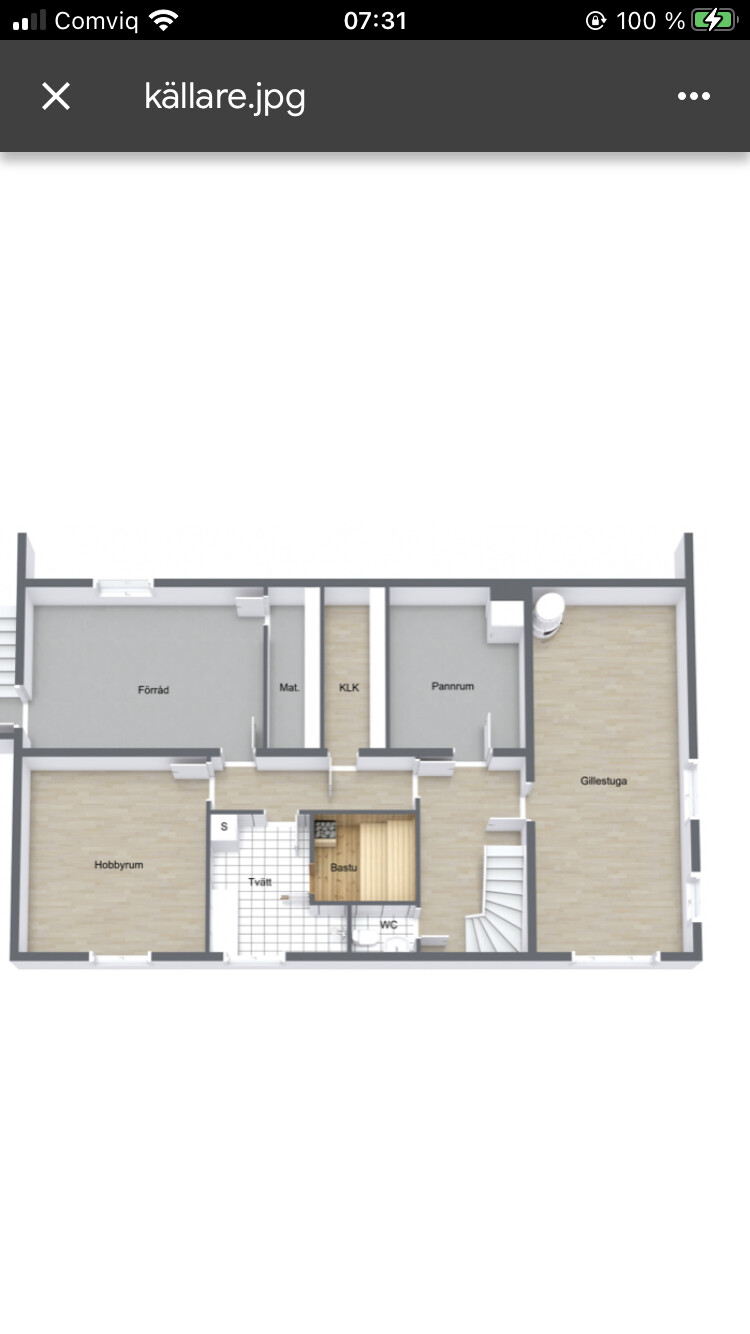
I need to see the roof trusses to assess it, but I would guess that something is supporting it even if it hasn't done so before due to the age of the house.