
25,024 views ·
77 replies
25k views
77 replies
Load-bearing or non-load-bearing, two structural engineers say different
Hello! We have a long, narrow single-story house with a basement made of brick. Between the floors, there are concrete slabs. According to the original drawings from '67, only the outer walls are load-bearing, but there are 8 meters between them. The roof has a low slope. On the ground floor, a wall runs along the entire length of the house according to the drawing.
We asked a construction engineer + designer if it was possible to demolish the wall between the kitchen and living room, and they said it wasn't load-bearing. Our neighbor happens to have an identical twin house and has been thinking along the same lines, but the engineer they hired says it is definitely load-bearing and even advises against using a glued laminated timber beam, insisting on a steel beam instead.
How can the opinions differ so greatly? Anyone with similar experiences?
We asked a construction engineer + designer if it was possible to demolish the wall between the kitchen and living room, and they said it wasn't load-bearing. Our neighbor happens to have an identical twin house and has been thinking along the same lines, but the engineer they hired says it is definitely load-bearing and even advises against using a glued laminated timber beam, insisting on a steel beam instead.
How can the opinions differ so greatly? Anyone with similar experiences?
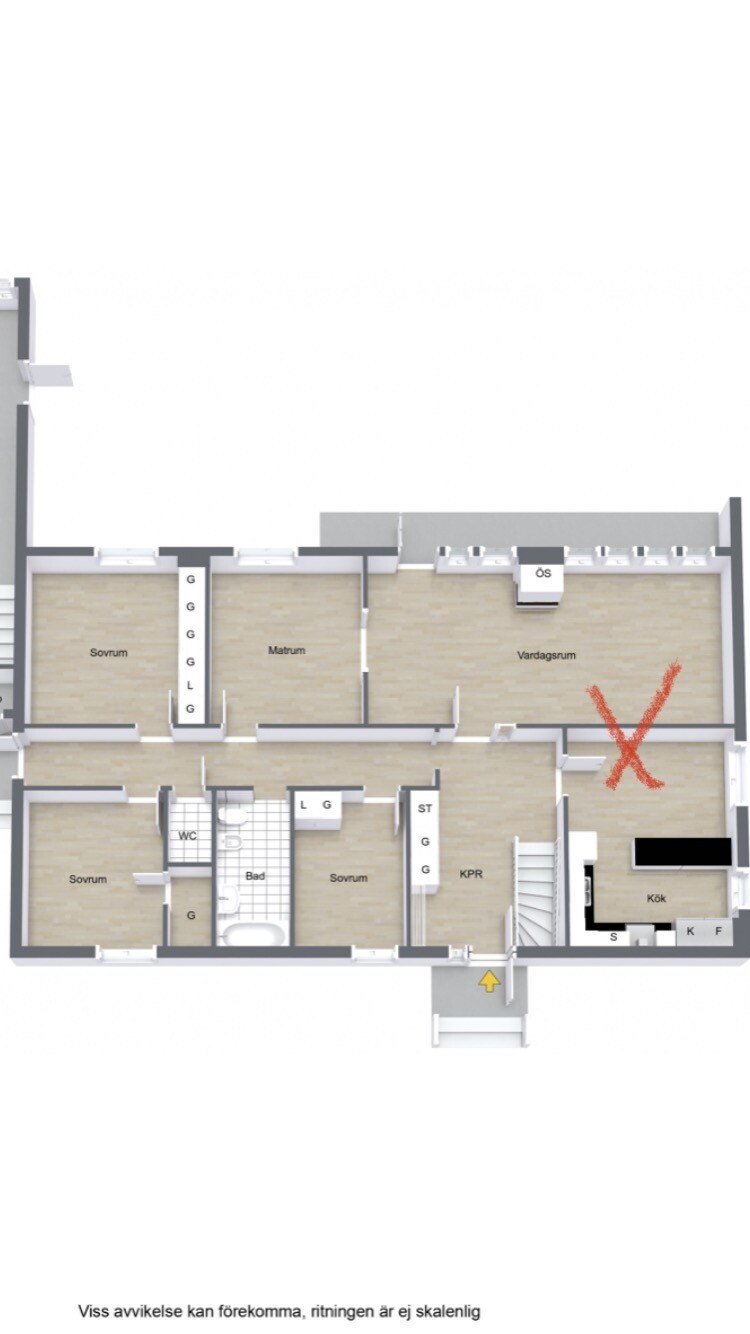
How are the roof trusses constructed?
That almost looks like my house from '62.
Not sure if that's a load-bearing wall though.
Let me know here if you find out.
PS I'll check with the neighbors who have similar houses and see what they say... some of them have renovated theirs quite extensively.
Not sure if that's a load-bearing wall though.
Let me know here if you find out.
PS I'll check with the neighbors who have similar houses and see what they say... some of them have renovated theirs quite extensively.

If someone is to say something, one needs to have the basis on which each party has based their decision.
So the neighbor's "engineer"'s basis
Your "construction engineer"'s basis
Your "constructor"'s basis
Only then can a third party determine who is more likely to be right.
Alternatively, you hire another one, and another one, and another one...
So the neighbor's "engineer"'s basis
Your "construction engineer"'s basis
Your "constructor"'s basis
Only then can a third party determine who is more likely to be right.
Alternatively, you hire another one, and another one, and another one...


Kan själv!
· Trelleborg
· 18 359 posts
I interpret it as we are not in the basement but the floor above?
Then I would say it depends on how the roof trusses are dimensioned.
We have a similar house and have free-standing roof trusses, it is built with an opening corresponding to the one you want to remove, no beam.
Then I would say it depends on how the roof trusses are dimensioned.
We have a similar house and have free-standing roof trusses, it is built with an opening corresponding to the one you want to remove, no beam.
Unfortunately, there aren't any! The only thing I have been able to dig up from the municipal archive is this: it still states self-supporting truss and that the outer wall is load-bearing.K Kane said:
But it's worrying when the neighbor hears that the roof will collapse if they tear down the same wall.
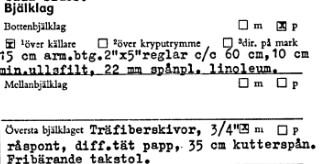

Yes, sorry, ground floor or whatever it should be called. Not basement.
Kan själv!
· Trelleborg
· 18 359 posts
Can't find any drawings of the roof trusses. However, it is a solid low-pitched roof with a 6-degree angle. It's hard to see anything at all in the tiny attic, plus it's full of kutterspån. However, we are planning to vacuum it out in the spring and install cellulose insulation, so hopefully, more will be visible then.
Kan själv!
· Trelleborg
· 18 359 posts
Ah, I missed the part about low-slope, I was thinking of traditional trusses.
I would double-check the trusses to ensure they can be free-spanning with acceptable deflection.
Drawings may be available at the municipality's building permit department.
I would double-check the trusses to ensure they can be free-spanning with acceptable deflection.
Drawings may be available at the municipality's building permit department.


Did you pay two for an investigation of your case or just call and ask two for arbitrary opinions?Vrana said:
Hi! We have a long, narrow single-story villa with a basement made of brick. Between the floors, there is a concrete joist. According to the original drawings from '67, only the outer walls are load-bearing, but there is an 8-meter gap between them. Low-pitched roof. Through the ground floor, a wall runs along the entire length of the house according to the drawing.
We asked a structural engineer + constructor if it was possible to remove the wall between the kitchen and the living room, and they said it was not load-bearing. The neighbor happens to have an identical twin house and has thought about the same, the engineer they hired says it is absolutely load-bearing and even advises against using a laminated wood beam, insisting on a steel beam instead.
How can there be such a stark difference? Anyone with similar experiences?
There is a difference between hiring someone who conducts a thorough investigation with site visits and calculations/expert assessments versus calling and asking someone what they think.
Last edited: